Tour Arlington National Cemetery’s Civil War History on Saturday, March 7, 2026, at 1 P.M.

Join us for a free tour of key Civil War sections at Arlington National Cemetery on Saturday, March 9, 2024, rain or shine. We’ll meet at the Visitor Center entrance at 1 p.m. for a 2.5-hour walking tour of Sections 1 and 2, and around Arlington House, The Robert E. Lee Memorial. 

Leading our tour is Jim Garrett, senior guide and trainer for Unscripted Tours. Jim led us on a Lincoln assassination tour last year, and two years ago, different sections of Arlington. 

If you are in town for the D.C. Antique Photo, Postcard & Civil War Show (Sunday, March 8), in the D.C. area, or plan on visiting the city, join us! For you show-goers, we’ll finish the tour with plenty of time for you to grab dinner and visit dealer rooms the evening before the show.

From our guide, Jim: “Plan on 2 1/2 miles of walking. We’ll see lots of unexpected sites. Our Arlington tour is rated by Viator as one of the top 20 tours (of all kinds of tours, food, white water, ghost, etc.) in America!”

For more information and questions, please contact Ron Coddington at militaryimages@gmail.com, Facebook message or text/voice at 703-568-1616.

Hope you can join us! I look forward to seeing you in person on the hallowed grounds of Arlington National Cemetery.

—Ronald S. Coddington, Editor and Publisher

Photo credits: Library of Congress, National Portrait Gallery

Civil War Nurses Exhibit Opens at Carnegie Free Library

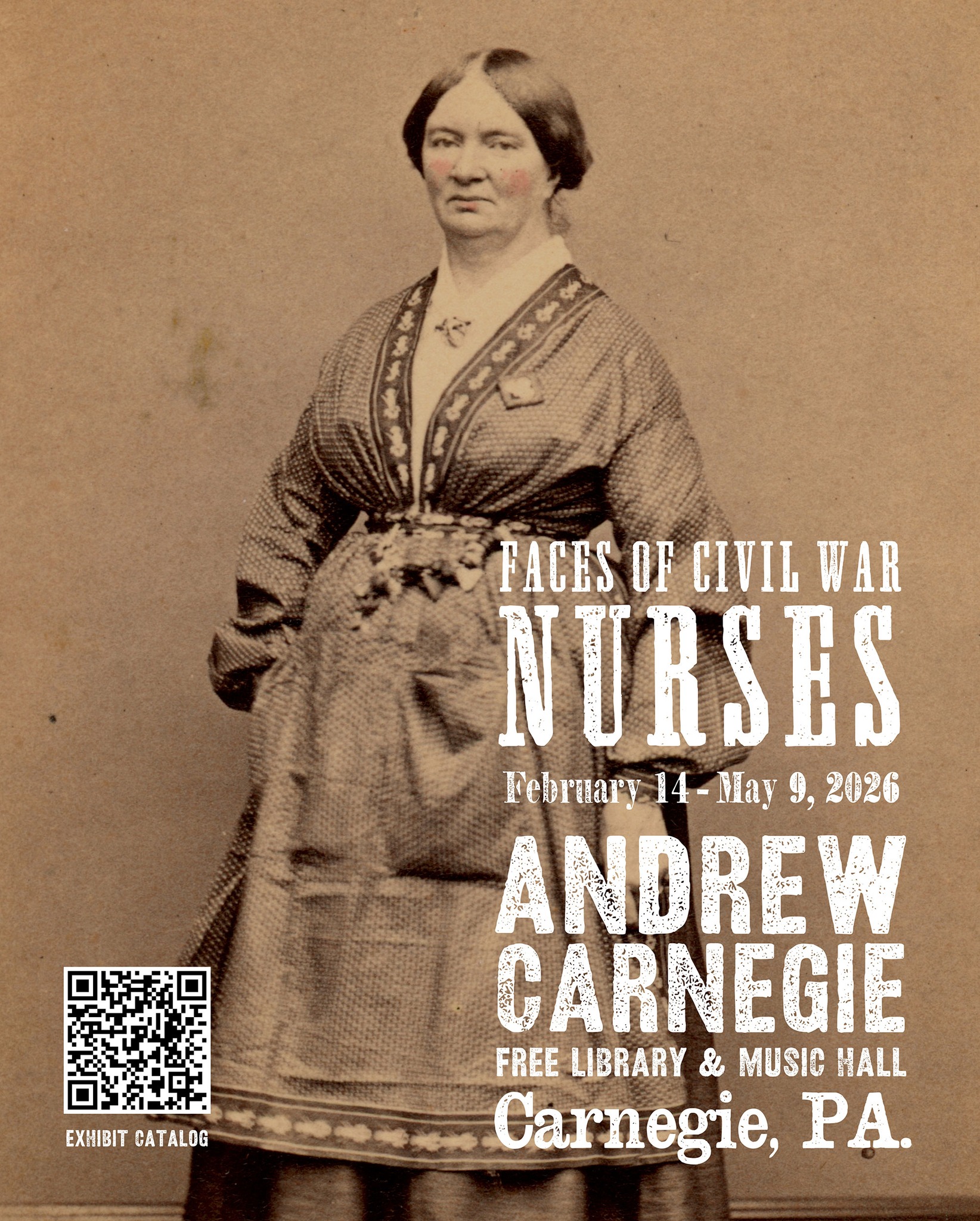
On February 14, 2026, the traveling exhibit Faces of Civil War Nurses opened to a warm welcome at the Andrew Carnegie Free Library & Music Hall in Carnegie, Pa., just outside Pittsburgh.

Presented in partnership by Military Images and the National Museum of Civil War Medicine, the exhibit features 20 life-size portraits of women who served as nurses during the Civil War—bringing viewers face-to-face with the caregivers who tended the wounded and dying in hospitals, camps, and on the battlefield.

The Carnegie installation marks the second stop for the exhibition following its premiere at the Clara Barton Missing Soldiers Office in Washington, D.C.

Andrew Carnegie Free Library & Music Hall .

A Record-Setting Opening

The Valentine’s Day opening program exceeded expectations in every way.

According to program coordinator Jon-Erik Gilot, the event set an attendance record for the library’s long-running Second Saturday Civil War Series, which began in 2014.

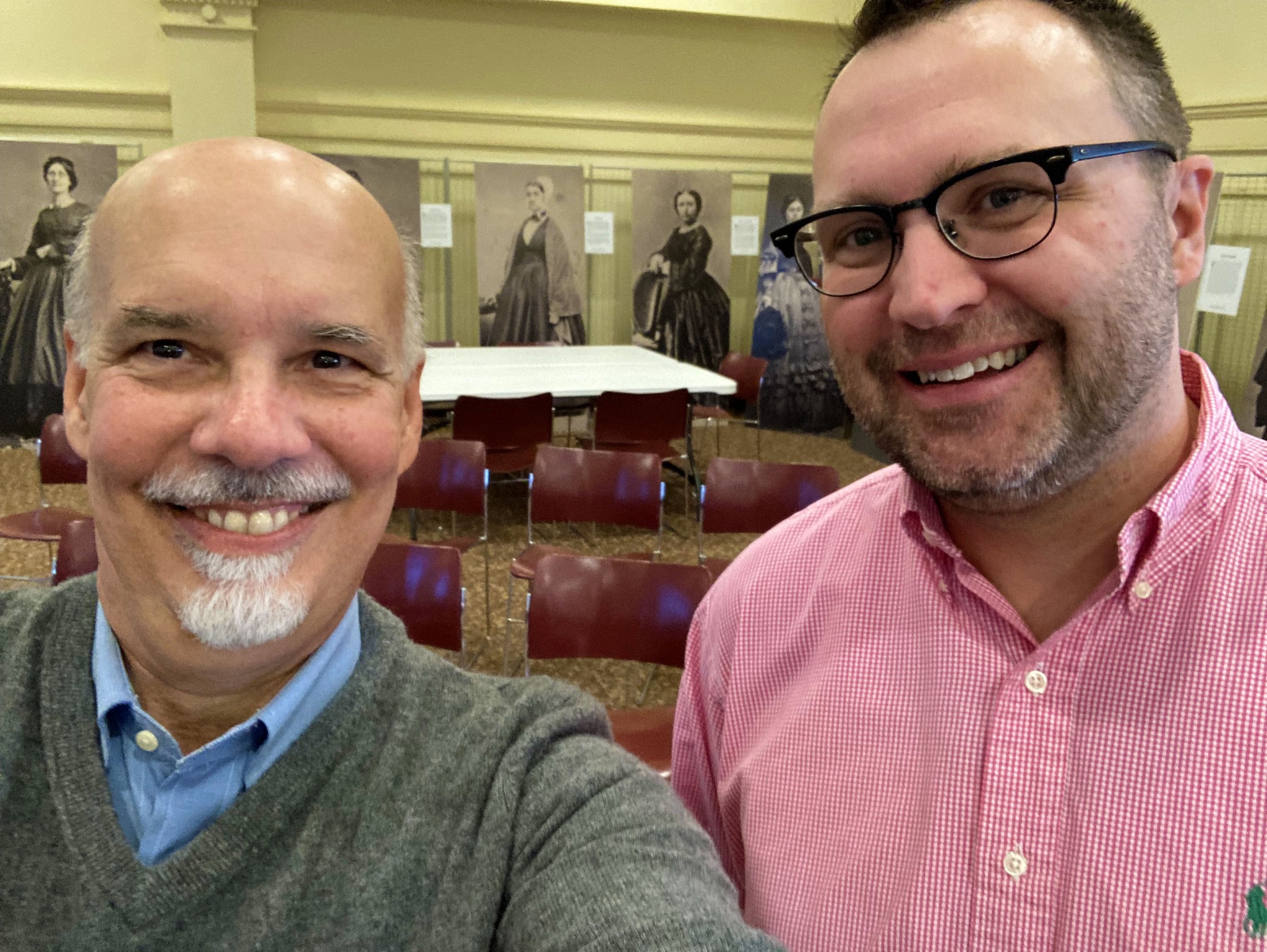
Coddington, left, with Jon-Erik Gilot.

The audience reflected the library’s broad educational mission. While many were Civil War enthusiasts, others came simply out of curiosity and a love of lifelong learning. Despite limited parking and a busy weekend, the room filled quickly, and late arrivals continued to stream in after the program began.

Bringing the Nurses to Life

The opening presentation explored the stories behind the images and the larger effort to identify, research, and interpret the visual record of Civil War nurses. The strong turnout—and the many thoughtful comments afterward—underscored the growing public interest in the human side of Civil War photography.

As Gilot noted, the program “set a high bar not just for attendance, but for content and quality,” and the enthusiastic response highlighted the power of portrait photography to connect modern audiences with the past.

Continuing the Journey

Faces of Civil War Nurses continues its run in Carnegie through May 9, offering visitors a rare opportunity to encounter these women at full scale and learn about their service and sacrifice.

The success of the opening affirms the exhibit’s mission: to honor the caregivers of the Civil War and to share their stories with communities across the country.

Life on the Civil War Research Trail—Now Streaming on HistoryFix

Military Images is excited to announce that Life on the Civil War Research Trail, the YouTube series created by Ronald S. Coddington, editor and publisher of Military Images magazine, is now on the streaming platform HistoryFix.

About the Series

Life on the Civil War Research Trail publishes a new episode every weekday. Ron—who begins every episode with the familiar greeting, “Hey all, Ron here from Military Images magazine with a new episode of Life on the Civil War Research Trail”—spends his mornings immersed in the 19th century, researching the individuals, stories, and visual culture of the Civil War. He launched the channel in 2022 on YouTube to share unique stories, anecdotes, narratives, and other discoveries that help humanize this tumultuous period in American history. The series is also available on the magazine’s main Facebook page.

Now on HistoryFix

Episodes are now available on HistoryFix, the subscription streaming service funded by Will Eichler that promises to “Get the best history experience from historians and history buffs alike, providing a wide range of content, including narrative features, short films, documentary, biography and how-to videos in both fiction and non-fiction genres.”

Whether you’re already following Ron on the research trail on YouTube or Facebook, or discovering the series for the first time, the HistoryFix partnership expands the ways you can engage with Civil War history and Military Images magazine.

How a Gettysburg Licensed Battlefield Guide Found a Soldier Portrait Through Military Images to Help Tell the Story of the Fight

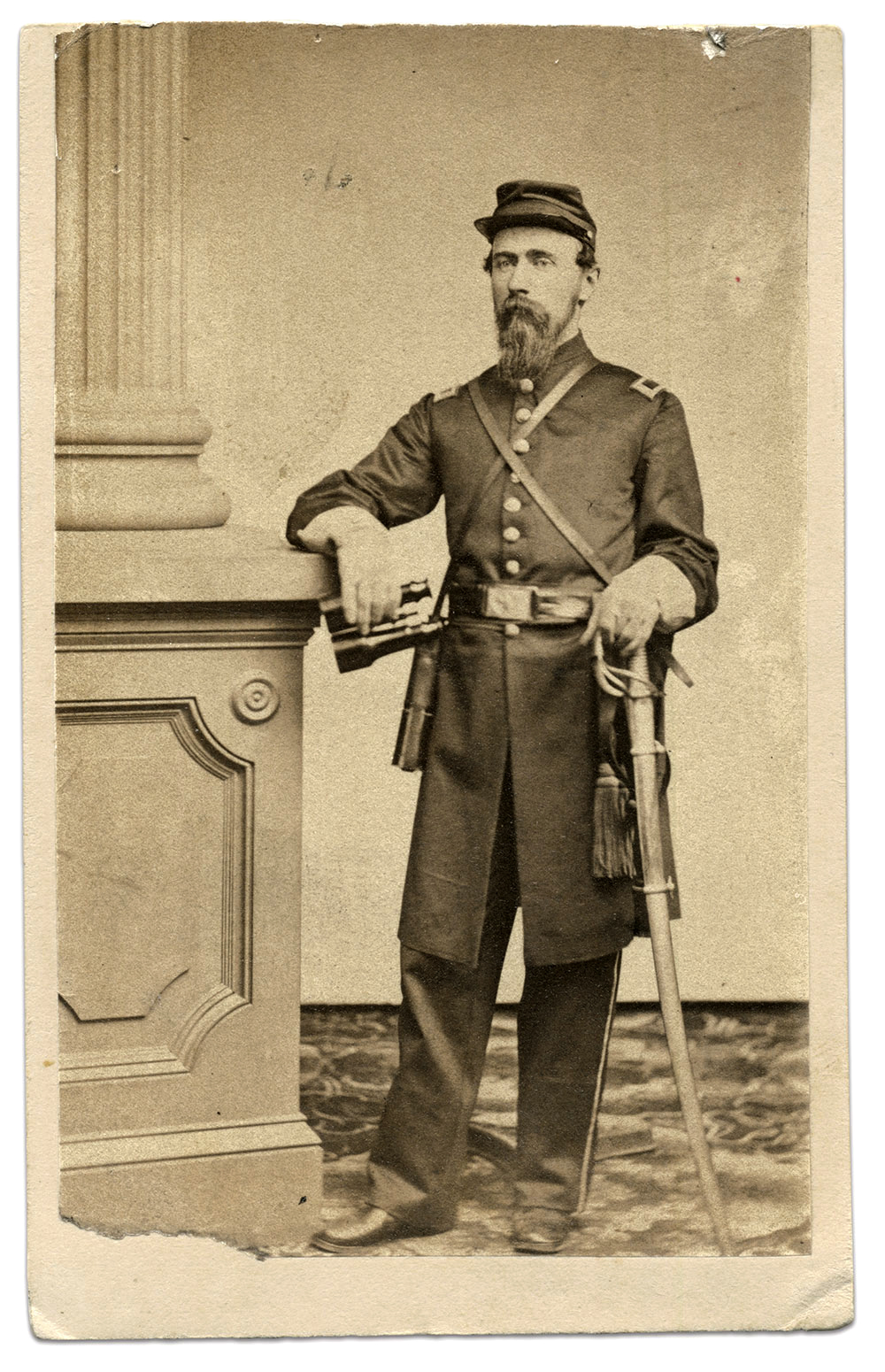
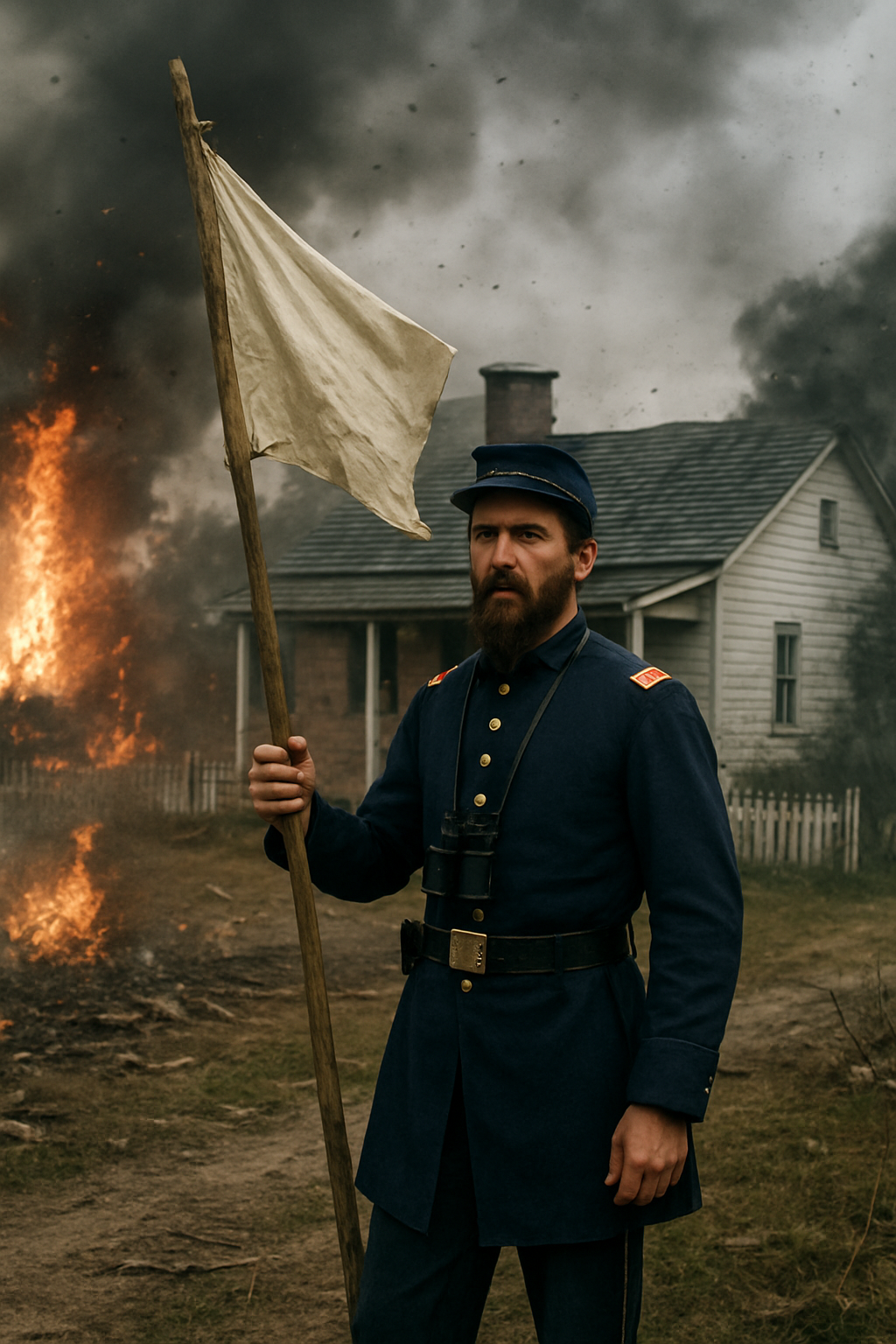
When Gettysburg Licensed Battlefield Guide Jerry Hahn watched a YouTube episode of Life on the Civil War Research Trail featuring Capt. Davis Eugene Castle of the U.S. Signal Corps, a wartime portrait of Castle—standing confidently, binoculars in hand—appeared on the screen.

Hahn, who tells Castle’s story as part of his tour, had not previously seen the image.

Carte de visite by an anonymous photographer. The late Rick Carlile Collection.

Hahn reached out and requested permission to use it, and for a higher resolution copy.

The image, part of the late Rick Carlile Collection, first appeared in our Summer 2019 issue in a feature story titled “Optics: Military men with field glasses and telescopes.

In 2022, Castle’s image and story appeared in the book Gettysburg Faces: Portraits and Personal Accounts, printed by Gettysburg Publishing.

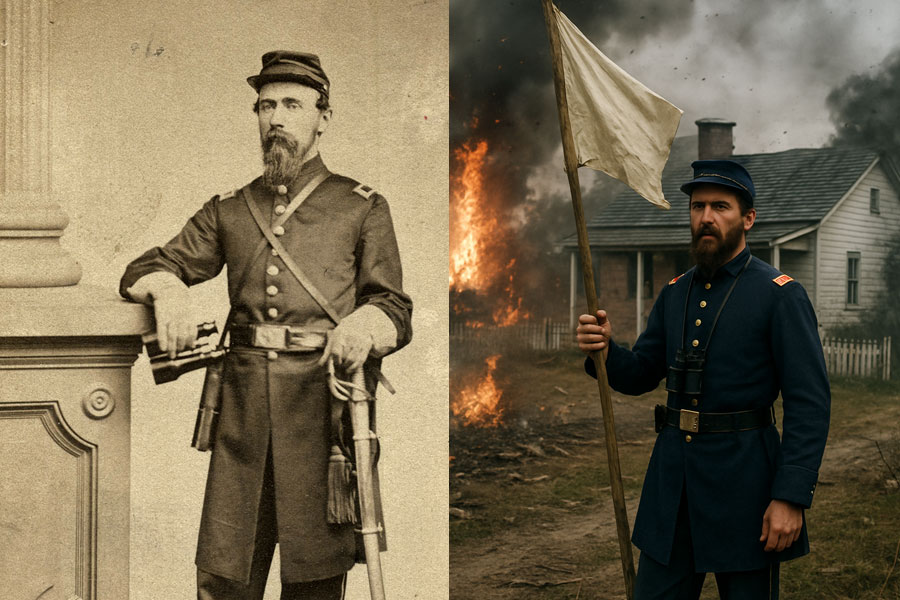
Castle’s Gettysburg story is memorable. According to an official report by his commanding officer, “On July 3, when the enemy made their furious attack upon our center at Gettysburg, Captain Castle occupied a signal station at General Meade’s headquarters, near Cemetery Hill, and remained there on duty after all others had been driven away. His flagmen had also left with his signal equipments, under the impression that their officer had gone with the rest. Having occasion to send a couple of important messages to the general commanding, then at General Slocum’s headquarters, Captain Castle quickly cut a pole, extemporized a signal flag from a bedsheet procured nearby, and sent his dispatches through under a most galling fire.”

Courtesy Jerry Hahn.

We gladly granted Hahn’s permission to use the portrait in his interpretive work on the battlefield. Using ChatGPT’s image-generation tools, he created a compelling artistic interpretation of Castle, standing with his improvised bedsheet signal flag, with Meade’s headquarters behind him. This imaginative visualization reflects what great battlefield guides do—take historical evidence, understand it in context, and bring it to life in ways that help visitors see the past more vividly. Hahn’s image reinforces Castle’s extraordinary moment of bravery and ingenuity.

Licensed battlefield guides like Hahn help visitors understand the human stories that shaped the battle. Their work depends on primary sources—photographs, letters, memoirs—and on the historians, editors, and collectors who preserve and publish them.

When battlefield guides and other students of Civil War history reach out to request an image—as Hahn did—we see it as a sign that the magazine remains a relevant resource for public history. We’re honored to support Hahn and all who interpret America’s defining conflict.

Bringing a Civil War Photographic Treasure to Hart Island

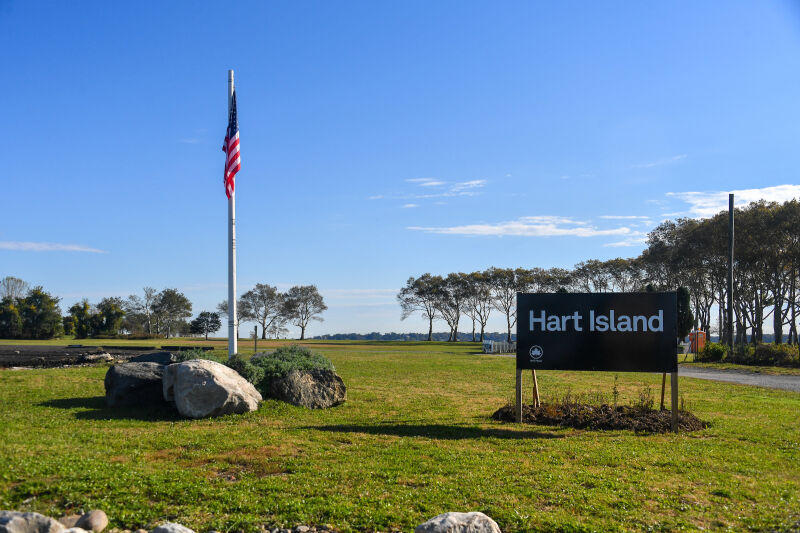
Military Images magazine is especially proud to help connect historic Civil War photographs and the private collectors who preserve them with researchers and educators around the country. Recently, Charles Handras, Park Supervisor for Hart Island in the Bronx, reached out to us as his office deepens its historical research into the island’s past.

Hart Island.

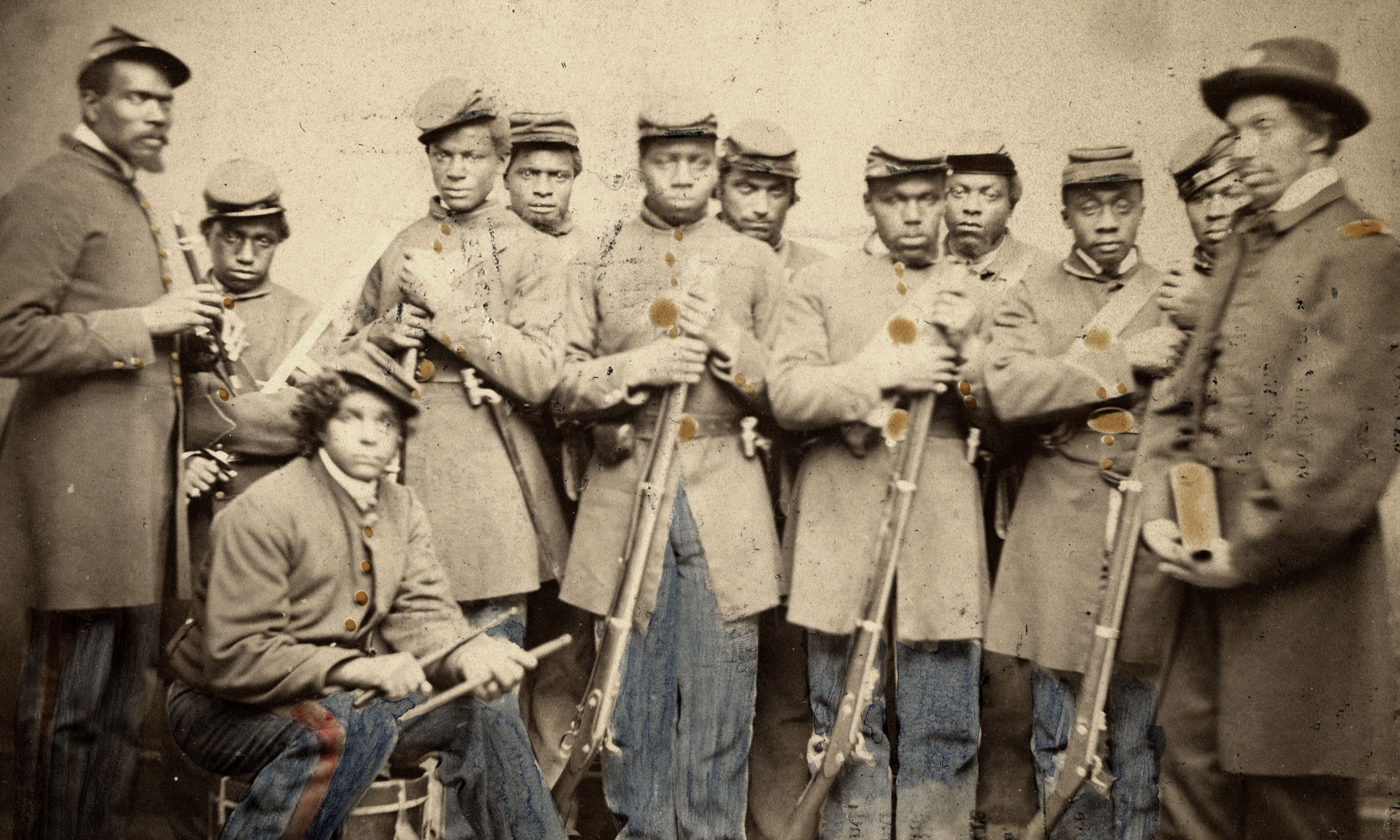
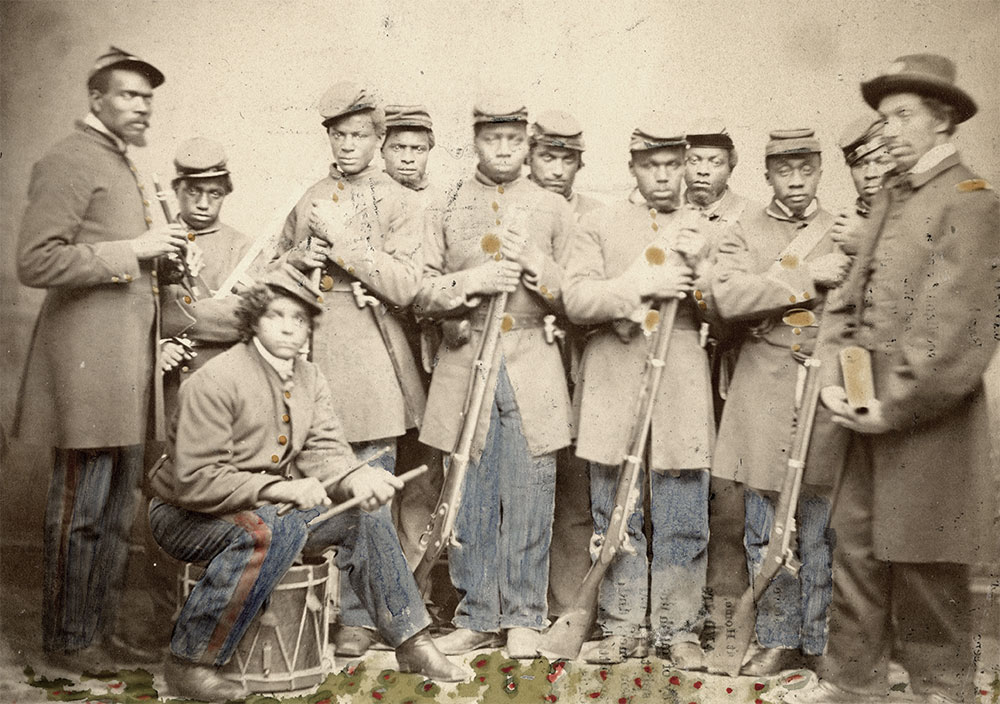
Their work includes exploring Hart Island’s connection to the U.S. Colored Troops who trained there before serving in the Union Army. Among the images that captured their attention was a historically significant 1864–65 photograph of African American soldiers at L’Ouverture Hospital in Alexandria, Va.,—an image featured in Military Images’ story “Freedmen Warriors, Civil Rights Fighters” by Charles Joyce, a onetime owner of the image.

Group at L’Overture Hospital, Alexandria, Va., about December 1864-April 1865, from left to right: Tobias Trout, 31st USCT, Wounded, Crater; William DeGraff, 22nd USCT, Sick; John H. Johnson, 27th USCT, Sick, diarrhea and rheumatism; Jerry Lisle, 28th USCT, Wounded, Crater; Leander Brown, 30th USCT, Wounded, Crater; Samuel Bond, 19th USCT, Sick; Robert Deyo, 26th USCT, Sick, pleurisy; Adolphus Harp, 19th USCT, Wounded, Crater; Stephen Vance, 30th USCT, Wounded, Crater; George H. Smith, 31st USCT, Wounded, Crater; Adam Bentley, 19th USCT, Wounded, Crater; Chauncey Leonard, Chaplain, USCT, Assigned to hospital. Ross J. Kelbaugh Collection.

The photograph now resides in the National Portrait Gallery, thanks to Ross J. Kelbaugh, who generously donated it and graciously granted permission for Supervisor Handras and his colleagues to publish it in their educational work.

Finding Aid: Autumn 2021

A complete table of contents for the Autumn 2021 issue of Military Images magazine, and information about how to purchase single issues and subscriptions.

Vol. XXXIX, No. 4
(80 pages)

Print edition: Visit our store to check availability
Digital edition: Visit JSTOR.org to purchase
Subscribe to MI
Explore the MI Archives:
Browse | Advanced search | Tutorial

Inside

Cover image
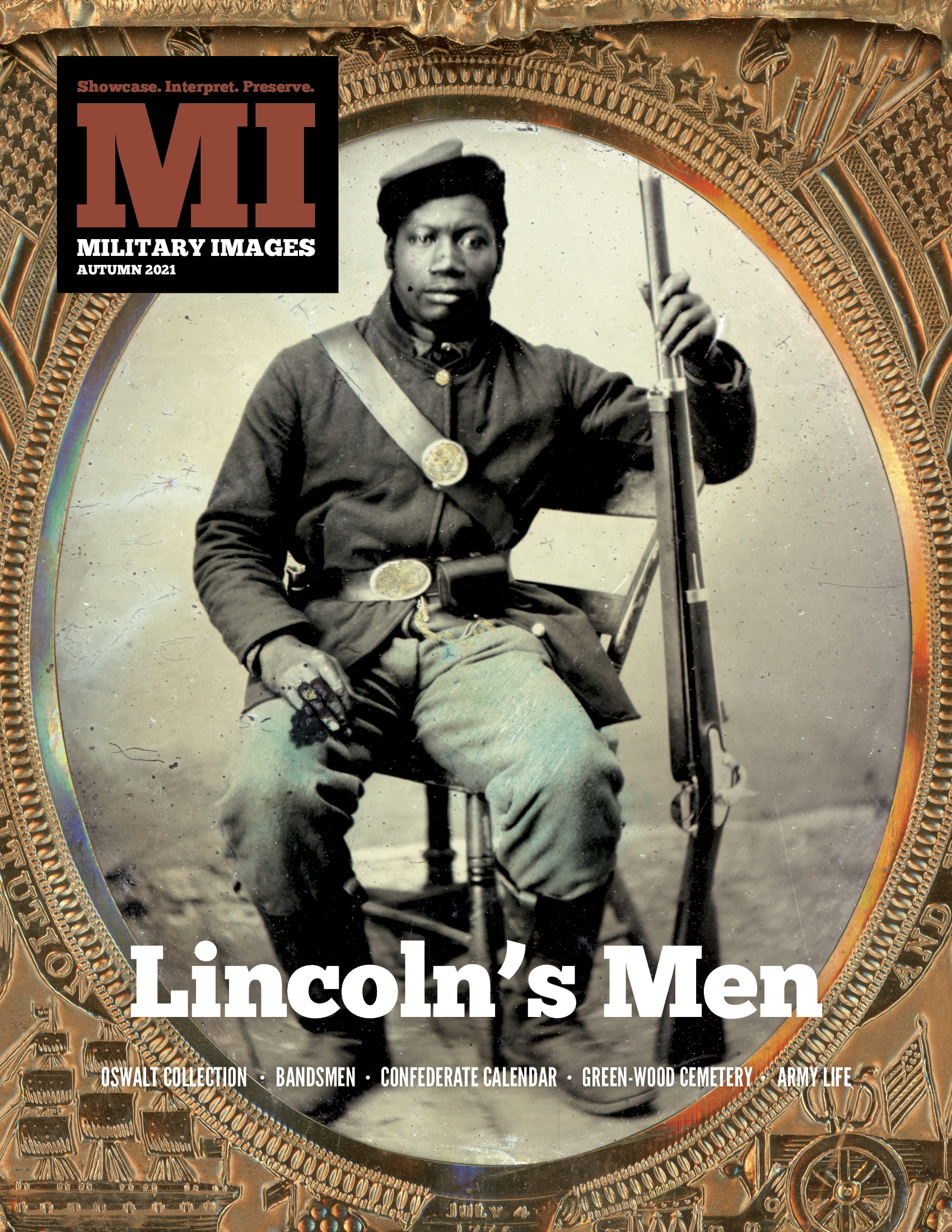
A sixth-plate tintype from the Dan Schwab Collection pictures a U.S. Colored Infantryman.

Table of Contents (p. 1)

Editor’s Desk (p. 2)
In “A Word About Mail Delivery,” the editor shares details about the history of the U.S. Post Office’s periodicals rate.

Mail Call (pp. 3-4)
Feedback includes praise for the gallery of buglers, a memorial to Trevor Boeve, a journey to recognize the grave of a Civil War veteran, and notes on fluted Colt Revolvers and Maynard Carbines.

Military Anthropologist (p. 4)
A breakdown of Medals of Honor awarded to Union army soldiers, by rank.

Passing in Review (p. 6)
Two books are reviewed: Colonel Mobley: The 7th Maryland Infantry in the Civil War by Justin T. Mayhew (self-published) and Military Prisons of the Civil War: A Comparative Study by David L. Keller (Westholme Publishing).

Photo Sleuth by Kurt Luther (pp. 8-10)
In “Civil War Photo Sleuth Goes Social,” Luther provides information about several new features that focus on collaboration and community.

Antebellum Warriors (p. 12)
A sixth plate daguerreotype features a soldier dressed in a uniform with hints of militia and regular army from the Mexican War to early 1850s era.

Most Hallowed Ground (p. 14)
Pvt. Oliver Gardner of the 3rd Michigan Infantry survived a wound at the Battle of Gettysburg but succumbed to injuries sustained during the Battle of The Wilderness. He is buried in Arlington National Cemetery.

The Honored Few (p. 16)
Maj. John Curtis Gilmore of the 16th New York Infantry put himself in harm’s way during the Battle of Salem Church when he grabbed the colors and rallied the men. His actions resulted in the Medal of Honor.

The Citizenry by Ross J. Kelbaugh (p. 18)
In “Free at Last,” the origins of a carte de visite of Freedmen on the grounds of a home is traced to Louisiana and the Baton Rouge studio of photographers McPherson and Oliver.

Bandsmen (pp. 21-35)
A gallery of 42 images collected in collaboration with Editor Dale Niesen of the Facebook group “The Image Collector” and contributions by collectors, reviewed by Jeff Stockham, is focused on musicians pictured with cornets and saxhorns.

Miniature Flags and Secession Cockades: Images from the Matthew L. Oswalt M.D. Collection (pp. 36-46)
30 representative images showcase Southern soldiers and civilians. The photographs are introduced with a biographical information of Oswalt and how he became a collector of Civil War images.

Sylvester’s War: The journey of an Indiana volunteer from Tippecanoe County to Tennessee by Ronald S. Coddington (pp. 48-51)
Wagonmaker Sylvester Leaming left his family and joined the 40th Indiana Infantry. His travels as a soldier took him to numerous battlefields, including Missionary Ridge, where a wound proved mortal. This is his story.

A Father and His Sons Fighting Together: The Drown family of the 5th Rhode Island Heavy Artillery by Norman C. Delaney (pp. 52-54)
Joshua Champlin Drown, Sr., and his sons, Joshua, Jr., and Benjamin, served and survived their Civil War military experience. This is their story.

Army Life: An essay in ambrotypes and tintypes by David B. Holcomb (pp. 55-59)
The author captures the essence of the Union soldiers’ Civil War experience in eight photographs.

Green-Wood Cemetery by Jeffrey I. Richman, with images courtesy of The Green-Wood Historic Fund Collections (pp. 61-66)
A final resting place for more than 5,000 Union and Confederate veterans in Brooklyn, N.Y., the cemetery is also distinguished as one of the earliest burial grounds in the rural cemetery movement of the early 19th century. A selection of images of Civil War soldiers interred in the historic cemetery is included here.

Groundbreaking Calendar, a Q&A with Confederate Calendar creator Lawrence T. Jones III (pp. 67-70)
In 1976, Texas photography Larry Jones of Austin, Texas, produced his first calendar with Confederate photographs. Little could he have realized that he’d continue making them for years. In this exclusive interview, Larry discusses the calendars and his lifetime of collecting.

Material Culture by Ron Field (pp. 75)
In “Navy Round Jackets,” Field provides detail about the blue cloth jackets that originate with the first U.S. Navy frigate crews in 1797.

Behind the Backdrop: Origins, artistry, and photographers by Adam Ochs Fleischer (pp. 74-75)
In “The Tiger Tree Backdrop of Kalamazoo, Michigan,” Fleischer examines the distinctive painted canvas with a striped tree and military scene. This presence of this background is a clue that the soldier pictured likely served in a small number of regiments formed in the region during the Civil War.

Stragglers: Distinctive Images from MI contributors (pp. 76-78)
Included are portraits of members of Company E, 44th New York Infantry, two members of U.S. Colored Infantry regiments, Henri B. Loomis of the 56th New York Infantry, Stephen Hannas of the 11th Virginia Infantry and a group of soldiers from the 21st Wisconsin Infantry atop Lookout Mountain, Tenn.

The Last Shot (p. 80)
A sixth plate post-mortem ambrotype pictures a Union officer in death, his body carefully cleaned and dressed.

Finding Aid: Spring 2021

Vol. XXXIX, No. 2
(80 pages)

Print edition: Visit our store to check availability
Digital edition: Visit JSTOR.org to purchase
Subscribe to MI
Explore the MI Archives:
Browse | Advanced search | Tutorial

Inside

Cover image
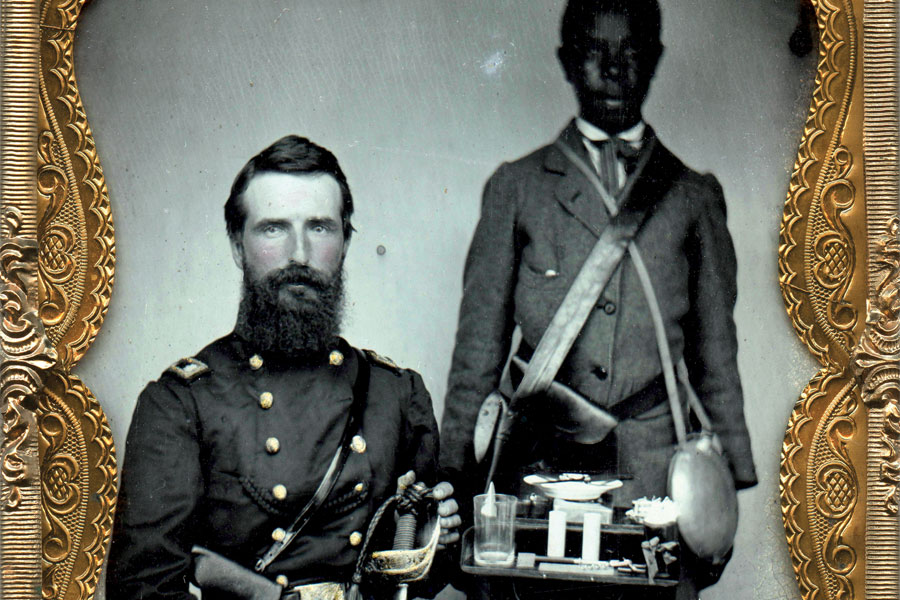
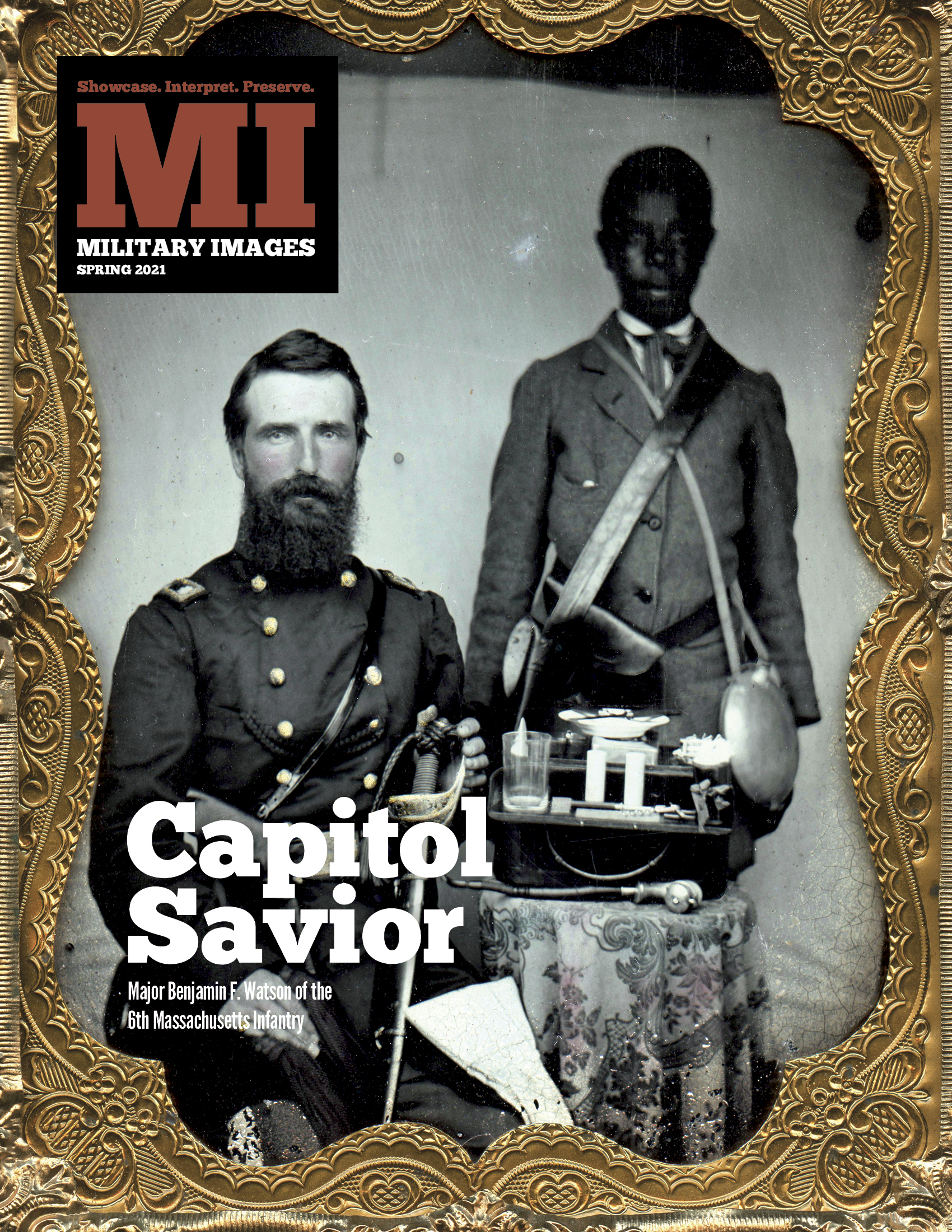
A quarter-plate ambrotype from the Paul Russinoff Collection pictures Maj. Benjamin Franklin Watson of the 6th Massachusetts Infantry and a personal attendant.

Table of Contents (p. 1)

Editor’s Desk (p. 2)
In “Musings on Preservation,” the editor discusses the word in the third of the publication’s motto: Showcase. Interpret. Preserve.

Mail Call (pp. 3-4)
Feedback includes praise for the New Hampshire gallery in the last issue, the identification of a backdrop, the discovery of a local connection to a New Hampshire soldier a note about image credits in a vibrant collector’s marketplace.

Military Anthropologist (p. 4)
A survey of 567 ambrotypes and 684 tintypes sheds light on plate sizes and the portion of each. Sixth-plate images dominate.

Passing in Review (p. 6)
Two books are reviewed: Yank and Rebel Rangers: Special Operations in the American Civil War (Pen & Sword Military) by Robert W. Black and Captured Images: Akron Photographers in the Civil War (self-published) by John P. Gurnish.

Photo Sleuth by Kurt Luther (pp. 8-11)
In “Investigating the Iconic Portraits of a USCT Drummer Boy,” Luther documents known variations of a pair of well-known cartes de visite of a youth pictured in tattered clothing in one portrait and a Union drummer in the other. The author examines the competing identifications of the subject as Taylor or Jackson and his regimental affiliation to the 78th or 79th U.S. Colored infantries.

Antebellum Warriors (p. 12)
A sixth-plate daguerreotype from the Mike Medhurst Collection features a boy holding a guidon and seated on a drum. His uniform and initials on the guidon connect him to the New York militia.

The Honored Few (p. 14)
Captain Dewitt Clinton Lewis of the 97th Pennsylvania Infantry received the Medal of Honor for rescuing a soldier in his command who became mired in a swamp during the Battle of Secessionville, S.C., on June 16, 1862.

Most Hallowed Ground (p. 16)
First Sergeant B. Fayette Green and his pards in the 126th New York Infantry began their service by being surrendered en masse at Harpers Ferry. They went on to distinguish themselves in battle at Gettysburg and the Overland Campaign, where Green suffered a wound at Cold Harbor that ended his combat career. He is buried in Arlington National Cemetery.

The Citizenry (p. 18)
In “A Capitol Policeman Inside the Dome,” we meet John Patterson Gulick, a native Pennsylvanian who lived in Illinois, Iowa, Michigan and Virginia before the war. He spent at least five years (1864-1869) as a police officer at the Capitol Building.

Fakes, Forgeries and Frauds by Perry M. Frohne (p. 20)
In “Confederate Remounts,” a companion to his previous column about Union remounts, Frohne shares tips to spot cartes de visite prints that have been carefully removed from mounts and replaced on new mounts to make them more salable.

A Savior of the Capitol by Paul Russinoff (pp. 22-31)
Benjamin Franklin Watson, a New Hampshire native who settled in Lowell, Mass., before the war, served in the 6th Massachusetts Infantry when the regiment received orders to report to Washington, D.C., during the days following the rebel attack on Fort Sumter. The author details Watson’s rise from a respected leader in Lowell to his leadership of the regiment as it journeyed through hostile mobs in Baltimore to sleeping in the U.S. Capitol and beyond. The story is illustrated with portraits of Watson and others.

Drummers (pp. 33-41)
A gallery of images collected in collaboration with Editor Dale Niesen of the Facebook group “The Image Collector” and contributions by collectors, reviewed by Contributing Editor Chris Nelson, is focused on soldiers pictured with their drums. All are Union musicians.

Tracking Booth by Richard A. Wolfe (pp. 43-46)
Everton Judson Conger went down in history for his role in the 1865 manhunt that ended in the capture and death of John Wilkes Booth, assassin of President Abraham Lincoln. There is, however, much more to his story. The author details Everton’s rise from a dentist in Ohio to a respected cavalry commander who caught the attention of Col. Lafayette Curry Baker. Everton’s brother, Seymour, served with him in the 3rd West Virginia Cavalry and suffered a death wound in 1864.

Case Number 16 by Patrick Naughton (pp. 48-51)
Respected Lt. John Sandford Williams of the 3rd Delaware Infantry found himself in a tough situation at the Battle of Hatcher’s Run. A fellow officer suffered a wound and pleaded with Williams to help him to safety. Williams acted with compassion and helped the man—and it resulted in his court martial. The author, a descendant of Williams, tells his ancestor’s story and reveals how commanders can treat honor and pride.

The Cambrian Oratress by Richard L. Leisenring, Jr. (pp. 52-55)
Susannah Evans came to New York City from her native Scotland in August 1863 on a crusade to promote the cause of temperance. Her journey in America benefitted soldiers who struggled with alcohol. She also turned her attention to aiding wounded men, including Sgt. Alfred A. Stratton of the 147th New York Infantry, who had suffered the loss of his arms in battle.

Not a Forty-Eighter by Daniel Carroll Toomey (pp. 56-59)
Social unrest in Germany during the mid-19th century ended in a nasty military crackdown that resulted in a wave of German immigration to the U.S. One of the soldiers who fought to put down the German rebels, Earnest Barth, followed them to America. After the start of the Civil War, he donned Union blue and helped put down the Southern rebellion. This is his story.

From Vivid Eggplant to Unpleasant Cheesy Hues by Ronald S. Coddington (pp. 60-64)
Concern about the yellowing and fading of albumen prints is almost as old albumen paper itself. Invented in 1850, it made the mass production of photographs possible—but the deterioration of the prints prompted the esteemed Photographic Society of London to open an investigation in 1855. This is a brief history of the problems and what today’s collectors can do to protect their treasures.

They Knew Gettysburg Before the Battle (pp. 67-70)
Included among the millions of artifacts in the collections of the Adams County Historical Society in Gettysburg, Pa., are a number of photographic portraits of townspeople. A selection of these images is pictured here. Each is identified and accompanied by a profile of the subject.

Connected by a Carte de Visite by Joseph G. Bilby and Gary D. Saretzky (pp. 71-72)
Rev. John G. Frazee of the 3rd New Jersey Cavalry posed for his portrait wearing the subdued uniform of a chaplain in the Camden, N.J., studio of Andrew Sims. A recent immigrant from Scotland, he was at the beginning of a long career as a lensman. The authors provide capsule biographies of the two men.

Behind the Backdrop: Origins, artistry and photographers by Adam Ochs Fleischer (pp. 73-74)
In “Lytle’s Baton Rouge Backdrop,” Fleischer examines the distinctive painted canvas featuring a plantation-style home used by Andrew David Lytle, an Ohio-born photographer who settled in Louisiana before the war. He is among a small cadre of photographers whose sitters included Union and Confederate soldiers.

Material Culture by Ron Field (pp. 75-77)
In “Early Uniforms of Duryée’s Zouaves, 1861,” Field examines the poor-quality uniforms furnished to the New Yorkers during the war’s first months. Three stereoviews by New York City photographer George Stacy illustrate the text.

Stragglers: Distinctive Images from MI contributors (pp. 78-79)
Included are portraits of Confederate soldiers who served in the 2nd Texas Cavalry, 17th Virginia Infantry, Col. John Singleton Mosby’s 43rd Cavalry Battalion, and the 4th Florida Infantry. Also pictured are two Union musicians.

The Last Shot (p. 80)
A sixth-plate tintype from the Dale Niesen Collection pictures a Union soldier holding up a pocket-sized book, G. Woolworth Colton’s New Guide Map of the United States & Canada With Railroads, Counties & c.
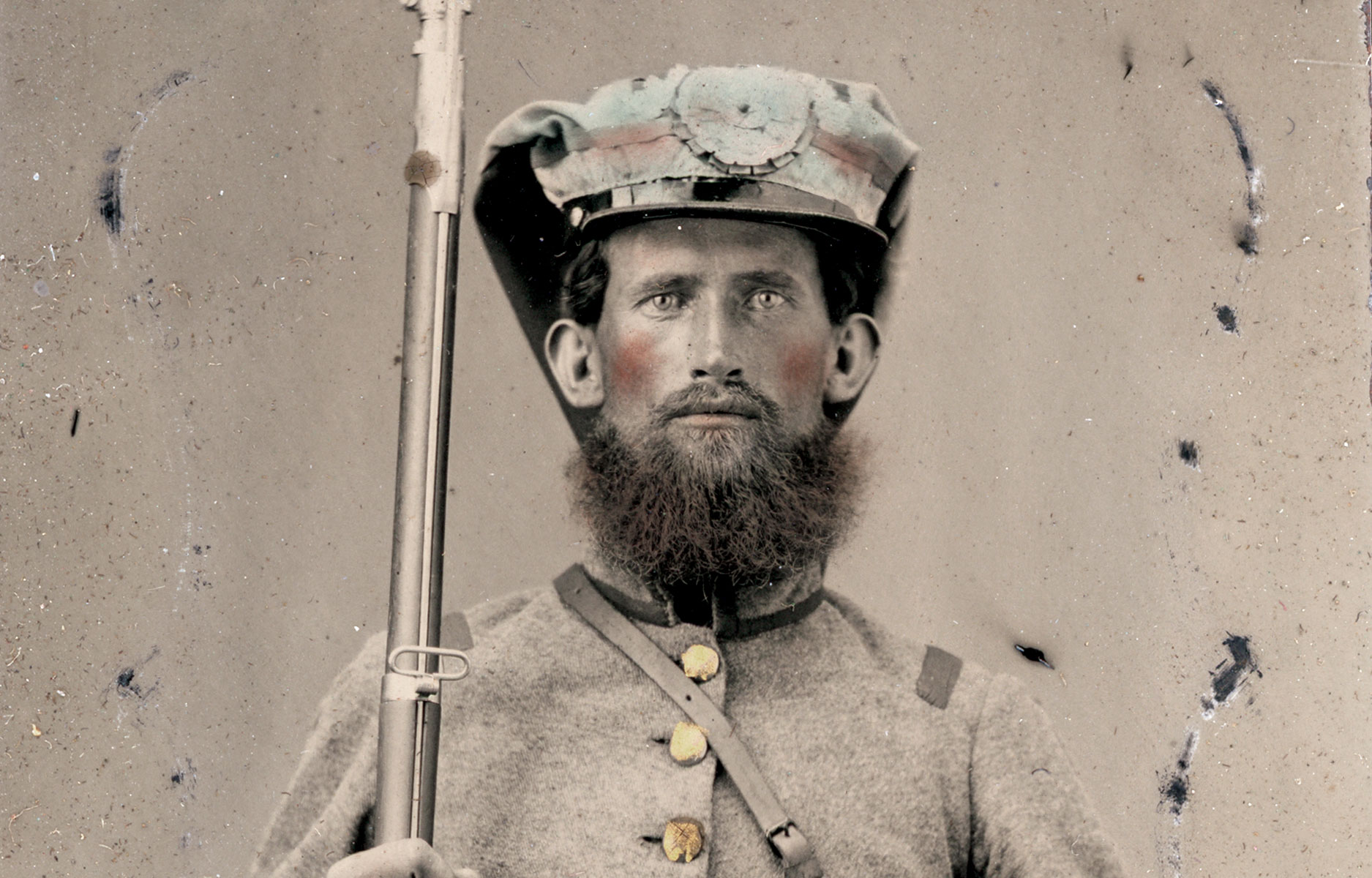
Research Rabbit Hole: The Backwards Image Problem

A new episode of Research Rabbit Hole, our Facebook Live show, premiered Monday evening, February 22, at 9 p.m. ET.

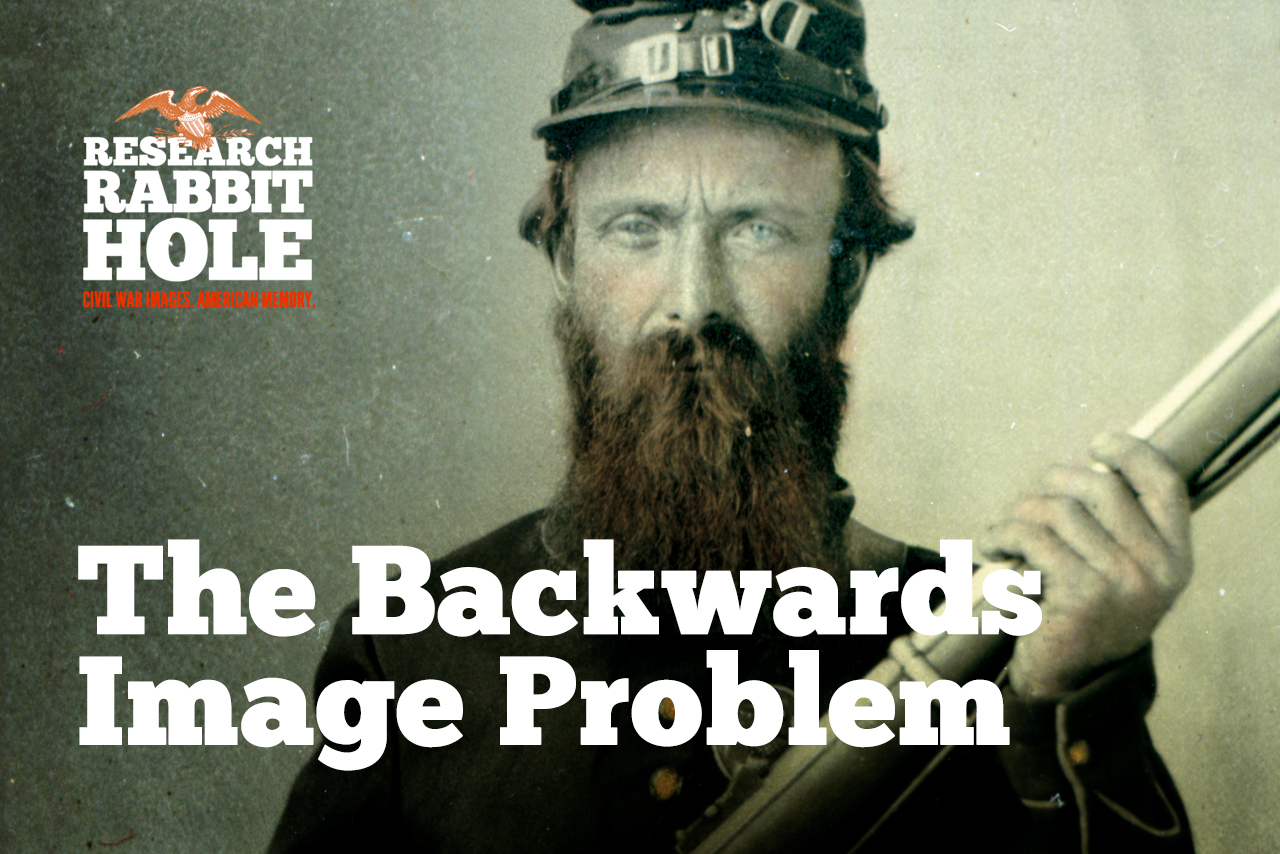
Season 1, Episode 4, explores the issue of viewing early photographs—daguerreotypes, ambrotypes and tintypes—in reverse. Photographers, inventors and other technologists of the mid-19th century were adaptable and most likely could have fixed it, but they did not. Why? Because lateral reversal is a 21st century problem!

The full season is available on YouTube.

New episodes of Research Rabbit Hole will be released every two weeks on our Facebook page. The host, Ronald S. Coddington, is Editor and Publisher of Military Images.

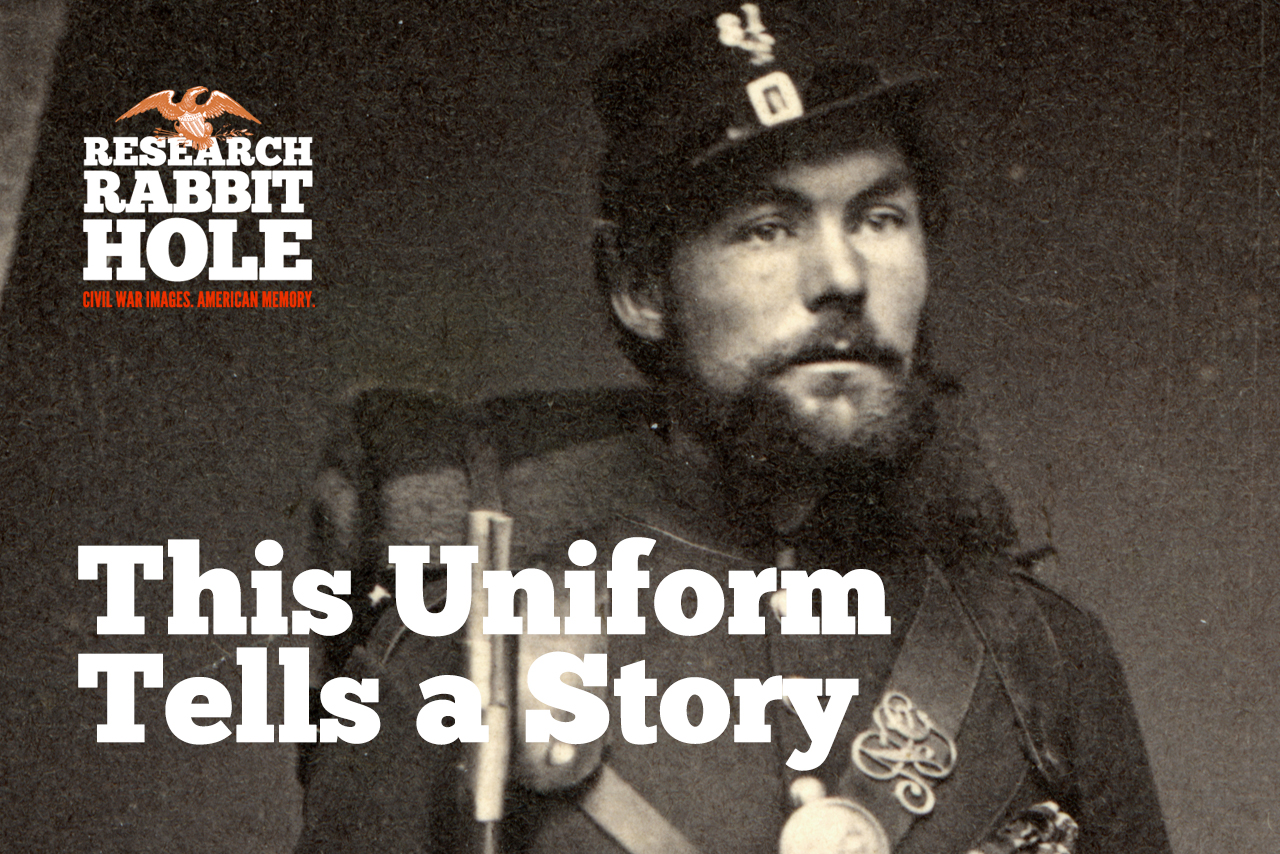
Research Rabbit Hole: This Uniform Tells a Story

A new episode of Research Rabbit Hole, our Facebook Live show, premiered Monday evening, February 8, at 9 p.m. ET.

Season 1, Episode 3, examines a carte de visite of an unidentified Union soldiers wearing a uniform that offers several clues as to the state from which he served, his pre-war military service, and the photography gallery in which he posed (hint: the Civil War’s most celebrated photographer).

The full season is available on YouTube.

New episodes of Research Rabbit Hole will be released every two weeks on our Facebook page. The host, Ronald S. Coddington, is Editor and Publisher of Military Images.

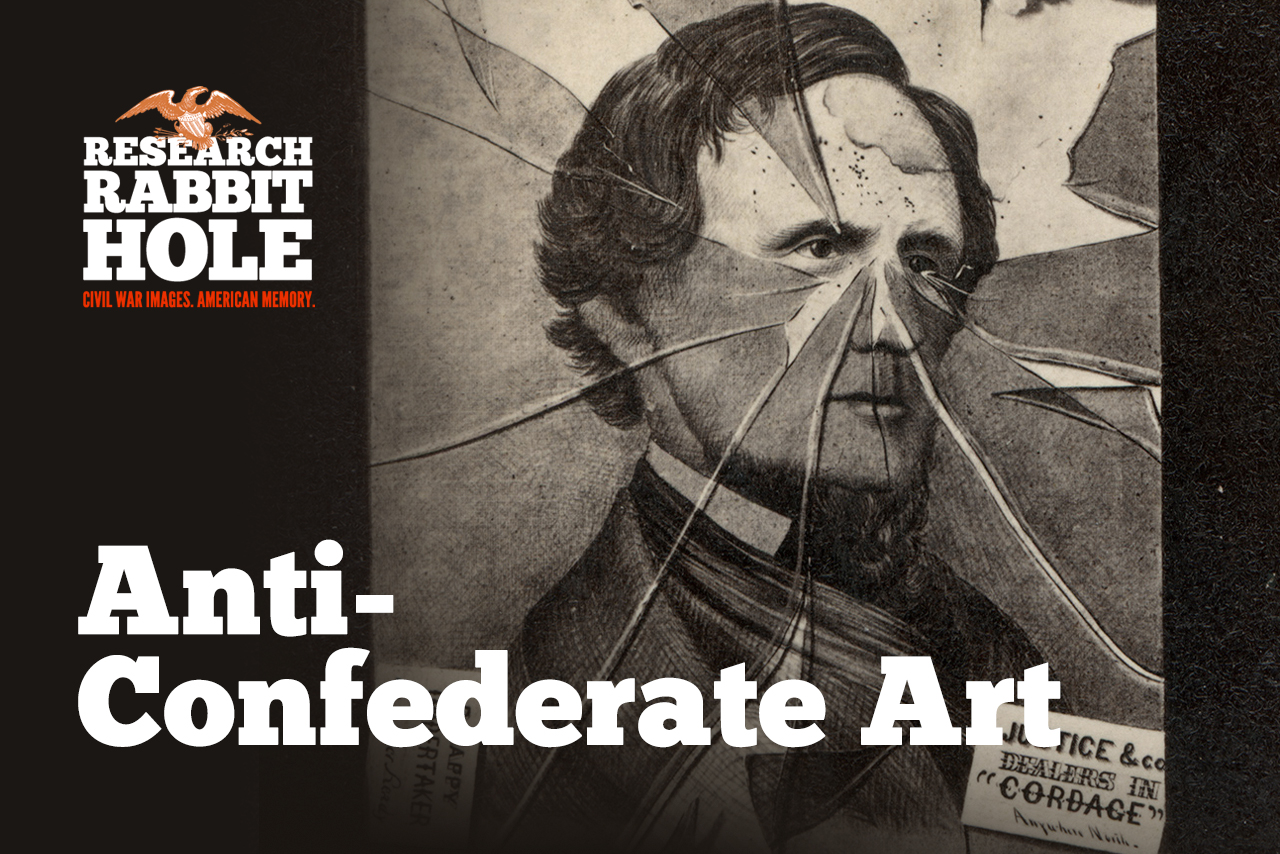
Research Rabbit Hole: Anti-Confederate Art

A new episode of Research Rabbit Hole, our Facebook Live show, premiered Monday evening, January 25, at 9 p.m. ET.

Season 1, Episode 2, examined a carte de visite titled “The Neglected Picture,” a painting by Port Jefferson, N.Y., artist William Moore Davis.

The full season is available on YouTube.

New episodes of Research Rabbit Hole will be released every two weeks on our Facebook page. The host, Ronald S. Coddington, is Editor and Publisher of Military Images.