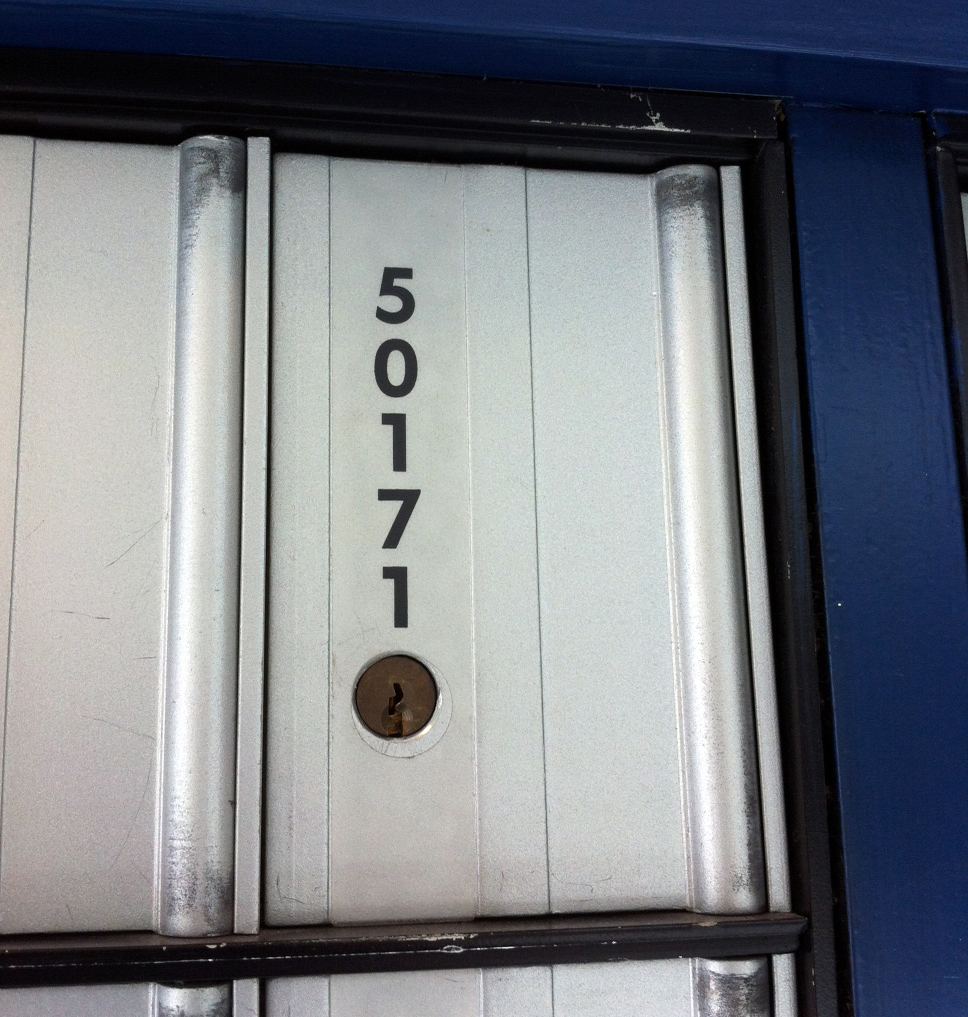
Yesterday, MI officially transferred its flag from Pennsylvania, where the magazine has lived for the last 34 years, to its new home in Arlington, Virginia. In the space of five hours, I formed a limited liability corporation (LLC), filed for and received a tax number, opened a bank account in the name of the magazine, and secured the post office box pictured here. It was surprisingly easy to make all of this happen.
Of the several individuals I worked with during the day, Suman Barua of Burke & Herbert Bank deserves special mention. In less than it takes to write this post, he explained in simple terms how to setup the LLC, acquire the tax number, and what documentation was required to set up the account. Had I not crossed paths with him, my day might have been more complicated. Thanks, Suman. And welcome to Virginia, MI!
BTW, the new address for Military Images is:
P.O. Box 50171
Arlington, VA 22205
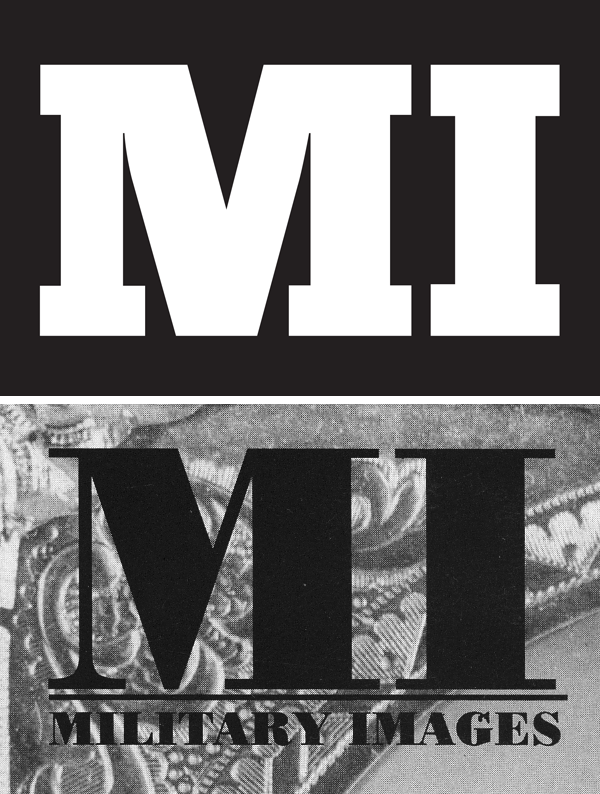
Military Images will be redesigned to begin its 35th year of publication, and the MI logo is an important part of the magazine’s identity. I want a font that is bold, expansive, reminiscent of historic type, and displays well in print and online.
I decided on Chunk Five, designed by Meredith Mandel for The League of Moveable Type. Chunk Five is described by Font-A-Day as “An ultra-bold slab serif typeface that is reminiscent of old American Western woodcuts, broadsides, and newspaper headlines. Used mainly for display, the fat block lettering is unreserved yet refined for contemporary use.”
A 2012 MacWorld review declares, “Call up ChunkFive where you need a heavy presence in print, beginning at the 12-point range. This style is not made for paragraphs, but it provides definite emphasis for subheads, titles, and single statement items.”
Pictured here is the new logo (above) and the old.
Coddington, left, and Neville after signing the purchase agreement at Neville’s home outside Pittsburgh, Pa.
Historian David Neville has stepped aside after a decade at the helm of Military Images. Neville, who has owned and edited the publication since 2003, sold the magazine to Ronald S. Coddington of Arlington, Va., on August 10, 2013.
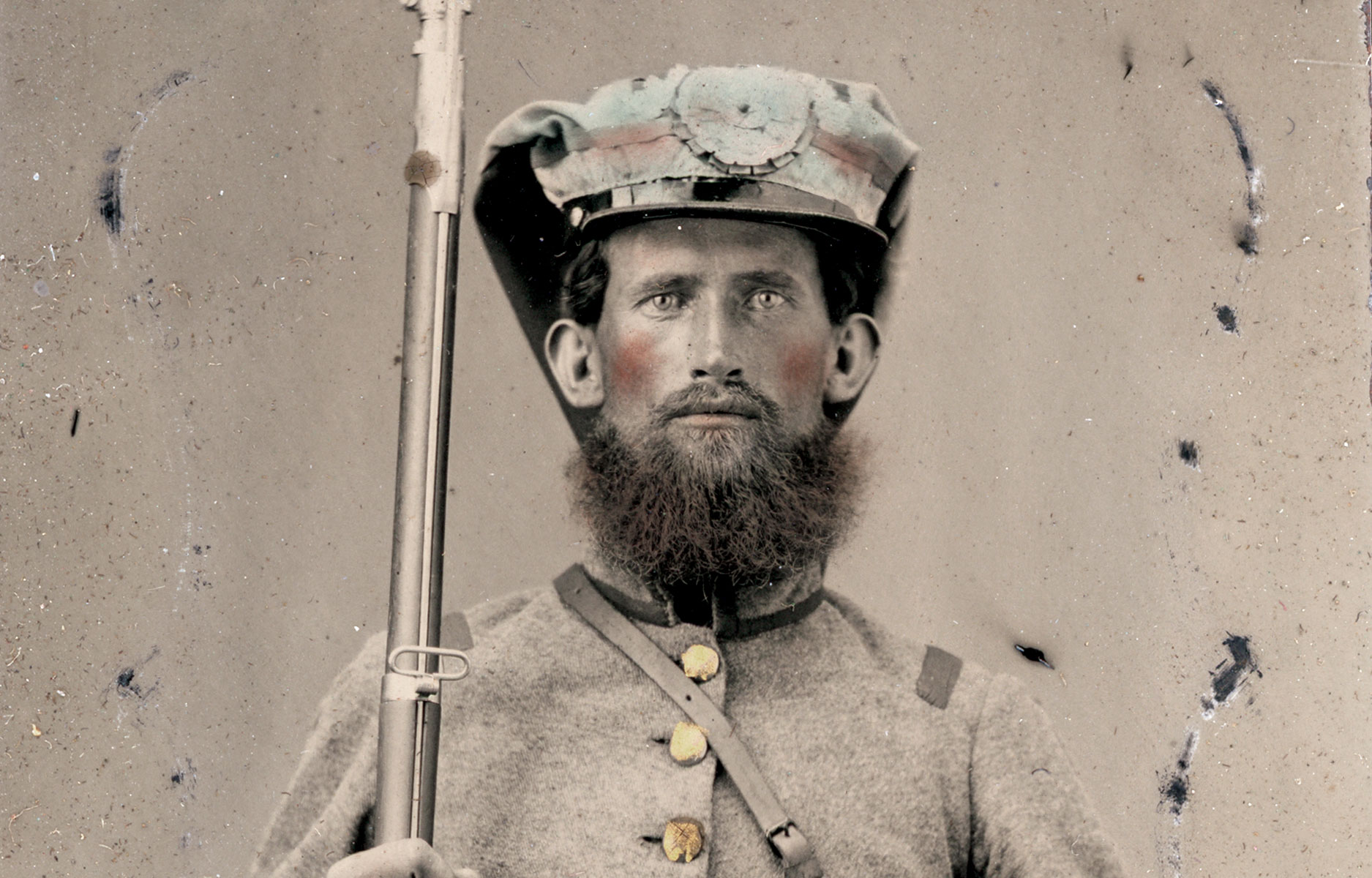
Coddington takes over as publisher and editor of MI immediately. “Military Images has a long tradition of excellence in bringing to light rare military portrait photographs, and I am thrilled and honored to have the opportunity to guide MI to the next chapter in its life,” reports Coddington. He adds, “The magazine continues to play a key role in preserving the visual record and stories of citizen soldiers in America, and is a key source for information about uniforms and other aspects of the military. In the current digital age, with so much new material surfacing, it is more important than ever to have a publication that showcases and interprets these important images.”
Harry Roach founded the magazine in 1979. He set a mission to document the photographic history of U.S. soldiers and sailors from the birth of photography in 1839 through World War I, although the vast majority of published images date from the Civil War period. Roach sold the magazine in 1999 to Philip Katcher, from whom Neville purchased it four years later.
Regular contributors to MI include some of the most respected and knowledgeable collectors in the country, including Michael J. McAfee, John Sickles, Chris Nelson, David Wynn Vaughan, Ron Field, and Ken Turner.
“I’m excited to continue working with all of our contributors, and to invite new faces with a passion for military photography to participate,” notes Coddington, who can be contacted at militaryimages@gmail.com or militaryimagesmagazine.com.
 Yesterday, MI officially transferred its flag from Pennsylvania, where the magazine has lived for the last 34 years, to its new home in Arlington, Virginia. In the space of five hours, I formed a limited liability corporation (LLC), filed for and received a tax number, opened a bank account in the name of the magazine, and secured the post office box pictured here. It was surprisingly easy to make all of this happen.