How a Gettysburg Licensed Battlefield Guide Found a Soldier Portrait Through Military Images to Help Tell the Story of the Fight

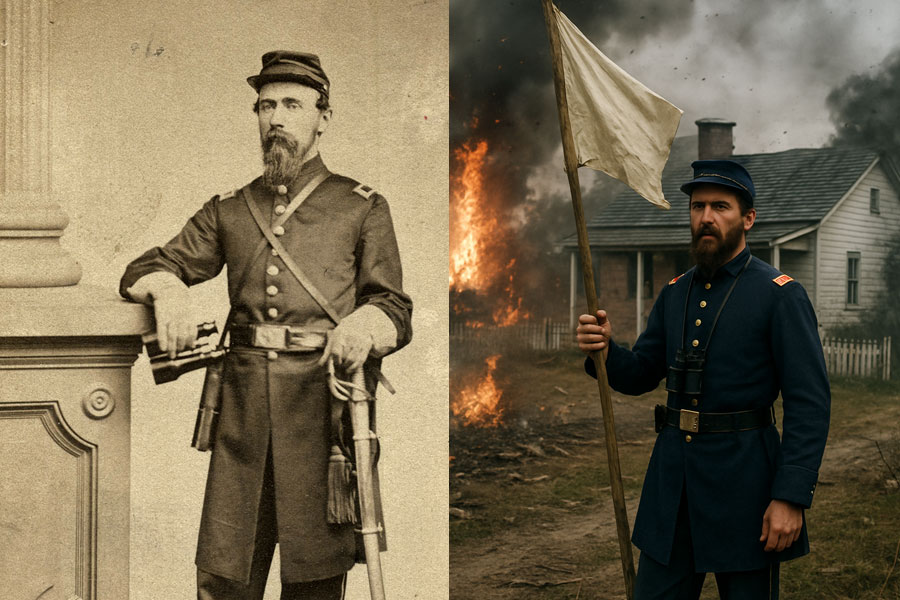
When Gettysburg Licensed Battlefield Guide Jerry Hahn watched a YouTube episode of Life on the Civil War Research Trail featuring Capt. Davis Eugene Castle of the U.S. Signal Corps, a wartime portrait of Castle—standing confidently, binoculars in hand—appeared on the screen.

Hahn, who tells Castle’s story as part of his tour, had not previously seen the image.
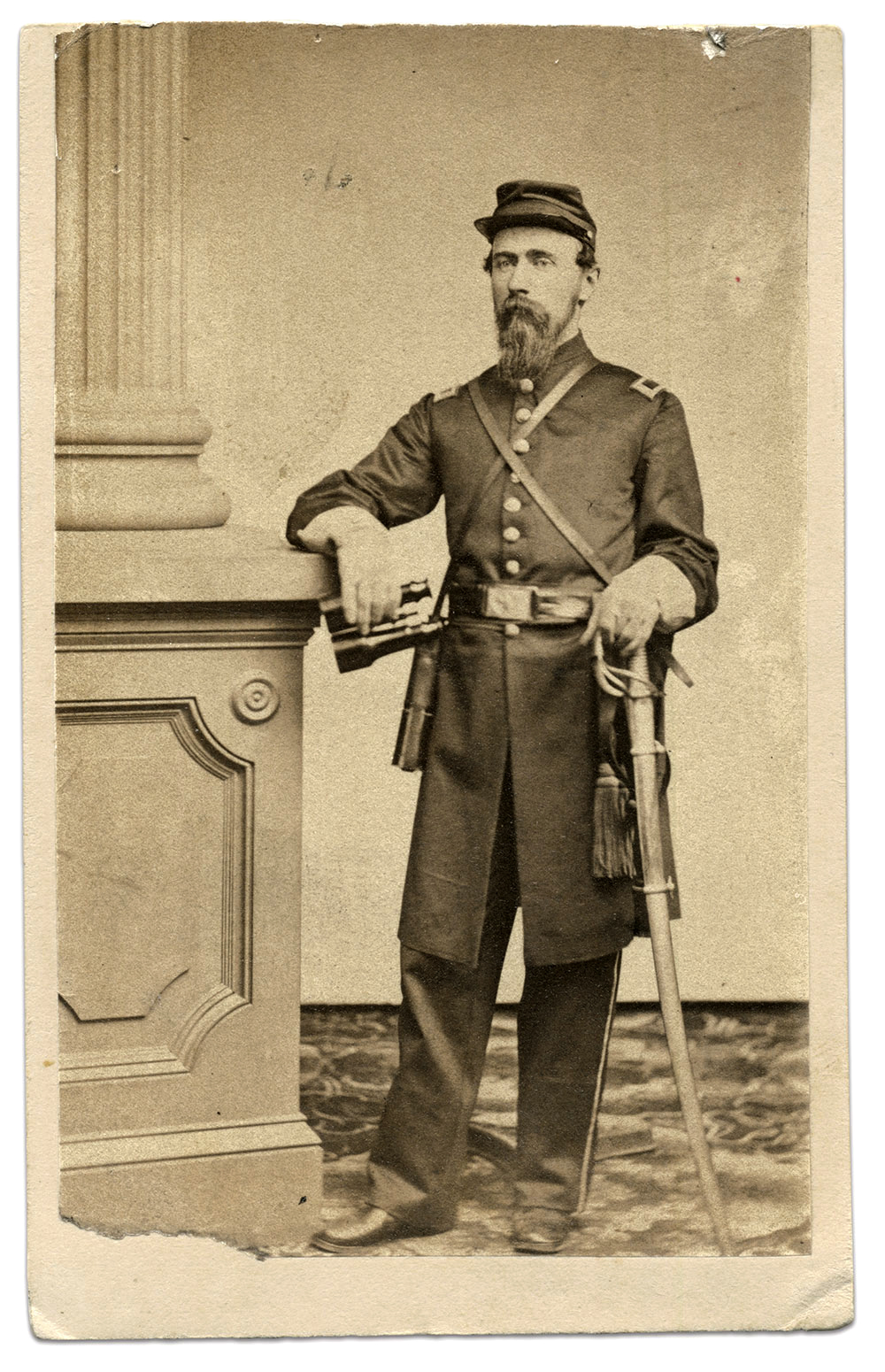
Carte de visite by an anonymous photographer. The late Rick Carlile Collection.

Hahn reached out and requested permission to use it, and for a higher resolution copy.

The image, part of the late Rick Carlile Collection, first appeared in our Summer 2019 issue in a feature story titled “Optics: Military men with field glasses and telescopes.

In 2022, Castle’s image and story appeared in the book Gettysburg Faces: Portraits and Personal Accounts, printed by Gettysburg Publishing.

Castle’s Gettysburg story is memorable. According to an official report by his commanding officer, “On July 3, when the enemy made their furious attack upon our center at Gettysburg, Captain Castle occupied a signal station at General Meade’s headquarters, near Cemetery Hill, and remained there on duty after all others had been driven away. His flagmen had also left with his signal equipments, under the impression that their officer had gone with the rest. Having occasion to send a couple of important messages to the general commanding, then at General Slocum’s headquarters, Captain Castle quickly cut a pole, extemporized a signal flag from a bedsheet procured nearby, and sent his dispatches through under a most galling fire.”
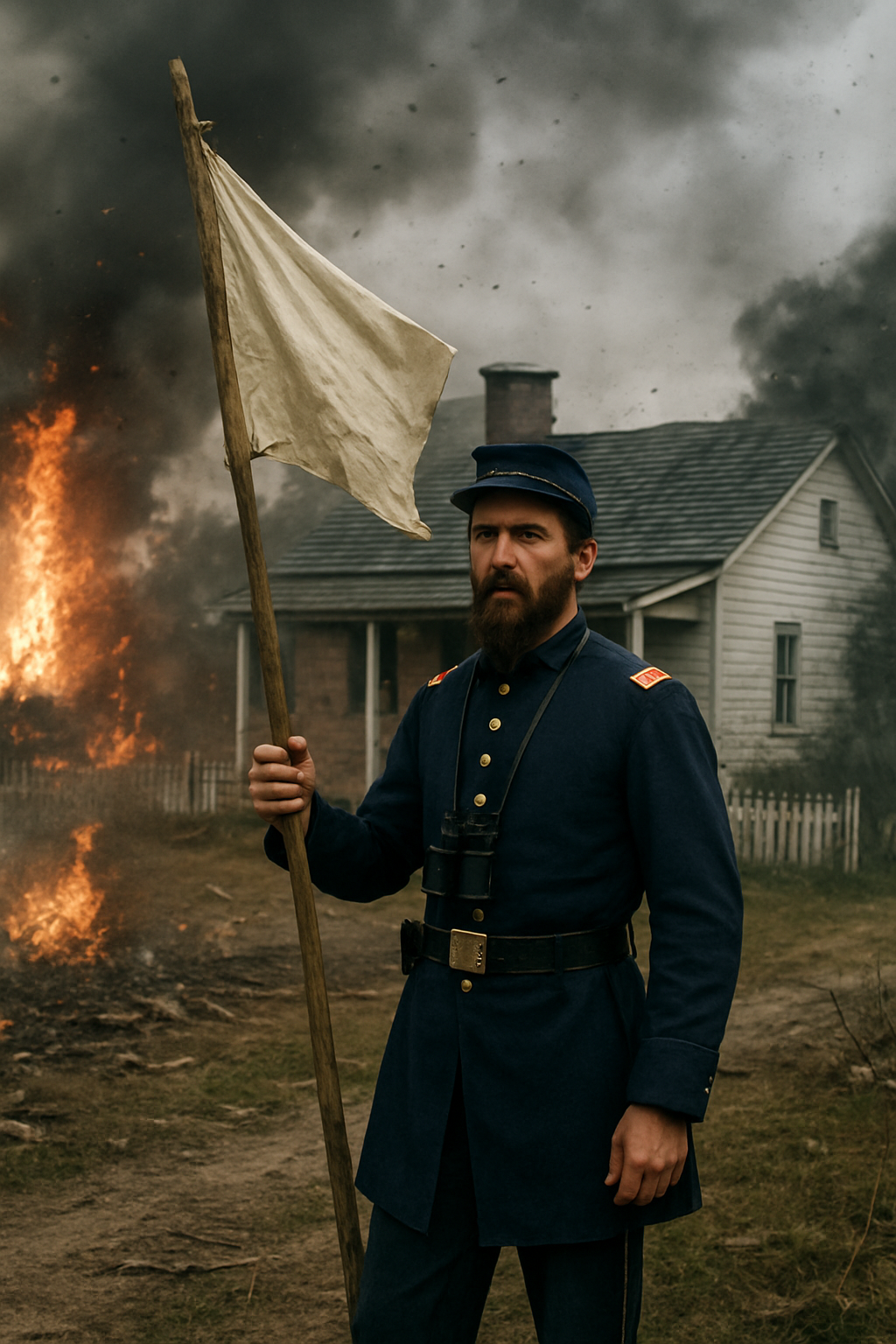
Courtesy Jerry Hahn.

We gladly granted Hahn’s permission to use the portrait in his interpretive work on the battlefield. Using ChatGPT’s image-generation tools, he created a compelling artistic interpretation of Castle, standing with his improvised bedsheet signal flag, with Meade’s headquarters behind him. This imaginative visualization reflects what great battlefield guides do—take historical evidence, understand it in context, and bring it to life in ways that help visitors see the past more vividly. Hahn’s image reinforces Castle’s extraordinary moment of bravery and ingenuity.

Licensed battlefield guides like Hahn help visitors understand the human stories that shaped the battle. Their work depends on primary sources—photographs, letters, memoirs—and on the historians, editors, and collectors who preserve and publish them.

When battlefield guides and other students of Civil War history reach out to request an image—as Hahn did—we see it as a sign that the magazine remains a relevant resource for public history. We’re honored to support Hahn and all who interpret America’s defining conflict.
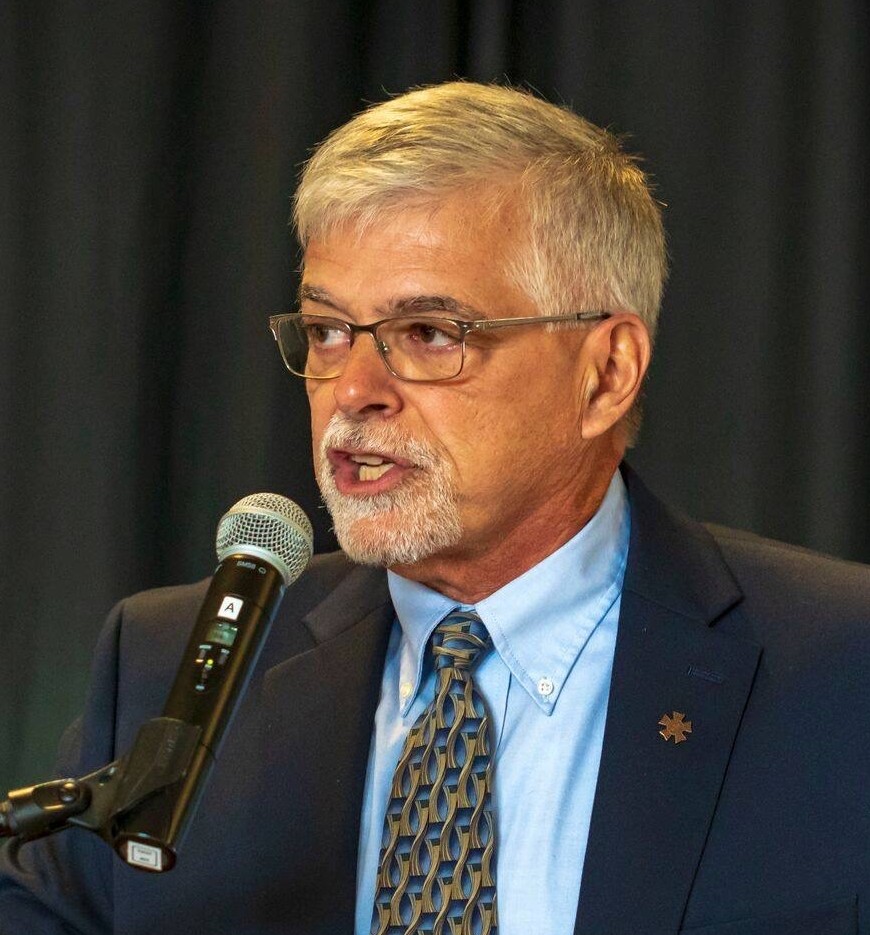
Free Talk About the 19th Indiana and the Iron Brigade, April 9, 2025

Live in Chicago and on Zoom | April 9, 2025 | 7:30 p.m. CST
📍 Zoom ID: 845 3227 1496 | No Passcode Required
Brought to you by the Civil War Round Table of Chicago
https://www.chicagocwrt.org/index.html

The Iron Brigade—famed for their black Hardee hats and fierce reputation—is often remembered as Wisconsin’s pride. But the 19th Indiana Infantry was there from the beginning. On April 9, Phil Spaugy, a senior editor who writes “Of Arms and Men” for Military Images, will share the compelling story of this hard-fighting Hoosier regiment.

At Gettysburg, the 19th Indiana fought valiantly along Willoughby Run, bearing the brunt of the July 1 assault with grim tenacity. They suffered a 62% casualty rate in a single day—an astonishing toll. Five color bearers fell carrying the flag. Their colonel, Samuel J. Williams, a farmer from Indiana with Virginia roots, was wounded at Gettysburg and later killed in action at the Battle of the Wilderness.

Phil brings decades of experience to this story. A longtime member of the North South Skirmish Association, he has live-fired nearly every type of Civil War firearm. His expertise in infantry arms, uniforms, and accouterments—especially those connected to the Iron Brigade of the West—makes him one of the most sought-after voices in the field.

In addition to his work for Military Images, Phil is the Arms Columnist for The Civil War Monitor and serves as a historical consultant to the Adams County Historical Society and Civil War News. He and his wife, Amy, live in Vandalia, Ohio.

Whether you attend in person or tune in via Zoom, this is a talk you won’t want to miss.

📆 Mark your calendar: Wednesday, April 9
💻 Zoom Meeting ID: 845 3227 1496
🕢 7:30 p.m. CST | No passcode required

New Column: “Of Arms and Men” by Phil Spaugy

I am thrilled to welcome Phil Spaugy as a Senior Editor and columnist. His inaugural column, “Of Arms and Men: At the intersection of photography and ordnance technology,” debuts in this issue. I’ve known Phil for some years now, and he’s the trusted source I’ve turned to time and again to identify long and side arms in photographs. His knowledge, enthusiasm, and collaborative spirit are infectious. A longtime member of the North-South Skirmish Association (N-SSA), Phil has served in numerous offices, including National Commander and the Board of Directors. He has also been active with the N-SSA’s Union Guards, 19th Indiana Infantry. Phil studies arms and accouterments of federal infantry soldiers with an emphasis on his home state of Ohio, firearms of the U.S Arsenal at Harpers Ferry, and the Iron Brigade.

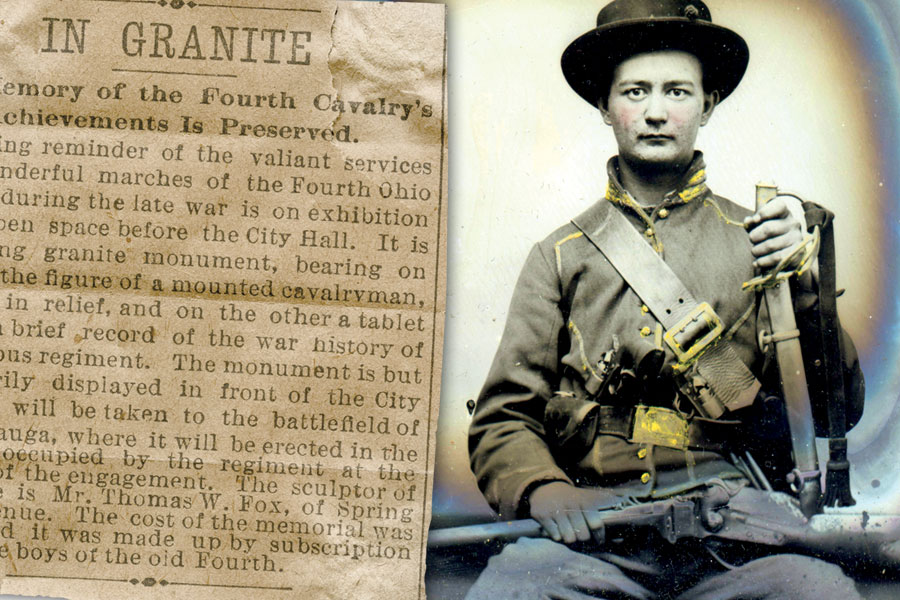
Phil’s inaugural column, “The Invincible Buckeyes of the 4th Ohio Volunteer Cavalry,” explores a sixth-plate tintype in the Paul Reeder Collection of an unidentified trooper. Phil details the weapons in the portrait and, thanks to a newspaper clipping tucked into the case, connects the image to Huntsville, Ala., where this image may have been taken.

Please join me in welcoming Phil and “Of Arms and Men” to MI.