A complete table of contents for the Autumn 2026 issue of Military Images magazine, and information about how to purchase single issues and subscriptions.
Vol. XLIV, No. 4
(80 pages)
Print edition: Visit our store to check availability
Digital edition: Visit JSTOR.org to purchase
Subscribe or renew your subscription
Explore the MI Archives:
Browse | Advanced search | Tutorial
Inside
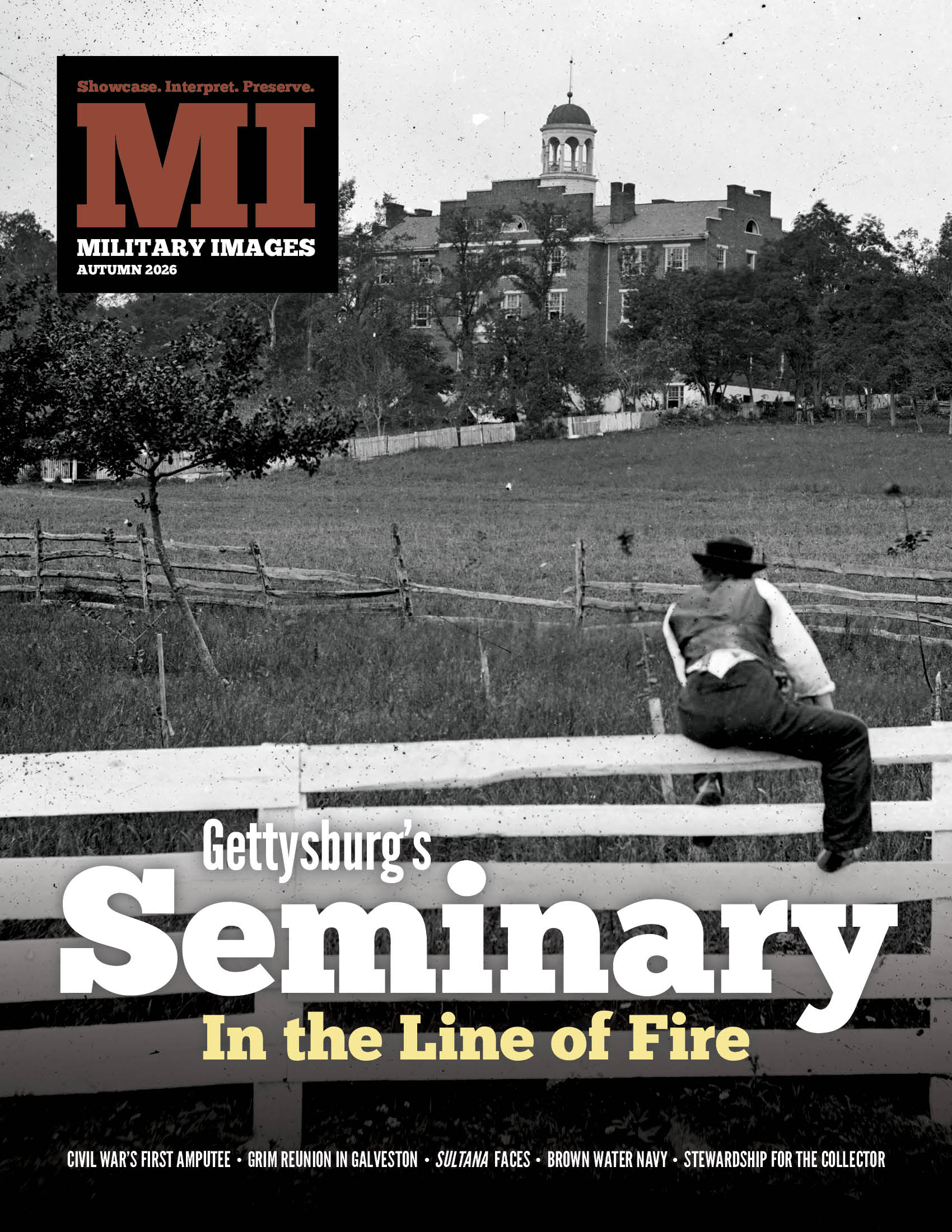
Cover
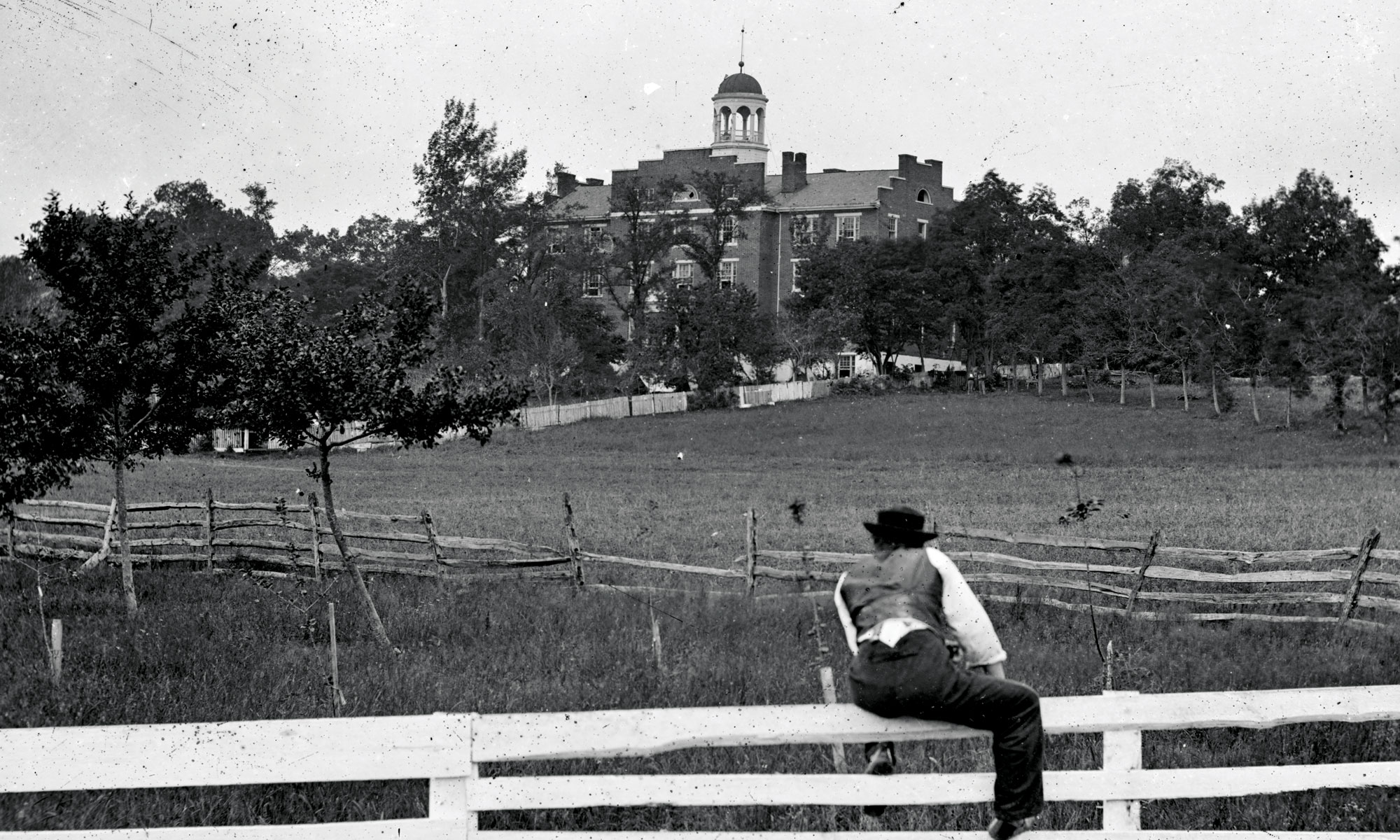
Gettysburg’s Lutheran Theological Seminary photographed by Mathew B. Brady’s team in July 1863.
Table of Contents (p. 1)
Editor’s Desk (p. 2)
A visit to Gettysburg offers hope for the future as a new generation of collectors embraces Civil War photographs and the stories they preserve.
Mail Call (pp. 3-4)
Feedback includes praise from new and veteran subscribers, a request for information about a Sanitary Fair statuette, the identification of a Tennessee officer, and more.
Military Anthropologist (p. 4)
William F. Fox’s Civil War data identifies nine Union infantry regiments that lost more than 100 men killed or mortally wounded in a single battle.
Passing in Review (p. 6)
Reviews of new books on Civil War nurse Cornelia Hancock by Carolyn Ivanoff and Don Troiani and Ron Field’s detailed study of Union and Confederate uniforms.
Photo Sleuth by Stephen Berry and Kurt Luther (pp. 8-9)
A composite photograph of South Carolina legislators reveals the power, politics, racism, and violence surrounding Prince Rivers during Reconstruction.
Antebellum Warriors (p. 10)
Marine officer William Stokes Boyd helped lay the first transatlantic telegraph cable aboard the USS Niagara in 1858, linking Britain and America.
Most Hallowed Ground (p. 12)
Augustus G. Kellogg fought aboard the USS Powhatan at Fort Fisher before embarking on a distinguished 26-year career in the U.S. Navy.
The Honored Few by Evan Phifer (pp. 14-16)
Wounded twice at Gettysburg, Henry S. Huidekoper refused to leave his regiment and later received the Medal of Honor for his courage under fire.
The Citizenry by Richard Look (p. 18)
Two women posed in a Union soldier’s uniform in 1863, connecting their portraits to a Massachusetts family touched deeply by the Civil War.
Of Arms and Men by Phil Spaugy (pp. 20-22)
Union soldiers rallied behind a rail barricade on Seminary Ridge, buying precious time during the first day of the Battle of Gettysburg.
Gettysburg’s Lutheran Seminary in the Line of Fire by Ronald S. Coddington (pp. 24-32)
A Brady photograph reveals Gettysburg’s Lutheran Seminary as a battlefield observation post and hospital during three days of fighting in July 1863.
Within These Walls: Gettysburg’s Seminary Hospital (pp. 34-47)
Portraits and personal accounts reveal the Union soldiers, surgeons, and nurses who experienced Gettysburg’s Seminary hospital during and after the battle.
The Civil War’s First Amputee by Jan K. Herman (pp. 51-52)
Moses S. Herrick suffered the surgical removal of his foot in an accidental shooting inside the U.S. Capitol, becoming the Civil War’s first documented amputee.
Faces of the Sultana by Gene Eric Salecker (pp. 53-57)
Portraits and stories reveal the soldiers, survivors, and victims of the Sultana disaster, which claimed an estimated 1,164 lives in April 1865.
Grim Reunion at Galveston: A Father and Son on Opposite Sides of the War by Curt Robbins (pp. 61-63)
A Confederate father finds his mortally wounded Union son after the Battle of Galveston, a tragic reunion of family divided by Civil War.
Practical Stewardship for the Modern Collector by Kevin Canberg(pp. 64-65)
How collectors can inventory, plan, and protect their collections while preparing artifacts for the next generation of caretakers.
Different Journeys, Shared Passion by Larry West, Ross J. Kelbaugh, Dr. Robert Drapkin, and Greg French (pp. 66-69)
Four collectors share the discoveries, stories, and unexpected journeys behind their passion for 19th-century photography.
Material Culture by Ron Field (pp. 70-71)
Explore the distinctive Havelock hats worn by Illinois, Iowa, and Wisconsin troops and the manufacturers who supplied them during the Civil War.
Women of War by Melissa A. Wynn (pp. 72-73)
Martha Coston perfected a pyrotechnic signal system that helped Union Navy ships communicate, enforce the blockade, and coordinate operations.
Behind the Backdrop by Buck Zaidel (pp. 74-75)
A portrait reveals how backdrops, military gear, personal objects, and even a pair of worn boots helped photographers tell a soldier’s story.
Vignette by Ronald S. Coddington (p. 76)
Seth Ledyard Phelps helped build the Union’s Brown Water Navy and fought at Forts Henry and Donelson, Shiloh, and in the Vicksburg Campaign.
Stragglers (p. 78)
Three images reveal a fallen Mississippi soldier, an unidentified USCT infantryman, and soldiers punished in barrel shirts.
The Last Shot (p. 80)
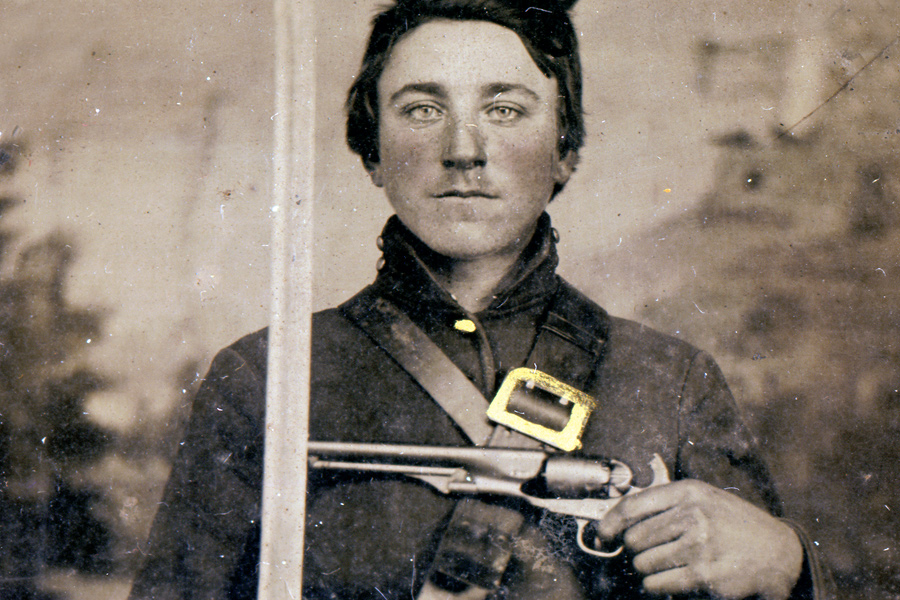
A Union infantryman poses as if advancing into battle, armed with a converted musket and Colt revolver in this dramatic Civil War tintype.