Military Images magazine is especially proud to help connect historic Civil War photographs and the private collectors who preserve them with researchers and educators around the country. Recently, Charles Handras, Park Supervisor for Hart Island in the Bronx, reached out to us as his office deepens its historical research into the island’s past.
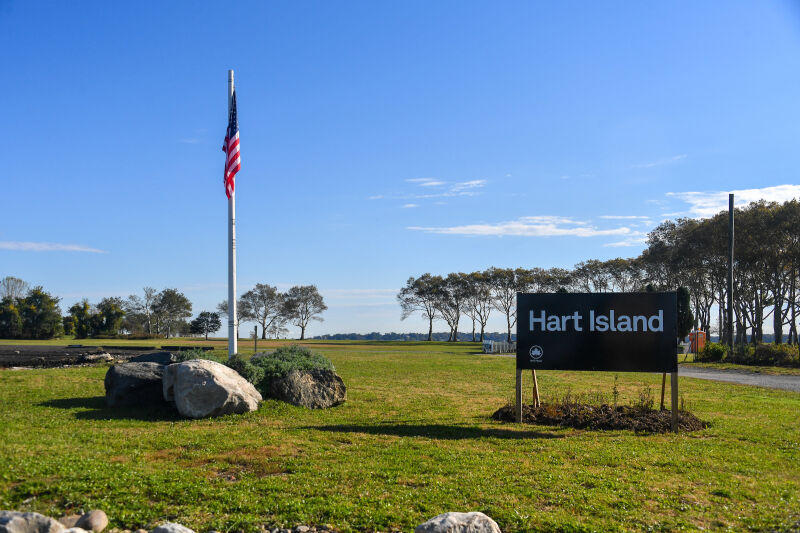
Hart Island.
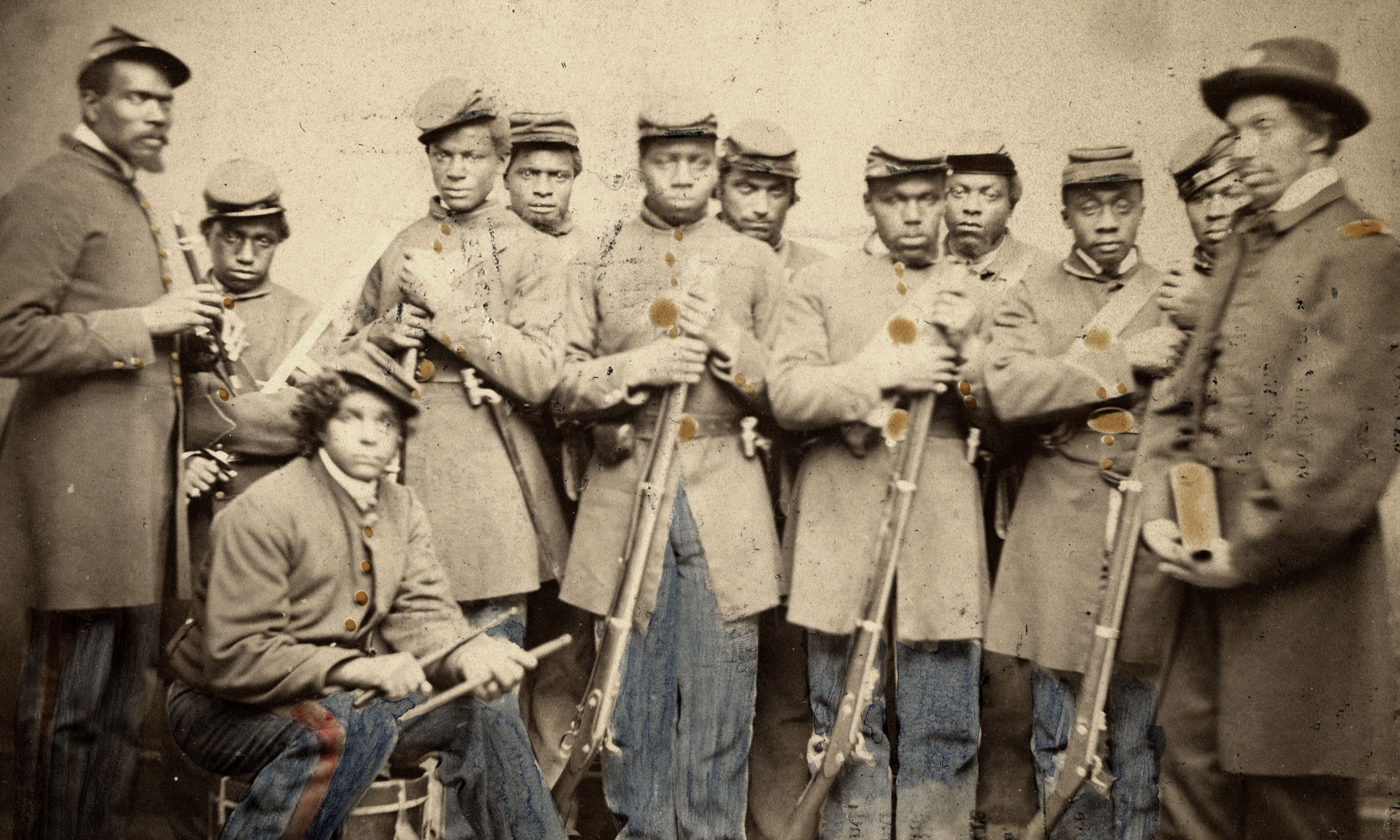
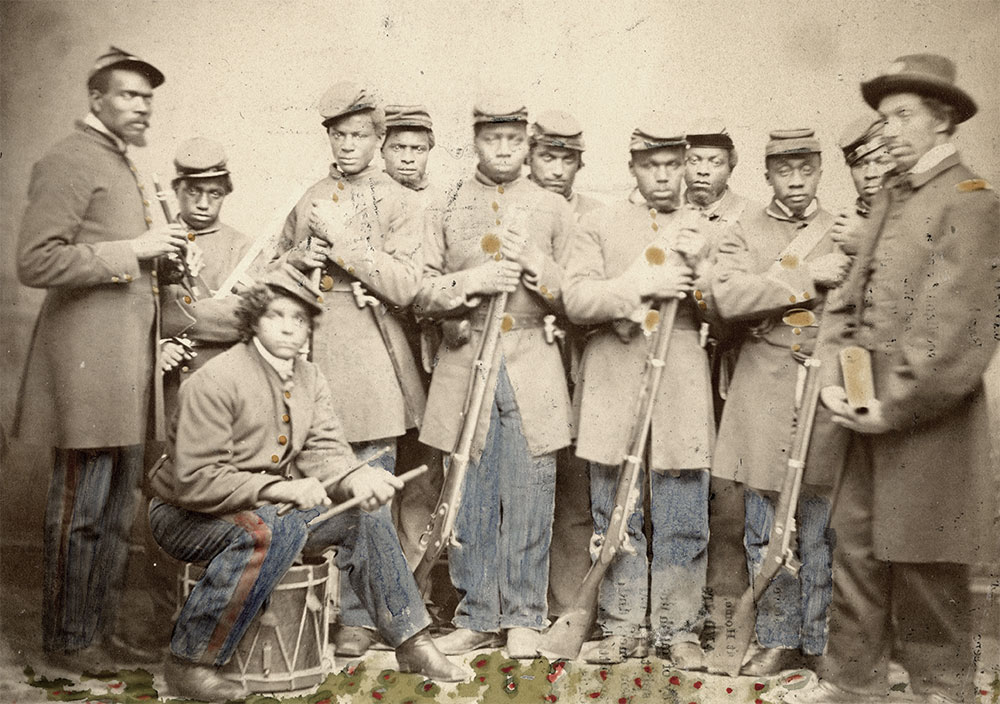
Their work includes exploring Hart Island’s connection to the U.S. Colored Troops who trained there before serving in the Union Army. Among the images that captured their attention was a historically significant 1864–65 photograph of African American soldiers at L’Ouverture Hospital in Alexandria, Va.,—an image featured in Military Images’ story “Freedmen Warriors, Civil Rights Fighters” by Charles Joyce, a onetime owner of the image.
Group at L’Overture Hospital, Alexandria, Va., about December 1864-April 1865, from left to right: Tobias Trout, 31st USCT, Wounded, Crater; William DeGraff, 22nd USCT, Sick; John H. Johnson, 27th USCT, Sick, diarrhea and rheumatism; Jerry Lisle, 28th USCT, Wounded, Crater; Leander Brown, 30th USCT, Wounded, Crater; Samuel Bond, 19th USCT, Sick; Robert Deyo, 26th USCT, Sick, pleurisy; Adolphus Harp, 19th USCT, Wounded, Crater; Stephen Vance, 30th USCT, Wounded, Crater; George H. Smith, 31st USCT, Wounded, Crater; Adam Bentley, 19th USCT, Wounded, Crater; Chauncey Leonard, Chaplain, USCT, Assigned to hospital. Ross J. Kelbaugh Collection.
The photograph now resides in the National Portrait Gallery, thanks to Ross J. Kelbaugh, who generously donated it and graciously granted permission for Supervisor Handras and his colleagues to publish it in their educational work.
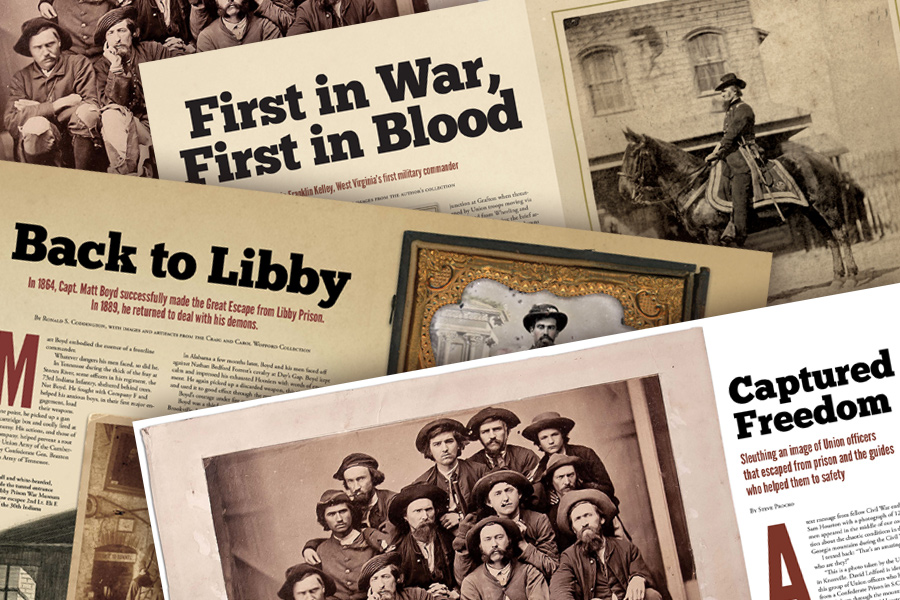
Delighted to announce that three stories from Military Images magazine have been named finalists for the 2025 Army Historical Foundation Distinguished Writing Awards:
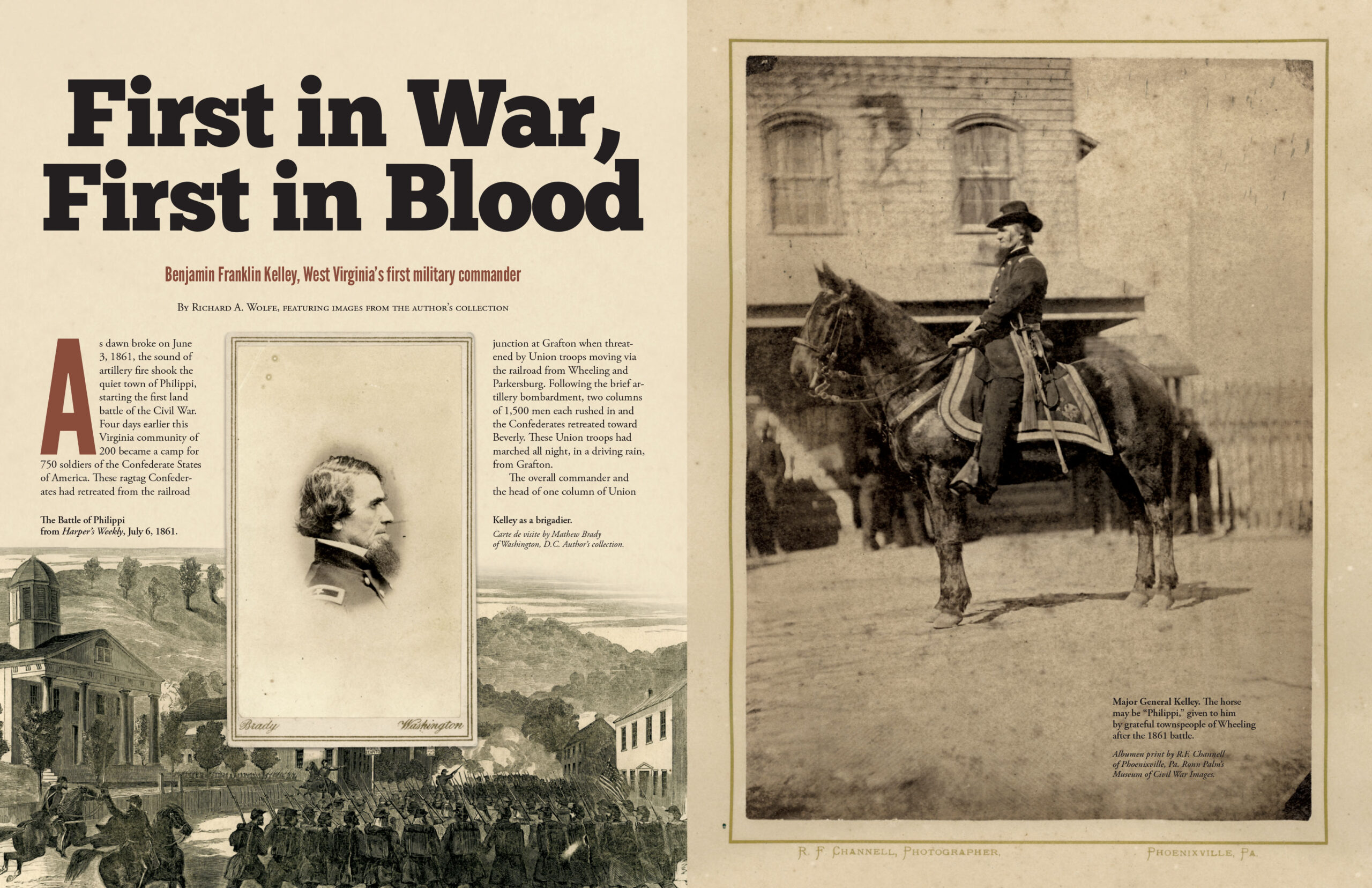
“First in War, First in Blood” by Richard A. Wolfe: Union Brig. Gen. Benjamin F. Kelley is remembered for his 1861 victory and his 1865 capture by partisan rangers. Here’s what happened in between.
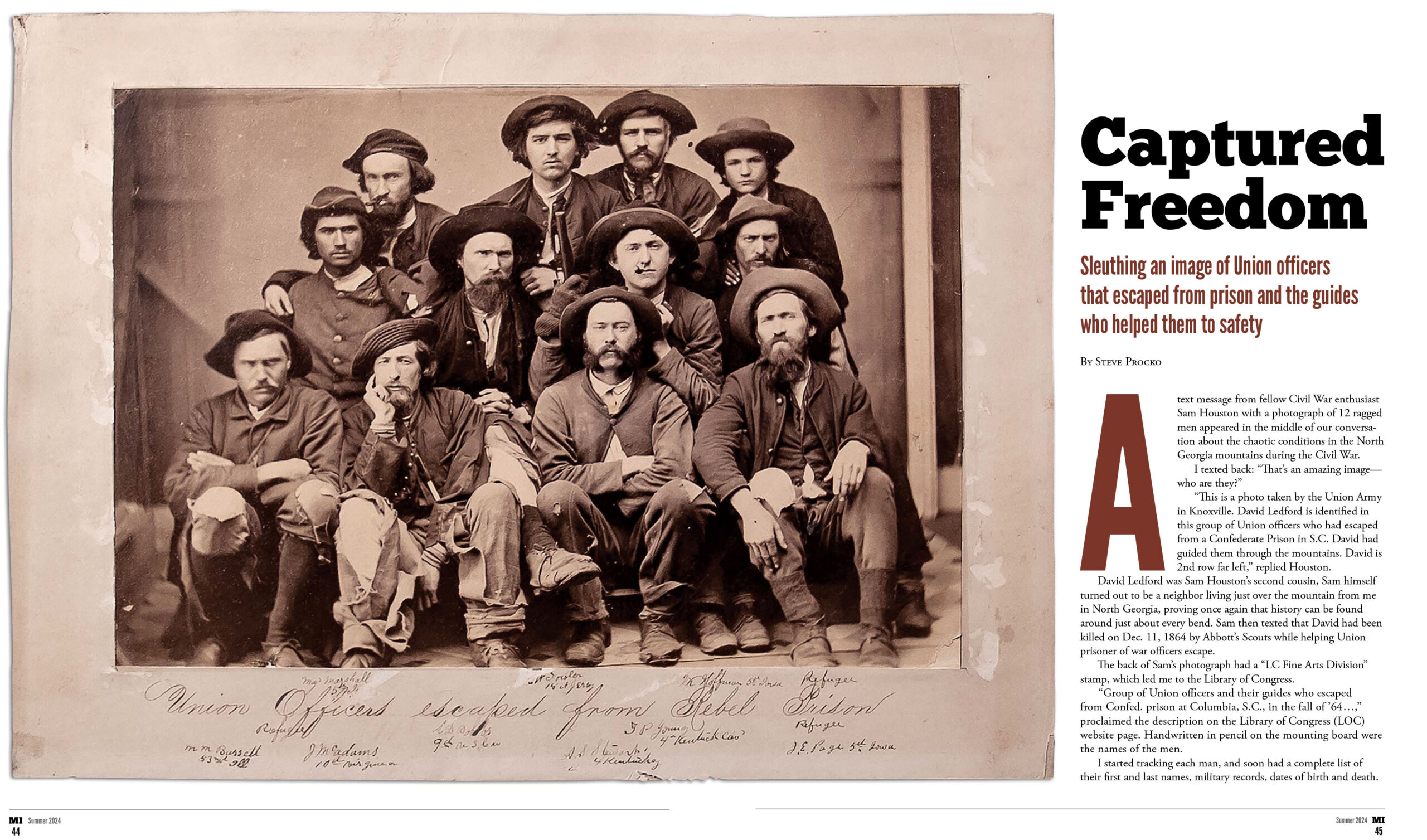
“Captured Freedom” by Steve Procko: An image of escaped Union prisoners and two guides who assisted them along the way has been reproduced and misidentified. Here’s the origin story of the photo.
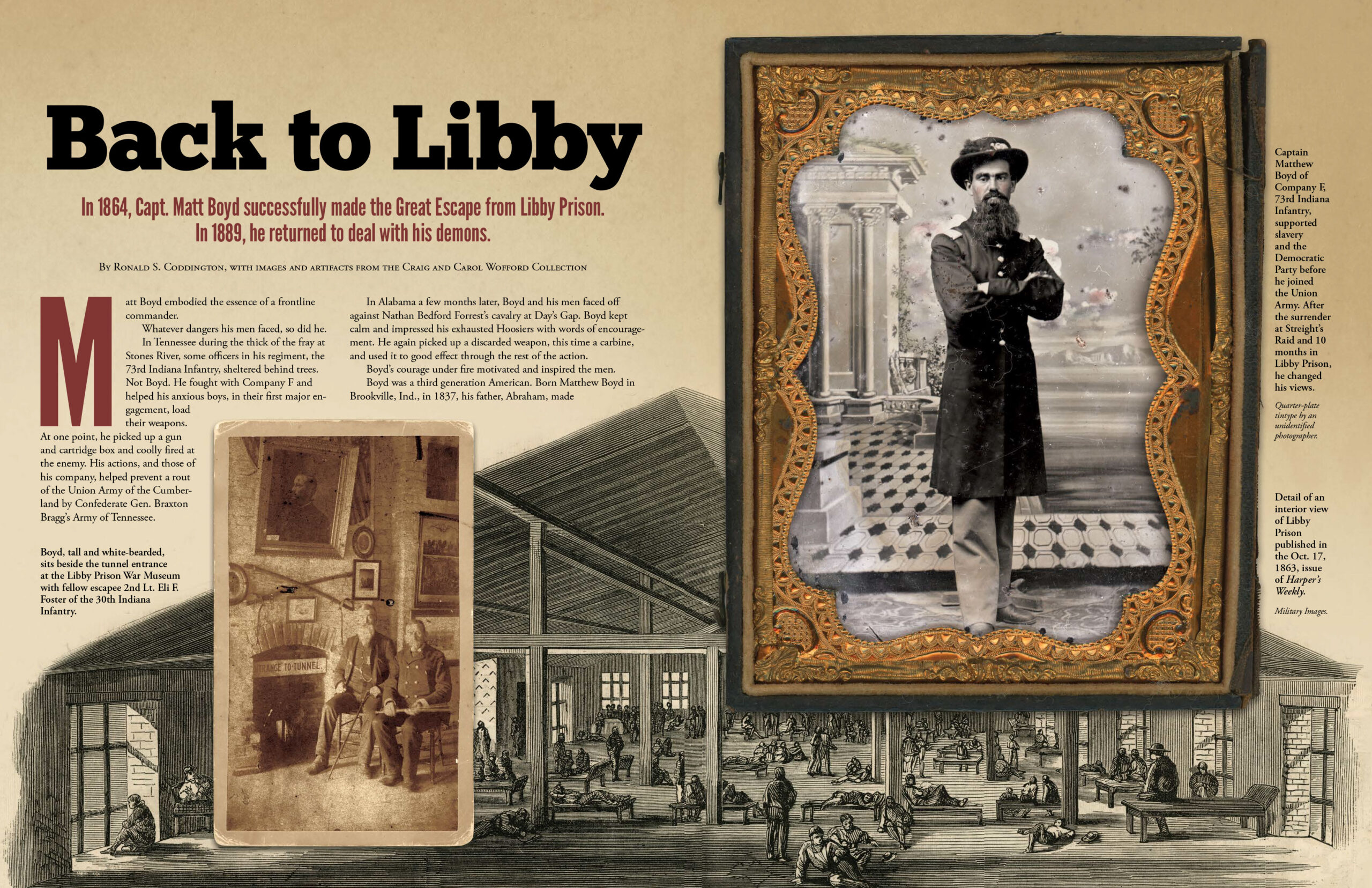
“Back to Libby” by Ronald S. Coddington: Matt Boyd, a captain in the 73rd Indiana Infantry, surrendered at the abrupt end of Streight’s Raid, returned to Libby Prison as a guard when the building was moved to Chicago and opened as a museum.
Presented annually by the Army Historical Foundation, the Distinguished Writing Awards honor excellence in historical writing that fosters greater understanding and appreciation of the U.S. Army’s storied past. Each year, the Foundation recognizes outstanding articles and books that exemplify rigorous research, engaging storytelling, and historical significance.
I am especially proud that Military Images is represented among this year’s finalists. Since 1979, our mission has been to showcase, interpret, and preserve Civil War portrait photography, sharing original photographs and personal stories of the soldiers and sailors who served and citizens who contributed. The nominated stories reflect our mission—blending rare and compelling images with historical context.
The winners will be announced later this year. Heartfelt congratulations to our contributors, and much appreciation to the Army Historical Foundation for this meaningful recognition.
Since its founding in 1979, Military Images magazine has played a vital role in connecting authors, historians, and researchers with compelling photographs to illustrate their work. As the only publication dedicated solely to the study and appreciation of Civil War portrait photography, Military Images has cultivated a vast network of collectors, archivists, and history enthusiasts who contribute to preserving these invaluable visual records.
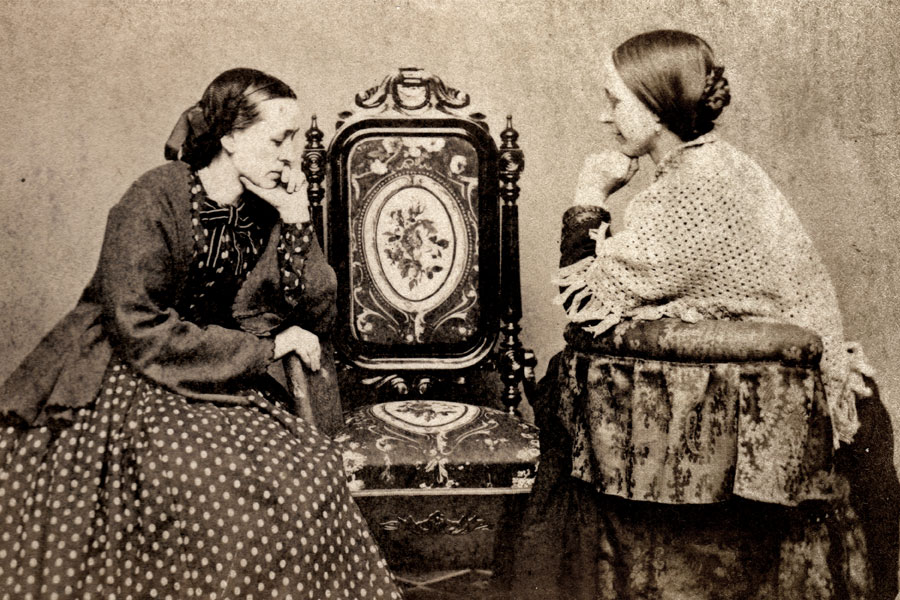
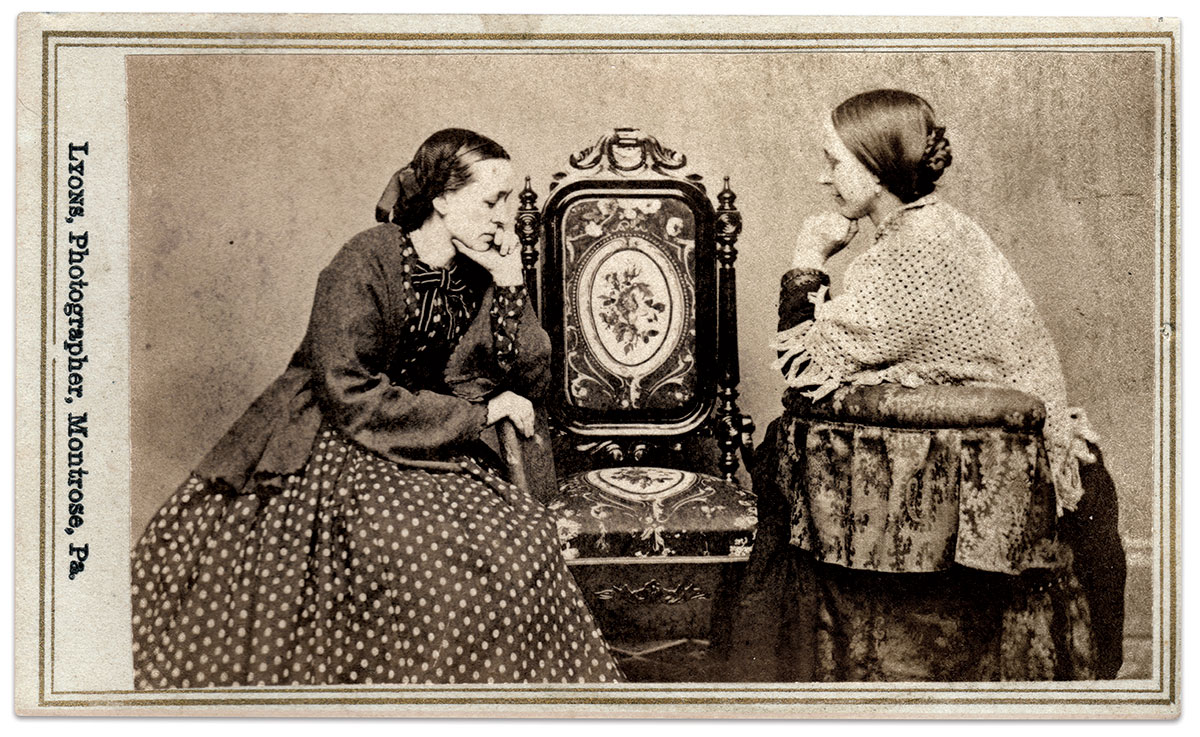
The latest example of our ongoing mission involves Kingston 300, Inc., a non-profit organization preparing to publish Tales of Jones River Village: Kingston’s 300 Years, a book celebrating the tricentennial of Kingston, Massachusetts, in 2026. As part of their effort to tell the town’s rich history, Ken Brack. One of the volunteers working on the project, reached out to request permission to publish the poignant image here of two women glancing at an empty chair, which appeared in the Autumn 2023 issue of the magazine to illustrate “Symbol of Remembrance: The Vacant Chair” by Elizabeth A. Topping. The image is in Elizabeth’s collection.
“The Vacant Chair,” a poem written by Henry Stevenson Washburn following the Battle of Ball’s Bluff, Va., in October 1861, edited national attention after George F. Root pirated the song in 1862 and set the words to music. Washburn lived in Kingston at one time. According to Brack, Kingston 300, Inc. plans to publish a short story about Washburn in the forthcoming book.
Brack discovered Elizabeth’s story and photograph in our digital edition and reached out for permission, which Elizabeth granted.
Making the connection between Elizabeth and Brack is another testament to how Military Images bridges the past and present through curated photographic content.
By facilitating access to historically significant imagery, Military Images strengthens the narratives of authors and researchers, ensuring that stories of the past are not only told but visually brought to life. This latest collaboration with Kingston 300, Inc. underscores the magazine’s long-standing commitment to historical preservation and education. As Military Images approaches its 50th anniversary, it remains a trusted resource for those seeking to honor and understand America’s military history through the power of photography.