The Autumn 2026 Issue

A complete table of contents for the Autumn 2026 issue of Military Images magazine, and information about how to purchase single issues and subscriptions.
Vol. XLIV, No. 4
(80 pages)

Print edition: Visit our store to check availability
Digital edition: Visit JSTOR.org to purchase
Subscribe or renew your subscription

Explore the MI Archives:
Browse | Advanced search | Tutorial

Inside

Cover
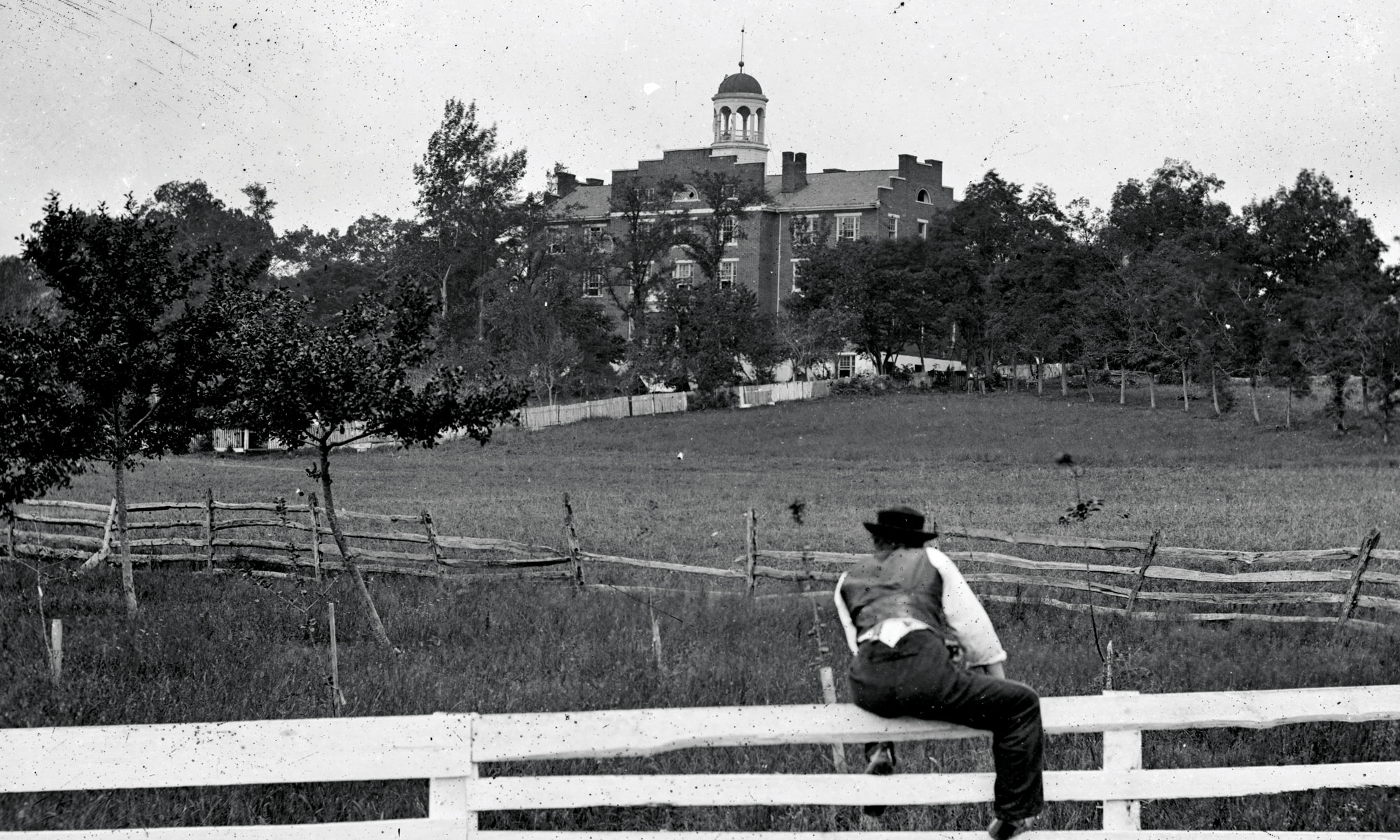
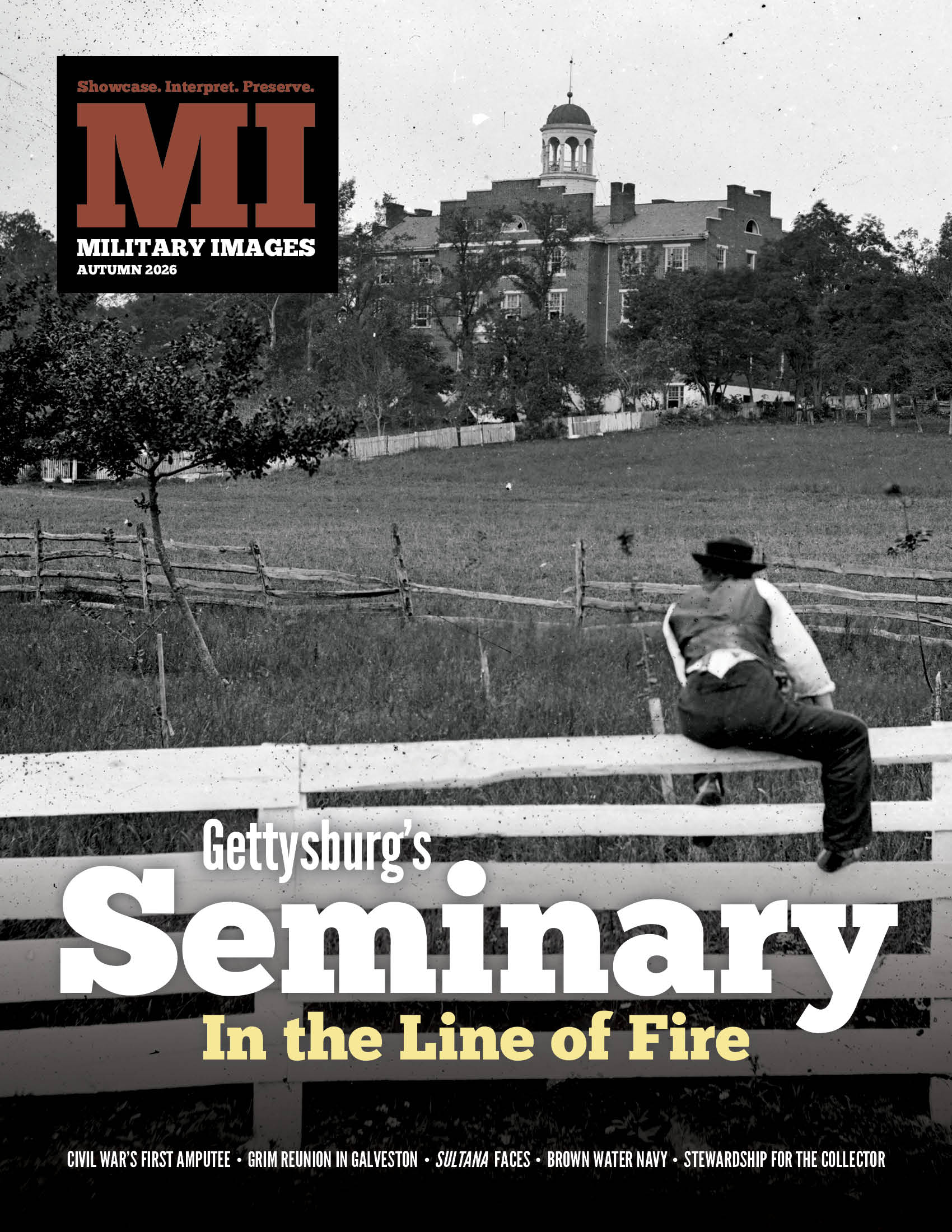
Gettysburg’s Lutheran Theological Seminary photographed by Mathew B. Brady’s team in July 1863.

Table of Contents (p. 1)

Editor’s Desk (p. 2)
A visit to Gettysburg offers hope for the future as a new generation of collectors embraces Civil War photographs and the stories they preserve.

Mail Call (pp. 3-4)
Feedback includes praise from new and veteran subscribers, a request for information about a Sanitary Fair statuette, the identification of a Tennessee officer, and more.

Military Anthropologist (p. 4)
William F. Fox’s Civil War data identifies nine Union infantry regiments that lost more than 100 men killed or mortally wounded in a single battle.

Passing in Review (p. 6)
Reviews of new books on Civil War nurse Cornelia Hancock by Carolyn Ivanoff and Don Troiani and Ron Field’s detailed study of Union and Confederate uniforms.

Photo Sleuth by Stephen Berry and Kurt Luther (pp. 8-9)
A composite photograph of South Carolina legislators reveals the power, politics, racism, and violence surrounding Prince Rivers during Reconstruction.

Antebellum Warriors (p. 10)
Marine officer William Stokes Boyd helped lay the first transatlantic telegraph cable aboard the USS Niagara in 1858, linking Britain and America.

Most Hallowed Ground (p. 12)
Augustus G. Kellogg fought aboard the USS Powhatan at Fort Fisher before embarking on a distinguished 26-year career in the U.S. Navy.

The Honored Few by Evan Phifer (pp. 14-16)
Wounded twice at Gettysburg, Henry S. Huidekoper refused to leave his regiment and later received the Medal of Honor for his courage under fire.

The Citizenry by Richard Look (p. 18)
Two women posed in a Union soldier’s uniform in 1863, connecting their portraits to a Massachusetts family touched deeply by the Civil War.

Of Arms and Men by Phil Spaugy (pp. 20-22)
Union soldiers rallied behind a rail barricade on Seminary Ridge, buying precious time during the first day of the Battle of Gettysburg.

Gettysburg’s Lutheran Seminary in the Line of Fire by Ronald S. Coddington (pp. 24-32)
A Brady photograph reveals Gettysburg’s Lutheran Seminary as a battlefield observation post and hospital during three days of fighting in July 1863.

Within These Walls: Gettysburg’s Seminary Hospital (pp. 34-47)
Portraits and personal accounts reveal the Union soldiers, surgeons, and nurses who experienced Gettysburg’s Seminary hospital during and after the battle.

The Civil War’s First Amputee by Jan K. Herman (pp. 51-52) 
Moses S. Herrick suffered the surgical removal of his foot in an accidental shooting inside the U.S. Capitol, becoming the Civil War’s first documented amputee.

Faces of the Sultana by Gene Eric Salecker (pp. 53-57)
Portraits and stories reveal the soldiers, survivors, and victims of the Sultana disaster, which claimed an estimated 1,164 lives in April 1865.

Grim Reunion at Galveston: A Father and Son on Opposite Sides of the War by Curt Robbins (pp. 61-63)
A Confederate father finds his mortally wounded Union son after the Battle of Galveston, a tragic reunion of family divided by Civil War.

Practical Stewardship for the Modern Collector by Kevin Canberg(pp. 64-65)
How collectors can inventory, plan, and protect their collections while preparing artifacts for the next generation of caretakers.

Different Journeys, Shared Passion by Larry West, Ross J. Kelbaugh, Dr. Robert Drapkin, and Greg French (pp. 66-69)
Four collectors share the discoveries, stories, and unexpected journeys behind their passion for 19th-century photography.

Material Culture by Ron Field (pp. 70-71)
Explore the distinctive Havelock hats worn by Illinois, Iowa, and Wisconsin troops and the manufacturers who supplied them during the Civil War.

Women of War by Melissa A. Wynn (pp. 72-73)
Martha Coston perfected a pyrotechnic signal system that helped Union Navy ships communicate, enforce the blockade, and coordinate operations.

Behind the Backdrop by Buck Zaidel (pp. 74-75)
A portrait reveals how backdrops, military gear, personal objects, and even a pair of worn boots helped photographers tell a soldier’s story.

Vignette by Ronald S. Coddington (p. 76)
Seth Ledyard Phelps helped build the Union’s Brown Water Navy and fought at Forts Henry and Donelson, Shiloh, and in the Vicksburg Campaign.

Stragglers (p. 78)
Three images reveal a fallen Mississippi soldier, an unidentified USCT infantryman, and soldiers punished in barrel shirts.

The Last Shot (p. 80)
A Union infantryman poses as if advancing into battle, armed with a converted musket and Colt revolver in this dramatic Civil War tintype.
The Winter 2026 Issue

A complete table of contents for the Winter 2026 issue of Military Images magazine, and information about how to purchase single issues and subscriptions.

Vol. XLIV, No. 1
(80 pages)

Print edition: Visit our store to check availability
Digital edition: Visit JSTOR.org to purchase
Subscribe or renew your subscription

Explore the MI Archives:
Browse | Advanced search | Tutorial

Inside

Cover
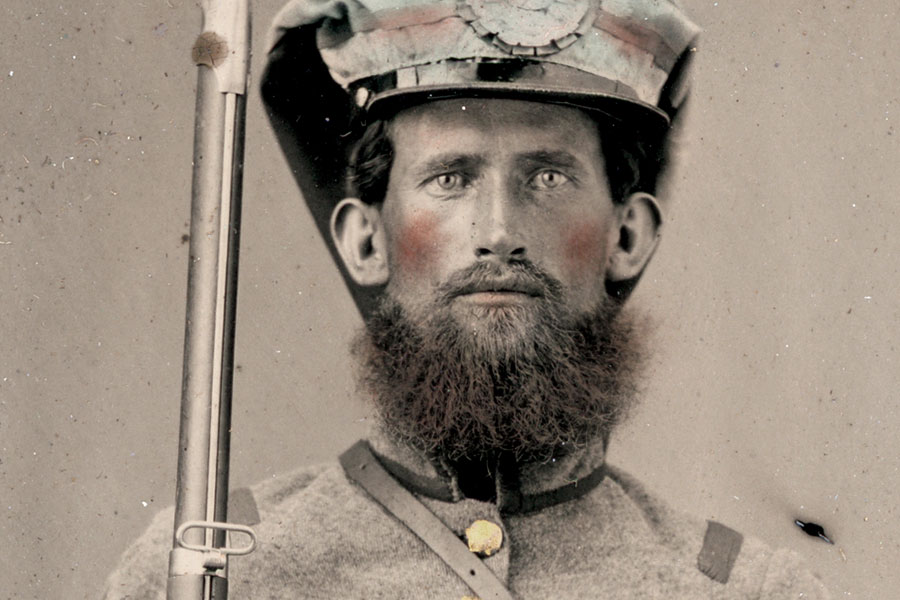
A tintype of a Confederate soldier sporting a “Sicilian”-style stocking cap with a large secession cockade attached to the front, D-Guard Bowie knife and Model 1842 musket.

Table of Contents (p. 1)

Editor’s Desk (p. 2)
A tribute to Rick Carlile’s impact on Military Images and collectors, honoring his mentorship, scholarship, and shared passion for Civil War photography.

Mail Call (pp. 3-4)
Feedback includes notes on Texas photographer Louis de Planque, restoring the name of a misidentified soldier, and more.

Military Anthropologist (p. 4)
Tracking the loyalties of 1,125 surviving West Point graduates, 1802-1864, indicates that one in three wore Confederate gray.

Passing in Review (p. 6)
Two new Civil War books explore a truce in Louisiana and New York City in images, offering fresh insights from James Hogg, Jonathan White, and Timothy Orr.

Photo Sleuth by Kurt Luther (pp. 8-10)
Research into a Civil War portrait reveals Maj. Alphonzo Nicholds and his wife, Julia, showing how photo sleuthing can restore names and stories to forgotten images.

Antebellum Warriors (p. 12)
A militia officer’s portrait reflects America’s 19th-century system of independent companies, state oversight, and reforms that led to today’s National Guard.

Most Hallowed Ground (p. 14)
At Cold Harbor, George Armes, and aide to Maj. Gen. Winfield Scott Hancock, rode through heavy fire to deliver an order to Maj. Gen. Francis Barlow.

The Honored Few by Evan Phifer (pp. 16-17)
Henry Goodwin of the 27th Maine served during the Gettysburg crisis, later receiving a Medal of Honor that was rescinded in the 1917 review of award criteria.

The Citizenry by Elizabeth A. Topping (p. 18)
Photographs of young women at the 1864 Metropolitan Fair show attendants of the Normandy Confectionery booth, not nurses, illustrating Civil War homefront roles.

Of Arms and Men by Phil Spaugy (pp. 20-22)
An 1861 view of the 9th Mississippi Infantry at Camp Magnolia shows early Confederate clothing, arms, and leadership as the regiment entered wartime service.

Southern Exposures: Confederate images from the Paul Reeder Collection by Ron Field (pp. 24-39)
A study of Confederate soldiers through their uniforms, weapons, and wartime portraits, revealing Southern military dress, equipment, and material culture.

A Wisconsin Sharpshooter’s Changing Face: Portraits and letters trace Pvt. Henry Lye’s wartime life—and loss at Gettysburg by Jeff McArdle (pp. 40-47)
Sharpshooter Henry Lye’s letters chart marches to Gettysburg, Peninsula and Chancellorsville battles, and his July 2, 1863 death, and Myra’s long grief at home.

Twice Dismissed, Never Defeated: Robley Evans and the making of the Navy legend “Fighting Bob” by Michael F. Fitzpatrick (pp. 48-56)
The story of Robley Dunglison Evans traces his perilous youth, Naval Academy appointment, Civil War service, and ascent to rear admiral after remarkable persistence.

Q&A with Cara Arnold: Connecting Through Images by Deena C. Bouknight(pp. 60-63)
An interview with Cara Arnold of The Horse Soldier, exploring her path into military history, image appraisal, collecting, and the world of Civil War material culture.

Material Culture by Dr. Charles H. Cureton (pp. 64-66)
A study of Marine Corps boy musicians, their distinctive uniforms, and the early-war Horstmann sword pattern documented through a studio image from Brooklyn.

Women of War by Melissa A. Wynn (pp. 68-69)
Kate Chase, Washington’s ambitious Civil War socialite, her political work for father Salmon P. Chase, marriage to marriage to Gov. William Sprague, and postwar decline.

Behind the Backdrop by Buck Zaidel (p. 70)
A Civil War soldier stands before a primitive painted camp backdrop by photographer Julia Emma Jones.

Vignette by Scott Valentine (p. 72)
The 8th Vermont Infantry met its first combat near Bayou des Allemands, and Alvin B. Franklin rose through repeated wounds to lead his regiment in battle.

Stragglers (pp. 74-76)
Images include Union and Confederate musicians, a Mississippi soldier, a Richmond monument, and a possible early war field hospital scene after Blackburn’s Ford.

The Last Shot (p. 80)
The story of Bob Dillard, an enslaved man identified by name and face, whose life was bound to Captain John Dillard through the Mexican War and the Civil War.

The Autumn 2025 Issue

A complete table of contents for the Autumn 2025 issue of Military Images magazine, and information about how to purchase single issues and subscriptions.

Vol. XLIII, No. 4
(80 pages)

Print edition: Visit our store to check availability
Digital edition: Visit JSTOR.org to purchase
Subscribe or renew your subscription

Explore the MI Archives:
Browse | Advanced search | Tutorial

Inside

Cover
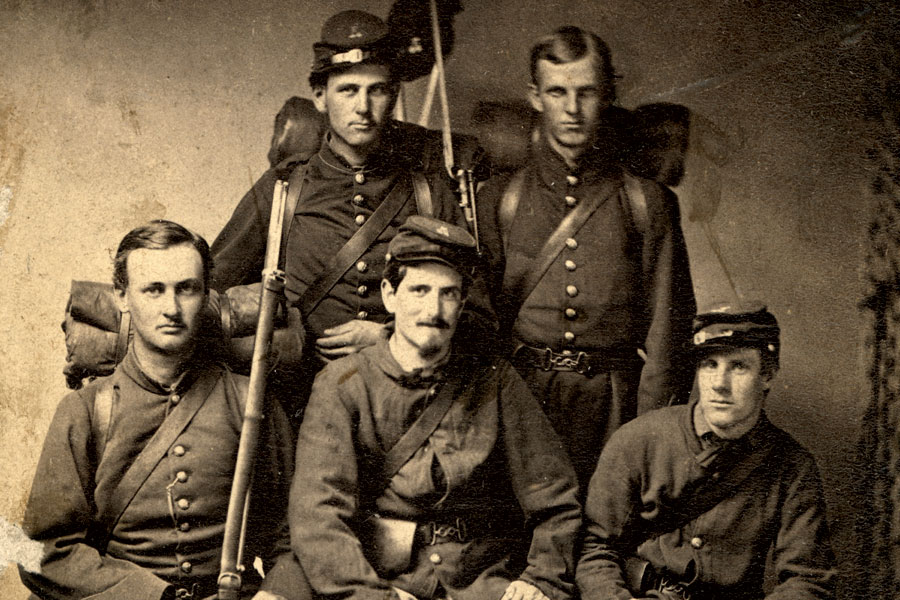
An albumen print the Rick Carlile Collection pictures five members of Company F, 44th Massachusetts Infantry, posed with weapons and gear.

Table of Contents (p. 1)

Editor’s Desk (p. 2)
A reflection on generative AI that animates and colorizes 19th-century military photographs, situating it within photography’s history and public engagement.

Mail Call (pp. 3-4)
Feedback includes the identification of two military images: U.S. Navy sailor Isaac H. Pierman and Sgt. John S. Koster of he 35th and 21st Massachusetts infantries.

Military Anthropologist (p. 4)
Newspapers.com data shows how “Contraband,” “Fugitive Slave,” “Colored Troops,” and “Freedmen” rose and fell in U.S. newspapers during the Civil War, 1861–1865.

Passing in Review (p. 6)
Review of Timothy Renner’s I Have Never Minded the Loneliness, profiling 37 hermits—including Gettysburg’s Hermit of Wolf Hill—with ties to Strange Familiars.

Photo Sleuth by Kurt Luther (pp. 8-11)
How to use generative AI in Civil War photo sleuthing: reverse image search, facial recognition, backdrop matching, better prompts, bias checks, and cautions.

Antebellum Warriors by Ron Field (p. 12)
A South Carolina militiaman with palmetto-plumed shako, triple-breasted coat, leather stock, civilian trousers, and an 1807-pattern stirrup-hilted sword.

Most Hallowed Ground (p. 14)
Franklin Y. Commagere served with the 14th Ohio Infantry, 67th New York Infantry, and the 6th U.S. Colored Cavalry; later in the 7th U.S. Cavalry. He is buried at Arlington.

The Honored Few by Evan Phifer (p. 16)
At Gettysburg, John B. Fassett led the 39th New York Infantry to retake Watson’s Battery guns near the Trostle farm on July 2, 1863, earning the Medal of Honor.

The Citizenry by Elizabeth A. Topping (p. 18)
Nine women identified as nurses at York U.S. Army Hospital, c.1864; with ties to the Ladies’ Aid Society ties and care after the Battle of Gettysburg.

Of Arms and Men by Phil Spaugy (pp. 20-23)
Company B, 9th Pennsylvania Cavalry on Lookout Mountain with Starr carbines in 1864, soon to ride under Kilpatrick during Sherman’s March to the Sea.

“Our Mess”: An 1862 image captures the camaraderie, campaigns, and distinctive equipment of five pards in Company F of the 44th Massachusetts Infantry by Michael R. Cunningham, Ph.D., featuring an image from the Rick Carlile Collection(pp. 24-27)
Exploring an image of five soldiers of Company F, 44th Massachusetts Infantry, posed with Enfield rifles and Short’s Patent knapsacks.

Marching Order! A glimpse of what federal soldiers looked like as they marched into battle— and into history by Michael R. Cunningham, Ph.D., featuring images from the Rick Carlile Collection (pp. 28-37)
Portraits show soldiers ready for campaigning with field gear—knapsacks, canteens, bayonets—plus other gear, from all sections of the Union.

The Bayard of the Volunteer Army: The life and death of Brig. Gen. William Haines Lytle, the poet-warrior by Ronald S. Coddington (pp. 38-43)
William Haines Lytle, 10th Ohio commander and poet, received a gold Maltese cross in August 1863 and fell at Chickamauga weeks later; his verse shaped his legacy. 

On Quinby’s Watch by Ronald S. Coddington (pp. 46-55)
Colorado Lt. Ira Quinby, a Signal Corps officer active at the 1864 Battle of Westport, helped guide moves that halted Price’s Raid—The Gettysburg of the West.

Mary’s Album: Cartes de visite and tintypes collected by a teenager put faces on two Loudoun Rangers of Virginia by Bob Iwig (pp. 58-60)
A Harpers Ferry teenager’s album includes photos of two Loudoun Rangers—Union cavalrymen active in an area with Mosby’s raiders and White’s Comanches.

Collecting Civil War Artifacts Before the Centennial by Norman Delaney(pp. 62-63)
Reflecting on how Civil War artifacts were found before the 1961–65 centennial, from family heirlooms to Bannerman catalogs, antique shops and early hunts.

Material Culture by Frederick C. Gaede and Paul D. Johnson (pp. 66-67)
Colonel William d’Alton Mann proposed shoulder-slung accouterments to move weight off the waist. Selected units tried the innovation, but never adopted it as standard.

Women of War by Melissa A. Wynn (pp. 68-69)
Louisa May Alcott served as a Civil War nurse in Washington, D.C., recorded her experiences in Hospital Sketches, and championed women’s rights.

Behind the Backdrop by Buck Zaidel (pp. 70-71)
A Hartford, Conn., studio’s camp-scene backdrop—attributed to Nelson A. Moore—shows up in similar form in Ohio and Philadelphia, tracing links among wartime studios.

Vignette by Scott Valentine (p. 72)
Samuel A. Duncan led the 4th and 6th USCT at New Market Heights in 1864 during the Richmond campaign; Sgt. Maj. Christian Fleetwood earned the Medal of Honor.

Stragglers (pp. 74-76)
Kentucky campaigners, a sailor of Asian heritage, a split-screen soldier on camp and on campaign, and a soldier at Point Lookout.

The Last Shot (p. 80)
Unidentified Confederate with Bowie knife, single-shot pistol, and tinware in a wool jacket—a ninth-plate ambrotype from the Paul Reeder Collection.