The Summer 2026 Issue

A complete table of contents for the Summer 2026 issue of Military Images magazine, and information about how to purchase single issues and subscriptions.

Vol. XLIV, No. 3
(80 pages)

Print edition: Visit our store to check availability
Digital edition: Visit JSTOR.org to purchase
Subscribe or renew your subscription

Explore the MI Archives:
Browse | Advanced search | Tutorial

Inside

Cover
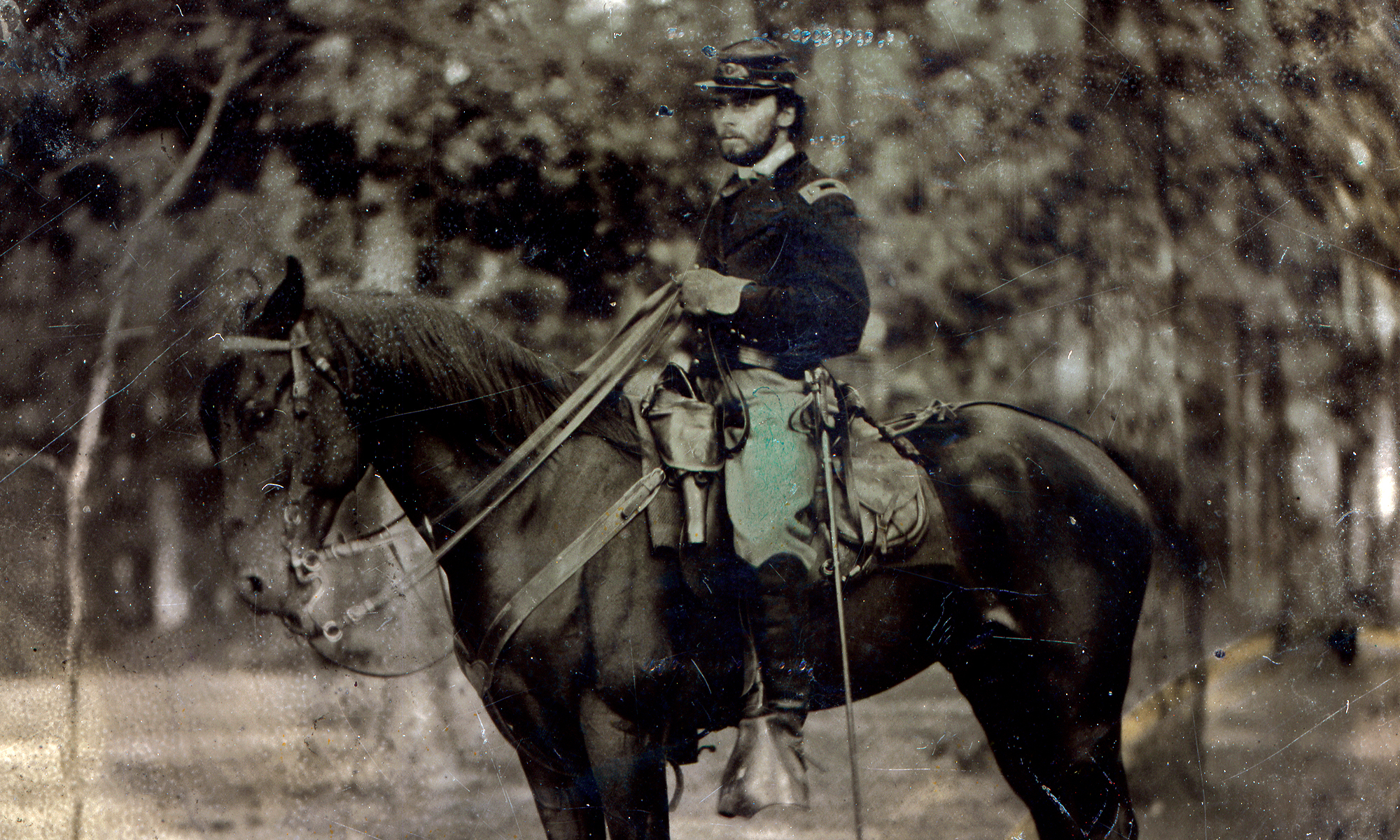
A tintype of Lt. Col. William A. Throop of the 1st Michigan Infantry on horseback beneath the shade of trees.

Table of Contents (p. 1)

Editor’s Desk (p. 2)
Thoughtful planning can help collectors find future caretakers for Civil War images and artifacts while easing the burden on loved ones.

Mail Call (pp. 3-4)
Feedback includes praise from new and veteran subscribers, and corrections on a weapon identification and a death place.

Military Anthropologist (p. 4)
Data reveals how emergency militia call-ups from New York, Pennsylvania, Illinois, and Indiana reinforced Union defenses during key Civil War crises.

Passing in Review (p. 6)
Reviews of two new books: Scott Hippensteel’s Civil War Photo Forensics and the first volume of James McLean’s regimental history of The 14th New York State Militia in the Civil War.

Photo Sleuth by Kurt Luther and Bryan Cheeseboro (pp. 8-13)
The identification of three rare U.S. Colored Troops group portraits, revealing their regiments, forts, photographer, and early postwar service in Washington, D.C.

Antebellum Warriors (p. 14)
A daguerreotype by Henry Earle Insley depicts a U.S. Army captain during the Mexican War era. Uniform details offer clues, but his identity remains unknown.

Most Hallowed Ground (p. 16)
Capt. George “Van” Vanderbilt led a daring cavalry action at Bristoe Station, delaying Confederates and helping secure a Union victory.

The Honored Few by Evan Phifer (pp. 18-20)
Artilleryman Frederick W. Fout earned the Medal of Honor for rallying abandoned guns during the 1862 siege and surrender of Harpers Ferry.

The Citizenry by Elizabeth A. Topping (pp. 22-24)
General George McClellan’s wife, Nelly, embraced society life, drew criticism for limited wartime charity work, and remained devoted to him until his death.

Of Arms and Men by Phil Spaugy (pp. 26-27)
Phil investigates three Ohio soldiers, Austrian Lorenz muskets, and conflicting evidence that challenges a long-accepted identification.

Gettysburg: Echoes of Three Days in July 1863 Curated by Charles Joyce, with contributions from Rick Brown, Scott Hann, Robert May, Dale Niesen, Paul Russinoff, and Melissa Winn (pp. 29-43)
Portraits and stories reveal stories of courage, sacrifice, wounds, death, and survival across three days of the Battle of Gettysburg.

War Compromised His Health. Photography Gave Him a New Lease on Life. The Life and Times of Enos F. Hilton, 8th Missouri State Militia Cavalry by M. Jane Johansson (pp. 44-47)
Civil War cavalryman Enos F. Hilton battled illness, reinvented himself as a photographer, and documented Colorado boomtowns.

Mountain Legion: The hard-fighting 156th New York Infantry in the Eastern and Western Theaters by Kyle A. Williams and Paul D. Thompson(pp. 48-55)
The 156th New York Infantry fought from Louisiana bayous to the Shenandoah Valley, earning distinction in both the Eastern and Western Theaters.

Rocket Man: Acting Signal Officer George H. Felt and his innovative pyrotechnics by Dale R. Niesen and Ronald S. Coddington (pp. 56-61)
Acting Signal Officer George H. Felt developed innovative signal rockets and coded pyrotechnics that sought to transform Civil War communications.

Material Culture by Ronald S. Coddington (p. 64)
Though linked to Confederate forces, Maynard carbines also armed select Union cavalry regiments, including the 1st Wisconsin and 9th Pennsylvania.

Women of War by Melissa A. Wynn (pp. 66-68)
Educator Emma Brown Montgomery devoted her life to teaching Black children during and after the Civil War, leaving a lasting legacy in Washington, D.C.

Behind the Backdrop by Buck Zaidel (pp. 70-71)
Four cartes de visite reveal how photographer J.P. Ball used painted backdrops to distinguish civilian life from military service in wartime Cincinnati.

Vignette by Scott Valentine (p. 72)
Colonel John A. Koltes fell leading a charge at Second Bull Run. His blood-stained scabbard rested atop his casket during a well-attended funeral in Philadelphia.

Stragglers (pp. 75-77)
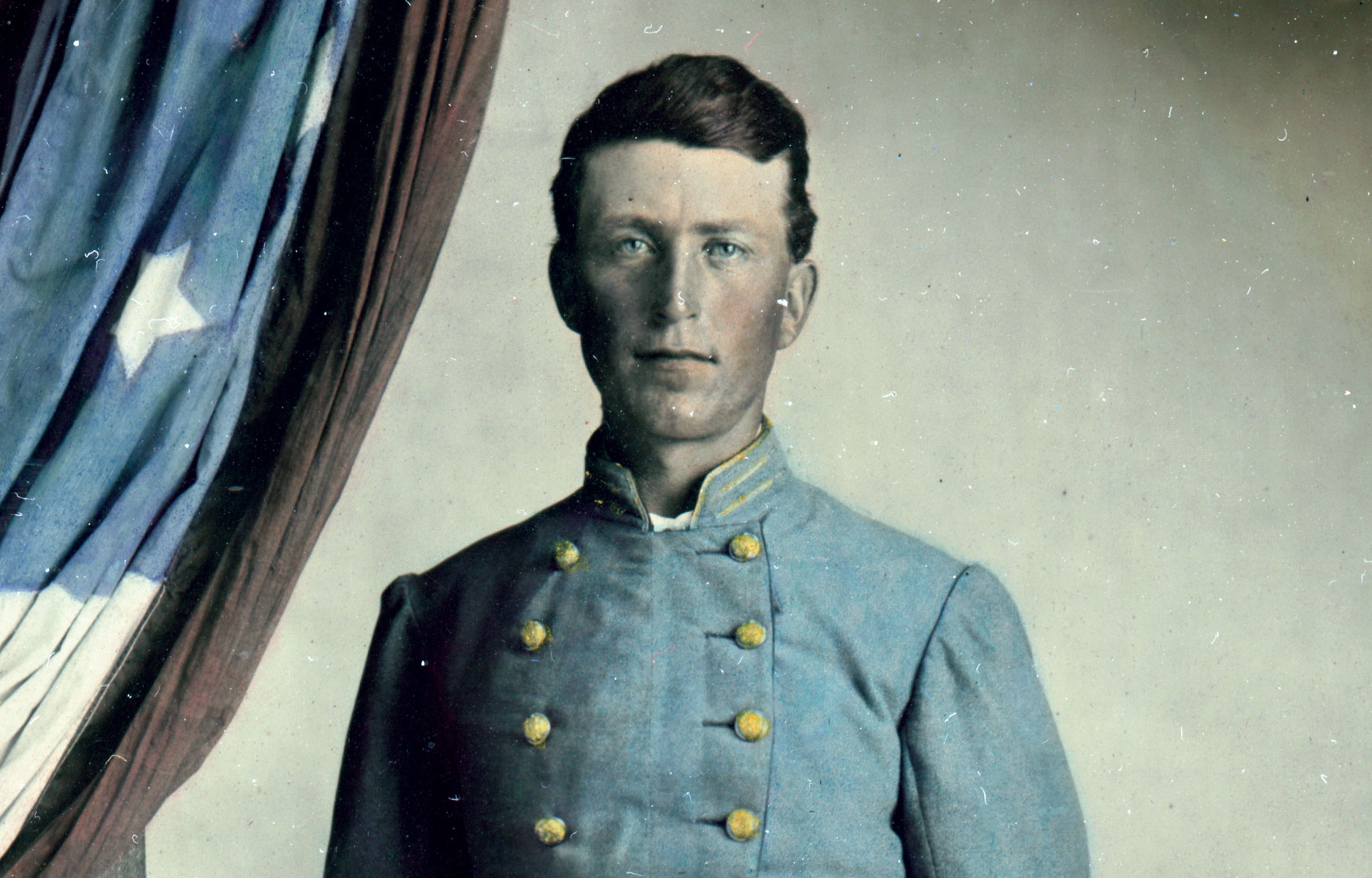
Confederate Capt. William Pratt Parks, Sgt. John W. Taylor, Capt. Samuel D. Irvin, a Zouave, and a portrait of a print of Col. Elmer E. Ellsworth.

The Last Shot by Robert May(p. 80)
Color Sergeant John A. Kiggins repaired his regiment’s flagpole at Gettysburg and earned the Medal of Honor for heroism at Lookout Mountain.
Bringing a Civil War Photographic Treasure to Hart Island

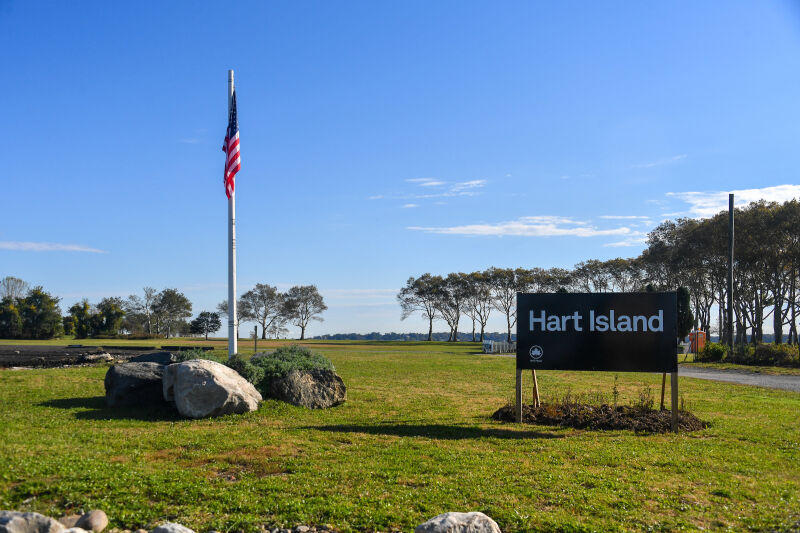
Military Images magazine is especially proud to help connect historic Civil War photographs and the private collectors who preserve them with researchers and educators around the country. Recently, Charles Handras, Park Supervisor for Hart Island in the Bronx, reached out to us as his office deepens its historical research into the island’s past.

Hart Island.

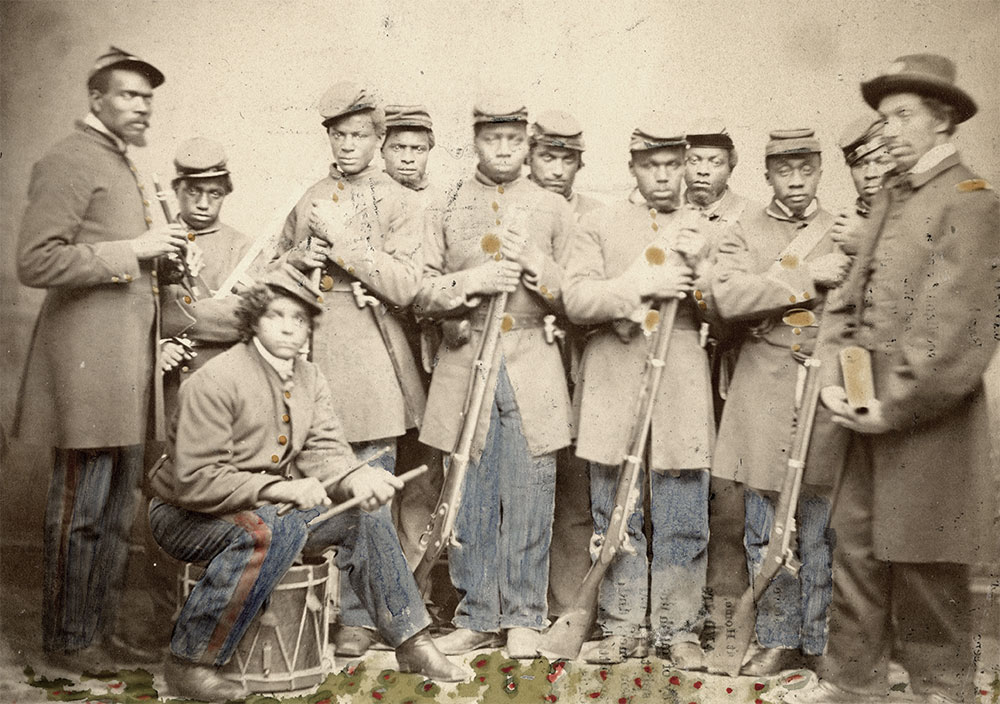
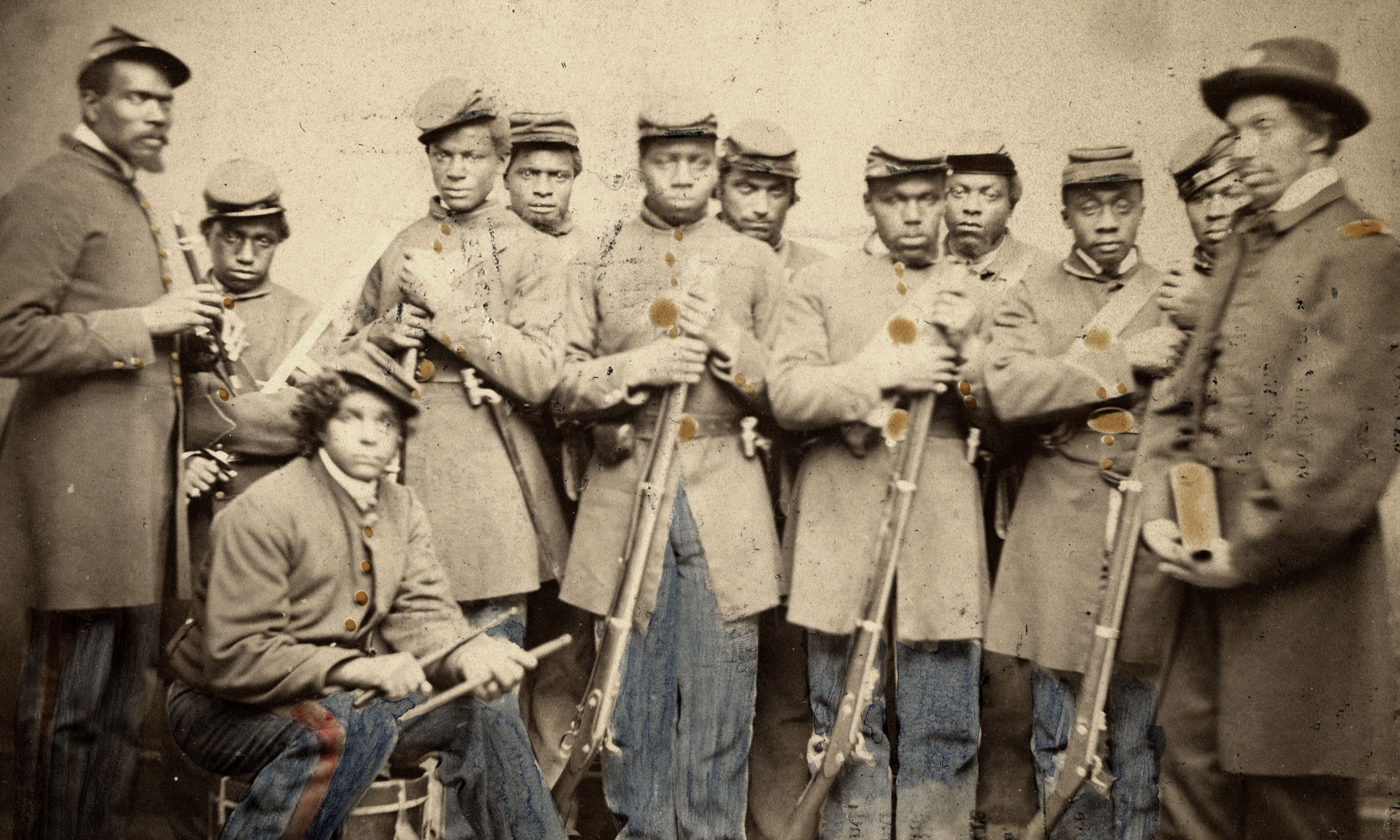
Their work includes exploring Hart Island’s connection to the U.S. Colored Troops who trained there before serving in the Union Army. Among the images that captured their attention was a historically significant 1864–65 photograph of African American soldiers at L’Ouverture Hospital in Alexandria, Va.,—an image featured in Military Images’ story “Freedmen Warriors, Civil Rights Fighters” by Charles Joyce, a onetime owner of the image.

Group at L’Overture Hospital, Alexandria, Va., about December 1864-April 1865, from left to right: Tobias Trout, 31st USCT, Wounded, Crater; William DeGraff, 22nd USCT, Sick; John H. Johnson, 27th USCT, Sick, diarrhea and rheumatism; Jerry Lisle, 28th USCT, Wounded, Crater; Leander Brown, 30th USCT, Wounded, Crater; Samuel Bond, 19th USCT, Sick; Robert Deyo, 26th USCT, Sick, pleurisy; Adolphus Harp, 19th USCT, Wounded, Crater; Stephen Vance, 30th USCT, Wounded, Crater; George H. Smith, 31st USCT, Wounded, Crater; Adam Bentley, 19th USCT, Wounded, Crater; Chauncey Leonard, Chaplain, USCT, Assigned to hospital. Ross J. Kelbaugh Collection.

The photograph now resides in the National Portrait Gallery, thanks to Ross J. Kelbaugh, who generously donated it and graciously granted permission for Supervisor Handras and his colleagues to publish it in their educational work.

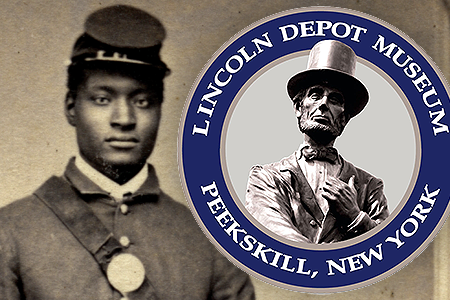
Faces of Freedom Exhibit Opens at Lincoln Depot Museum

Peekskill, NY — June 7, 2025

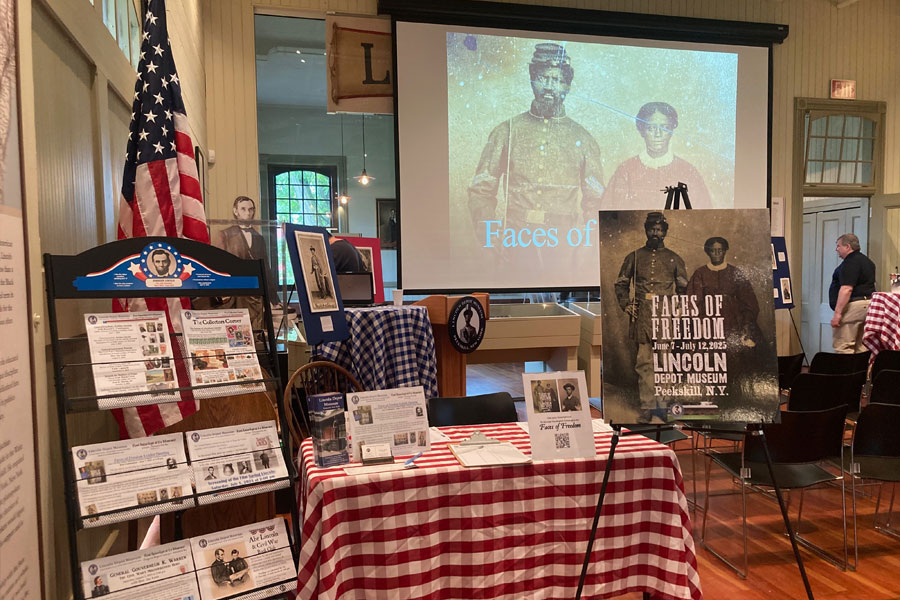
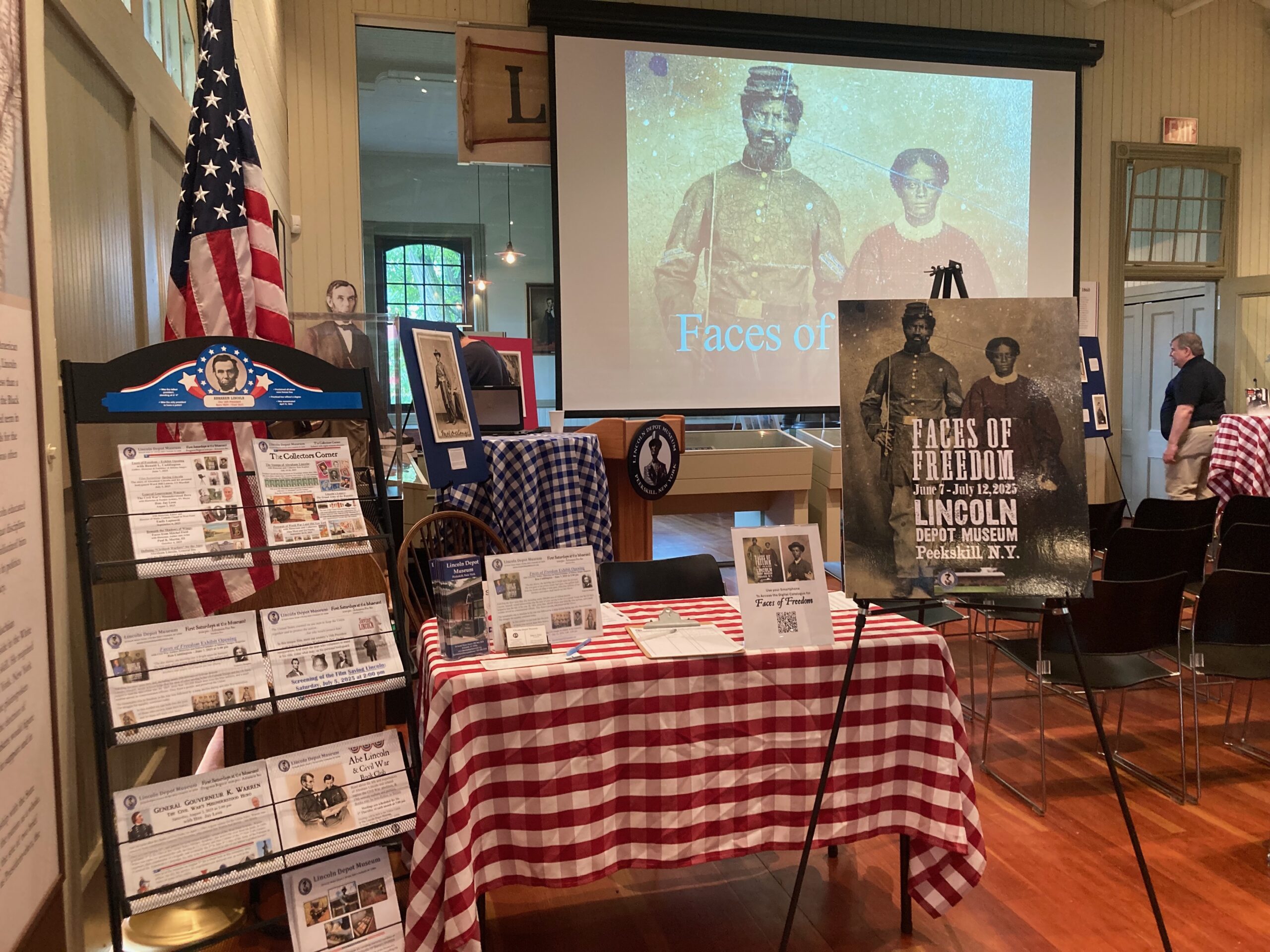
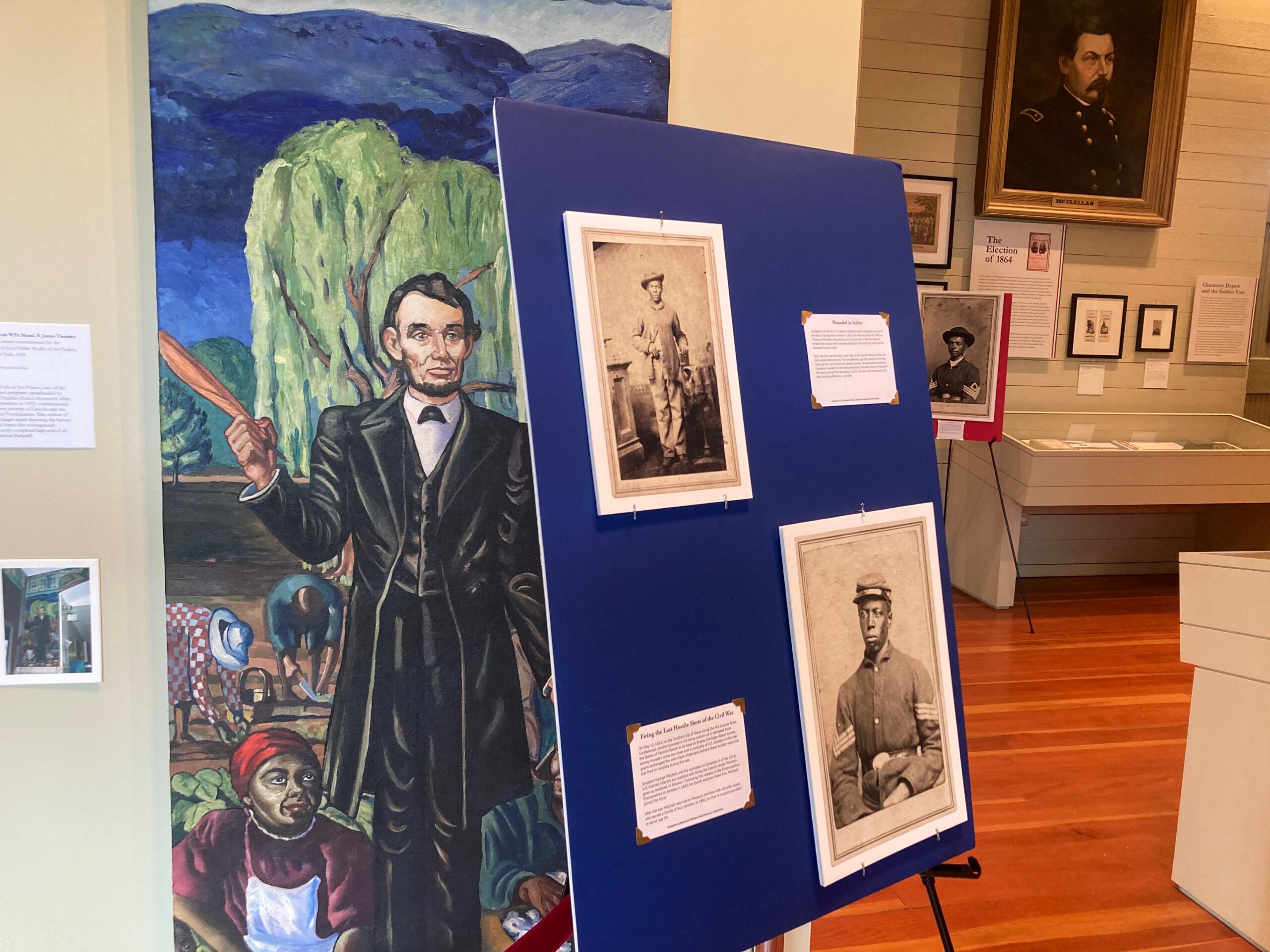
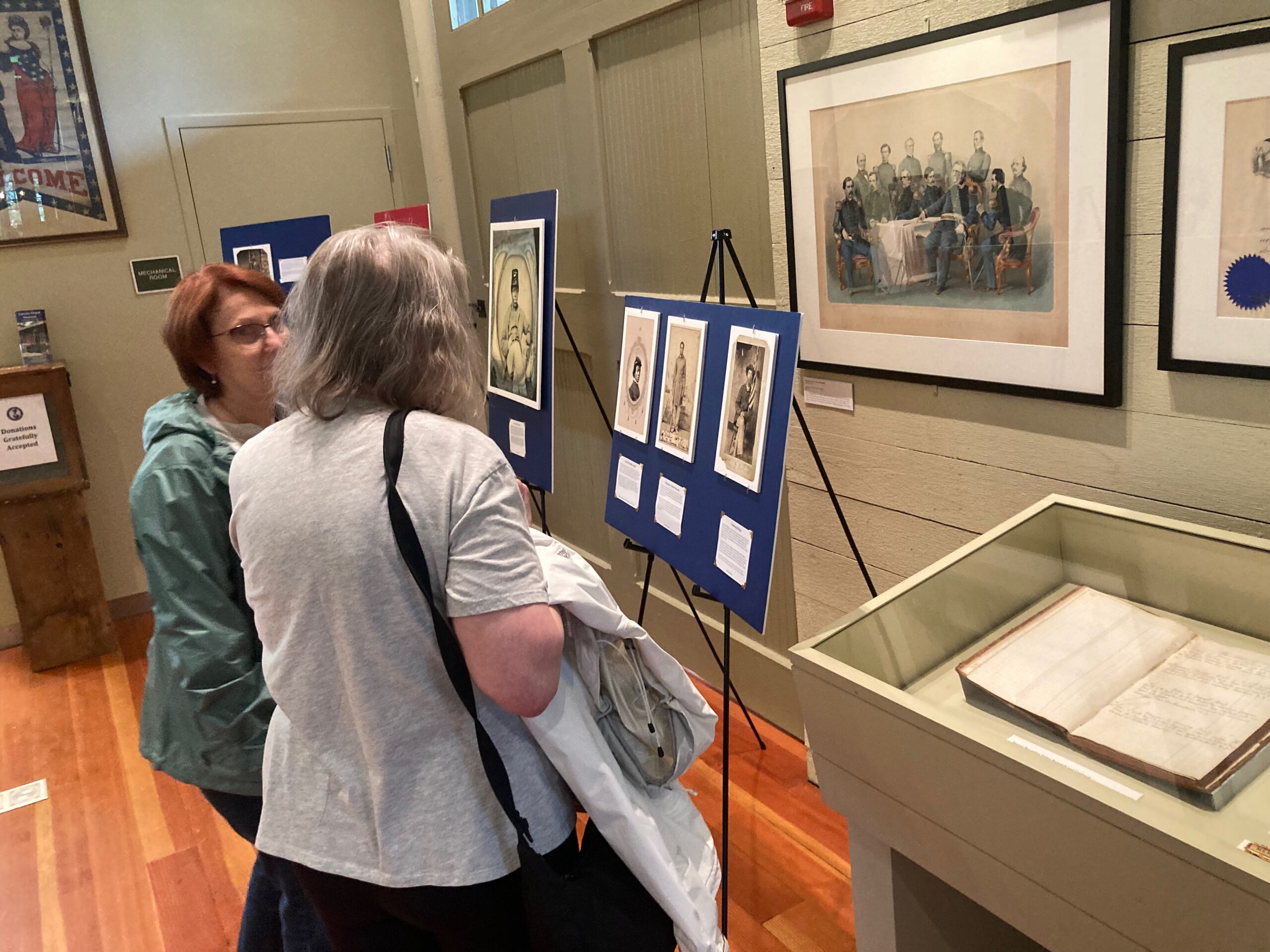
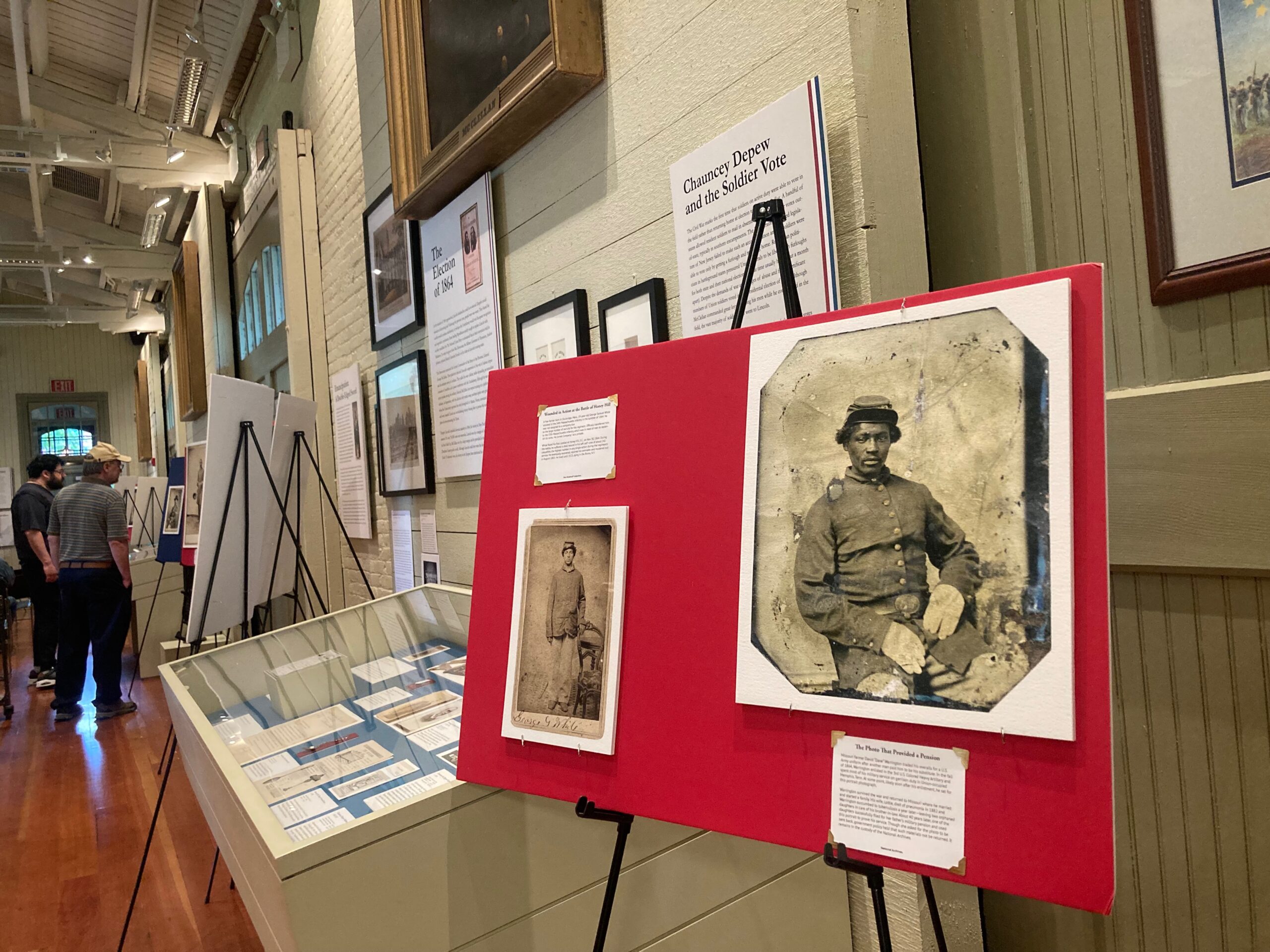
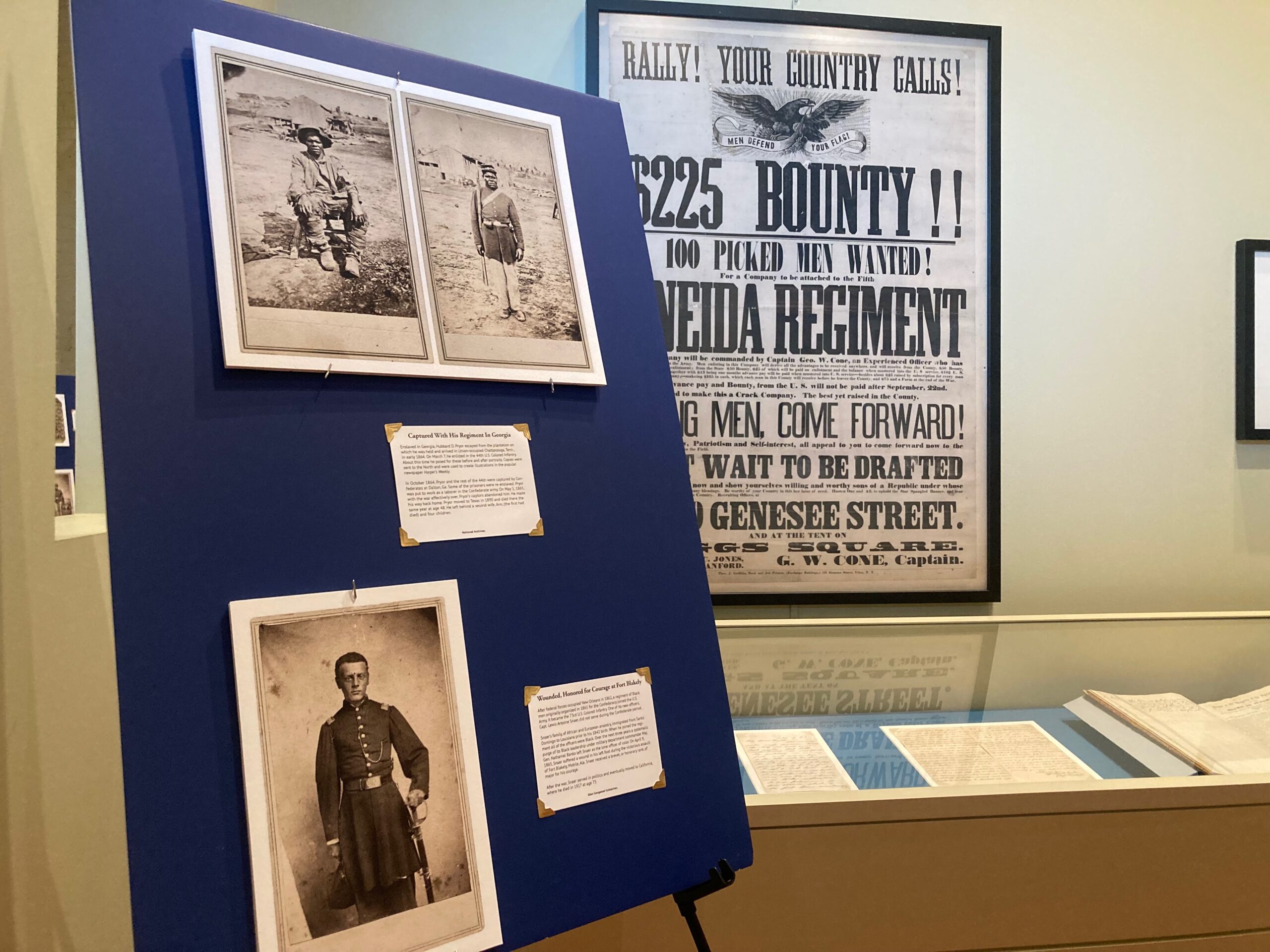
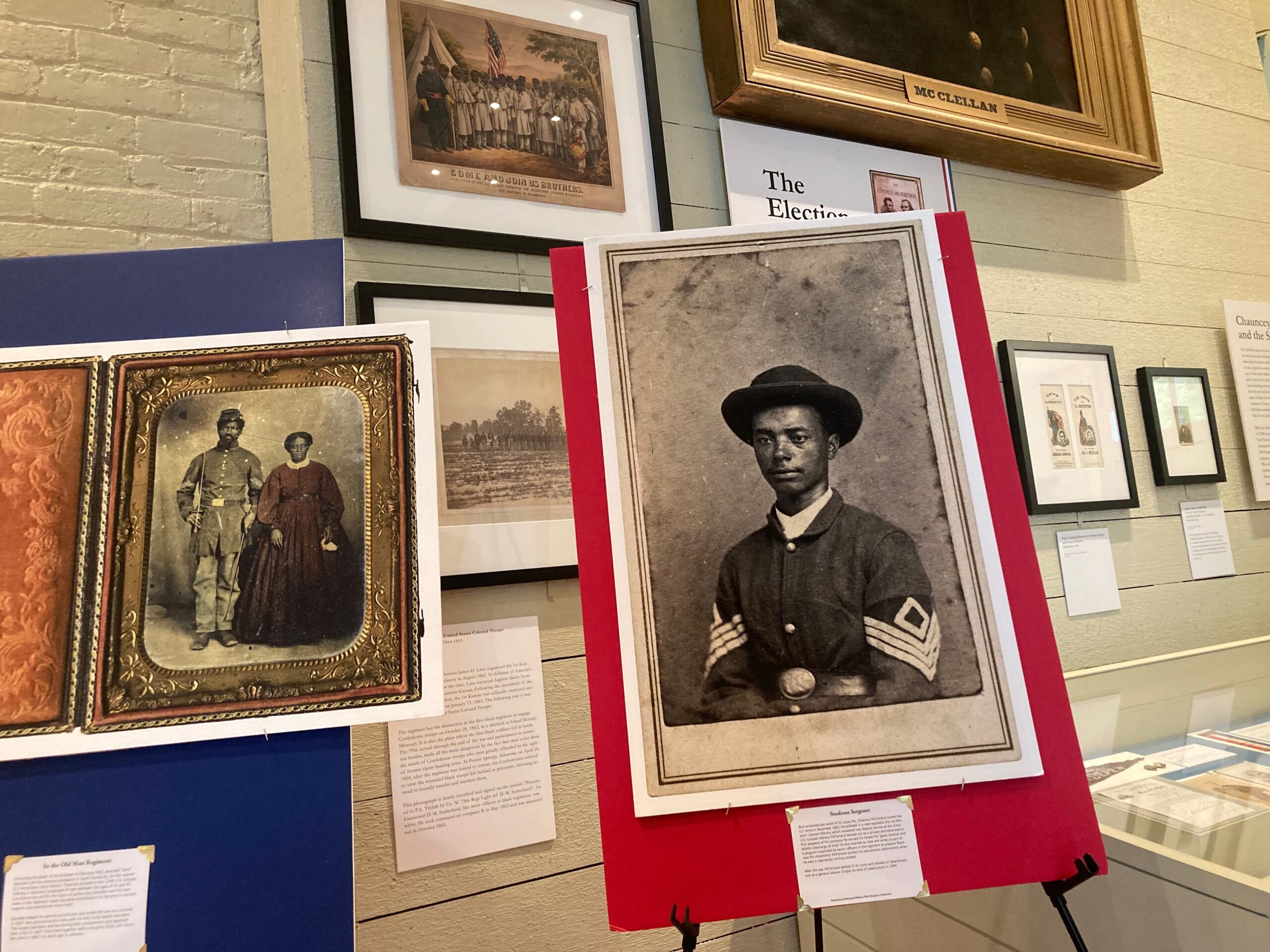
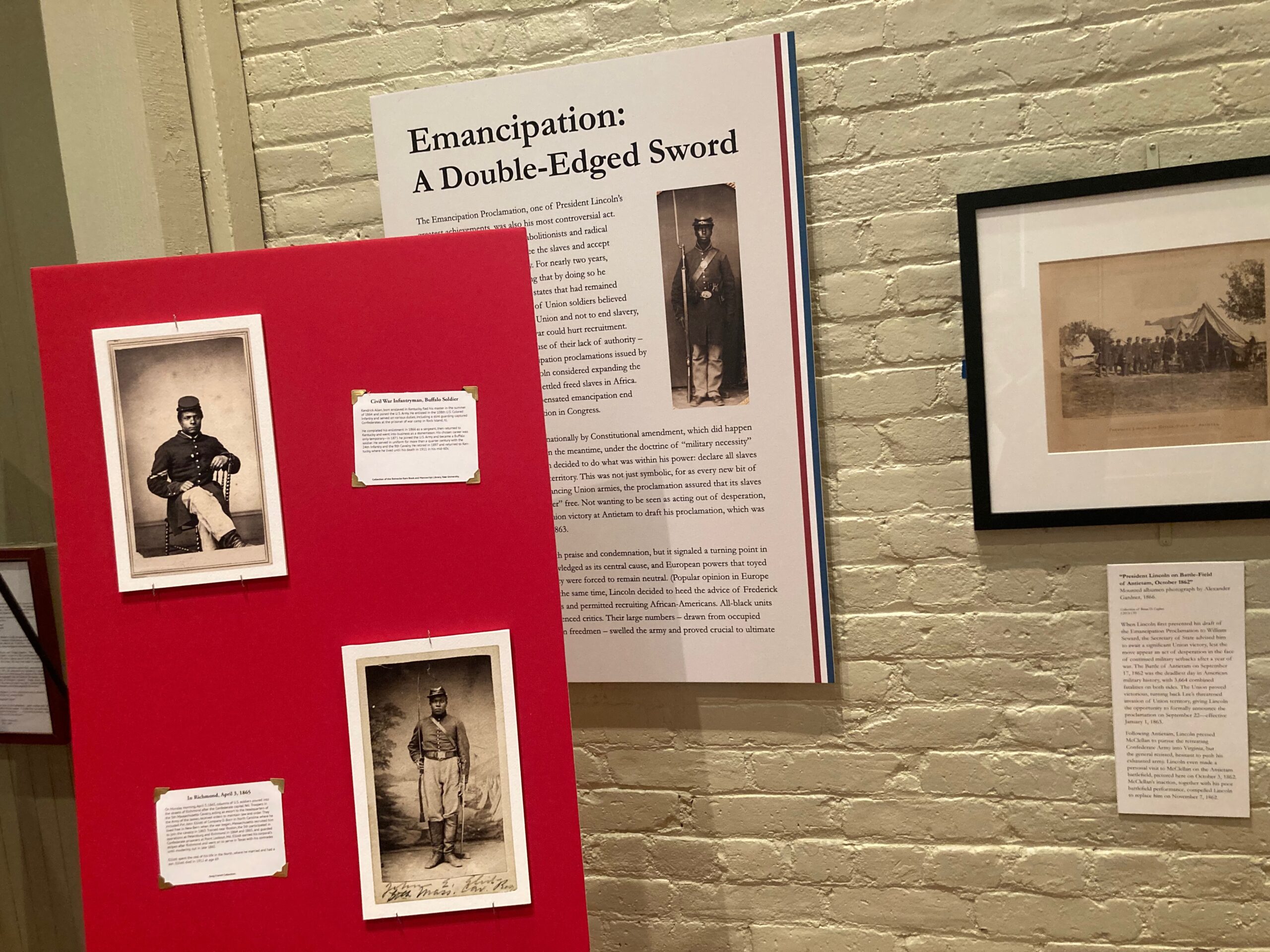
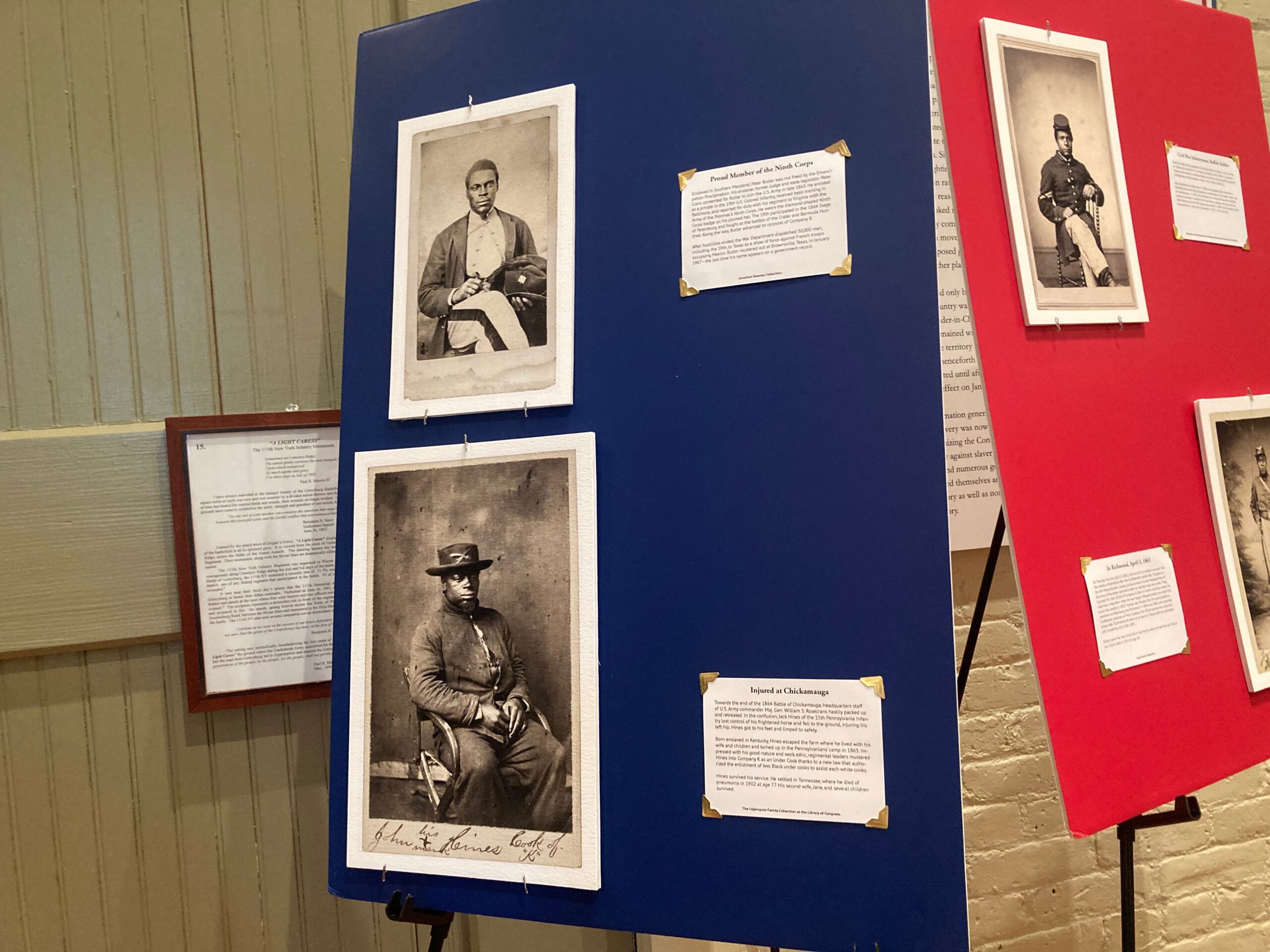
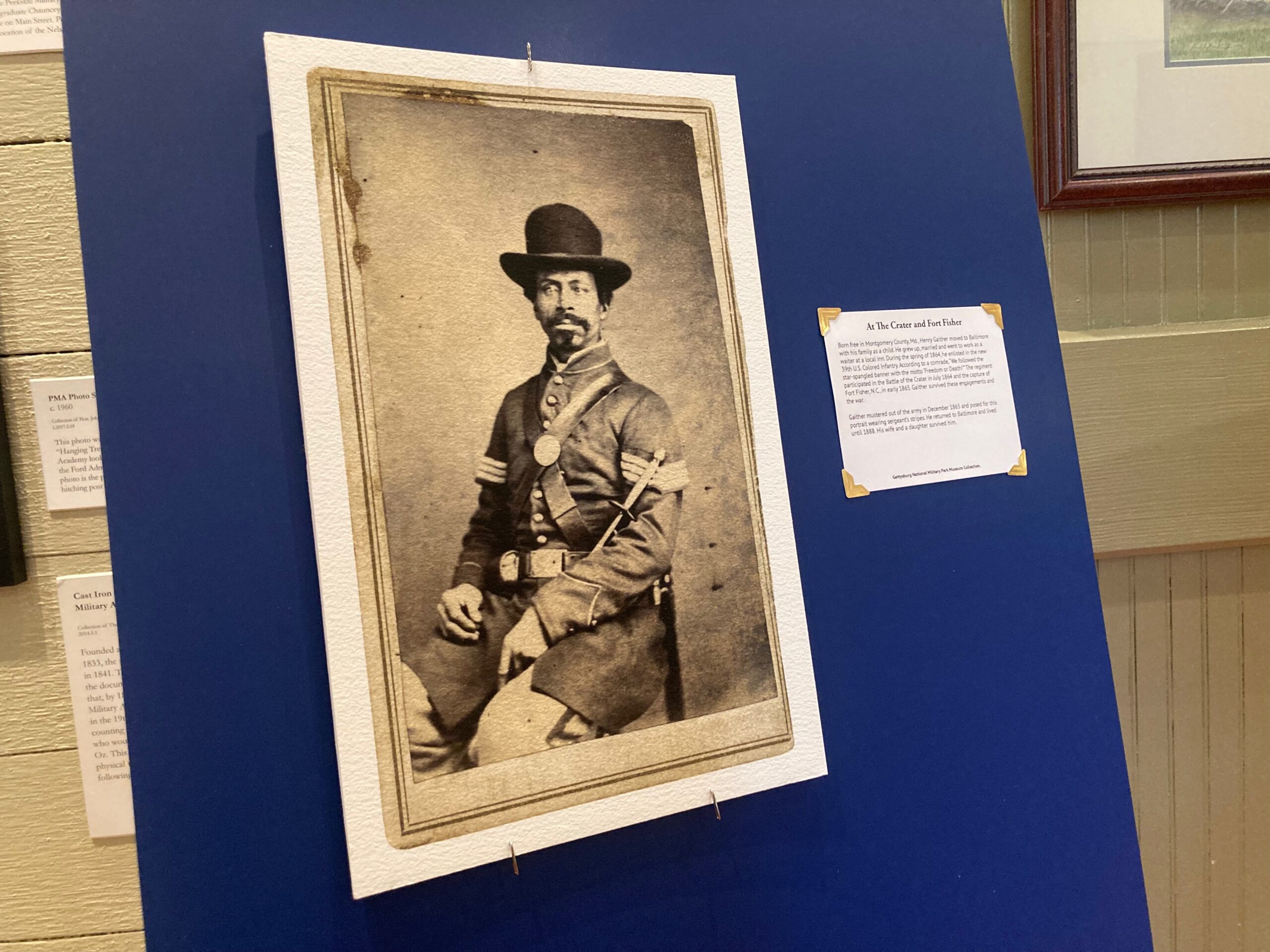
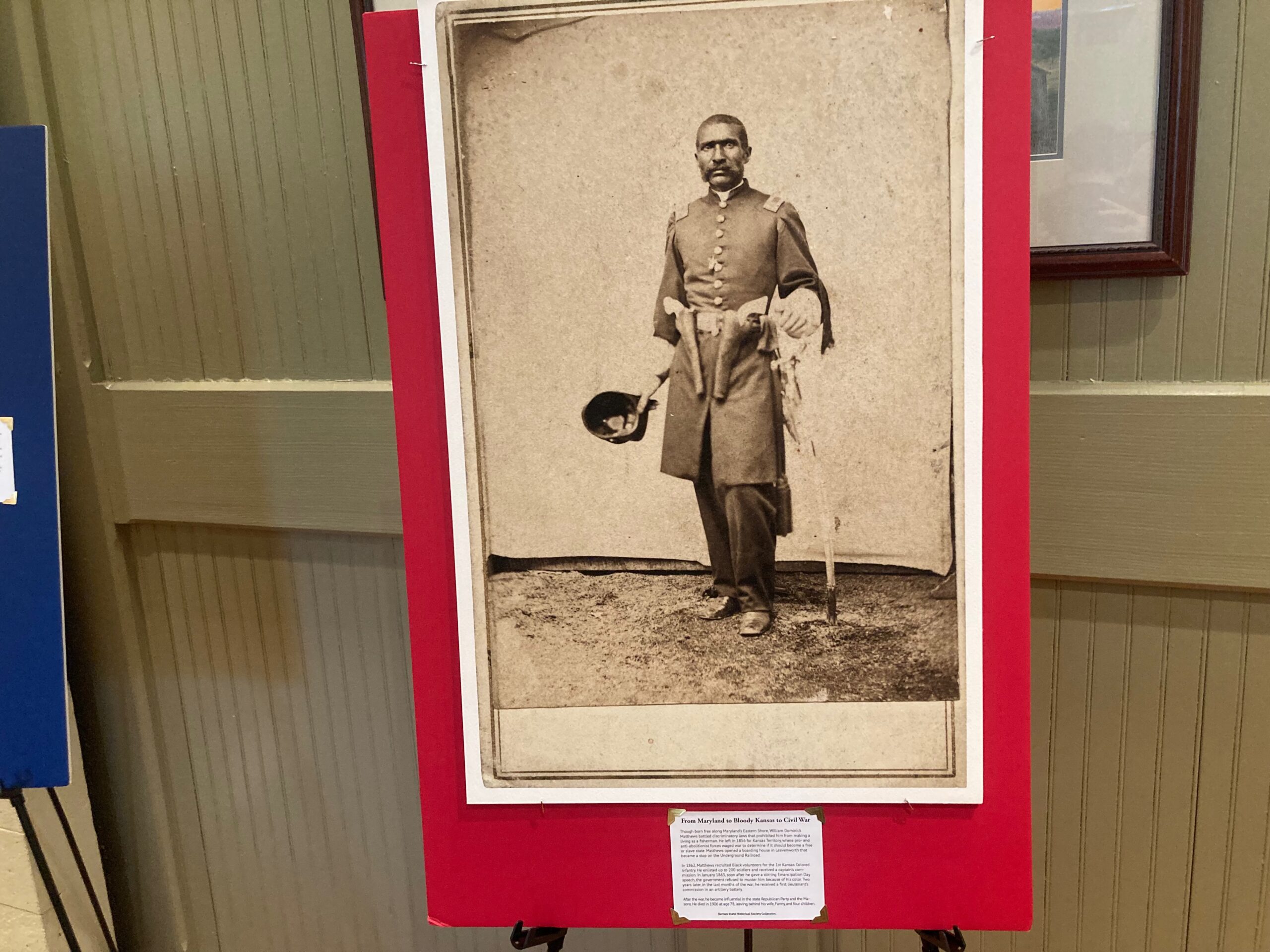
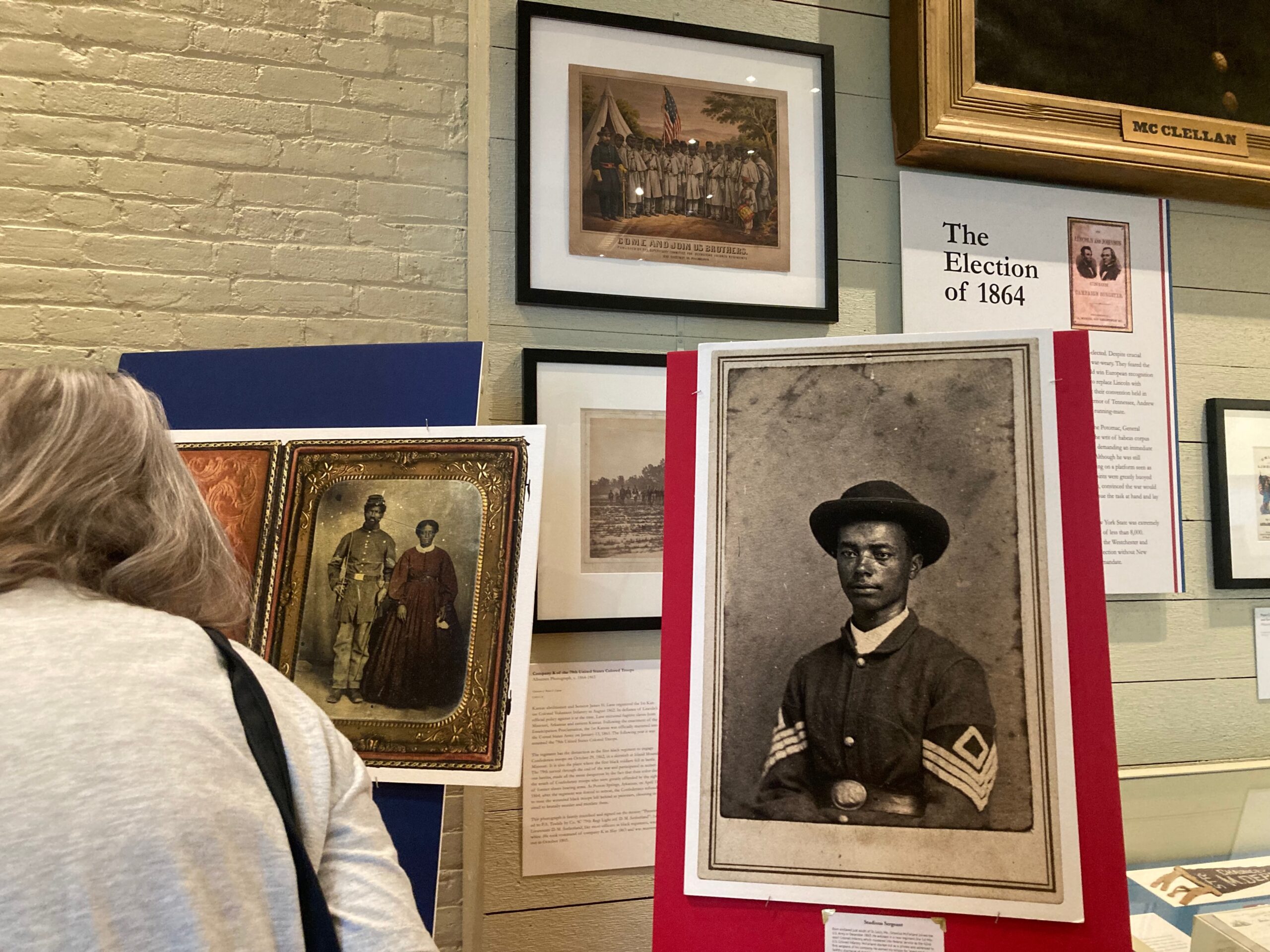
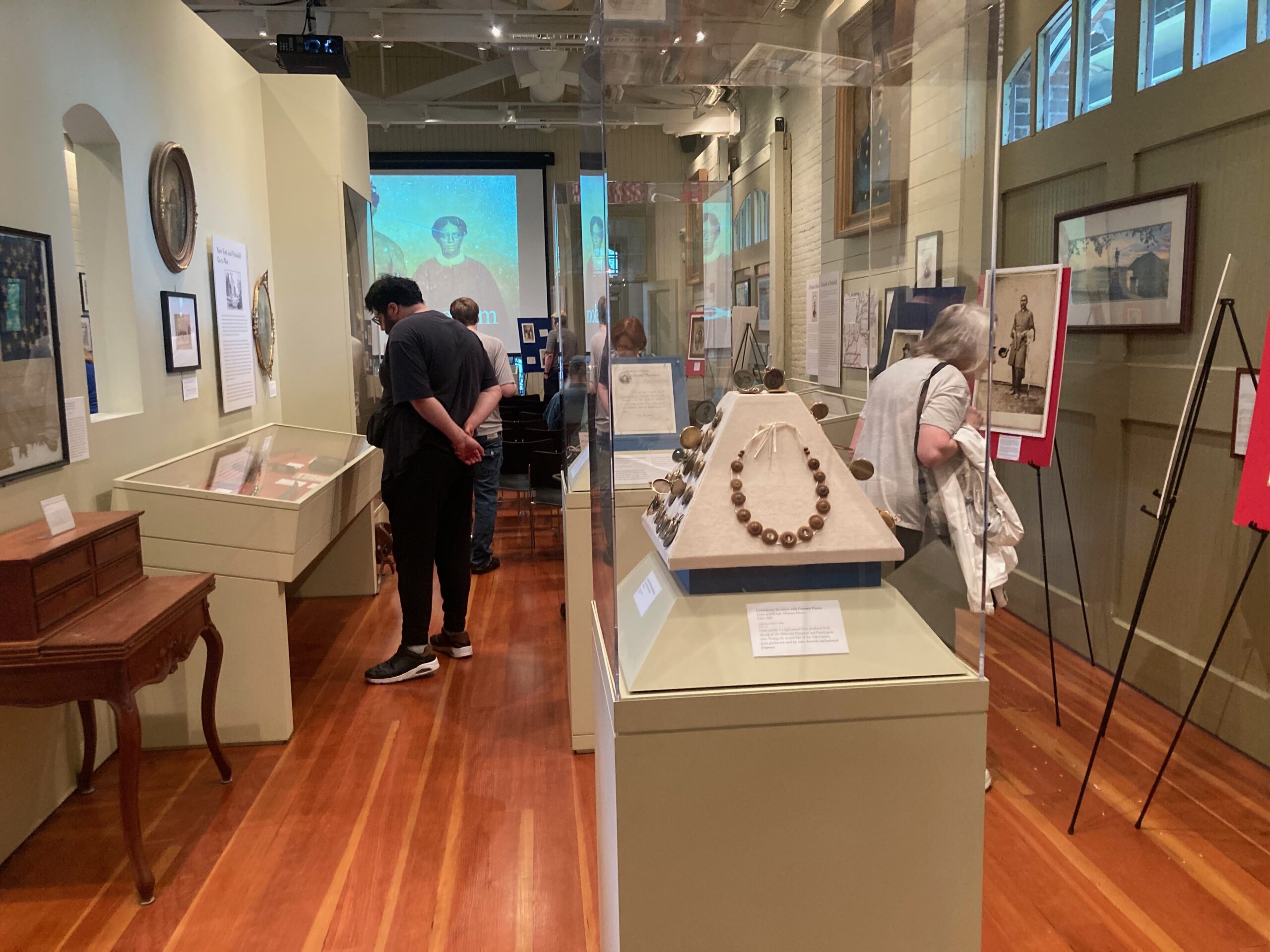
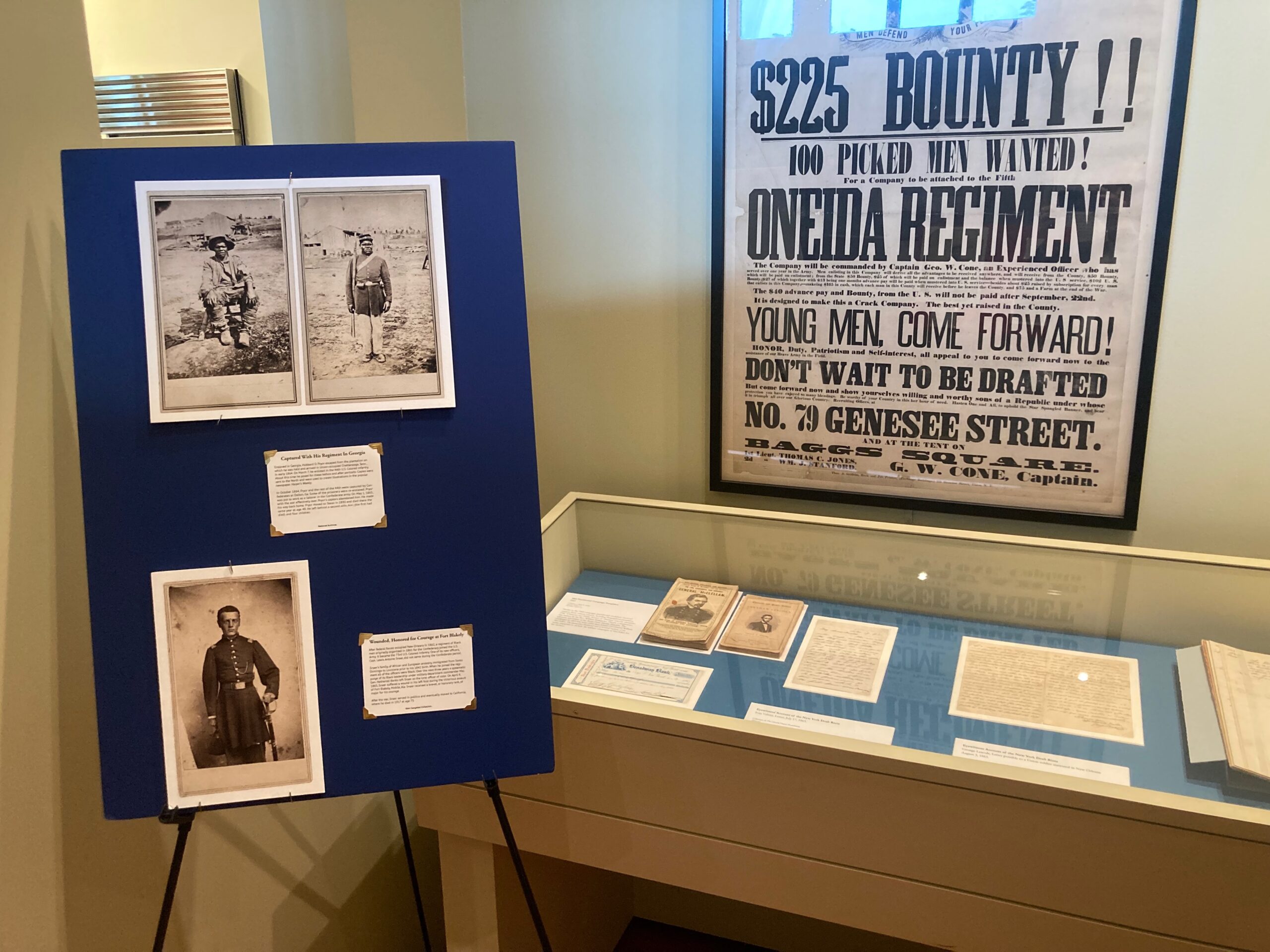
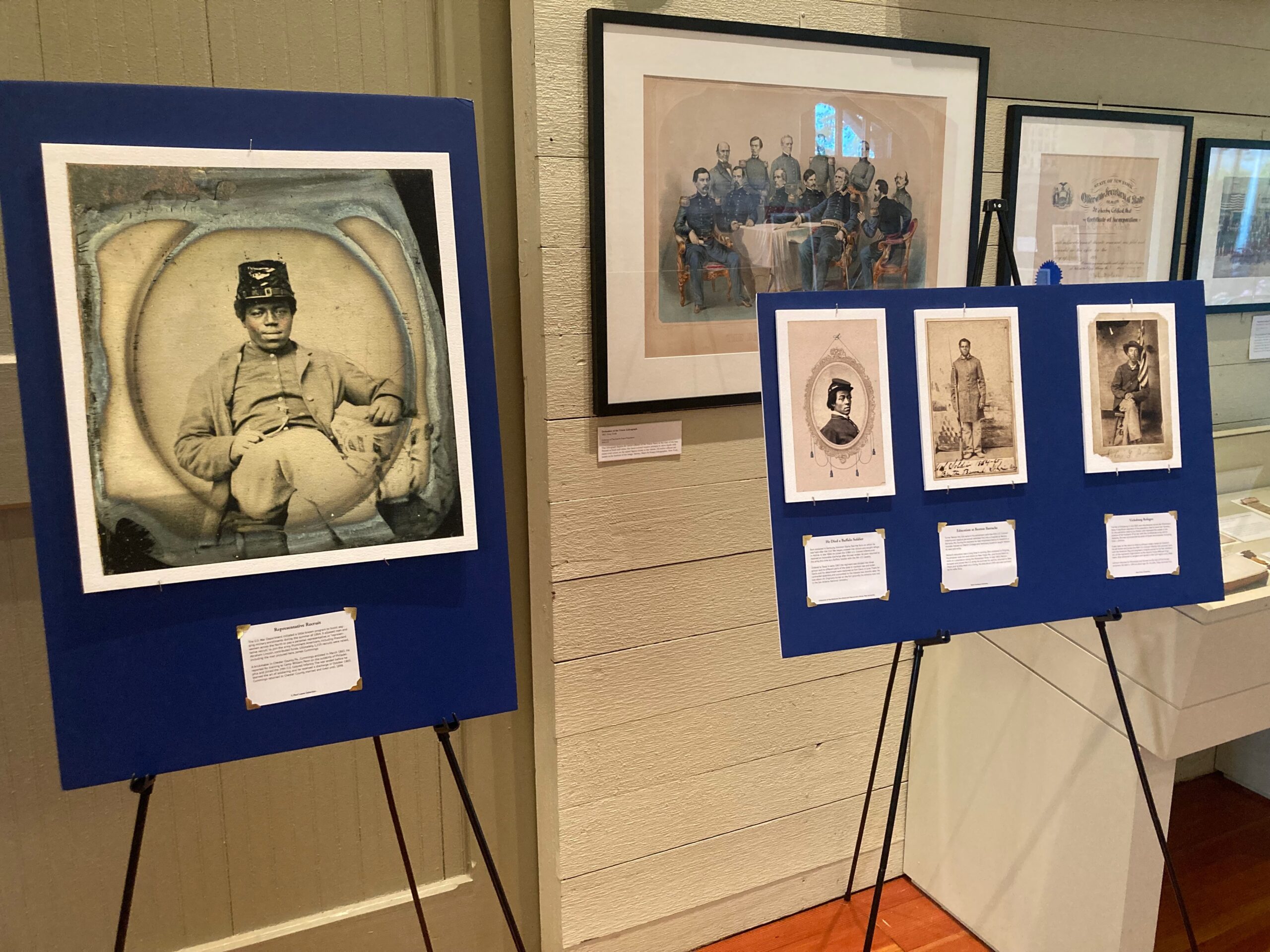
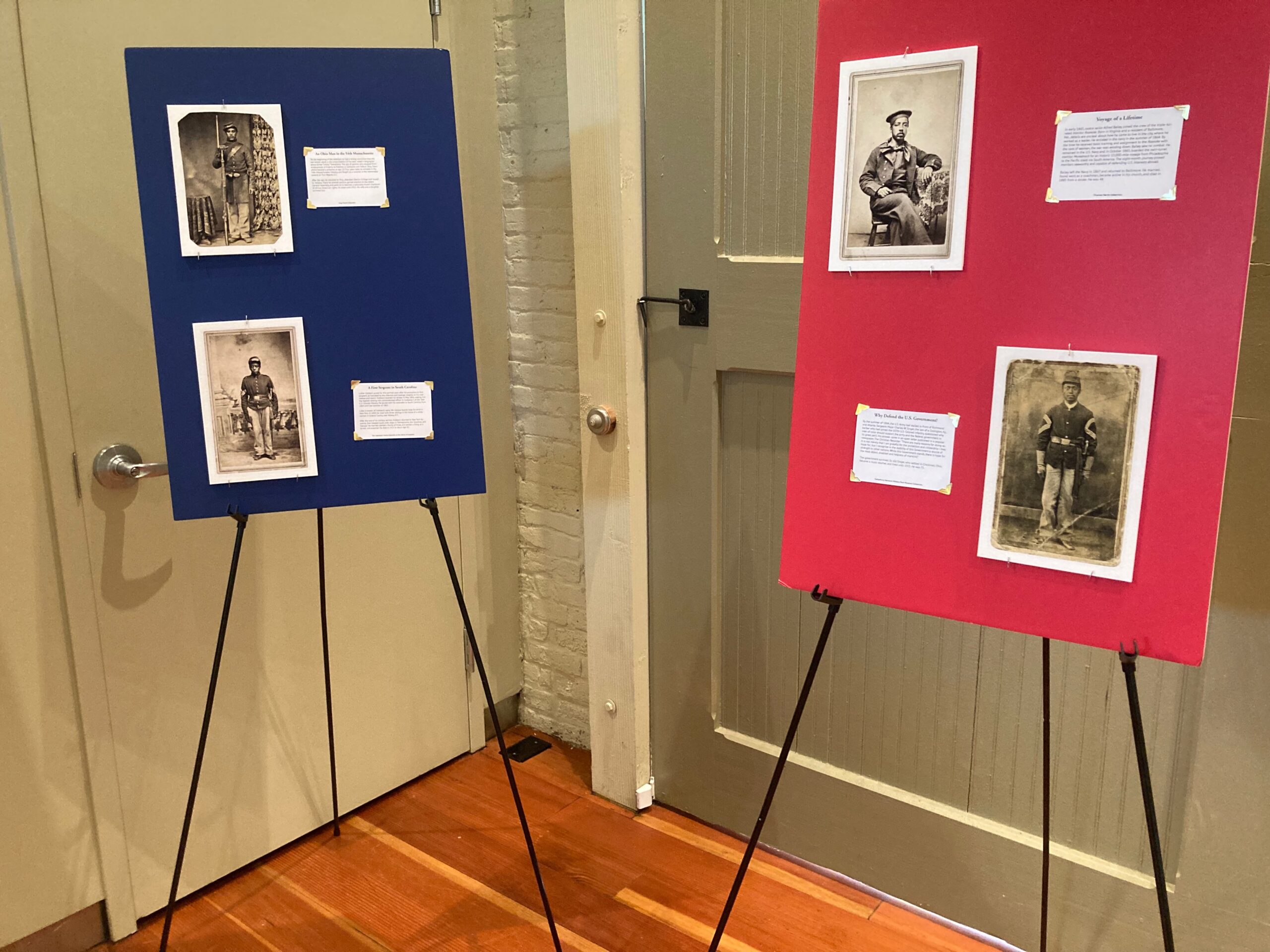
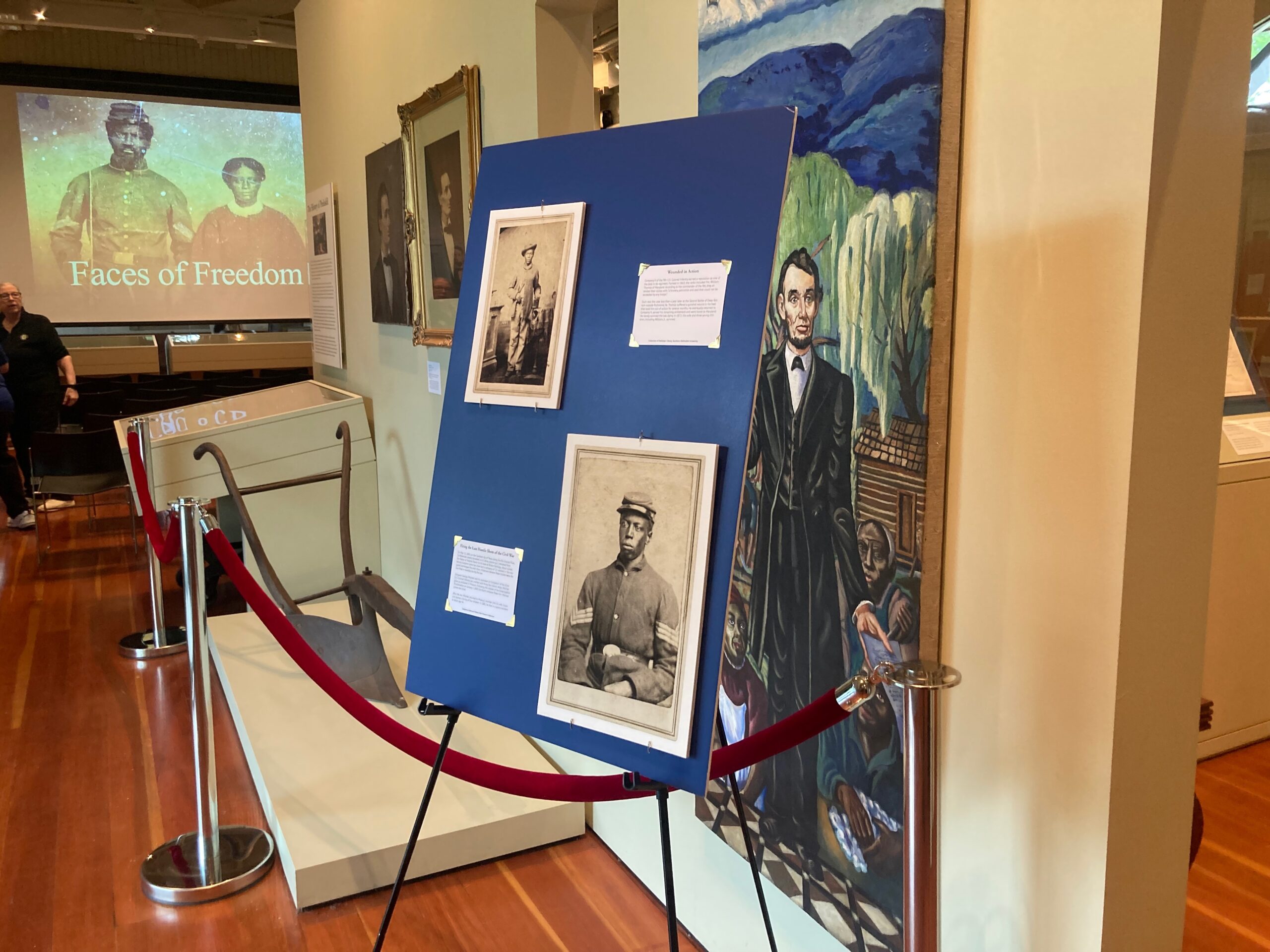
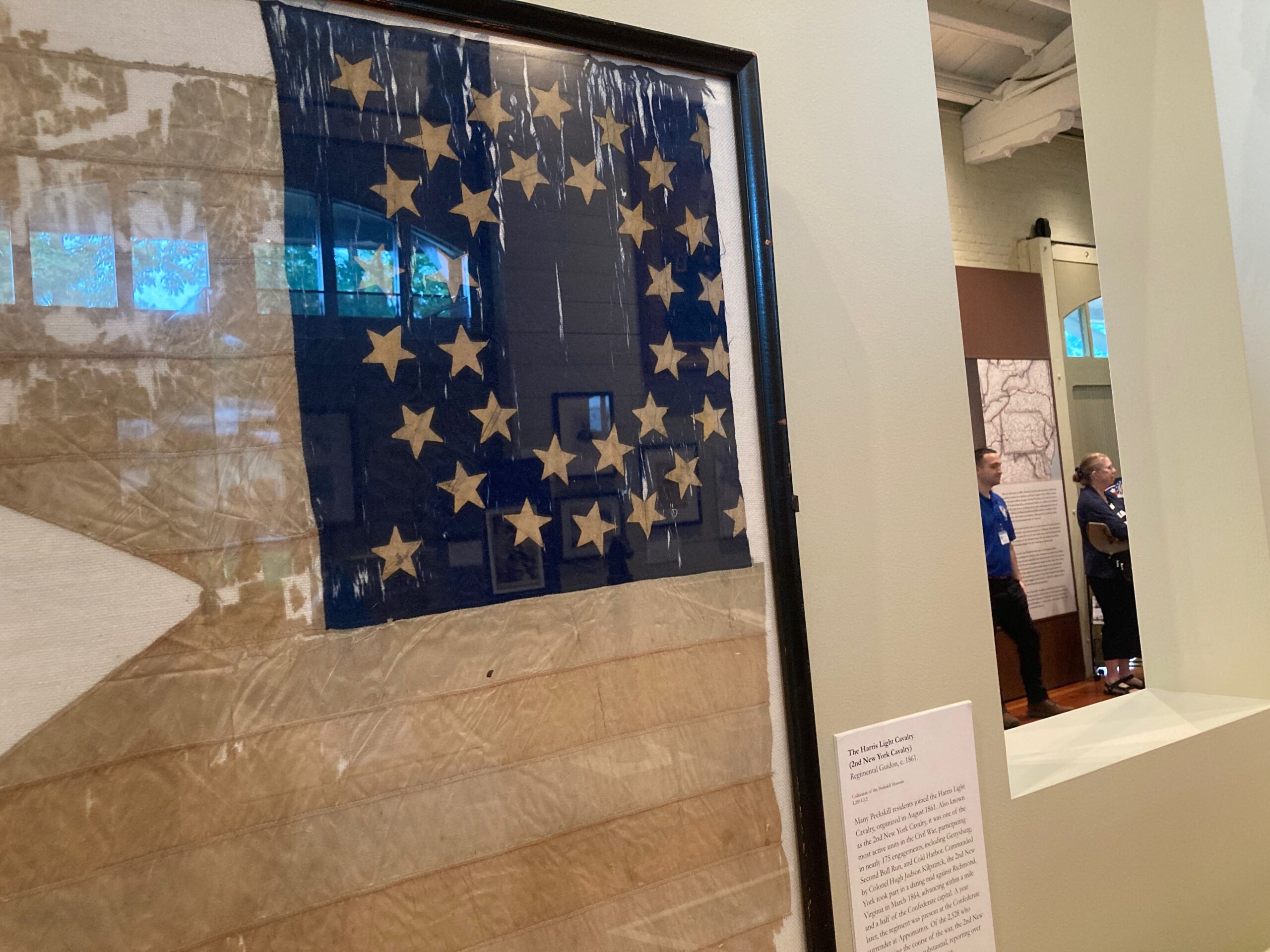
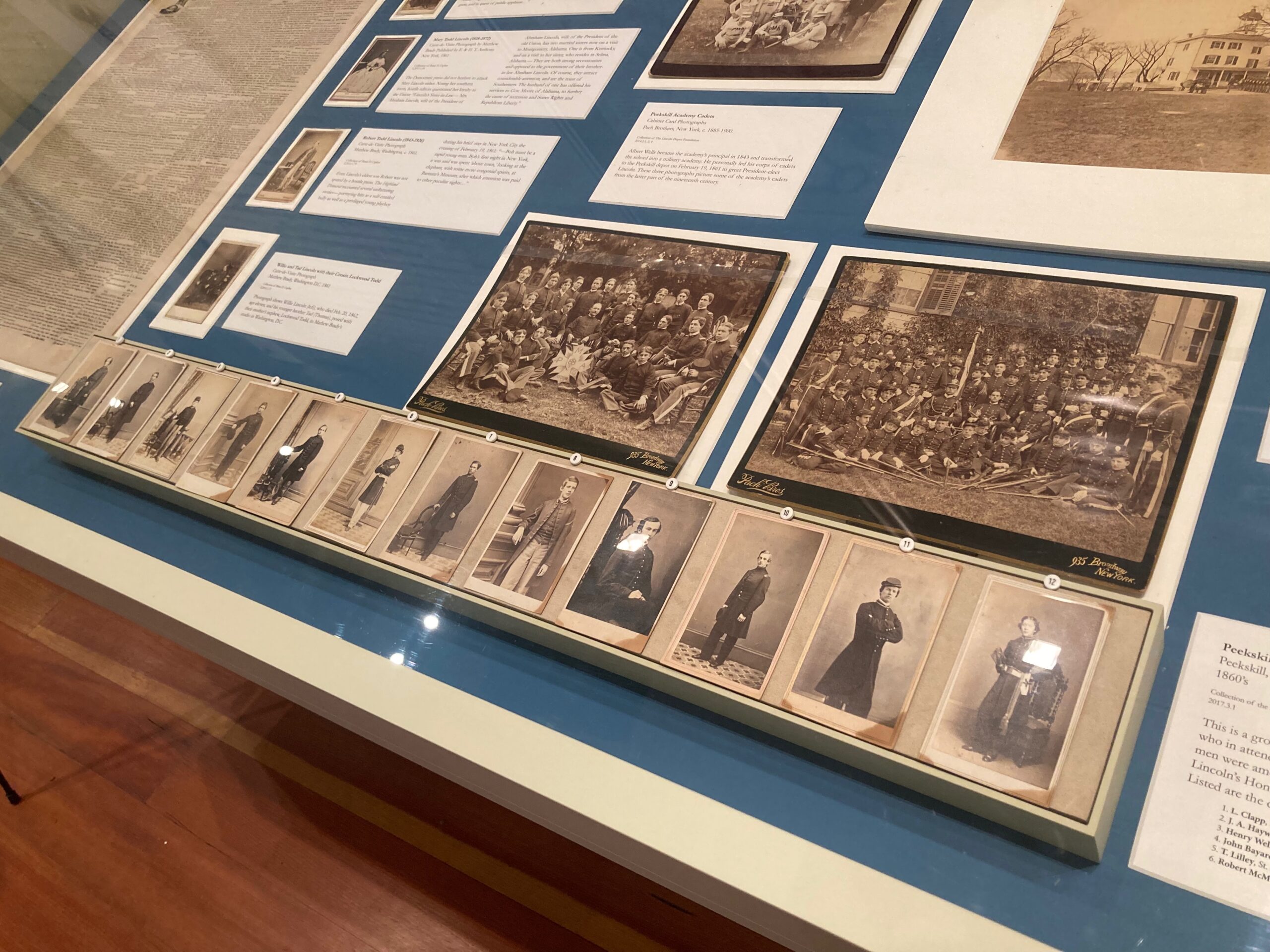
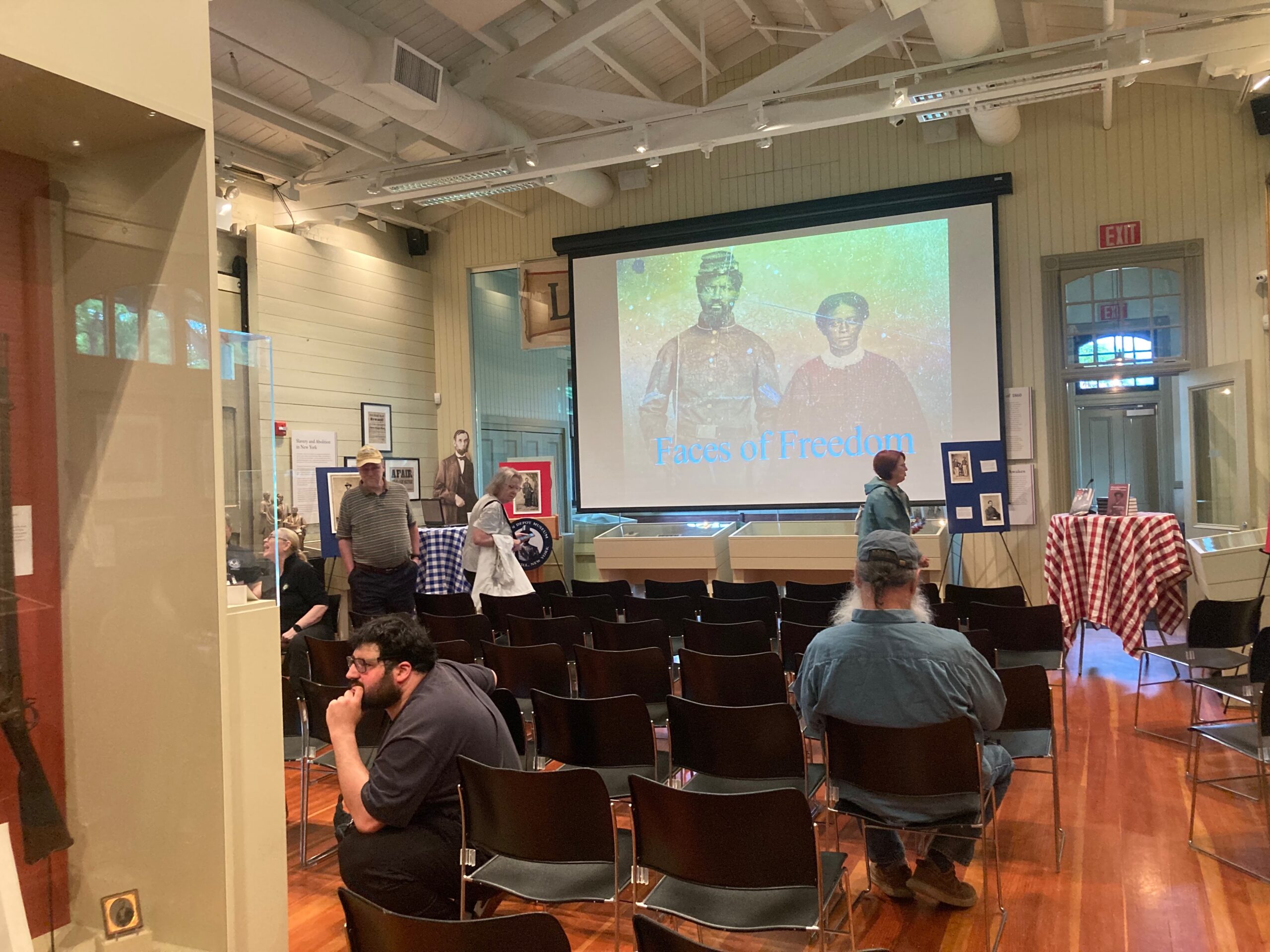
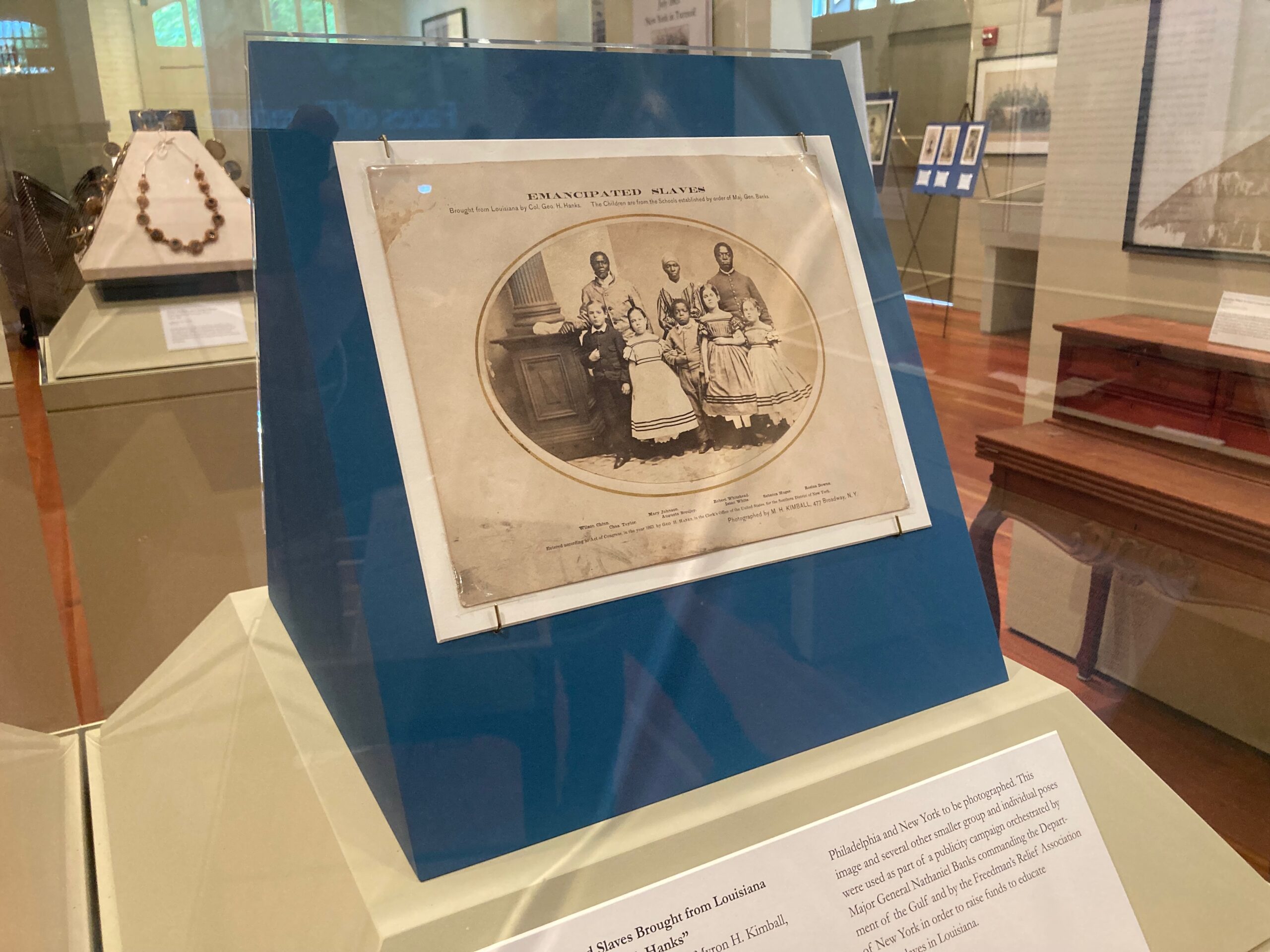
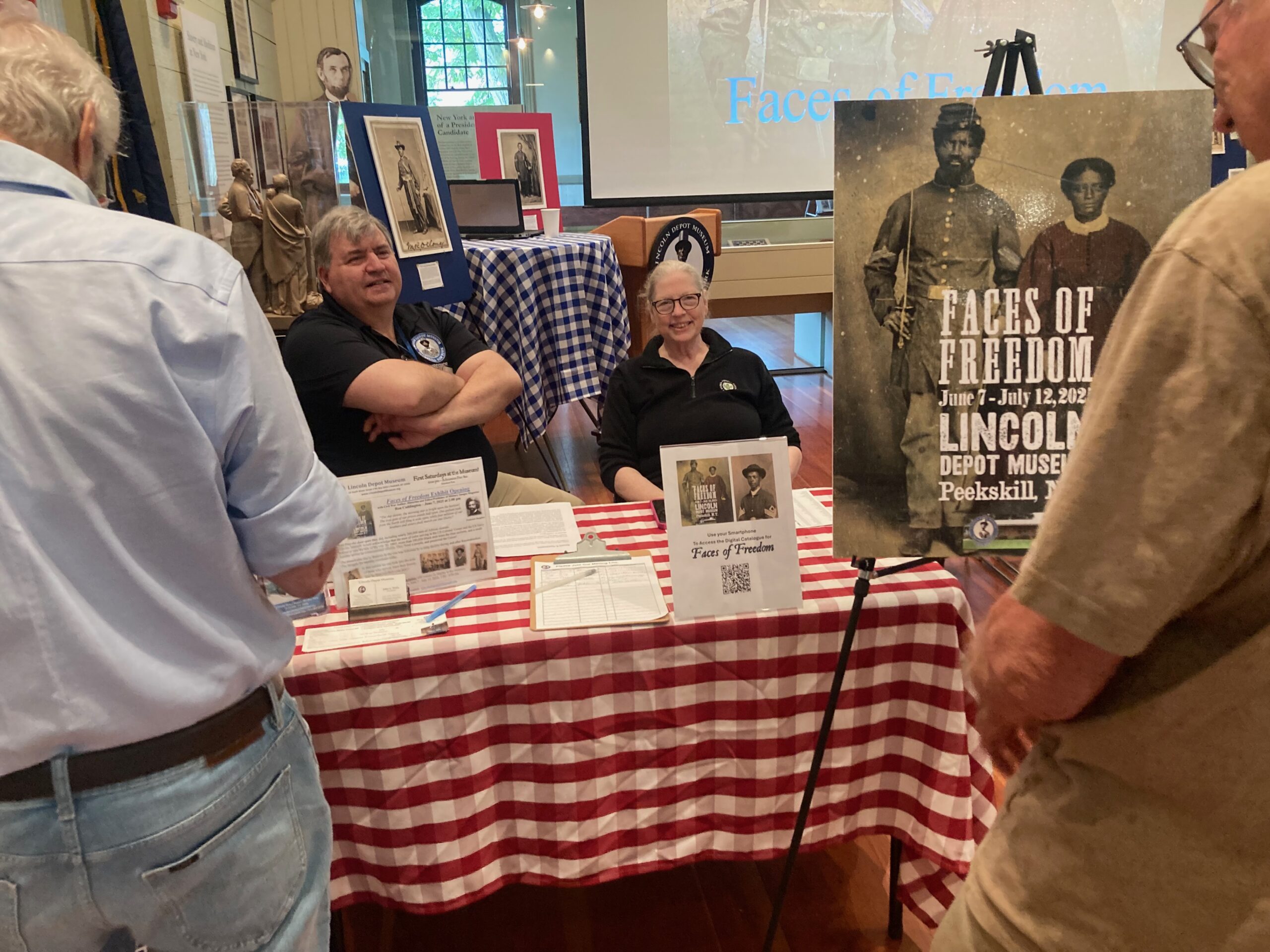
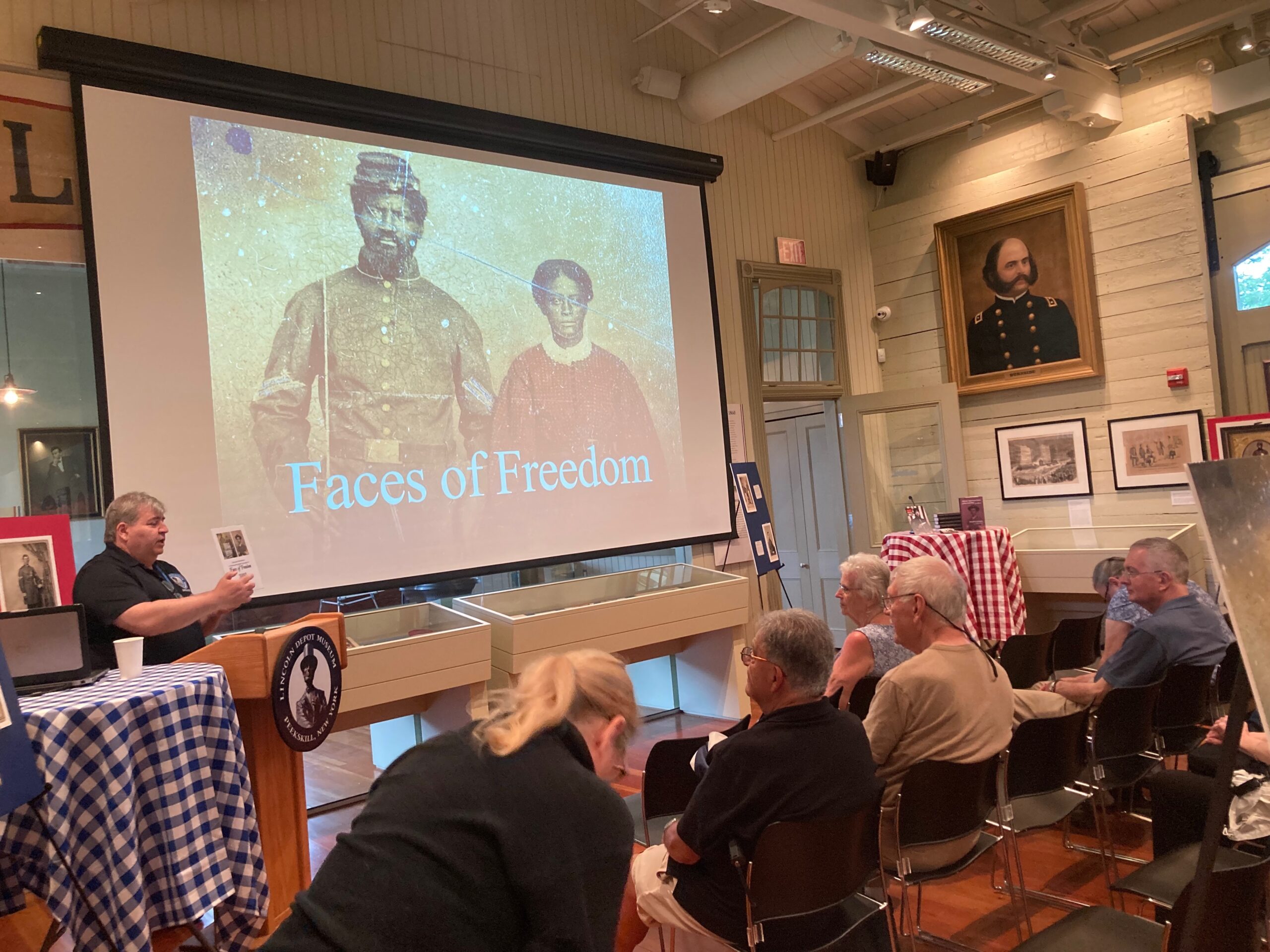
Military Images officially launched its traveling exhibit, Faces of Freedom: African American Faces of the Civil War Era, today at the historic Lincoln Depot Museum—just as a steady rain tapped against the roof of the 19th-century depot. Inside, the energy was high and the room full, as a packed house gathered to mark the opening.

Ron Coddington, editor and publisher of Military Images, delivered a wide-ranging presentation that set the stage for the exhibit. He traced the project’s development and explored the evolution of photography during the Civil War era. A “By the Numbers” section offered compelling data points, while detailed diagrams mapped the journeys of Black men from 1861 through the postwar years, culminating in the formation of the Buffalo Soldiers.

Coddington also addressed the evolution of terminology—from “Contraband” to “Freedmen” to “United States Colored Troops (USCT)”—and shared powerful, firsthand quotes from the soldiers themselves. Audience questions were both plentiful and insightful, underscoring the impact and importance of the stories on display.

Military Images extends a heartfelt thanks to Michael and Gail Bennett and all the volunteers at the Lincoln Depot Museum for their generous support and hospitality.

If you missed today’s event, don’t worry—the exhibit runs through July 12, 2025. Don’t miss your chance to experience this compelling visual and historical narrative.

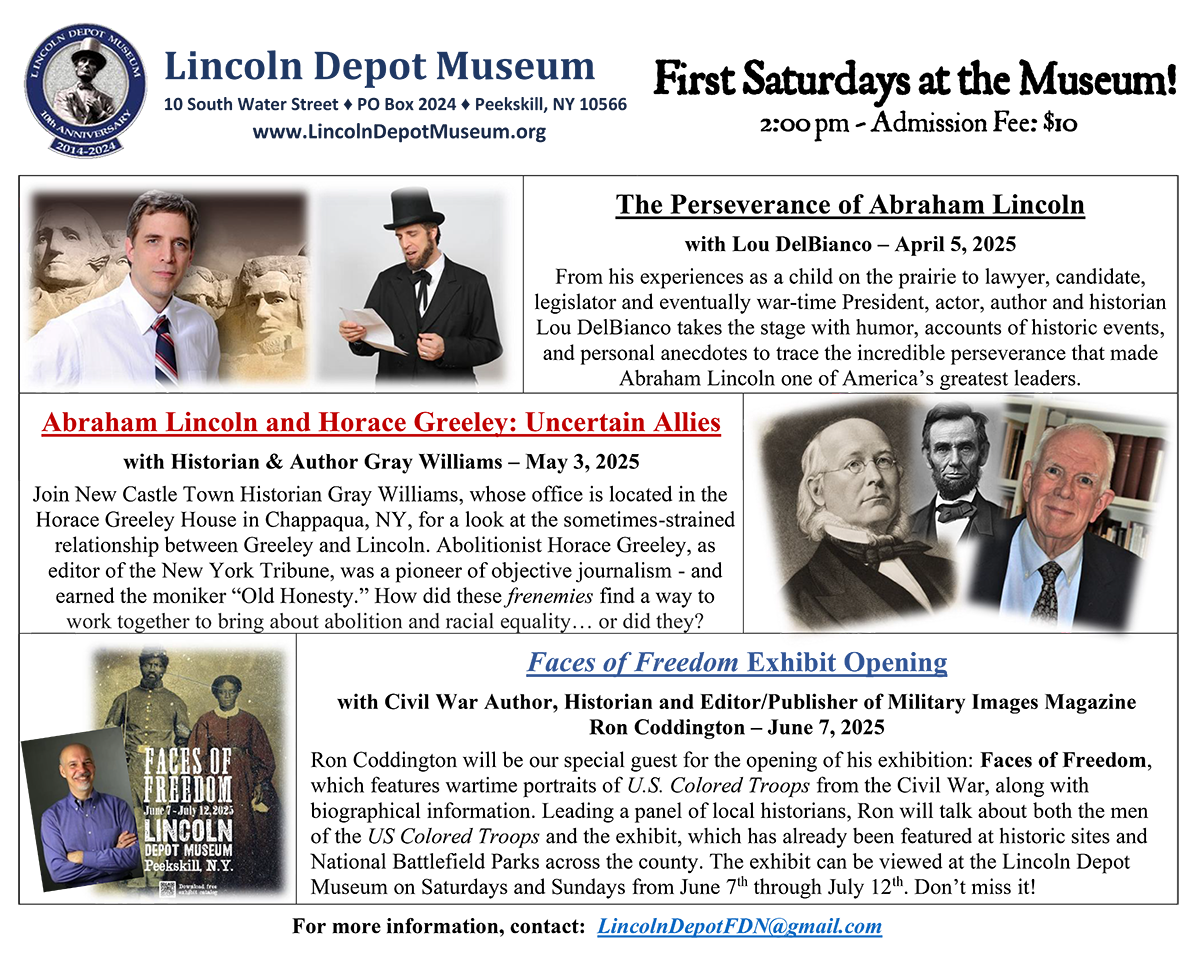
Faces of Freedom Exhibit Travels to the Lincoln Depot Museum

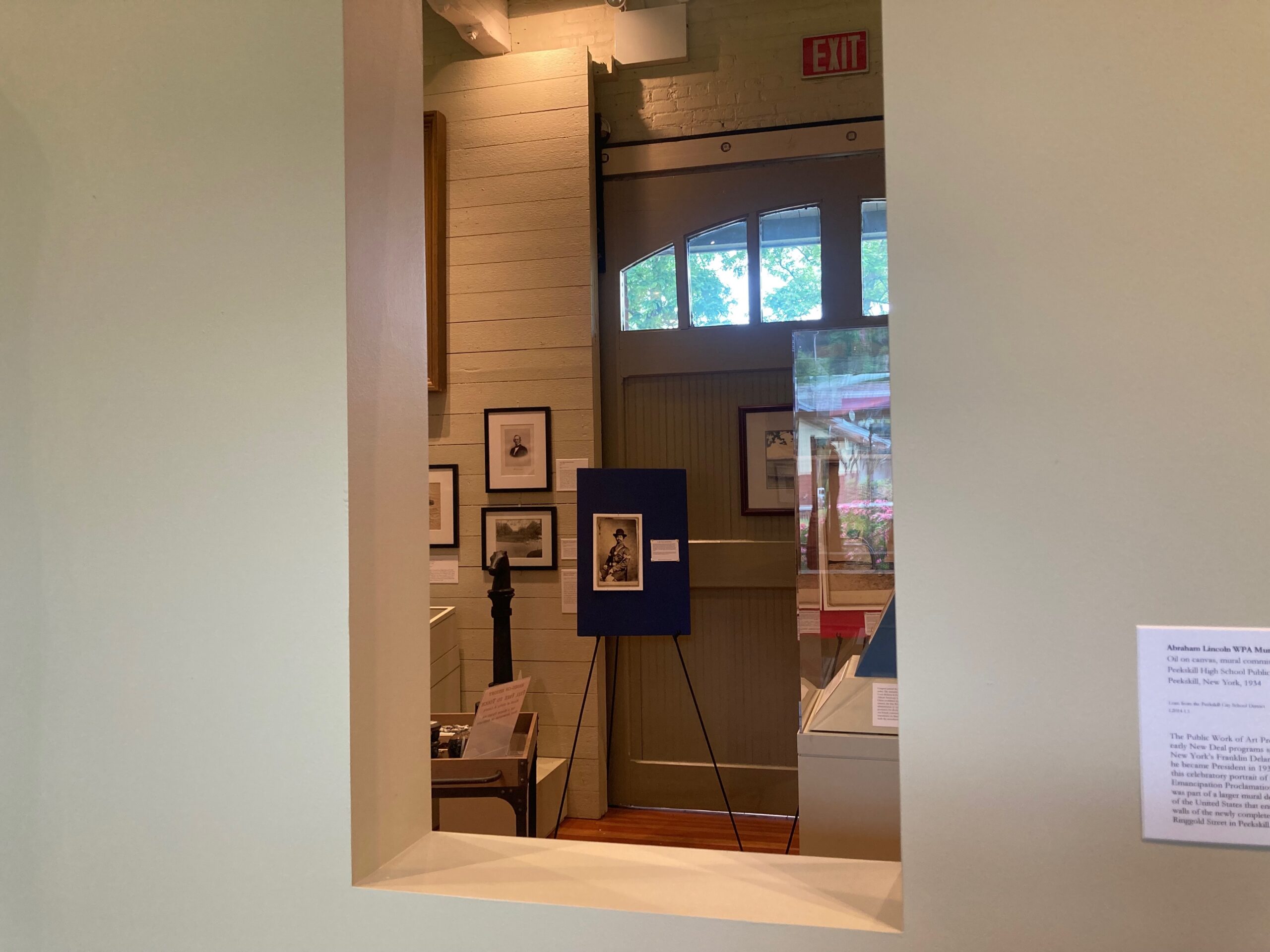
We are thrilled to announce that our traveling exhibit, Faces of Freedom, is coming to the Lincoln Depot Museum in Peekskill, N.Y. The exhibit will be on display from June 7 through July 12, 2025, offering visitors a powerful opportunity to connect with the courageous Black men who fought for freedom during the Civil War.

Established in 2019, Faces of Freedom first appeared at the Hubbard House Underground Railroad Museum in Ashtabula, Ohio. After a pause due to COVID, the exhibit resumed its travels in 2024, stopping at the Goodridge Freedom Center and Underground Railroad Museum in York, Pa., followed by Manassas National Battlefield Park. Now, we are honored to bring this exhibit to the Lincoln Depot Museum.

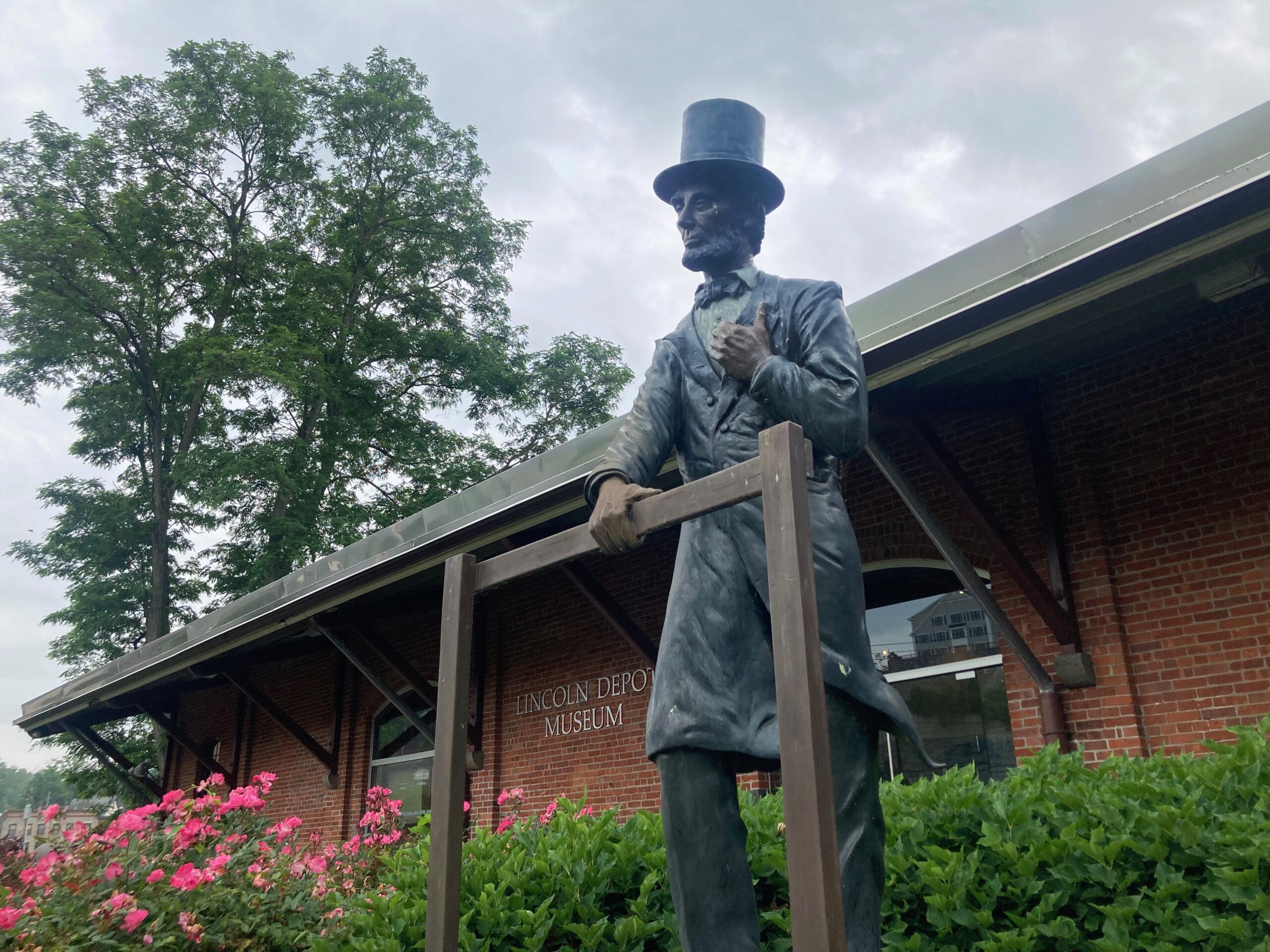
The Lincoln Depot Museum is a fitting location for this unique exhibit. President Abraham Lincoln traveled by rail through Peekskill on the way to his first inauguration in 1861. Two years later, Lincoln signed the Emancipation Proclamation, an executive order that paved the way for the enlistment of Black men in the Union Army and Navy. The soldiers featured in Faces of Freedom fought for the very cause Lincoln championed—freedom and equality.


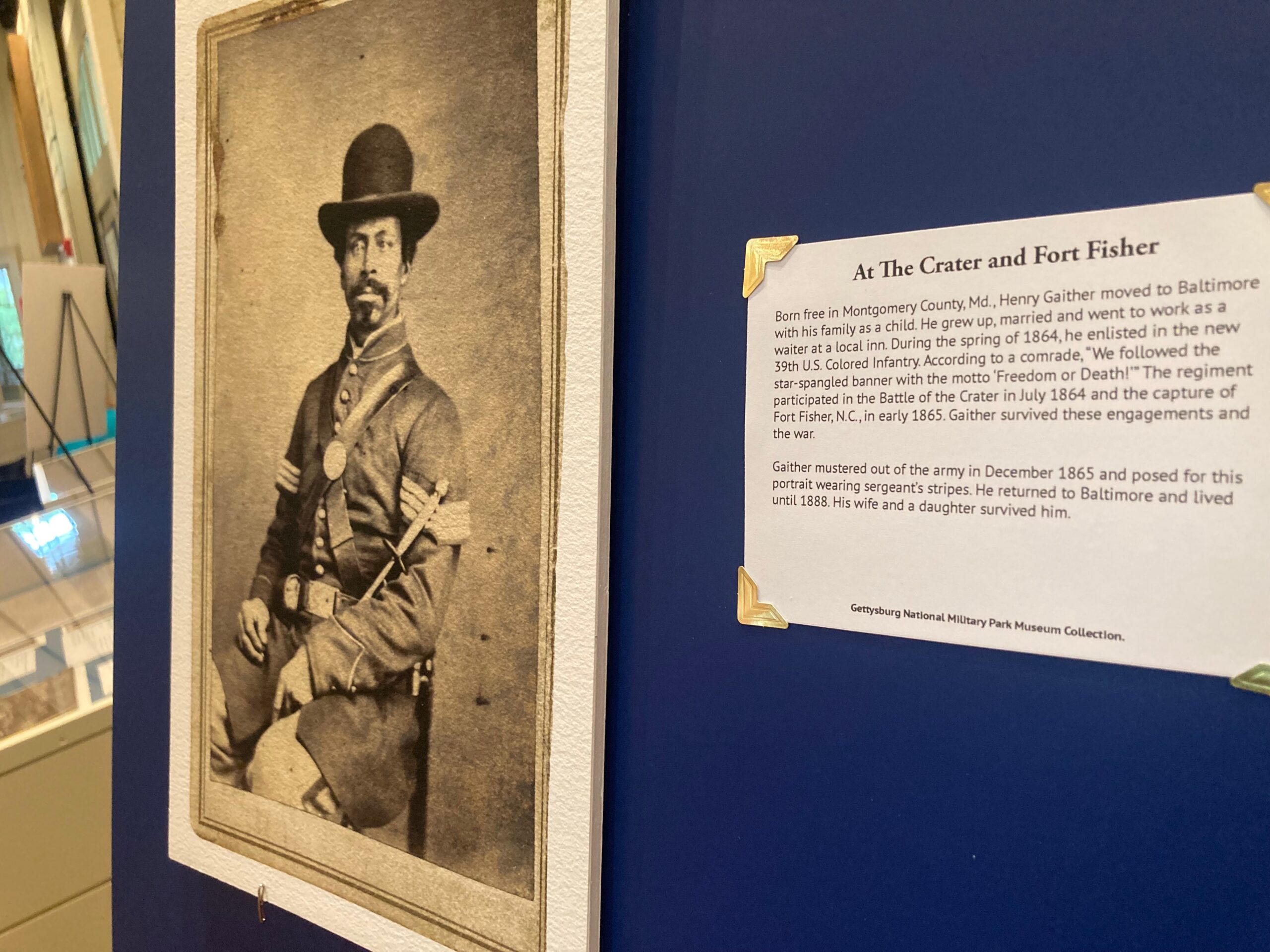
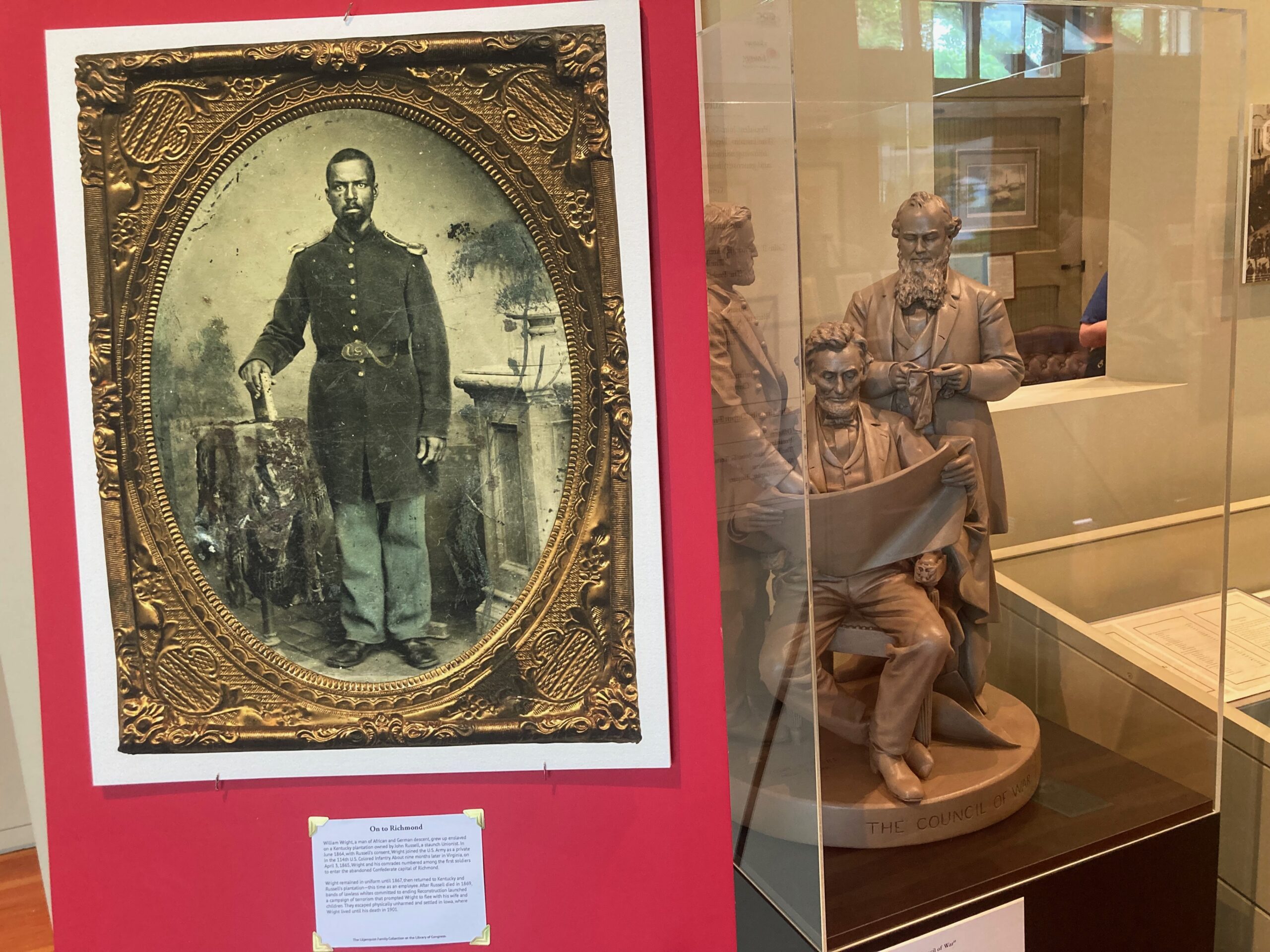
The exhibit features 37 stunning, high-quality prints of wartime portraits of Black soldiers and sailors who served in the U.S. Colored Troops (USCT) and Navy. Each portrait is paired with a compelling biographical sketch detailing their wartime experiences—some gave their lives in service of a more perfect Union, while others continued their fight for justice as Buffalo Soldiers in the West.

This special exhibit is made possible by Military Images, with assistance from the Goodridge Freedom Center and Underground Railroad Museum. Editor and Publisher Ron Coddington shares, “We are excited to bring these incredible portraits and stories to the Lincoln Depot Museum, where visitors can truly appreciate the bravery and sacrifice of these men who shaped our nation’s history.”

The images on display come from both private collectors and esteemed public institutions. We extend our deepest gratitude to the following individuals for sharing images from their collections: Jonathan Beasley, David E. Brown, Kevin Canberg, Glen Cangelosi, Ronald S. Coddington, Greg French, Thomas Harris, Ross Kelbaugh, C. Paul Loane, Steve Meadow, Ronn Palm, and Paul Russinoff.

We also thank the following institutions for their contributions:

  • Beinecke Rare Book and Manuscript Library, Yale University
  • The Lawrence T. Jones III Collection at DeGolyer Library, Southern Methodist University
  • Gettysburg National Military Park Museum
  • Kansas State Historical Society
  • The Liljenquist Family Collection at the Library of Congress
  • National Archives
  • West Virginia and Regional History Collection, West Virginia University Libraries
  • Manuscripts, Archives, and Rare Book Library, Robert W. Woodruff Library, Emory University

Don’t miss this extraordinary opportunity to experience history up close and honor these forgotten heroes. Visit the Lincoln Depot Museum in Peekskill, N.Y., and immerse yourself in the powerful stories of the Faces of Freedom.

For more details about the exhibit and museum hours, please visit https://lincolndepotmuseum.org/.