July 1 Talk: Cardomania! The Rise and Fall of the Carte de Visite

The Civil War Generation was the first to grow up with photography. This transformative medium made it possible for Americans from all walks of life to preserve their own likeness, a privilege once reserved only for the wealthy. During photography’s early years, daguerreotypes, ambrotypes and tintypes ruled the portrait world. Then, on the eve of the Civil War, a curious new format landed in America—the carte de visite. After hostilities began, hundreds of thousands of citizen soldiers and sailors posed for their likenesses. Countless millions of photographs were produced. Significant numbers of these most intimate and personal artifacts survive today. Some are finding a place among the iconic images of the war. Join Ron Coddington, author of four books of collected Civil War portraits and editor and publisher of Military Images magazine, as he tells the story of the rise and fall of the carte de visite—and what became of them.

Also appearing at the event are our friends from Gettysburg Publishing, represented by Kevin Drake and several of his authors:

  • Mark H. Dunkelman
  • Cindy Small-Jennie Wade of Gettysburg
  • Patricia Rich
  • Scott Mingus, Sr
  • Bernadette Loeffel-Atkins
  • Lisa Shower

Event details:
Sunday, July 1, 5-6 p.m.
Gettysburg Heritage Center
297 Steinwehr Ave.
Gettysburg, PA 17325
No admission charge

For more information, visit:
http://www.gettysburgpublishing.com/upcoming-events.html
https://www.facebook.com/Gettysburgpublishing/
https://www.gettysburgmuseum.com/author–artist-events.html

“You Were Making History”: Faces of Maine men who fought at Gettysburg

In this adaptation from his new book, Maine Roads to Gettysburg (Stackpole Books, 2018), the author provides an overview of the Pine State’s contribution to the Civil War through the varied experiences of its military volunteers. Profiles include Freeman McGilvery, Edwin B. Dow, Moses B. Lakeman, Abner Small, George Bisbee, Charles Mattocks, Holman Melcher, Ellis Spear and Samuel Keene. Each is illustrated with a portrait courtesy of the Maine Historical Society. Learn more about this story and others with our finding aid.

Gettysburg Album: Portraits of Union and Confederate soldiers in the Gettysburg Campaign

A total of 13 images, 5 Confederate and 8 Union, of soldiers who participated parts of the three-day battle and/or related engagements following the rebel retreat. They include John Lewis Ells of the 3rd Georgia Infantry, Kirkbride Taylor of the 8th Virginia Infantry, Augustine Leftwich Jr. of Shoemaker’s Battery, Virginia Horse Artillery, Ludwig Kohn of the 26th Wisconsin Infantry and more. Learn more about this story and others with our finding aid.

Old Pap: The neglected legacy of one of the Union’s most loyal brigadiers

Alpheus Starkey Williams commanded troops at many of the Civil War’s biggest battles and campaigns, including Gettysburg, Atlanta and the March to the Sea. His military record was exemplary. And yet history has forgotten him. The author examines Williams the soldier and the man, and reveals how his humble ways likely contributed to his lack of notoriety. Learn more about this story and others with our finding aid.

Silver for The Superb: Hometown tribute to a national hero

The wounding of Winfield Scott Hancock during Pickett’s Charge is one of the most notable moments of the Battle of Gettysburg. His actions in helping to repulse the Confederate assault won him new admirers throughout the Union, especially in his hometown of Norristown, Pa. His neighbors and friends paid tribute to Hancock with a unique silver service. Learn more about this story and others with our finding aid.

Finding Aid: Summer 2018

The complete issue

Vol. XXXVI, No. 3
(80 pages)

Print edition: Visit our store to check availability
Digital edition: Visit JSTOR.org to purchase
Subscribe to MI ($24.95)
Explore the MI Archives: Browse | Advanced search | Tutorial

Inside

Cover image
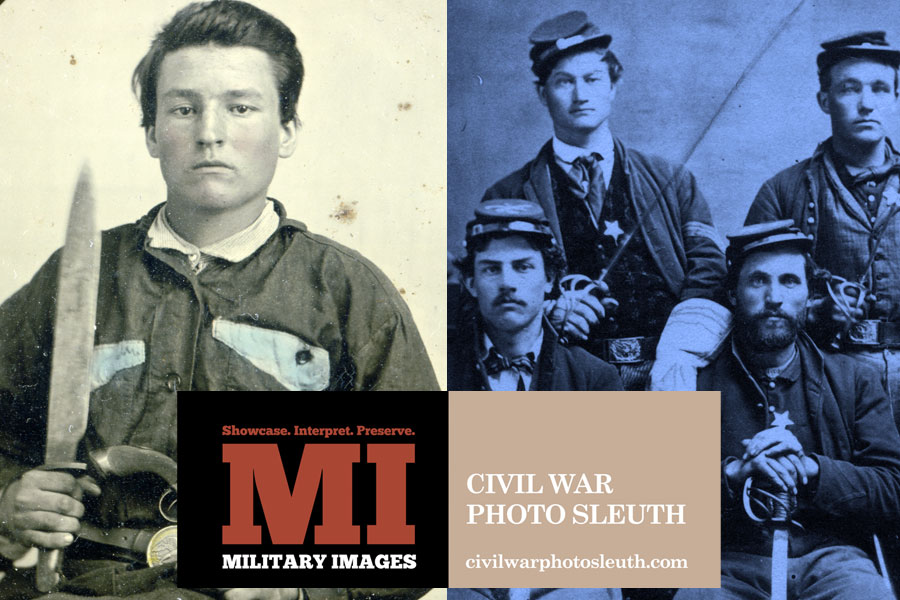
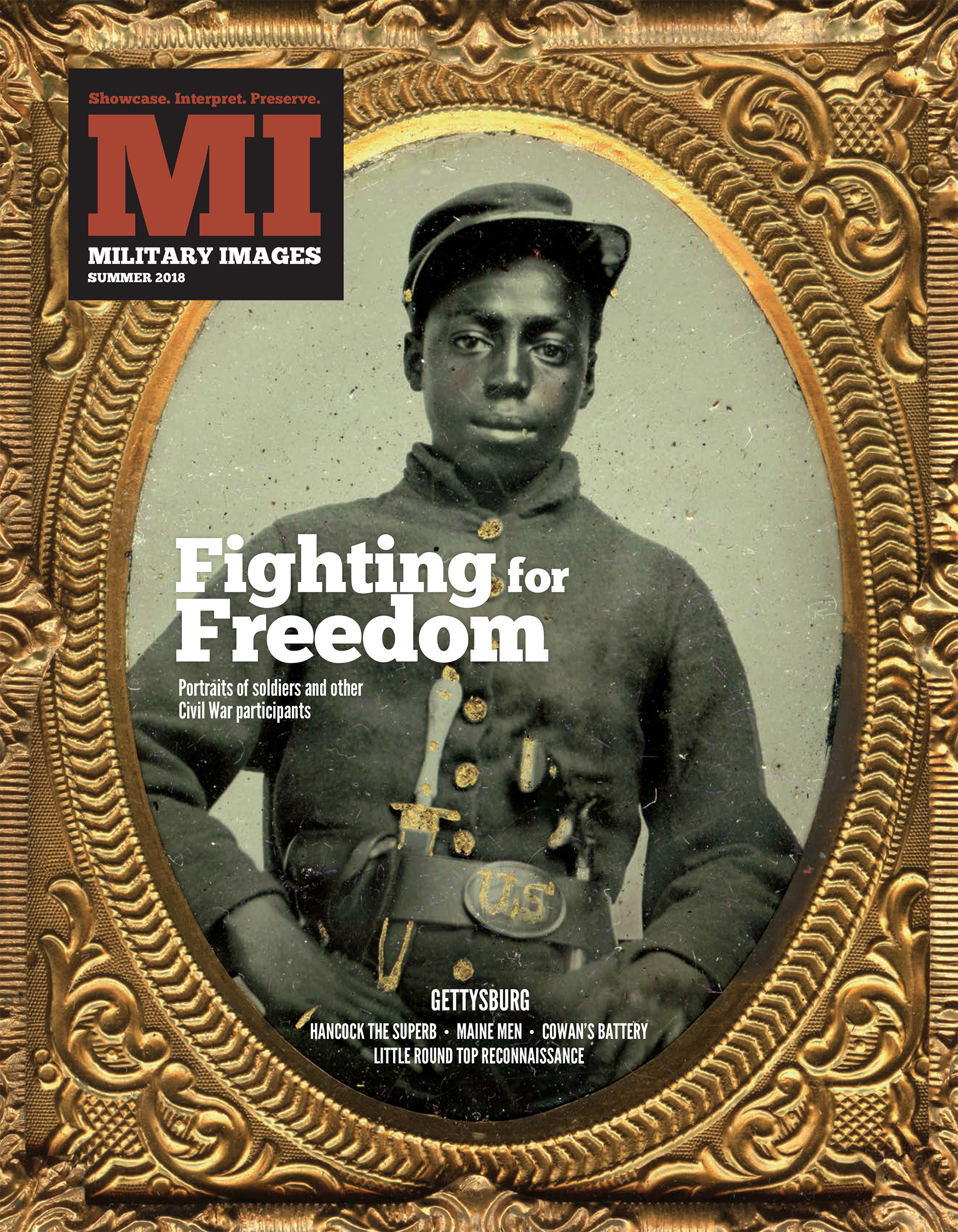
A ninth-plate tintype from the Doug York Collection pictures a young enlisted soldier with a knife and Colt Root Revolver.
Download (free)

Table of Contents (p. 1)
Download (free)

Editor’s Desk (p. 2)
In “Our Digital Preservation Effort,” the editor announces a deal with the non-profit digital library Journal Storage (JSTOR) to digitize and make searchable the entire run of Military Images.
Download (free)

Mail Call (pp. 3-4)
Feedback includes praise for personal soldier stories, feedback on the Father of the American Cavalry, comments on a soldier identified as a prototypical Confederate, and clarity of terms and titles used in our Nathan Bedford Forrest gallery.
Download (free)

Military Anthropologist (p. 4)
An analysis of the residences reported by 1,275 men of color upon their enrollment in the 54th Massachusetts Infantry.
Download (free)

Passing in Review (p. 6)
The War Outside My Window: The Civil War Diary of LeRoy Wiley Gresham (Savas Beatie) edited by Janet Elizabeth Croon is the writings of an invalid Georgia boy who observed the rise and fall of the Confederate nation.
Download (free)

Antebellum Warriors (p. 8)
A sixth-plate ruby ambrotype by from the Ron Field Collection is a portrait of Michael G. Stapleton, an Irish-born soldier who served in the 65th New York State Militia. He went on to serve in the Civil War with the 164th New York Infantry but did not live to see the end of hostilities.

Most Hallowed Ground (p. 10)
Carlos Alvarez de le Mesa, a native of Spain who served an officer in the 39th New York Infantry, also known as the Garibaldi Guard, was wounded in the Battle of Gettysburg. The bullet that struck his foot ended his active duty and he spent the rest of the war in the Veteran Reserve Corps. His grandson, Terry de la Mesa Allen, became a noted World War II general with the nom de guerre “Terrible Terry.”

Photo Sleuth by Kurt Luther (pp. 12-13)
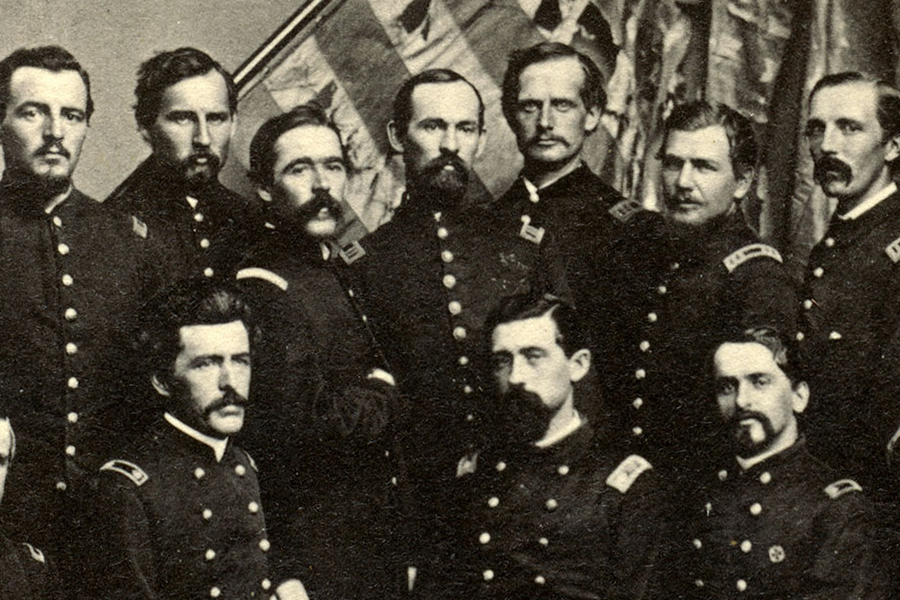
In “Non-Traditional Research Tools—and Serendipity,” Kurt explains how he identified a group of officers pictured in a carte de visite that was partially inscribed on the back of the mount. Period newspapers, letters and other sources helped him out names to all four faces.

Uniforms & History by Michael J. McAfee (p. 14)
In “Men of the Military Telegraph Service,” McAfee profiles this agency run by the Quartermaster Department. The text is illustrated with portraits of service members Samuel M. Brown, David Strouse, David Homer Bates, Richard O’Brien, Homer W. Gilbert and C.A. Homan.

Gettysburg Album: Portraits of Union and Confederate soldiers in the Gettysburg Campaign (pp. 16-22)
A total of 13 images, 5 Confederate and 8 Union, of soldiers who participated parts of the three-day battle and/or related engagements following the rebel retreat. They include John Lewis Ells of the 3rd Georgia Infantry, Kirkbride Taylor of the 8th Virginia Infantry, Augustine Leftwich Jr. of Shoemaker’s Battery, Virginia Horse Artillery, Ludwig Kohn of the 26th Wisconsin Infantry and more.

“You Were Making History”: Faces of Maine men who fought at Gettysburg by Tom Huntington (pp. 24-29)
In this adaptation from his new book, Maine Roads to Gettysburg (Stackpole Books, 2018), the author provides an overview of the Pine State’s contribution to the Civil War through the varied experiences of its military volunteers. Profiles include Freeman McGilvery, Edwin B. Dow, Moses B. Lakeman, Abner Small, George Bisbee, Charles Mattocks, Holman Melcher, Ellis Spear and Samuel Keene. Each is illustrated with a portrait courtesy of the Maine Historical Society.

Reluctant Hero: Otis C. Billings and Cowan’s 1st New York Independent Battery at Gettysburg by Charles Joyce (pp. 30-34)
Billings, a young, battle-hardened soldier with a distinguished record, was unusually reluctant to fight on the third day at Gettysburg. He and his artillery battery, commanded by Capt. Andrew Cowan, went on to fight near The Copse of Trees during Pickett’s Charge. There the fate of Billings and the rest of Cowan’s gunners were decided.

Fallout from the Johnston Reconnaissance: A late-war letter by Robert E. Lee sheds light on an enduring Gettysburg controversy by Ronald S. Coddington with Dave Batalo (pp. 36-37)
In late January 1865, Lt. Col. Samuel Richards Johnston became a father after his wife gave birth to a baby boy. Johnston decided to name his son after the general on whose staff he served—Robert E. Lee. A reply letter from Lee thanking Johnston for the honor suggest the two men were on cordial terms. This suggests Lee harbored no ill will towards Johnston for a July 2, 1863, reconnaissance on Little Round Top that remains a hot topic for historians and other battle enthusiasts.

Silver for The Superb: Hometown tribute to a national hero by Matt Hagans (pp. 38-39)
The wounding of Winfield Scott Hancock during Pickett’s Charge is one of the most notable moments of the Battle of Gettysburg. His actions in helping to repulse the Confederate assault won him new admirers throughout the Union, especially in his hometown of Norristown, Pa. His neighbors and friends paid tribute to Hancock with a unique silver service.

Civil War Images; Fallen Soldiers by Robert Lee Blankenship  (p. 40)
A poem explores the connection between Civil War soldier photographs and the individuals who collect them.

Faces in Cases: Representative images from the Bryan Watson collection (pp. 42-51)
Wyoming’s Bryan Watson’s passion for collecting might be summed up in a fortune cookie he once received: “Where your treasure is there will your heart will be also.” A profile of Watson is accompanied by a selection of 25 of his finest portraits of Union and Confederate soldiers.

Old Pap: The neglected legacy of one of the Union’s most loyal brigadiers by Ben Myers (pp. 52-58)
Alpheus Starkey Williams commanded troops at many of the Civil War’s biggest battles and campaigns, including Gettysburg, Atlanta and the March to the Sea. His military record was exemplary. And yet history has forgotten him. The author examines Williams the soldier and the man, and reveals how his humble ways likely contributed to his lack of notoriety.

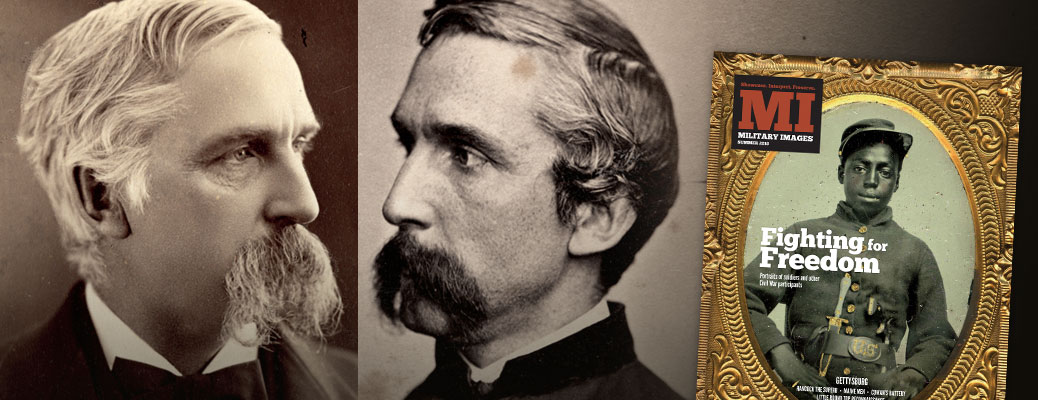
Fighting for Freedom: Portraits of soldiers and other Civil War participants (pp. 59-65)
No single group experienced such a dramatic change in fortunes during the Civil War than men of color. From an enslaved race to freedmen to post-war struggles, they served as soldiers, servants and laborers. A sampling of 13 portraits, some never before published, are featured here.

Memento of a Senseless Death: The portrait of a surgeon recalls a wartime murder by Daniel R. Glenn (pp. 66-68)
John Gore Johnson, a Massachusetts physician who served as a contract surgeon in Union-occupied North Carolina, treated an African American man shot and mortally wounded by a federal soldier. A court-martial convened in New Bern to try the soldier, who was charged with murder. Johnson testified, and posed for his portrait soon afterwards. A note tucked inside the image case suggests that the trial was one that the doctor wanted to remember.

A Navy Lieutenant Faces Divided Loyalties in His Final Discharge of Duty by Fred D. Taylor (pp. 70-73)
Virginia-born career navy officer Otway Henry Berryman found himself in command of a vessel in Florida as the Union broke apart and was consumed by war. In the face of divided loyalties, Berryman managed to navigate uncharted political and military waters as tensions mounted in Pensacola Bay. He might have gone on to become one of the Union’s best-known naval commanders—then fate intervened.

The Honored Few (pp. 74-75)
Charles Henry Tompkins, a West Point dropout whose father was a career army officer, was perhaps an unlikely choice for a war hero. On June 1, 1861, on a scouting mission just outside Washington, D.C., he encountered Confederate troops. What followed was an encounter that became known as the Battle of Fairfax Court House. His aggressive actions were recognized with the Medal of Honor in 1893.

Stragglers: Distinctive Images from MI contributors (pp. 76-77)
“Confederate Portraits” features three images of unidentified soldiers.

Sutler’s Row (p. 79)

The Last Shot (p. 80)
A carte de visite from the Michael J. McAfee Collection is a portrait of a trio of young ladies who have surrounded their captive, a Union first sergeant.
Our Digital Preservation Effort

The toughest part of my job may surprise you—fielding specific search requests. Want to know how many times the 54th Massachusetts Infantry is mentioned in all of our issues? How about the 6th Virginia Cavalry? I couldn’t tell you without a huge investment in time.

The root of the problem is that there has been no easy way to search our 200-plus issues archive. My predecessors, to their credit, anticipated the need, and created two indexes: one for stories and another for regiments. But they were not maintained and are now out of date. A substantial effort is required to bring them to current times. And they’re not digital native.

I’ve been concerned about how to make 40 years of content available since becoming editor.

Our first effort to address the problem was to create finding aids. We began cataloging in November 2015 and completed the work last December. These aids can now be browsed by volume by volume and issue number in the Back Issues section of our site. Though these finding aids do not satisfy larger search needs, they do document the contents of each issue.

What we really needed was a fully searchable digitized collection. I investigated a few options early on in my tenure, but could not find a way forward.

Everything changed on Sept. 26, 2016, with an email from Robert Sedgwick, a Senior Editor at the non-profit digital library Journal Storage, or JSTOR. “I write today to invite your publication, Military Images, to join our archive,” Sedgwick stated. He added, “Participation in the archive is by invitation, and Military Images was selected after a careful review of its publication history, as well as recommendations from academic librarians and scholars.”

I accepted the offer and soon the archive of printed magazines was in the hands of JSTOR staff. They scanned and converted each page to optical character recognition, then made everything searchable on JSTOR.org. The work finished last month.

The JSTOR team has my eternal gratitude for preserving Military Images for all time.

Thanks to their efforts, Military Images can be searched by anyone. Modest fees apply to download stories and issues. So go forth and explore! Visit jstor.org/journal/militaryimages to begin searching. Before you do, I recommend our guide for how to get the most out of your JSTOR visit. It is available on militaryimages.com.

Oh, and the answers to those questions? The 54th Massachusetts appears 22 times, and the 6th Virginia Cavalry makes 14 appearances.

How to Make the Most of Your Military Images Search on JSTOR

JSTOR offers a powerful search tool to explore Military Images, and has a unique interface to guide you to the best possible results. There are two main ways to access our content:

  • Advanced Search: Using key terms and boolean operators to deliver relevant results, this is a great tool for in-depth fielded searches.
  • Browse: Organized by subject, title and publisher. If you are looking for a specific issue , this is a convenient way to access it.

Military Images recommends the Advanced Search to take full advantage of our full run of issues. Why? Because the JSTOR interface is designed to perform unique searches of value to collectors, historians, genealogists and other enthusiasts. Here’s how it works:

  1. Go to jstor.org and select “Advanced Search.” You don’t need to be logged in to search.
  2. On the search screen, enter key terms in the field boxes and the pull-down menus to connect the terms (and, or, not, near 5, near 10, near 25). You can add additional search boxes as needed. Scroll down to the “Journal of Book Title” field and type in Military Images. Fill in other boxes as desired.
  3. Select “Search.” A new page will load with your results.
  4. Select a search result to purchase a PDF of the story. To complete the purchase you will need to register for an account.

For further information, visit JSTOR’s collection of video tutorials.

Maelstrom in The Wilderness

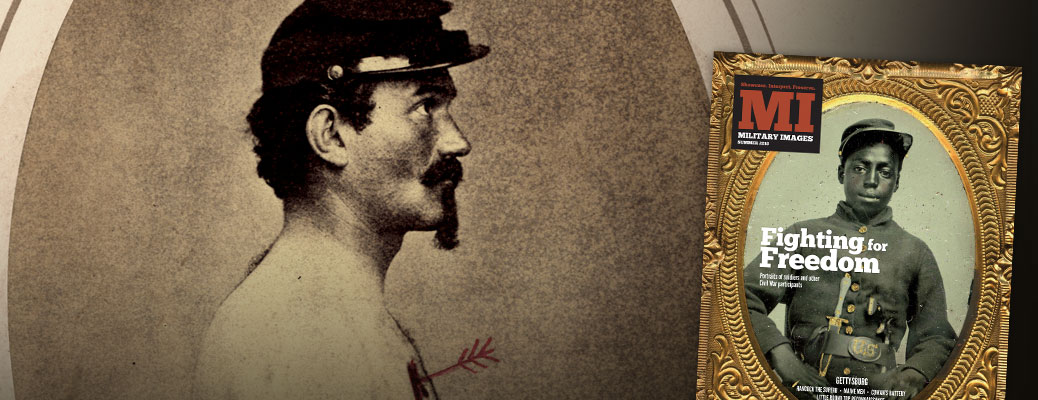
Without question, Union losses during the Battle of the Wilderness in the spring of 1864 were on a massive scale. The volunteers of Vermont suffered heavy casualties as the Army of the Potomac ground its way towards eventual victory over the Army of Northern Virginia. Here, we look at Vermont’s story through the portraits and stories of those who became casualties in the brutal fight. Learn more about this story and others with our finding aid.

Philanthropic Photos

The Civil War was a time of many firsts, and one of them is the explosion in sales of photographs for charitable purposes. From massive fairs in major cities to raise money for the leading philanthropic organization of the day to individual soldiers maimed by amputation and unable to work, we take a look at different uses. Learn more about this story and others with our finding aid.