Finding Aid: September/October 2000

The complete issue

Vol. XXII, No. 2
(48 pages)

Print edition: Visit our store to check availability
Digital edition: Visit JSTOR.org to purchase
Subscribe to MI
Explore the MI Archives: Browse | Advanced search | Tutorial

Inside

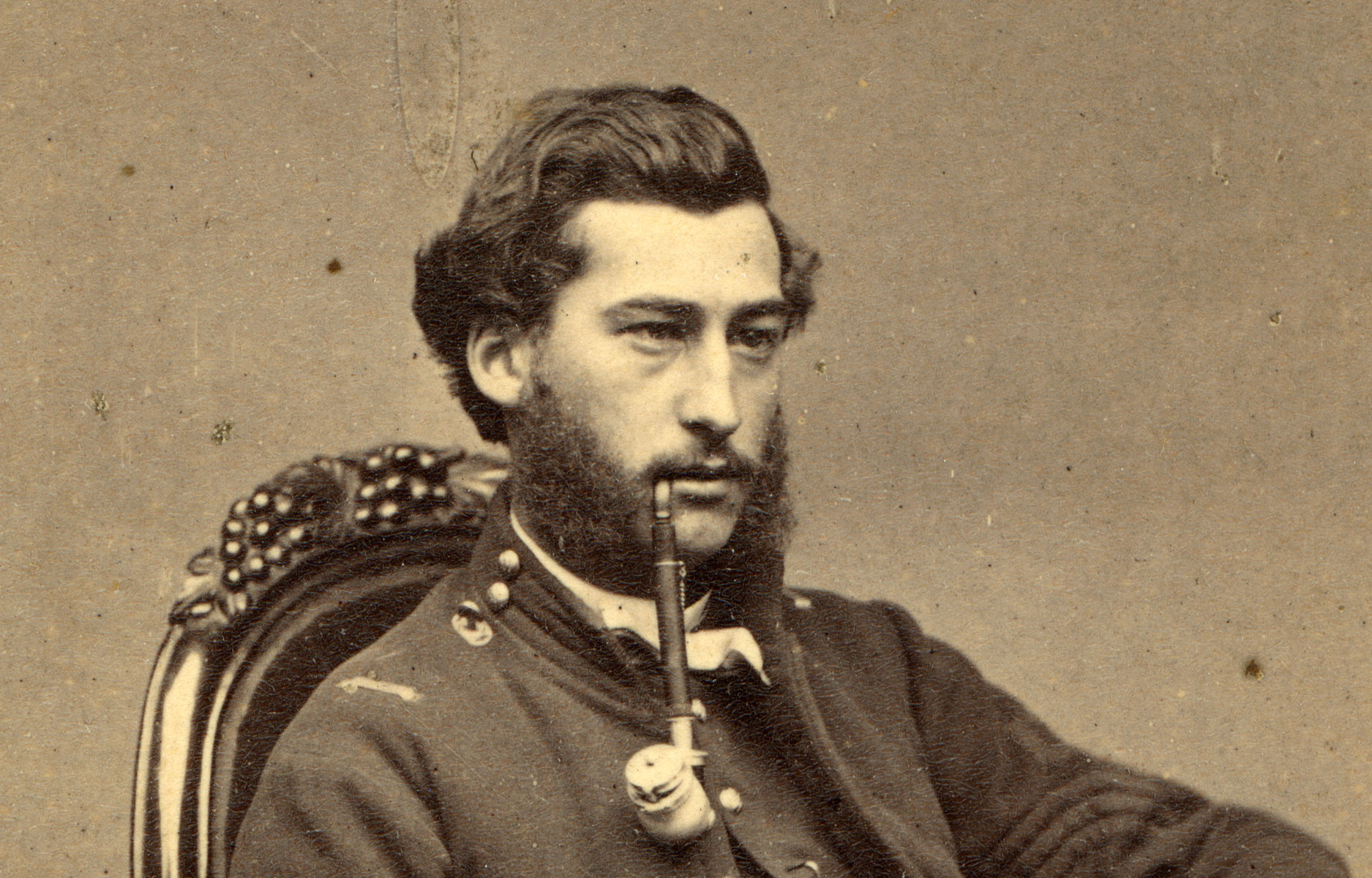
Cover image
A photograph of a U.S. navy lieutenant by Black of Boston wears the rank insignia consistent with 1852 regulations.

Table of Contents (p. 1)

Editor’s Desk (p. 3)
The editor announces that he has been keeping an index of every unit mentioned in the issues, and that it will be available on the web site and also parts of the magazine. Also, MI has a new addition to the team of book review editors: Thomas Boaz, author of Guns for Cotton, England Arms the Confederacy and Libby Prison & Beyond, A Union Staff Officer in the East, 1862-1865.

Mail Call (pp. 4-5)
Topics include congratulations to Phil in his new role as editor and a question about a carte de visite identified as Lotta Crabtree, who was an actress in post-war California.

Rank Insignia of the Civil War U.S. Line Officers: A Primer by Phil Katcher (pp. 6-10)
The author notes, “The U.S. Navy constantly changed its rank insignia system during the war. These different badges give clear clues as t the date of period images.” The survey of ranks continues with text and graphics that diagram the changing cuff designs. Portraits of the following naval officers are also included: Capt. Henry W. Morris, Cmdr. David D. Porter, Cmdr. Edward Hooker, Cmdr. John L. Worden, Master William F. McCann, Lt. Cmdr. George A Bigelow with Surg. Thomas Potter, and Ensign Seth L. La Dieu.

The Andersonville of the North: A Documentary History by John Eltzgaard (pp. 11-17)
According to the author, “Camp Douglas, near Chicago, gained a reputation as the Andersonville of the North. Yet it had one thing Andersonville didn’t, its own photographer.” The narrative continues with a series of report excerpts that touch on various aspects of life inside and outside the infamous camp, and a brief biography of photographer Daniel F. Brandon. The story is illustrated with a Brandon photo from the top of a wall of the camp and portraits of guards (7) and prisoners (8). Three of the guards are identified: Mathias Kesler of the 104th Illinois Infantry, Samuel S. Fairfield of the 65th Illinois Infantry and Capt. James M. Tracy of the 8th Veteran Reserve Corps. Two of the prisoners are identified: William M. Carter and William E. McCormick of the 8th Kentucky Cavalry. Three other prisoner portraits have tentative identifications: M.O. Mason Ryan of McLean, Texas, Joseph Holt and L. Daly.

A Photograph of the C.S.S. Alabama “In Chase” by Stanley Warren and Budd LaRue (pp. 18-22)
The discovery of a photograph of the famed rebel raider is illustrated with the image that was found in the Museum of the Confederacy and six other images.

The Murdered Children by Steve DeGenaro (pp. 23-24)
During the decade following the Civil War, a disturbed veteran was involved in the gruesome murder of two children in Columbiana, Ohio. Ervin Porter, who had served in Company C of the 24th Ohio Infantry, distinguished himself during his military service and suffered a wound during the Battle of Chickamauga. On Dec. 12, 1872, he killed his young daughters with a small hatchet. Declared insane, he was imprisoned and died in captivity in 1875.

The Friends of Davy Corser: An Album of Wartime Acquaintances by Mahlon P. Nichols (pp. 25-27)
Service in the 14th New Hampshire Infantry during the Civil War was for 15-year-old David S. Corser the beginning of a remarkable career as a lawyer, and later as Messenger and Assistant Sergeant at Arms for the U.S. Senate. From 1885 to 1933, he served every president from Grover Cleveland to Franklin D. Roosevelt. He died in 1937. His surviving personal photo album includes his wartime likeness plus images of comrades 1st Lt. Marcus M. Holmes, 1st Lt. James B. Mason, 1st Sgt. David A. Macurdy, 2nd Lt. Walter H. Sergeant, Pvt. Joseph T. Cotton and a soldier believed to be his brother, Hamilton Corser. Two post-war photographs are also featured of Corser with veterans.

Staff Officers of the 43d Massachusetts Volunteers: Photographic Detective Work with the U.S.A.M.H.I. by Paul R. Johnson, M.D., F.A.C.S. (pp. 28-31)
A case study of the how the author came to identify seven officers pictured in a large outdoor albumen photograph marked, “Camp Rogers, Encampment of the 43rd Mass. Vols., Newbern, N.C., March 13, 1863.” The photographer, G.H. Nickerson, was a first lieutenant in Company E. of the regiment. The men are Col. Charles L. Holbrook, Quartermaster Henry A. Turner, Lt. Col. John C. Whiton, Chaplain Jacob C. Manning, Surg. Alonzo Carter Webber, Adj. James M. Whitney and Maj. Everett Lane. Also included are photographs from the U.S. Military History Institute in Carlisle Barracks, Pa., that corroborate the identities of the officers.

Uniforms & History by Michael J. McAfee (pp. 32-33)
In this installment of the column, “The U.S.M.A. Corps of Cadets,” McAfee explains that Cadet Gray and Army Blue are all part of the same history that dates back to the War of 1812. Illustrations include two cadets, W.R. Rowell in full gray dress uniform and Charles L. Fitzhugh dressed in the furlough uniform of blue.

Stragglers (pp. 34-38)
Featured images include 2nd Lt. DeLafayette Chandler of the Pennsylvania Light Artillery, Cpl. Thomas M. Round of the 46th New York Infantry, a Confederate officer wearing a uniform jacket with fur muffs attached to his cuffs, a Georgia soldier with a Colt Navy revolver tucked into his waist belt and Cpl. Richard M. Goshorn of the 34th Indiana Infantry who is dressed in a Zouave-inspired uniform.

Captain Bob’s Caveat Emptorium, House of a Thousand Bargains by Harry Roach (p. 39)
In this column, readers are persuaded to believe that two photographs are portraits of Confederate and Union soldiers. In fact, the “Confederate” is a British soldier who served in the 2nd Shropshire Rifle Volunteers. The Yankee is a corporal in the Salvation Army, circa 1870-1900.

Index to Civil War Regiments (pp. 40-45)

Passing in Review (p. 46)
Two publications are reviewed, Terrible Swift Sword, Union Artillery, Cavalry and Infantry, 1861-1865 (Stackpole Co.) by John P. Langellier and Warrior in Gray: General Robert Rodes of Lee’s Army (White Mane Books) by James K. Swisher.

Sutler’s Row (pp. 47-48)

Finding Aid: March/April 1989

The complete issue

Vol. X, No. 5
(32 pages)

Print edition: Visit our store to check availability
Digital edition: Visit JSTOR.org to purchase
Subscribe to MI
Explore the MI Archives: Browse | Advanced search | Tutorial

Inside

Cover image
A full-plate albumen photograph from the David Mark collection pictures two corporals of the Maryland Guard Battalion, John Eager Howard of the 1st Infantry and the 1st Cavalry, and Charles R. Thompson of the 1st Cavalry.

Editor’s Desk (p. 1)
The editor notes that this is the very first issue dedicated to a single state—Maryland Troops in the Confederate Army. It is also the third issue dedicated to one man’s collection. (Ronn Palm had the honor of being first in 1987 and Mike McAfee in 1988.)

Mail Call (p. 2)
The letters to the editor include a plea for “More sex!” This is a reference to the gallery Risque Business in the last issue. Another letter describes how someone is forging signatures on cartes de visite and selling them at Civil War shows.

Passing in Review (p. 3)
The issue features reviews of 3 publications, including Winfield Scott Hancock, A Soldier’s Life (Indiana University Press) by David M. Jordan; Cry Comanche (The Hill College Press) by Col. Harold B. Simpson and Gettysburg, videotape of the 1988 battle reenactment (Classic Videos).

Vis-à-vis: Dave Mark (p. 4)
An interview in a question and answer format explores the background and interests of the featured collector of this issue.

Maryland Troops in the Confederate Army (p. 5)
This introduction to the David Mark collection is an overview of Maryland’s participation in the Civil War, which includes a roster of all the Confederate units.

Maryland General Officers (pp. 6-8)
The officers include Brig. Gen. Bradley T. Johnson, Brig. Gen. John Henry Winder, Brig. Gen. George Hume “Maryland” Steuart, Brig. Gen. James Jay Archer, Brig. Gen. Arnold Elzey, Maj. Gen. Mansfield Lovell and Brig. Gen. Lloyd Tilghman.

Maryland Naval Officers (pp. 9-11)
The officers include Adm. Franklin Buchanan, Cmdr. James Iredell Waddell, John W. Bennett, Comm. George N. Hollins Sr. and Rear Adm. Raphael Semmes.

Maryland Staff Officers (pp. 12-13)
The officers include Lt. Col. Osmun Latrobe, who served on the staffs of Joseph E. Johnston, David Jones and James Longstreet; Capt. McHenry Howard, who served on the staffs of Charles Winder, “Maryland” Steuert and George Washington Custis Lee; Col. William Norris, Chief of the Confederate Signal Corps and later Chief of the Secret Service Bureau; Maj. Frederick Gustavus Skinner of the 1st Virginia Infantry, Lt. Col. Edward Murray of the 49th Virginia Infantry, who also served as assistant adjutant general to Robert E. Lee and Maj. Henry Kyd Douglas, who served on the staffs of Thomas J. “Stonewall” Jackson, Edward Johnson and John B. Gordon.

Maryland Artillerymen (pp. 14-15)
The soldiers include Capt. Frederick M. Colston of the Army of Northern Virginia, Lt. Col. Llewellyn Griffith Hoxton of William J. Hardee’s Corps, Capt. William L. Ritter of the 3rd Maryland Battery, Maj. James Breathed of J.E.B. Stuart’s cavalry corps, Pvt. George Addison Cook of Dement’s Battery, 1st Maryland Artillery, Capt. William Hunter Griffin of the 2nd Maryland “Baltimore Light” Battery and Lt. Henry Clay Hewitt of Otey’s Battery.

The Maryland Guard Battalion (pp. 16-19)
Identified soldiers include Dewitt Clinton Rench, Charles P. Stewart, John Hudson Snowden, William H. Murray, McHenry Howard, Robert G. Harper Carroll and George P. Kane.

Maryland Infantrymen (pp. 20-22)
Identified soldiers include Capt. William Henry Murray of the 1st and 2nd infantries, Pvt. Alexander Murray of the 2nd Infantry, Maj. William Worthington Goldsborough of the 2nd Infantry, Sgt. Charles R. Favour of the 12th and 13th Virginia infantries, Lt. William Zollinger of the 1st and 2nd infantries, Capt. James Thomas Bussey of the 2nd Infantry, Pvt. William H. Ryan of the 1st Infantry and 2nd Cavalry Battalion, Pvt. Robert Scott Young of the 8th Virginia Infantry and Pvt. John Alexander Hayden of the 2nd Infantry.

Maryland Cavalrymen (pp. 23-27)
Identified soldiers include Pvt. Thaddeus Clary of the 11th Virginia Cavalry and McNeill’s Rangers; Pvt. John B. Williamson of McNeill’s Rangers and the 2nd Cavalry Battalion; Capt. William I. Rasin of the 1st Clary (he led the final cavalry charge at Appomattox); Lt. Col. Harry W. Gilmor of the 7th Virginia Cavalry, 12th Virginia Cavalry and 2nd Cavalry; Lt. Col. Elijah Viers White of the 7th Virginia Cavalry, White’s Rebels and the 35th Virginia Cavalry Battalion; James L. Clark of the 1st Infantry, 12th Virginia Cavalry and 2nd Cavalry; Capt. Jesse Brandenburg of the 2nd Cavalry Battalion; Lt. Edward Beatty of the 1st Cavalry; James W. Jenkins Jr. of the 1st Cavalry; Capt. Nathan Chew Hobbs of the 1st Virginia Cavalry, Pvt. Thomas P. Williams of the 1st Cavalry; Pvt. Daniel Giraud Wright of the 1st Infantry and Mosby’s guerillas; Cpl. Elijah Bishop of the 25th Virginia Cavalry; Lt. William H.B. Dorsey of the 1st Infantry and 1st Cavalry and Capt. George Ridgeley Gaither of the 1st Virginia Cavalry.

Stragglers (pp. 28-29)
Six images from the David Mark collection are unidentified Confederate soldiers who may have hailed from Maryland or served in Maryland military organizations.

Sutler’s Row (p. 32)

Back cover
A carte de visite from the David Mark collection pictures two Maryland Confederates, James McHenry Howard of the 1st Infantry and Pelham’s Battery of Stuart’s Horse Artillery, and his brother David Ridgely Howard of the 2nd Infantry.

Finding Aid: January/February 1989

The complete issue

Vol. X, No. 4
(32 pages)

Print edition: Visit our store to check availability
Digital edition: Visit JSTOR.org to purchase
Subscribe to MI
Explore the MI Archives: Browse | Advanced search | Tutorial

Inside

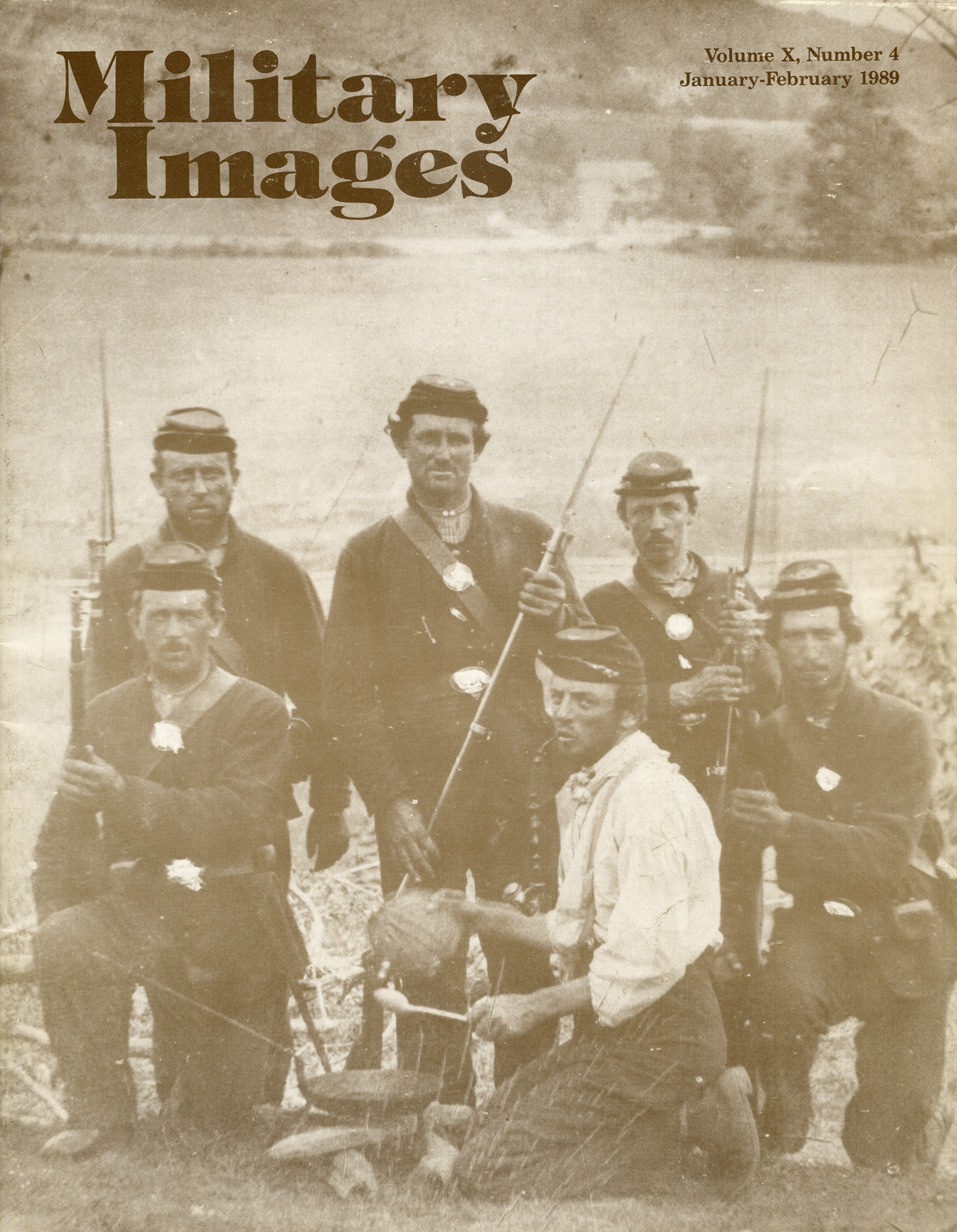
Cover image
A sixth-plate tintype from the collection of James Tassile Carden pictures a group of Union soldiers faking a meal for the photographer.

Editor’s Desk (p. 1)
“Sex sells!” exclaims the editor by way of introducing a feature gallery of daring images of scantily clad women from the Bill Gladstone collection. Also mentioned is a request to donate to the Association for the Preservation of Civil War Sites, Inc. (APCWS)

Mail Call (pp. 2-3)
The letters to the editor includes several clarifications and/or corrections, a plea for images of Civil and Revolutionary War generals, and a lengthy note about Orr’s Rifles by Ron Field.

Passing in Review (pp. 4-5)
The issue features reviews of 10 publications, including Civil War Dictionary (David McKay Co.) by Mar M. Boatner; George B. McClellan, the Young Napoleon (Ticknor & Fields) by Stephen W. Sears; Come Retribution: The Confederate Secret Service and the Assassination of Lincoln (University Press of Mississippi) by William A. Tidwell with James O. Hall and David Winfrey Gaddy; Make Me a Map of the Valley (SMU Press) by Jediah Hotchkiss; Distant Thunder: A Photographic Essay on the American Civil War (Thomasson-Grant) by Sam Abdell and Brian Pohanka; Centennial Campaign: The Sioux War of 1876 (University of Oklahoma Press) by John S. Gray; If It Takes All Summer: The Battle of Spotsylvania (University of North Carolina Press) by William D. Matter; The Siege of Savannah (print by Freedom Hill Press) by Charles Jones; Gaines’ Mills to Appomattox (Texian Press) by Harold B. Simpson; The Brothers’ War: Civil War Letters to Their Loved Ones from the Blue and Gray (Times Books) by Annette Tapert.

Risque Business (pp. 6-7)
A group of seven photographs of lithographs are illustrations of women in various compromising situations. “The cartes reproduced here from the collection of William Gladstone seem naively modest to the jaded modern eye. To the simple soldier of the Victorian era they must have seemed incredibly daring.”

All for the Union: Tales of Ten Federal Soldiers by Orton Begner, Richard Rattenbury, Tom McDonald, Richard Betterly, James Zupan, Brian Pohanka, Barry I. Mickey, Wendell W. Lang Jr. and Seward R. Osborne (pp. 8-13)
Soldier vignettes include Sgt. Seth Plumb of the 8th Connecticut Infantry, Sgt. John V. Richards of the 31st Wisconsin Infantry, the Whiting brothers (Capt. Whiting S. and 1st lt. James W. of the 1st Maine Artillery and 1st lt. Charles A. of the 6th Maine Infantry), Capt. George Bissell of the 5th Wisconsin Infantry, Pvt. William H. Webster of the 96th Ohio Infantry, Pvt. George Wannemacher of the 5th New York Infantry (Duryée Zouaves), Pvt. Henry Williamson of the 1st Vermont Infantry and 7th Squadron Rhode Island Cavalry, Capt. Edward Hall of the 8th Vermont Infantry and Capt. Ambrose N. Baldwin of the 20th New York State Militia.

An Incident at Sangster’s Station by Richard Carlile (pp. 14-15)
The life and death of Lt. Henry Hidden of the 1st New York Cavalry, who suffered fatal wound in action and died on March 9, 1862—the same day as the famed encounter between the Monitor and the Virginia. Hidden is believed to be the first cavalry officer in the Army of the Potomac to die in battle. The text is illustrated by four cartes de visite, two variations on a well-known portrait by Mathew Brady, another Brady image and a photo of Hidden in civilian clothes.

Buddies: Pals in the Great War, from the Collection of Robert Norland (pp. 16-22)
A total of 27 images of groups of Doughboys are pictured in a variety of poses, situations and locations. Identified soldiers that are known to be pictured include Albert Erickson of the 163rd Infantry, 41st Division; Farriers Bothalman, Bellard, Johnson, Sgt. Gipp, James, Mible and Aische of Company A, 107th Engineers; Maj. Samuel M. Johnson and Capt. John H. Pleasants, Company D, 140th Infantry, 35th Division;

The Walking Artillery by Timothy Brookes (p. 23)
A brief history of the 140th Pennsylvania Infantry, illustrated with a carte de visite of Pvt. David Whitehill of Company H. Taken prisoner in the Wheatfield during the Battle of Gettysburg, Whitehill was eventually exchanged and rejoined his regiment. He was killed in action in 1864 during the Battle of Hatcher’s Run.

A Secret Hero & A Secret Weapon: Two vignettes of the Boxer Rebellion by John M. Carroll (pp. 24-25)
Lt. Herbert Goldsmith Squiers, a veteran of 14 years on the western frontier, found himself at the American Embassy in Pekin, China, during the Boxer Rebellion. Serving officially as first secretary, he assumed a leadership role of the defenses of the embassies when the Boxers launched attacks against the fabled city. Key to the defenses was an old muzzle-loading cannon, known affectionately as The Old International. One of the men who worked the weapon, Gunner’s Mate Joseph Mitchell, would receive the Medal of Honor for his bravery in servicing the piece under fire. Images of Squiers, his wife, and several views of the cannon are included.

Stragglers (pp. 26-31)
Solo photos of the unusual, the unidentified & the humorous features images that span the antebellum era through the early 1900s. Included is four ambrotypes of pre-Civil War soldiers, a carte de visite of soldiers of the 71st New York State Militia at mess, the summer encampment of the Lincoln Light Infantry, Nebraska National Guard, and an albumen of a courier wearing a havelock preparing to deliver a message from the officer of the day.

Sutler’s Row (p. 32)

Back cover
A sixth-plate daguerreotype from the collection of Steven Lister is a portrait of a militia sergeant, circa 1846-1850, dressed in a huge bell-crowned shako and equipped with a Model 1842 Springfield musket.

Finding Aid: November/December 1988

The complete issue

Vol. X, No. 3
(32 pages)


Print edition: Visit our store to check availability
Digital edition: Visit JSTOR.org to purchase
Subscribe to MI
Explore the MI Archives: Browse | Advanced search | Tutorial

Inside

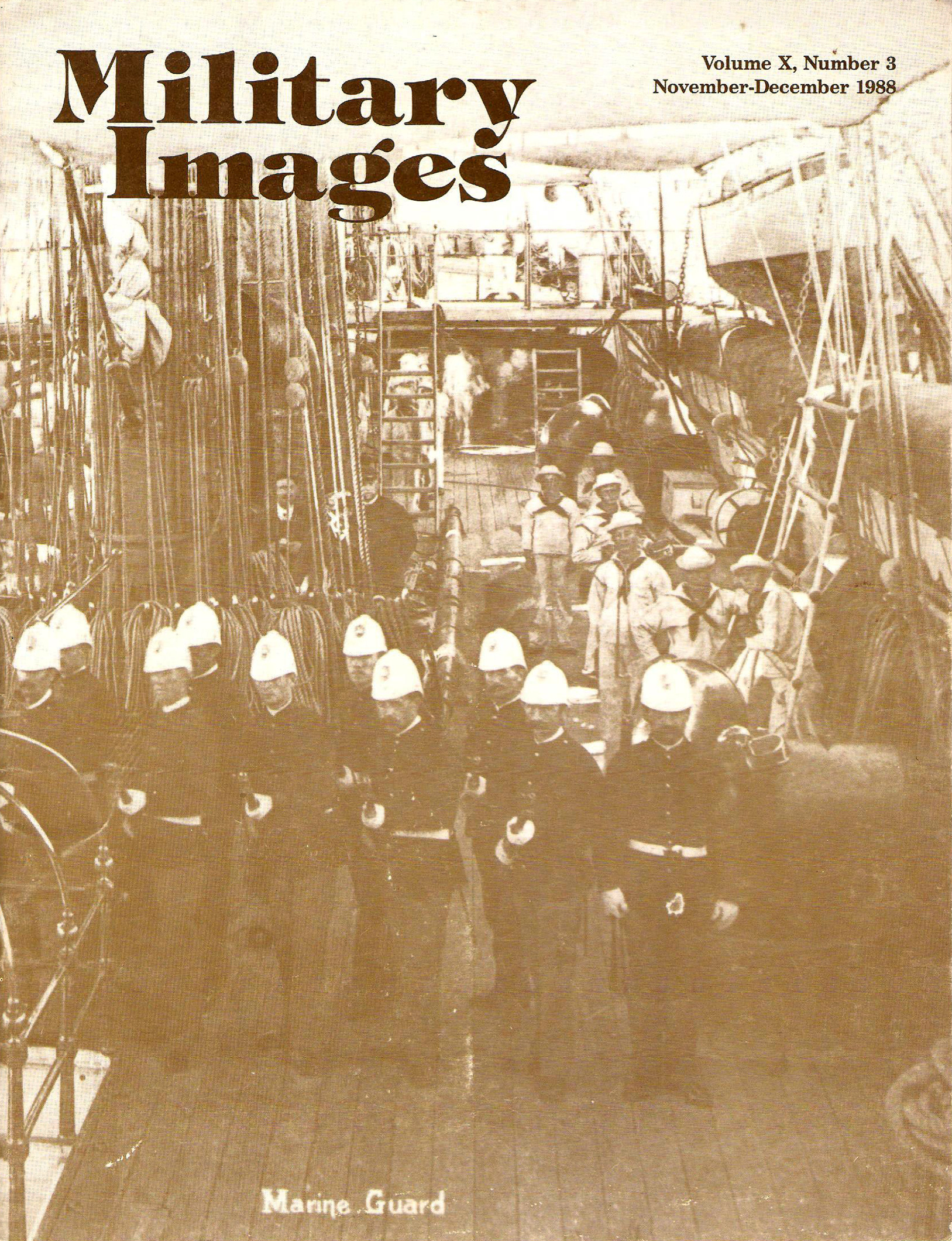
Cover image
The cover and back image of this current issue features the Marine Guard of the U.S.S. Essex taken in 1888. The “field musics” (drummer and bugler) and officer are included.

Editor’s Desk (p. 1)
The editor notes that the resting place of Marie “French Mary” Tepe had been given a new headstone and G.A.R. marker. Articles in previous issues of Military Images in 1982 and 1983 prompted a renewed interest in this vivandiere and her story.

Mail Call (pp. 2-3)
The letters to the editor includes many accolades for the magazine as well as clarifications and additional information, including one reader who solved the “puzzle” of a belt buckle by turning the image upside down and reversing it to show an eagle. Some suggestions for future issues were also made.

Passing in Review (p. 4)
The issue features four different reviews of publications, beginning with B.P. Gallaway’s The Ragged Rebel, which is a biography of David Carey Nance of the Texas Cavalry, a common soldier who provides insight into lesser-known aspects of the Civil War. Next is Hood’s Texas Brigade: Tom Jones’ Military Sketchbook No. 1 by Tom Jones. He has produced pencil sketches of all known photographs of the unit, clearing up some of the “murky” details from the original images in his drawings. A total of 74 illustrations are included. The Saga of the Confederate Ram Arkansas: The Mississippi Campaign, 1862 by Tom Z. Parrish is the story of the CSS Arkansas did not review well, with the reviewer feeling that the details about how this partially completed vessel was initially created were lacking and additional information not connected to this event is given much detail. Finally, Civil War Relics of the Western Campaigns, 1861-1865 by Charles Harris focuses on the unique and rarer relics found in the area between the Appalachians and the Mississippi. The volume includes 1300 photos of great variety and should appeal to all levels of enthusiasts.

Blue Strings Revisited by Harry Roach (p. 5)
This short article with an accompanying hand-drawn sketch in a carte de visite is an addendum to the article on the Blue Springs, Tennessee images featured in the July-August issue of Military Images. The sketch was made by William H. Morgan of the 9th Indiana, and shows where a number of the unit encampments were located in Grose’s Brigade. The original photographic image combined with this unusual carte de visite map provides greater insight into the location and condition of the 3rd Brigade, 1st Division, 4th A.C. during the winter of 1863-64.

The Best of Gettysburg ’88 complied by Irena Zogoff (pp. 6-15)
A number of collectors at the 1988 Mason-Dixon Civil War Relic Show allowed Military Images to feature a total of 34 images in the current issues. A wide variety of scenes, both indoor and outdoor, are included, such as the crossing at the American side of the bridge at U.S.-Canadian border (complete with rules for crossing and penalties for non-compliance), a team of Union bakers with their hardtack wares, and a full band from Camp Douglas in Illinois. Individual portraits in various forms were also selected, such as a full-plate daguerreotype of a Confederate lieutenant wearing a Model 1851 forage cap, a cabinet card of Emma Lou Jassoy wearing a kepi, a quarter-plate ambrotype of two “Wide Awakes,” and several images of military pals.

From the Halls of Montezuma… to the Bistros of Gay Paris: A look at the U.S. Marines, 1866-1899 unit history by David M. Sullivan (pp. 16-20)
The stories of seven different international incidents which helped establish the United States as a global power and the Marine Corps as the first American force utilized in those conflicts are told, beginning with skirmishes in Formosa in 1867 and ending with Samoa in 1899. Intervention in Columbia in 1885 to protect the lives and property of Americans living there presaged the eventual uprising that led to independence from Columbia early in the 20th century. Other events in Mexico (1870), Korea (1871), and Egypt (1882) tell the story of a world that was still unsettled and grappling with the reach of the West towards the East. Perhaps the most unusual of the stories was in France in 1889 during the Paris Exposition when the Marines who were sent to protect the American contributions to the fair became of such interest that they themselves became part of the American exhibit by their precise drill that drew crowed and impressed European military observers, with each Marine being given a medal by the French.

Sgt. Joseph Camersac LeBleu of Company K, 10th Louisiana Infantry vignette by Michael Dan Jones (p.21)
The Confederate soldier with his slouch hat pinned on one side was born in the bayous of Louisiana, the son of a pirate associated with Jean Lafitte. He began the war with Company K, 10th Louisiana Volunteers in July 1861, but after serving in several battles in Virginia such as Malvern Hill, he eventually reassigned himself and became part of the 7th Louisiana Cavalry, fighting in the Red River campaign in 1864 and being paroled in Natchitoches in early June, 1865. Le Bleu served in many public offices in the Lake Charles area, eventually serving as a major in of a troop of cavalry he organized for the Spanish-American War in 1899.

The 1st South Carolina Rifles: An Album of Officers in Orr’s Regiment unit history by John Mills Bigham (pp. 23-27)
Although he did not serve as Colonel of his namesake regiment (he was elected to the Confederate State Senate in December 1861), Orr’s Regiment of Rifles held a storied service, including Gaines Mill, Fredericksburg (where their brigade general, Maxcy Gregg, was killed), and beyond to Appomattox. The 16 different images coming from a Charleston family’s photograph album are of officers from Orr’s Regiment, mostly from the beginning of the war. The execution of rank on the uniforms differed from most Confederate uniforms, gradually conforming to a more recognizable standard later on. A short biography of each officer is provided.

Uniforms and History: 22nd Regiment, National Guard, State of New York (p. 28)
Not only Confederates wore gray. The initial uniform of the “Union Grays” (home guard put together to protect New York City after the militia of the area was called to defend Washington in early 1861) was gray with a red collar and cuffs that were edged in white. Notably, they carried a two-banded Enfield rifle, and other unique uniform markings once they were designated as the 22nd Regiment. Seeing action at Harper’s Ferry against “Stonewall” Jackson in the Valley campaign of 1862 and again at Gettysburg with the VI Corps, the unit had adopted a blue frock coat with grey trousers, with a “22” on the cap front and the company letters were on the belt buckle plate.

Stragglers (pp. 29-31)
Rick Carlisle submitted two different images of the same well, each found in a different part of the U.S.; any readers with insight regarding the significance of the well are encouraged to reply. Other stragglers include a possible image of the “Mad Gasser” of Mattoon, Illinois, a carte de visite with images of 67 different Confederate generals, and a warning about fake dress uniform coats from the 7th Regiment of the New York National Guard from the 1920s; their gray uniforms appealed to many 150th anniversary Confederate reenactors in the 1960s and are now being passed off as those belonging to the 7th New York.