The Autumn 2026 Issue

A complete table of contents for the Autumn 2026 issue of Military Images magazine, and information about how to purchase single issues and subscriptions.

Vol. XLIV, No. 4
(80 pages)

Print edition: Visit our store to check availability
Digital edition: Visit JSTOR.org to purchase
Subscribe or renew your subscription

Explore the MI Archives:
Browse | Advanced search | Tutorial

Inside

Cover
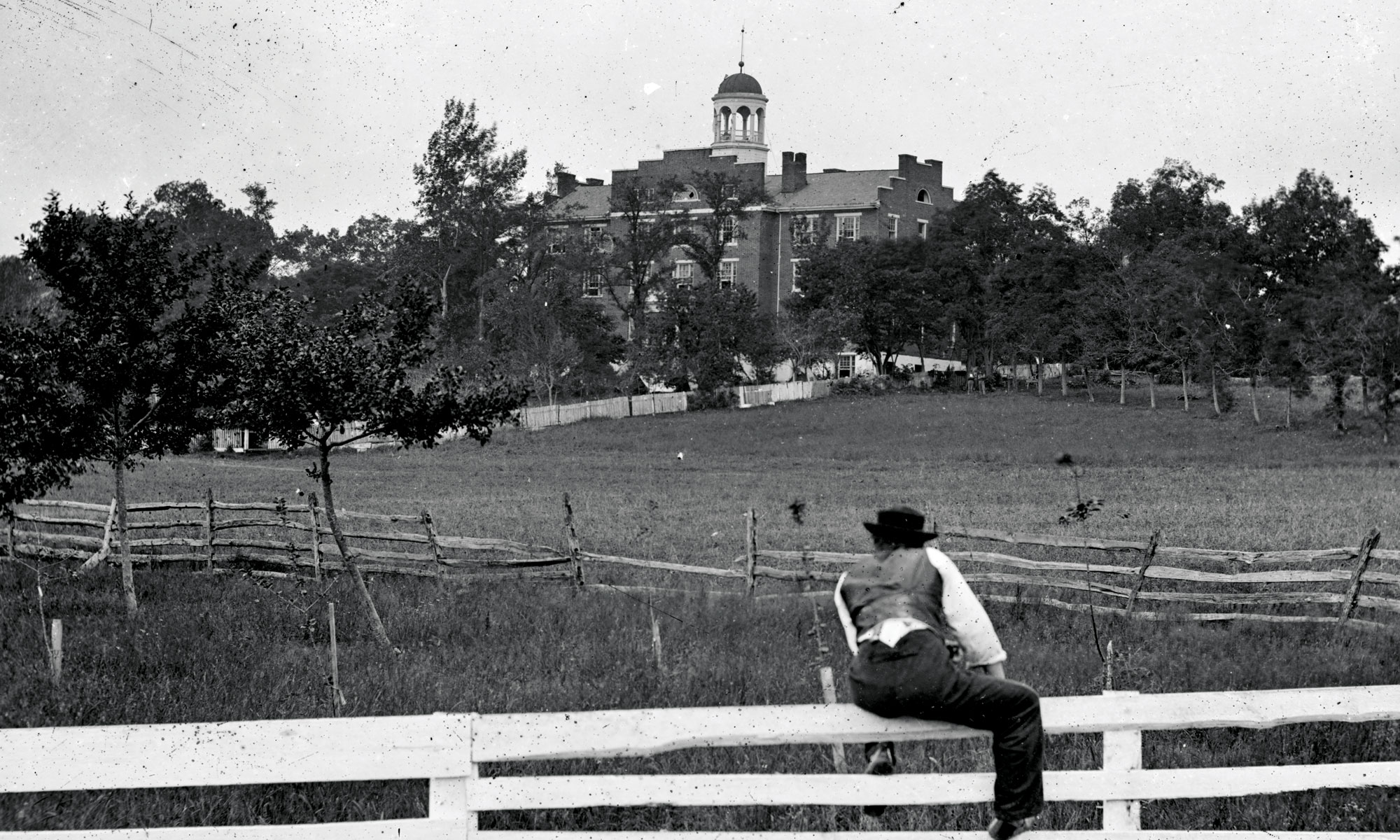
Gettysburg’s Lutheran Theological Seminary photographed by Mathew B. Brady’s team in July 1863.

Table of Contents (p. 1)

Editor’s Desk (p. 2)
A visit to Gettysburg offers hope for the future as a new generation of collectors embraces Civil War photographs and the stories they preserve.

Mail Call (pp. 3-4)
Feedback includes praise from new and veteran subscribers, a request for information about a Sanitary Fair statuette, the identification of a Tennessee officer, and more.

Military Anthropologist (p. 4)
William F. Fox’s Civil War data identifies nine Union infantry regiments that lost more than 100 men killed or mortally wounded in a single battle.

Passing in Review (p. 6)
Reviews of new books on Civil War nurse Cornelia Hancock by Carolyn Ivanoff and Don Troiani and Ron Field’s detailed study of Union and Confederate uniforms.

Photo Sleuth by Stephen Berry and Kurt Luther (pp. 8-9)
A composite photograph of South Carolina legislators reveals the power, politics, racism, and violence surrounding Prince Rivers during Reconstruction.

Antebellum Warriors (p. 10)
Marine officer William Stokes Boyd helped lay the first transatlantic telegraph cable aboard the USS Niagara in 1858, linking Britain and America.

Most Hallowed Ground (p. 12)
Augustus G. Kellogg fought aboard the USS Powhatan at Fort Fisher before embarking on a distinguished 26-year career in the U.S. Navy.

The Honored Few by Evan Phifer (pp. 14-16)
Wounded twice at Gettysburg, Henry S. Huidekoper refused to leave his regiment and later received the Medal of Honor for his courage under fire.

The Citizenry by Richard Look (p. 18)
Two women posed in a Union soldier’s uniform in 1863, connecting their portraits to a Massachusetts family touched deeply by the Civil War.

Of Arms and Men by Phil Spaugy (pp. 20-22)
Union soldiers rallied behind a rail barricade on Seminary Ridge, buying precious time during the first day of the Battle of Gettysburg.

Gettysburg’s Lutheran Seminary in the Line of Fire by Ronald S. Coddington (pp. 24-32)
A Brady photograph reveals Gettysburg’s Lutheran Seminary as a battlefield observation post and hospital during three days of fighting in July 1863.

Within These Walls: Gettysburg’s Seminary Hospital (pp. 34-47)
Portraits and personal accounts reveal the Union soldiers, surgeons, and nurses who experienced Gettysburg’s Seminary hospital during and after the battle.

The Civil War’s First Amputee by Jan K. Herman (pp. 51-52) 
Moses S. Herrick suffered the surgical removal of his foot in an accidental shooting inside the U.S. Capitol, becoming the Civil War’s first documented amputee.

Faces of the Sultana by Gene Eric Salecker (pp. 53-57)
Portraits and stories reveal the soldiers, survivors, and victims of the Sultana disaster, which claimed an estimated 1,164 lives in April 1865.

Grim Reunion at Galveston: A Father and Son on Opposite Sides of the War by Curt Robbins (pp. 61-63)
A Confederate father finds his mortally wounded Union son after the Battle of Galveston, a tragic reunion of family divided by Civil War.

Practical Stewardship for the Modern Collector by Kevin Canberg(pp. 64-65)
How collectors can inventory, plan, and protect their collections while preparing artifacts for the next generation of caretakers.

Different Journeys, Shared Passion by Larry West, Ross J. Kelbaugh, Dr. Robert Drapkin, and Greg French (pp. 66-69)
Four collectors share the discoveries, stories, and unexpected journeys behind their passion for 19th-century photography.

Material Culture by Ron Field (pp. 70-71)
Explore the distinctive Havelock hats worn by Illinois, Iowa, and Wisconsin troops and the manufacturers who supplied them during the Civil War.

Women of War by Melissa A. Wynn (pp. 72-73)
Martha Coston perfected a pyrotechnic signal system that helped Union Navy ships communicate, enforce the blockade, and coordinate operations.

Behind the Backdrop by Buck Zaidel (pp. 74-75)
A portrait reveals how backdrops, military gear, personal objects, and even a pair of worn boots helped photographers tell a soldier’s story.

Vignette by Ronald S. Coddington (p. 76)
Seth Ledyard Phelps helped build the Union’s Brown Water Navy and fought at Forts Henry and Donelson, Shiloh, and in the Vicksburg Campaign.

Stragglers (p. 78)
Three images reveal a fallen Mississippi soldier, an unidentified USCT infantryman, and soldiers punished in barrel shirts.

The Last Shot (p. 80)
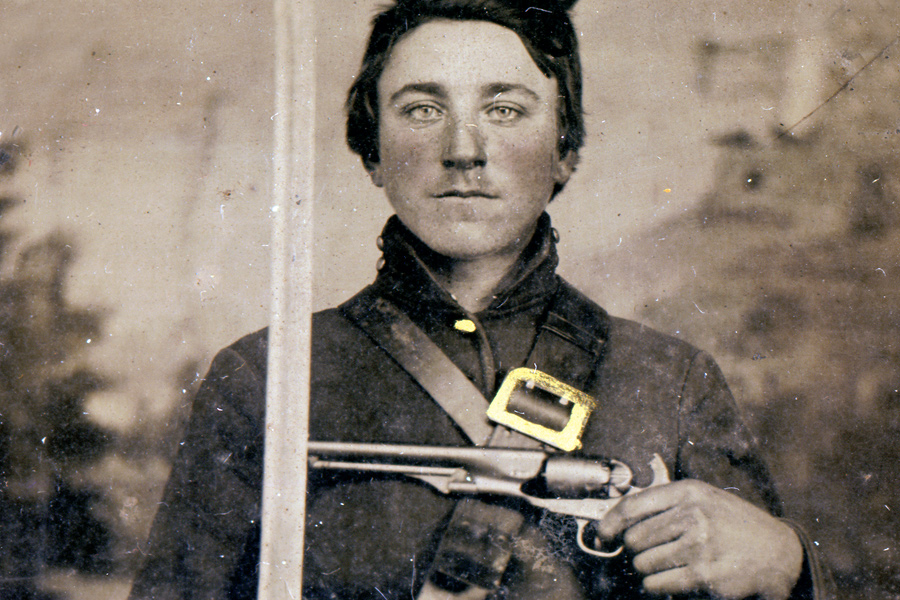
A Union infantryman poses as if advancing into battle, armed with a converted musket and Colt revolver in this dramatic Civil War tintype.

From Gettysburg to Saratoga Springs, our Education Program Continues to Grow

We’re proud to announce that the New York State Military Museum has joined the Kenneth J. Bertholf Jr. Civil War History Education Program—our 65th site!

The addition of the museum puts another subscription into workers on the front lines of history— a growing network of battlefields, museums, libraries, archives, and historic sites committed to preserving and sharing the stories of the American past through education, research, and public engagement.

The Bertholf Program provides participating institutions with complimentary subscriptions to Military Images magazine and educational resources focused on Civil War portrait photography and material culture. The program is open to national battlefields, historical sites, and non-profit organizations connected to American history.

Learn more: https://militaryimagesmagazine.com/2023/11/30/the-kenneth-j-bertholf-jr-civil-war-history-education-program/

Fund a participating site or organization: https://shopmilitaryimages.com/collections/support-history/products/the-kenneth-j-bertholf-jr-civil-war-history-education-program

Want to nominate a deserving group? Contact militaryimages@gmail.com.

Participating institutions currently include sites and organizations such as Gettysburg National Military Park, Harpers Ferry National Historical Park, the National Museum of Civil War Medicine, the Library of Congress, the National Portrait Gallery, and many others across the country.

We’re grateful to every supporter helping to connect students of the Civil War and American history through period portrait photography.

Photo: Wikimedia

The Spring 2026 Issue

A complete table of contents for the Spring 2026 issue of Military Images magazine, and information about how to purchase single issues and subscriptions.

Vol. XLIV, No. 2
(80 pages)

Print edition: Visit our store to check availability
Digital edition: Visit JSTOR.org to purchase
Subscribe or renew your subscription

Explore the MI Archives:
Browse | Advanced search | Tutorial

Inside

Cover
A tintype of a Hoosier cavalryman posed with a Merrill carbine and a .44-caliber Model 1860 Army Colt revolver.

Table of Contents (p. 1)

Editor’s Desk (p. 2)
A reflection on collectors Rick Carlile and Perry Frohne, stewardship, and the future of Civil War photography collecting in a changing digital community.

Mail Call (pp. 3-4)
Feedback includes praise for Mike Fitzpatrick’s profile of “Fighting Bob” Robley, identifying three Confederate soldiers, and more.

Military Anthropologist (p. 4)
National Archives data shows how 2,700 women served in concentrated Union hospital centers, revealing the scale and geography of wartime care.

Passing in Review (p. 6)
A new book by Richard Leisenring Jr. examines Elmira prison images as historical evidence, revealing how photography, commerce, and memory shaped views of the Civil War camp.

Photo Sleuth by Kurt Luther (pp. 8-9)
Why many images of women soldiers are misidentified or fake—and how research separates verified portraits from myths in Civil War history.

Antebellum Warriors (p. 10)
A militia officer’s portrait raises questions about daguerreotype reversal, revealing clues in uniform details, sword presentation, and camera technology.

Most Hallowed Ground (p. 12)
Major Ruel M. Johnson led the 100th Indiana Infantry under heavy fire at Missionary Ridge, earning the Medal of Honor for gallantry in the Chattanooga Campaign.

The Honored Few by Evan Phifer (p. 14)
Iron Brigade officer William Wade Dudley lost a leg at Gettysburg, later served veterans as Pension Bureau chief, and was tied to the 1888 Block of Five scandal.

The Citizenry (p. 16)
A Lafayette, Ind., firm’s Civil War contracts fed Union troops, revealing how Midwestern businesses powered the Northern war effort in the Western Theater.

Of Arms and Men by Phil Spaugy (pp. 18-20)
A Terre Haute, Ind., portrait of veteran Union soldiers reveals clues in Model 1842 muskets, Greenwood alterations, and field gear used to trace their unit.

Hoosiers: Indiana Faces of the Civil War (pp. 22-40)
A gallery of Indiana Civil War portraits and stories, from early enlistments to major battles, prison camps, and home-front sacrifice across the Western Theater.

Long Sol: Indiana’a Fighting Quaker by Lance J. Herdegen (pp. 42-46)
The rise of Solomon “Long Sol” Meredith and his Iron Brigade, from Brawner’s Farm to Gettysburg, where wounds ended his battlefield career.

Thunderbolts and Lightning at Hoover’s Gap: How Wilder’s Lightning Brigade received its nom de guerre by Ronald S. Coddington (pp. 48-52)
How John T. Wilder’s mounted infantry and Spencer rifles secured Hoover’s Gap and earned the name “Lightning Brigade” in the Tullahoma Campaign.

Dynamite Man: The life and times of Hoosier soldier, sailor, and inventor James Weir Graydon by Ronald S. Coddington(pp. 54-59)
From teenage bugler in the 7th Indiana Cavalry to Navy officer and prolific inventor, the remarkable life and ambitions of James W. Graydon.

Harper’s Weekly Needed an Image of Wallace’s Zouaves. They Commissioned This One. by Ron Field(pp. 60-62)
How photographs of the 11th Indiana Infantry, also known as Wallace’s Zouaves, became Harper’s Weekly engravings.

Material Culture by Ron Field (pp. 64-68)
How the 11th Indiana Infantry’s Zouave uniforms changed during the war, from gray militia dress to distinctive blue patterns worn in major campaigns.

Women of War by Melissa A. Wynn (pp. 70-71)
Indiana nurse Eleanor Ransom survived the 1864 sinking of the transport North America and returned to care for Union soldiers through war’s end.

Behind the Backdrop by Buck Zaidel (pp. 72-73)
How focus, depth, and staging at an Indianapolis gallery turned painted Civil War backdrops into convincing camp scenes for Indiana soldiers.

Vignette by Scott Valentine (p. 74)
Captain Poinsett Cooper of the 42nd New York Infantry survived four wounds from Antietam to the Wilderness, including a guerrilla attack during evacuation in Virginia.

Stragglers (pp. 75-77)
Profiles of Union and Confederate soldiers through Civil War portraits, including rare “Jeff. Davis and the South!”placard images, battlefield service, and personal wartime histories.

The Last Shot (p. 80)
How the 58th Indiana Infantry funded and dedicated one of Indiana’s first Civil War monuments to honor its fallen, conceived while the regiment was still in service.

The Summer 2025 Issue

A complete table of contents for the Summer 2025 issue of Military Images magazine, and information about how to purchase single issues and subscriptions.
Vol. XLIII, No. 3
(80 pages)

Print edition: Visit our store to check availability
Digital edition: Visit JSTOR.org to purchase
Subscribe or renew your subscription

Explore the MI Archives:
Browse | Advanced search | Tutorial

Inside

Cover
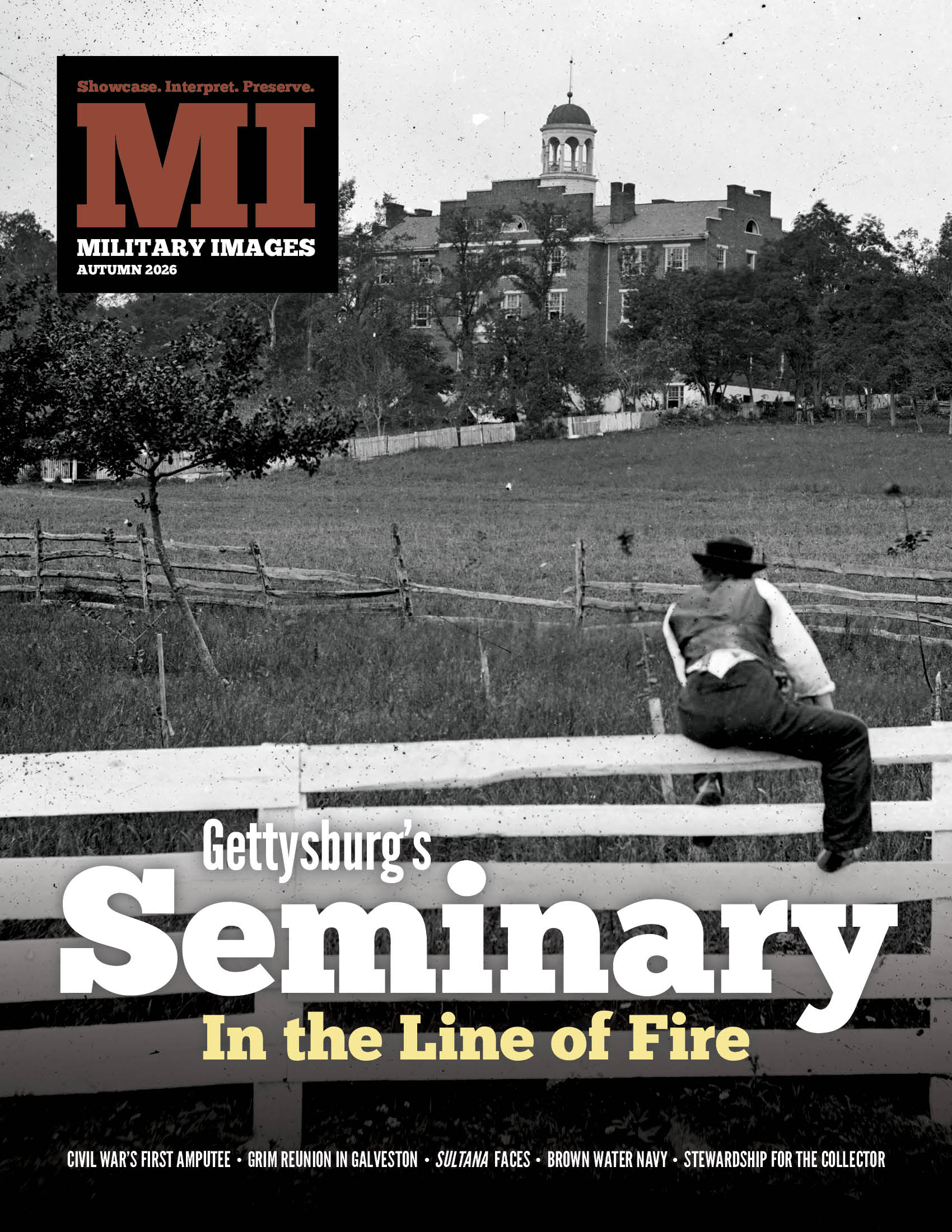
A carte de visite from the Karl Sundstrom Collection pictures Maj. Horace N. Attkisson of the 50th Indiana Infantry, “The Gallant Hero of Edgefield Junction.”

Table of Contents (p. 1)

Editor’s Desk (p. 2)
Civil War portraits of wounded, like battlefield photos in 1862, evoke powerful emotions—reminders of war’s cost and the courage of those who endured it.

Mail Call (pp. 3-4)
Feedback includes references to Confederate Gen. Evander Law, North Carolina photographer Esley Hunt, and American heritage and memories.

Military Anthropologist (p. 4)
A chart reveals how far Union regiments marched in the three weeks before Gettysburg. The range is from under 60 to more than 350 miles.

Passing in Review (p. 6)
Two new books spotlight overlooked forces in the Civil War—Catholic chaplains who served troops and the powerful role of weather in the Gettysburg Campaign.

Photo Sleuth by Kurt Luther (pp. 8-10)
A mystery Brady photo once thought to be Thomas Meagher or John Buford is correctly re-identified as Capt. Atlee W. Putnam of the 7th U.S. Infantry.

Antebellum Warriors by Joe Bauman (pp. 12-13)
Lt. Col. Joshua Howard fought in the War of 1812, the Mexican-American War, and the Civil War—one of a small group to serve in all three major conflicts.

Most Hallowed Ground (p. 14)
Captain Edward C. Townsend, a Union officer and War Department clerk, mourned Lincoln’s assassination and led U.S. Colored Troops at the Battle of the Crater.

The Honored Few (p. 16)
Christian Fleetwood, a free Black man from Baltimore, earned the Medal of Honor for heroism at New Market Heights and fought to preserve the legacy of Black soldiers.

The Citizenry (pp. 18-19)
In 1861, President-elect Abraham Lincoln met 94-year-old Joshua Dewey, a Revolutionary War veteran who had voted in every U.S. election since Washington.

Of Arms and Men by Phil Spaugy (pp. 20-22)
The story of John Burns, the civilian hero of Gettysburg, his iconic firearms, battlefield bravery, and how history and photography remembered him—and his weapons.

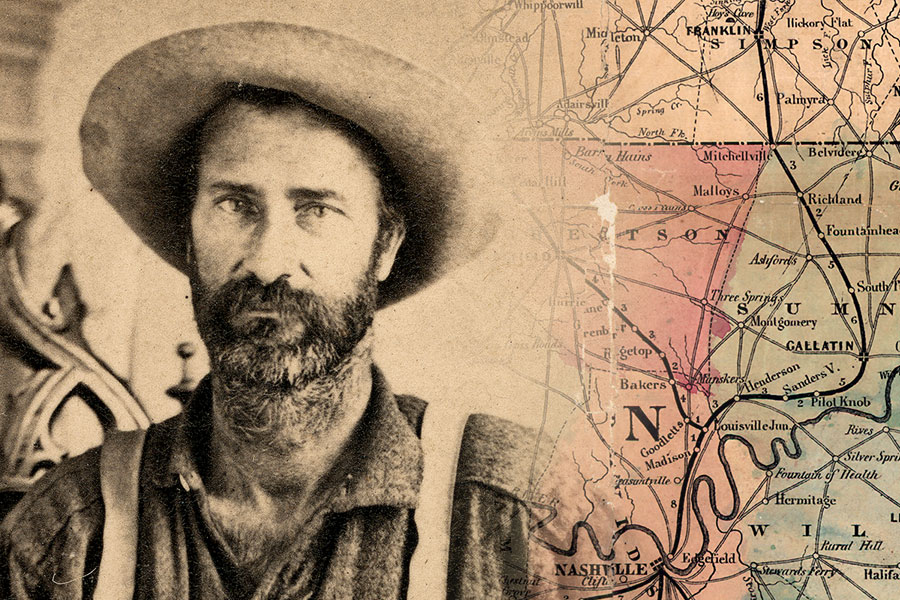
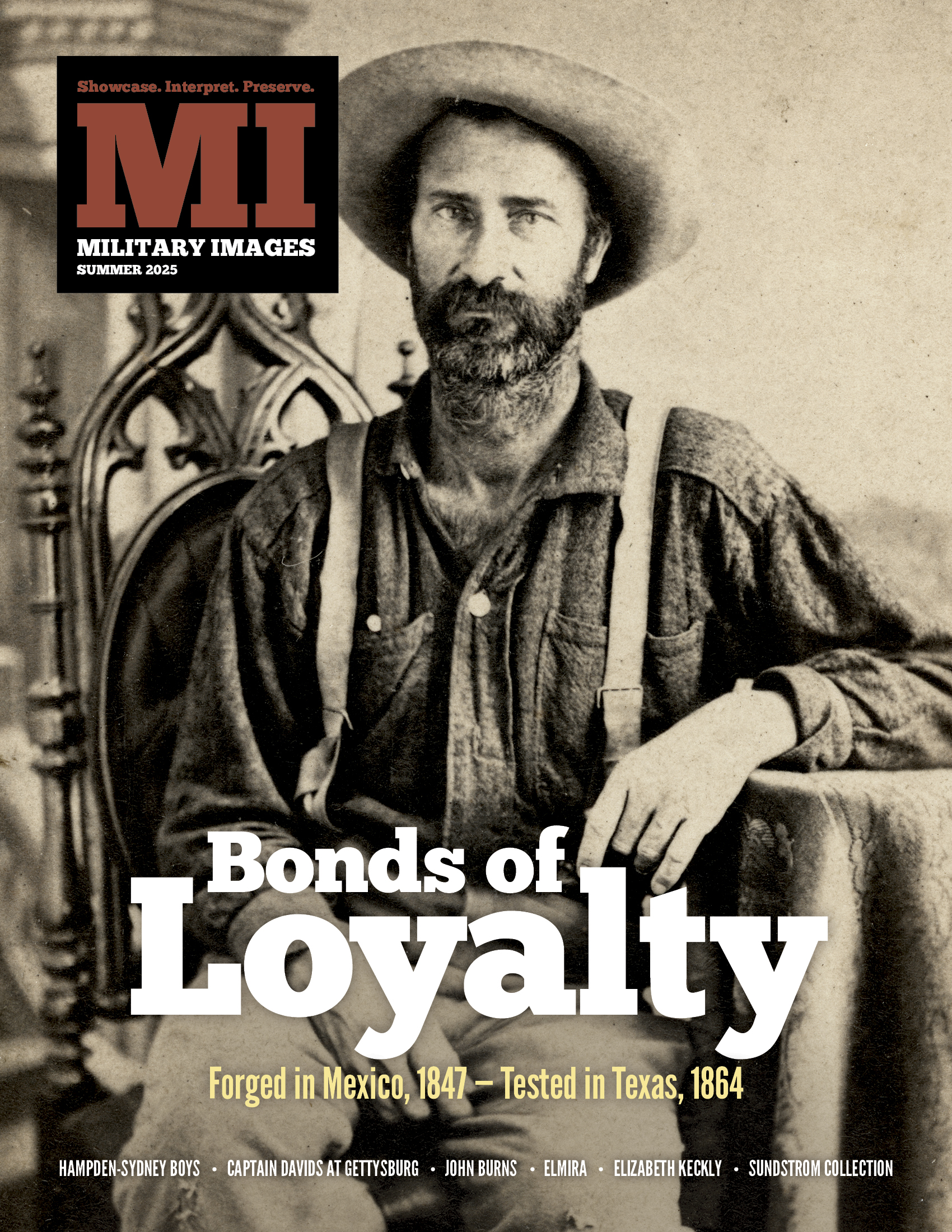
Bonds of Loyalty: Forged in Mexico, 1847 — Tested in Texas, 1864 by Ronald S. Coddington (pp. 24-32)
In Indiana during the Mexican War, two soldiers fought side by side. Fifteen years later during the Civil War they met again—this time on opposite sides.

Capturing Elmira: The photographers who documented a Northern prisoner of war camp by Richard Leisenring, Jr., adapted from his forthcoming book(pp. 34-38)
The story of Elmira’s Civil War prison camp—“Hellmira”—through photographs, historical details, and the harsh realities faced by Confederate prisoners.

A Boy Company Goes to War: William Henry Harrison Ewing and His Hampden-Sydney College Classmates by Dave Batalo and Hunter Lesser (pp. 40-43)
Hampden-Sydney College students formed a militia in 1861, fought at Rich Mountain, were captured, and sent home with a lesson from Maj. Gen. George B. McClellan.

The Last Grand Army Vets and a Youthful Symbol of America’s Fighting Men by Ronald S. Coddington (pp. 44-47)
A 1952 Boston Globe cover honored the last Union veterans and a young Korean War soldier, bridging generations of service and capturing a poignant national moment.

The Last Confederate Veteran by Ronald S. Coddington (pp. 48-49)
Pleasant Riggs Crump, the last confirmed Confederate veteran, survived Hatcher’s Run, lived to 104, and became a symbol of memory in the postwar South.

“‘Died at Gettysburg!’ No Prouder Epitaph Need Any Man Covet.”: The Tragedy of Capt. Richard Wistar Davids of the 118th Pennsylvania Infantry by Charles T. Joyce (pp. 50-59)
The life and legacy of Davids, a Philadelphia aristocrat whose sacrifice at Gettysburg shaped his family’s story and historical memory.

Collector and Mentor: Seven decades after he began his Civil War journey, Karl Sundstrom continues to inspire by Austin Sundstrom(pp. 60-65)
Explore Civil War portrait photography through the unique lens of Karl Sundstrom’s collection, introduced by his nephew and fellow collector, Austin Sundstrom.

Material Culture by Ron Field (pp. 66-68)
Explore how to distinguish U.S. and British Navy sailors in Civil War-era photos by comparing subtle uniform differences in rare images from Ron Field’s collection.

Women of War by Melissa A. Wynn (pp. 70-71)
Elizabeth Keckly rose from slavery to become Mary Todd Lincoln’s dressmaker and confidante—then risked it all by publishing her bold and controversial memoir.

Behind the Backdrop by Buck Zaidel and Ronald S. Coddington (p. 72)
Philadelphia photographer Washington L. Germon’s Sea of Tents background is likely inspired by the many military camps in the city during the Civil War.

Vignette by Scott Valentine (p. 74)
Brigadier Gen. Joseph King Fenno Mansfield, a veteran engineer and Mexican War hero, was mortally wounded at Antietam just two days after taking corps command.

Stragglers (p. 74)
A Union soldier grips a War of 1812-era cavalry saber, dressed in early war uniform with 1851 eagle belt plate, and a collector’s first image.

The Last Shot (p. 80)
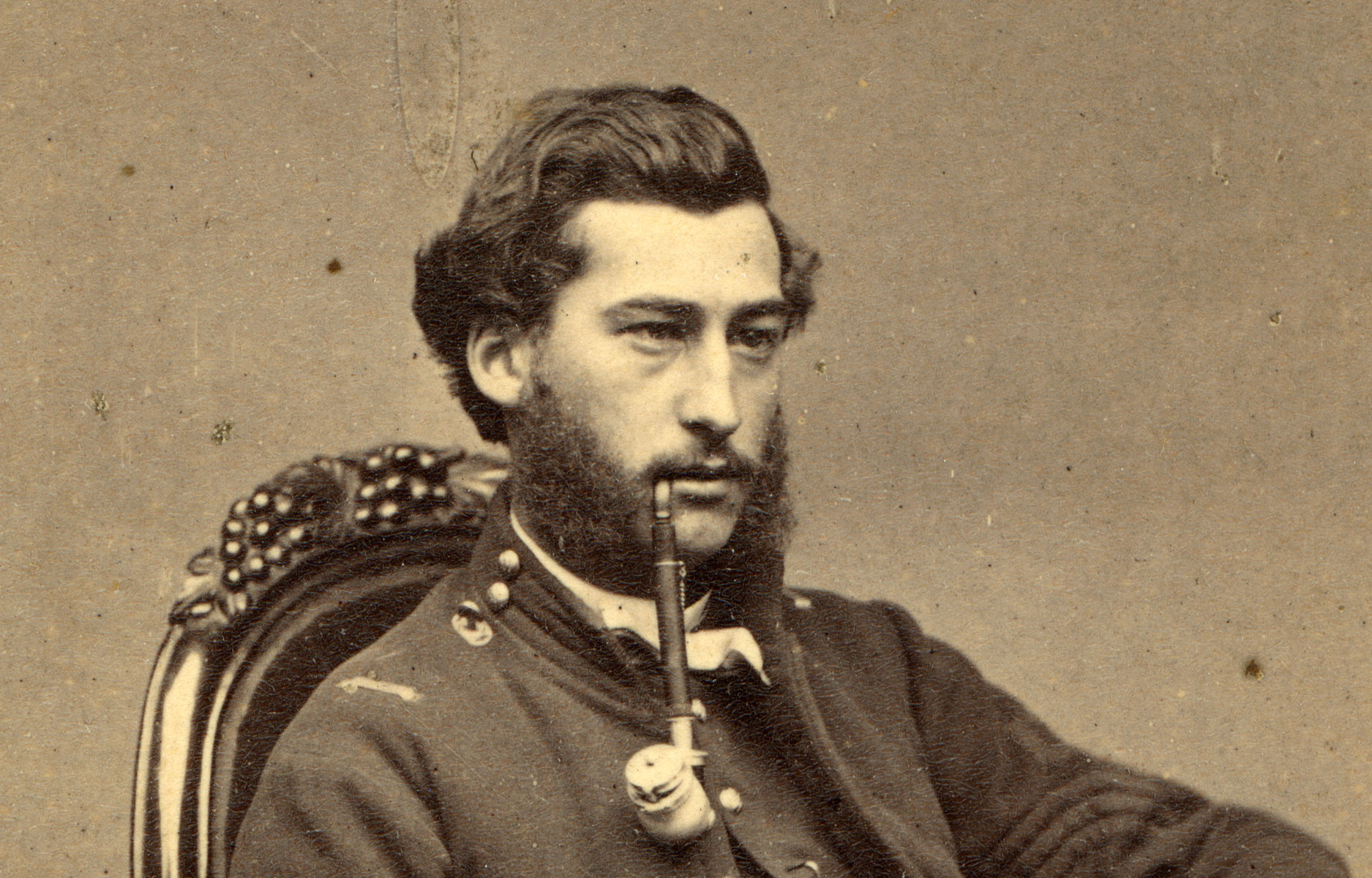
John “Laurenz” Rosenberger, a Confederate band member and postwar orchestra leader, played music through war and peace, from Richmond to Ford’s Theater.