New MI Policy Addresses Digital Scans

submission-featureI recently received a submission of a scanned historic photograph. I learned that various nicks, chips and other blemishes had been carefully removed in Photoshop. The result was a nearly pristine restored image. During an email exchange about the Photoshop work, the contributor provided the original, unmodified scan. I compared the two, and determined that Military Images should have a formal policy that addresses Photoshop use.

Since the advent of the digital era, photojournalists and other professional documentary photographers have crafted policies to preserve the authenticity of images. Curators and other museum professionals, notably at the Library of Congress, have established technical guidelines and best practices to insure the accuracy of historic photographs.

After careful consideration and after consultation with contributing editors and others connected to Military Images, I am pleased to announce the following statement summarizing MI’s position on the subject:

Military Images does not accept scans of photographs that have been digitally enhanced, and does not condone the practice of digital enhancement of historic images. Scratches, chips, nicks, cracks and other blemishes, while they may interfere with the content of an image, are also part of its history and should be preserved. Military Images will accept digitally corrected scans that have been adjusted for brightness, contrast and color.

This policy is consistent with MI’s mission to showcase, interpret and preserve historic military photographs. It seeks to provide the MI audience with the most historically accurate and reliable images consistent with current standards and best practices.

The “Submission Guidelines and Deadlines” section of our site has been updated to include this statement.

Coming Up in the Winter 2014 Issue of MI

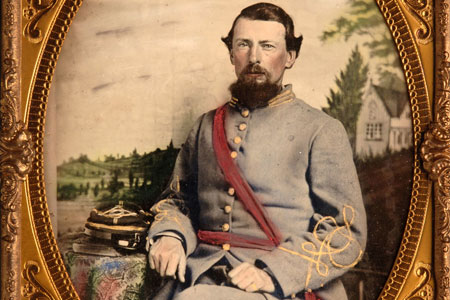
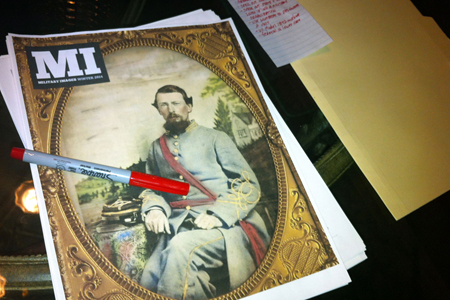
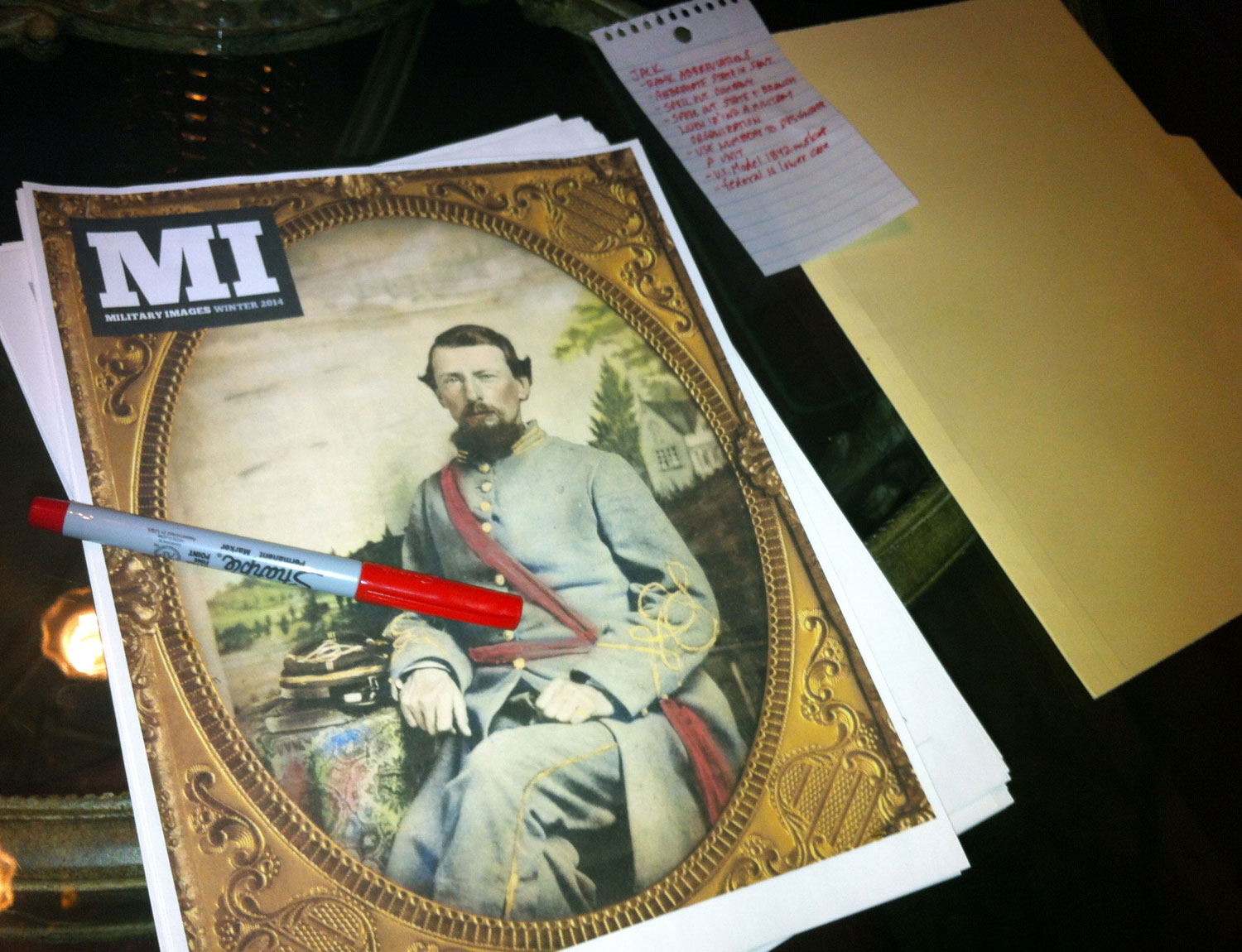
mi-cover-winter-2014Pleased to present the Table of Contents for the Winter 2014 issue of Military Images. Inside you’ll find rare and unpublished portraits of North Carolina Confederates, enlisted men from Company G of the 25th U.S. Colored Infantry, and more! Here’s a list of features and columns (pictured here is the cover from the David W. Vaughan collection):

“Tar Heels: A Survey of North Carolinians in the Confederate Army,” by Greg Mast. An MI exclusive preview of images from Greg’s forthcoming book, a long awaited follow-up to his first volume on North Carolina soldiers published two decades ago.

“Gallery: ‘God Bless Gallant Old North Carolina,’ is a collection of identified images from the Liljenquist Family collection at the Library of Congress.

“An Album of Faces of the 25th USCT,” by Shayne Davidson, features 18 never-before-published photographs of African Americans who served in Company G of the regiment, and their white captain.

“An Irish-American Civil War Veteran Engages in a Showdown with the Sioux,” by longtime MI Contributing Editor Scott Valentine traces the military career of Ferdinand Edwin DeCourcy of Ballylongford, County Kerry, Ireland, from Civil War officer to frontier fighter.

“A Portrait of Lee We Were Not Supposed to See,” by Don Hopkins, sheds light on a series of post-war portraits of the General.

“Four Decades on the High Seas: Boastwain William Long, and Englishman in the U.S. Navy,” by Ron Field, MI Contributing Editor and author of Bluejackets, chronicles the career of a sailor who served on the fames “San Jacinto” and a number of other vessels during his time in uniform.

“Passing in Review,” MI’s book review, examines  by Shannon Pritchard and Shane Kisner.

Mike McAfee’s “Uniforms & History” column traces the origins of the Union enlisted man’s frock coat, and examines how Civil War soldiers adopted it to suit their style.

“Stragglers,” a collection of images submitted by the MI audience, includes images from the Civil War and the Spanish-American War.

“The Last Shot,” the images that traditionally appears on the last page of the issue, is a previously unpublished ambrotype of a 15-year-old Confederate from North Carolina.

The Winter 2014 Issue Is Ready to Go to Press!

One of the editorial highlights of any publication is the moment you decide it is ready to go to press. The moment comes after weeks and months of planning, and a final few frenetic days of proofing pages, editing text and tweaking the design.

mi-editsThe ‘Moment’ for Military Images arrived last night when I put my red pen down, confident that the Winter 2014 issue (my first as editor and publisher) was completed.

And while my description may make it seem a solitary journey, it was anything but a lonesome adventure. My wife Anne has been great in every way, and her honest feedback along the way truly appreciated. Copy Editor Jack Hurov has been terrific. His work has sharpened the text and put MI on the path of a solid style guide that will be very useful for future issues. I am indebted to Senior Editor Mike McAfee for his great column, “Uniforms & History,” and for the number of times over the last few months that I’ve emailed him images with a request for his authoritative opinion, which he always gave quickly and decisively.

So many other friends of MI have rallied to support our efforts, and I’ve been overwhelmed with their generosity. Contributing Editors Ron Field, Steve Karnes, Scott Valentine and David W. Vaughan contacted me early on and shared their contributions and observations. They were not alone! Other contributors in this issue include Rick Carlile, David Cress, Shayne Davidson, Francis Guber, Janet & Bedford Hayes, Don Hopkins, Mike Hunt, Rich Jahn, Tom Liljenquist, Greg Mast, John Robella, Gary and Bill Stier, Bryan Watson and Buck Zaidel.

In the end, it is your passion, enthusiasm and energy that keeps MI alive. This thought is foremost in my mind this morning.

The work of course is not complete! Today, I’ll make pdfs of the pages and shipped them via DropBox to the printer. And planning is already underway for the Spring 2014 issue and beyond!

What Does Military Images Magazine Mean to You?

what-mi-means-to-meMI celebrates its 35th anniversary of MI in 2014. To mark the occasion,  I invite all magazine subscribers to share your thoughts about what Military Images has meant to you through the years.

Please leave your comments here, in 100 words or less. Or, send them to militaryimages@gmail.com. Selected comments will be published in the next issue, which goes to the printer Dec. 1. The comments will be featured in “Mail Call,” MIs letters to the editor section.

Please take a few minutes to share your thoughts—and thanks for your support of MI!

Finding Aid: January/February 2008

2008-v29-04-xxix

The complete issue

Vol. XXIX, No. 4
(40 pages)


Print edition: Visit our store to check availability
Digital edition: Visit JSTOR.org to purchase
Subscribe to MI
Explore the MI Archives: Browse | Advanced search | Tutorial

Inside

Cover image
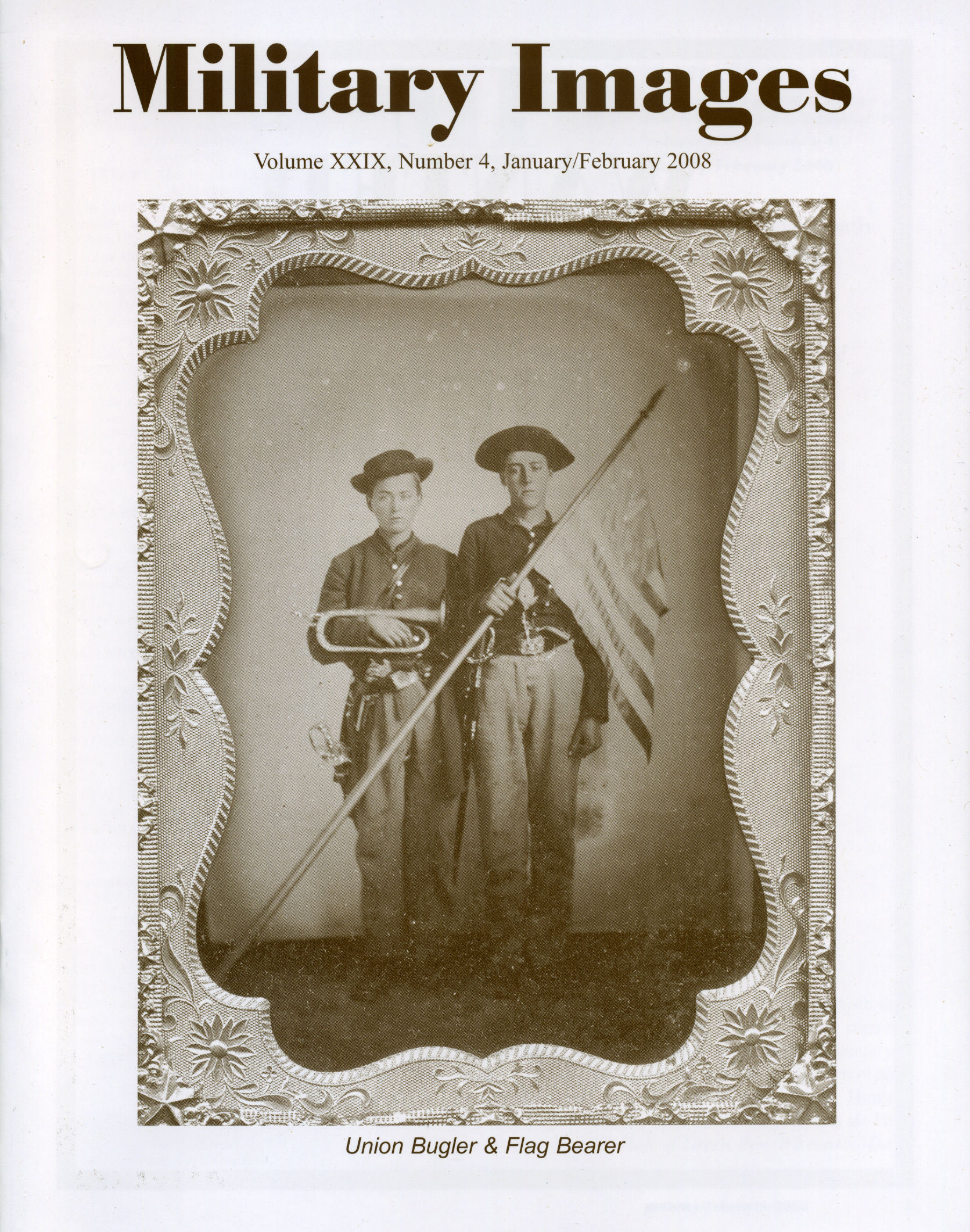
A quarter-plate ambrotype from the Donald Bates Sr. collection is a portrait of a Union bugler and flag bearer armed with revolvers and sabers. The flag is a swallowtail guidon of the style adopted by the Union army in January 1862.

Table of Contents (p. 1)

Editor’s Desk (p. 2)
The editor highlights the facts that this issue contains representative images that span seven of the first eight decades of photography, from the 1850s to the 1920s. Also mentioned is a fundraising effort by the Army Heritage Center Foundation to preserve the unique collection of images at the U.S. Army Military History Institute at Carlile Barracks, Pa.

Passing in Review (p. 3)
Two books receive positive reviews. West Point by Maureen Oehler DuRant and Peter E. Carroll is part of Arcadia Publishing’s Postcard History Series, and it is a revealing look at the U.S. Military Academy during the first half of the 20th century. “West Point is well worth the read,” declares the reviewer. “Georgia’s Confederate Sons Volume I by Dr. David N. Wiggins includes hundreds of images of Georgians at war. “Photo historians, and those who study Confederate uniforms and equipment will find this volume indispensible.”

Charlestown Honors a Local Hero: The Death of Lt. Colonel James O’Brien, Forty-Eighth Massachusetts Infantry by Ron Coddington and Reggie Van Driest (pp. 4-7)
An unusual cabinet card showing the casket of O’Brien lying in state at the Charlestown, Mass., City Hall is the centerpiece of a story about the life, military service and death of O’Brien, an Irish immigrant killed in action at the head of a “Forlorn Hope” against the defenses of Port Hudson, La., on May 27, 1863. In addition to the cabinet card, a wartime carte de visite of O’Brien and an image of Maj. Gen. Christopher C. Augur are included.

Indian War Images From the Collection of Thomas Trevor (pp. 8-11)
A total of four images are featured in this mini-gallery. They include Sgt. Max Simon of Troop H of the 6th U.S. Cavalry, an Apache scout circa 1881, three members of the 7th U.S. Cavalry (one man is identified as Herb McCarthy), and three troopers of the 6th U.S. Cavalry.

Last Ride of the Hoosier Lightning Brigade by John Sickles (pp. 12-23)
Subtitles “Indiana Troopers Sweep Through Alabama During the Final Weeks of the War,” the story is a history of Wilder’s Brigade, named for its commander John T. Wilder. The brigade included the 98th and 123rd Illinois and the 17th and 72nd Indiana Mounted Infantry regiments. The last ride, a saber charge, occurred on April 1, 1865. Identified soldiers include, in order of appearance, Col. Wilder, Lt. Col. Chester G. Thompson of the 72nd, Maj. Gen. James H. Wilson, Pvt. Richard Foster of the 72nd, Col. Jacob G. Vail of the 17th, Pvt. Charles T. Hughes of the 17th, Maj. Lawson Kilborn of the 72nd, Pvt. John T. Fisher of the 17th, 1st Lt. Lewis B. Garrett of the 72nd, Capt. James Taylor of the 17th, Gen, Nathan Bedford Forrest, 1st Lt. James T. Quick of the 72nd, Lt. Col. Frank White of the 17th, Surg. William C. Cole of the 72nd, Pvt. Tobias M. Grimes of the 72nd, Capt. Arius U. Craven of the 72nd, Capt. Jacob W. Gladden of the 72nd, Pvt. Jacob Musgrave of the 72nd, 2nd Lt. George J. Foster of the 72nd, 2nd Lt. William H. Atkinson of the 72nd, Pvt. John Quillan of the 17th, Pvt. George W. Lamson of the 17th, 1st Lt. Johnson Parker of the 72nd, Capt. Robert A. Vance of the 72nd, Capt. William P. Herron of the 72nd, Sgt. Augustus M. Cory of the 72nd, 2nd Lt. William F. Hendrickson of the 72nd, 1st Sgt. James Richey of the 72nd, Surg. John B. Larkin of the 17th, Maj. John J. Weiler of the 17th, Pvt. Wesley Burris of the 72nd, Pvt. Benjamin Pickerel of the 72nd and Pvt. James H. Higgason of the 72nd.

A Miscellany of World War One Images From the Collection of Mike Fitzpatrick (pp. 24-30)
A total of 12 images, 11 American and one German, are featured. Identified subjects include Henry Heintz of Elmhurst, Ill., J.M. Roberts of Eldred, Ind., Roy Zittustrung of Grantsburg, Wis., John Hulihan of Chicago and Corp. Hubert Amous.

Uniforms & History by Michael J. McAfee (pp. 31-33)
In “Landis’ Battery: Company A, First Regiment Pennsylvania [Militia] Artillery,” McAfee admits his fondness for the American militiaman and goes on to discuss the military history and uniforms of Landis’ Battery. Images include Capt. Henry D. Landis, for whom the battery takes its name, John Fulton Reynolds Landis (1856-1939), his son, Pvt. A.M. Grant, and two images of the battery in camp and in the field.

The Confederate Soldier (p. 34)
A ninth-plate ruby ambrotype from the Robert C. Johnson Jr. collection features a soldier dressed in a battle shirt and holding a flintlock musket and bayonet.

Stragglers (pp. 35-37)
A total of 8 images submitted by subscribers are featured, and they include a trooper from the 1st Vermont Cavalry, Thomas Whipkey of the 15th Pennsylvania Cavalry and Drummer boy Daniel Clouse of the 46th Pennsylvania Infantry.

Back Cover Story (p. 38)

Sutler’s Row (p. 39)

The Last Shot (p. 40)
“Winning Hearts ad Minds in the Philippines” is the quote below a circa 1900 photo of four U.S. soldiers posing with a pile of humans skeletons.

Back Cover
A carte de visite copy of a daguerreotype from the David Neville collection shows Fort Howard, Wis., in 1850.

Finding Aid: May/June 2007

2007-v28-06-xxviii

The complete issue

Vol. XXVIII, No. 6
(40 pages)


Print edition: Visit our store to check availability
Digital edition: Visit JSTOR.org to purchase
Subscribe to MI
Explore the MI Archives: Browse | Advanced search | Tutorial

Inside

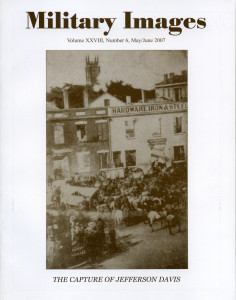
Cover image
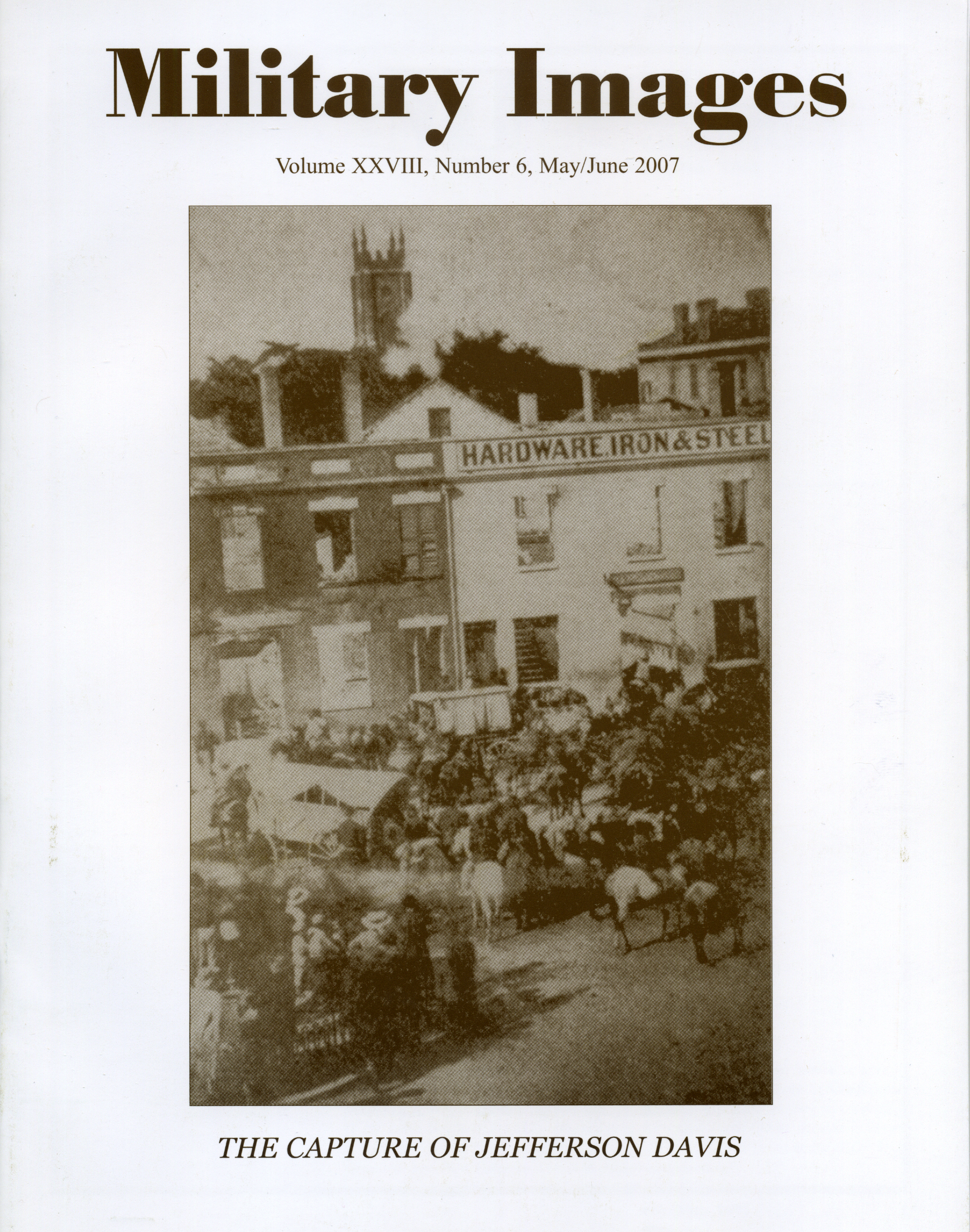
carte de visite from the David Parks collection is inscribed, “Ambulance and wagon occupied by Mr. Davis and family in front of Gen. Wilson’s Headquarters Macon, GA, May 12, 1865.”

Table of Contents (p. 1)

Editor’s Desk and Mail Call (p. 2)
The editor explains why readers received a second copy of this issue. Turns out the first issue had printing irregularities that prompted a reprint and resend. He goes on to promote the upcoming medical issue, and describes the interest as “red hot.”

Passing in Review (p. 3)
The Officer Corps of Custer’s Seventh Cavalry 1866-1876 (Schiffer Military History) by James B. Klokner is well received. “Mr. Klokner’s volume contributes useful biographical data to our already vast knowledge of the 7th U.S. Cavalry.”

The Capture of Jefferson Davis by John Sickles (pp. 4-19)
The author tells the dramatic story of how the Confederate president fell into enemy hands, and it is illustrated with a number of identified portraits of troopers who served in the 4th Michigan Cavalry, the regiment credited with the capture. They include Benjamin Archer, Herbert A. Backus, William L. Bailey, Lester P. Bates, Lucius Bates, Charles Blackall, Henry S. Boutell, Martin L. Brown, Joseph Colenso, Julian G. Dickinson, William Dill, John H. Douglas, John N. Gilbert, Augustus Grawn, George Hall, Martin V. Heckathorn, George F. Hodge, Charles T. Hudson, Joseph W. Huston, George Kauffman, Gurdin N. Kenyon, George W. Lawton, William McCune, Angus McDonald, John C. McLain, Emery A. Miller, Robert Horatio George Minty, Frank Mix, Elias F. Pierce, Henry A. Potter, Benjamin D. Pritchard, Alfred B. Purinton, Elias Scales, Isaac Skinner, George Smith, Luke M. Thayer, Benjamin Thompson, George B. Walker, Horace B. Warner, Augustus Wegal, Charles Wegal, Daniel P. Welton (possibly) and Fred Woohans.

Conant Family in the Civil War by J. Dale West (pp. 20-23)
The story is subtitled, “From Missouri, the Conant brothers were early volunteers in ‘Mr. Lincoln’s Army.’” The author profiles Maj. Horace A. Conant, aide de camp to Brig. Gen. Nathaniel Lyon and paymaster, 1st and 2nd Regiments, 1st Brigade Missouri Volunteers and Capt. John H. Conant, 1st Missouri Light Artillery. Also pictures are Capt. and Provost Marshal Abraham D. Daugherty and Abbie Maria Conant Daugherty, wife of Capt. Abraham Daugherty and sister of Horace and John.

Texans in Search of a Fight by Derek Manov (pp. 24-27)
Two photographs of Confederate soldiers are the subject of this investigation into the uniforms and equipment of the 4th Texas Infantry, which was part of Gen. John B. Hood’s Texas Brigade in the Army of Northern Virginia. One image, a quarter-plate ambrotype, pictures two unidentified members of Company B, also known as the ‘Tom Green Rifles.” The second image, a sixth-plate ambrotype, is a portrait of an unidentified member of the regiment.

Rhode Island Uniforms in the Civil War by Robert Grandchamp (pp. 28-32)
Though comparatively smaller in size and population to the other states of the Union, Rhode Island had its share of uniform style. The author details the variations, illustrated with several images that include privates William S. Perrin and William H. Jordan of the 1st Light Artillery, Capt. Theodore Winn, Pvt. Horace D. Healey, Pvt. Henry Wilson, Pvt. John P. Jones, Sgt. Franklin Gonsolve and Lt. Darius Cole of the 7th Infantry, Capt. George Newman Bliss of the 1st Cavalry, Pvt. George Henry Maxfield of the 2nd Infantry.

Uniforms & History by Michael J. McAfee (pp. 33-34)
In “The Ninety-Seventh Regiment, New York Volunteer Infantry,” McAfee examines the service record of the regiment, which lost heavily during the first day of the Battle of Gettysburg, and the uniforms and equipment that they were issued. Images that accompany the text include Luther E. Bullock, Louis Dallarmi, George F. Dempster and William A Wright.

The Confederate Soldier (p. 35)
A hard-plate photograph of A.J. Johnson of the 18th Alabama Infantry in civilian clothes may be the only surviving portrait of the soldier, who died during the April 1865 siege on Spanish Fort in Mobile Bay, Ala.

Stragglers (pp. 36-38)
A total of 11 images are featured in this issue. None of the soldiers are identified.

Sutler’s Row (p. 39)

The Last Shot (p. 40)
A carte de visite copy of a tintype of two soldiers with smokes and cards from the collection of Chris Nelson is simply titled, “Pards At Cards.”

Back Cover
A carte de visite from the David W. Vaughan collection pictures Benjamin Staats of the 14th Rhode Island Heavy Artillery.

Finding Aid: March/April 2007

2007-v28-05-xxviii

The complete issue

Vol. XXVIII, No. 5
(40 pages)


Print edition: Visit our store to check availability
Digital edition: Visit JSTOR.org to purchase
Subscribe to MI
Explore the MI Archives: Browse | Advanced search | Tutorial

Inside

Cover image
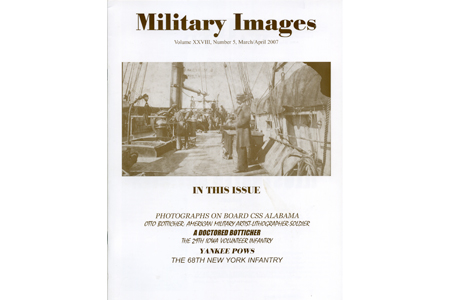
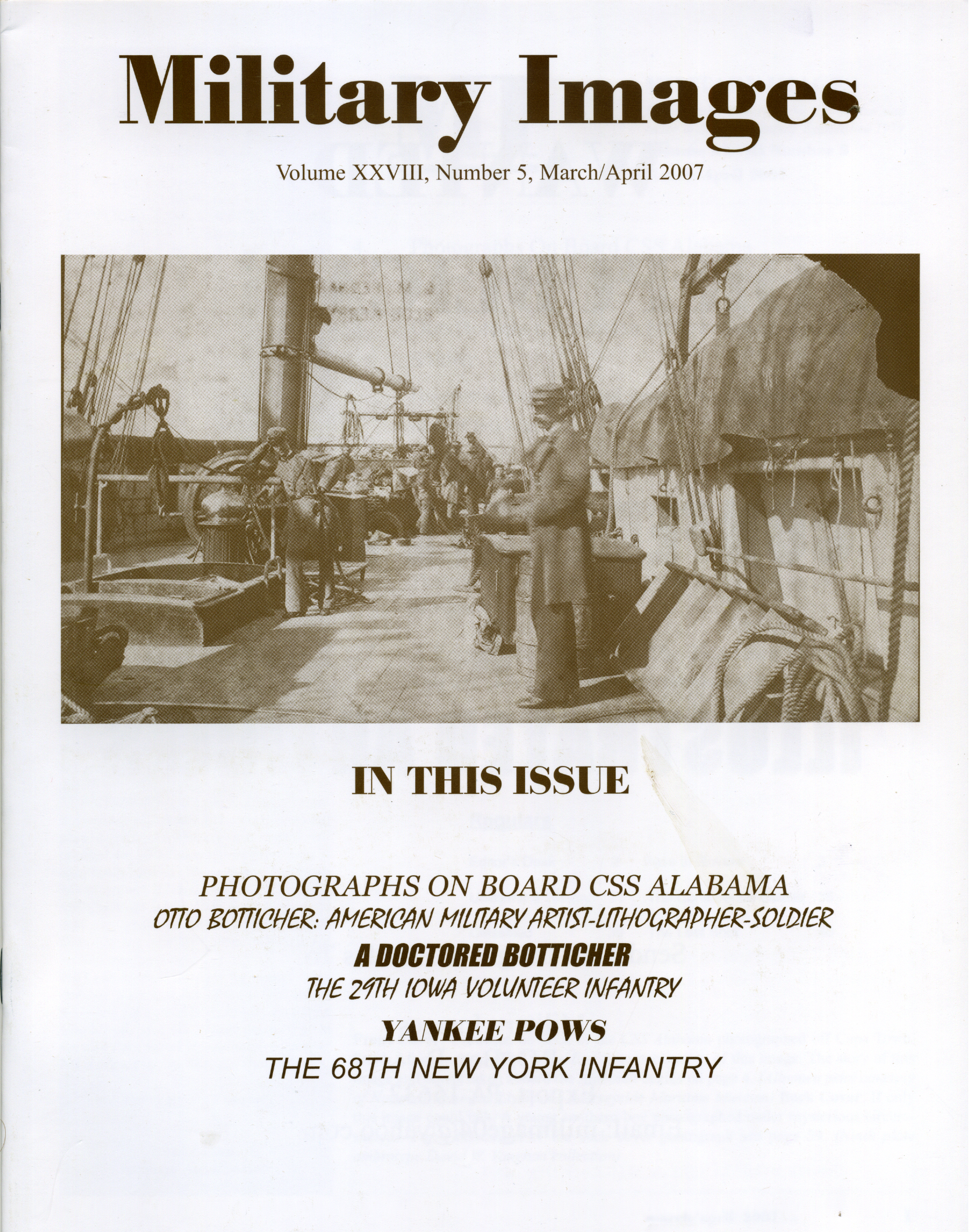
An albumen print from the National Museums Liverpool-Merseyside Maritime Museum pictures crewmen on deck of the Confederate cruiser Alabama off Cape Town, South Africa, in 1863. This is the first time this image has been published.

Table of Contents (p. 1)

Editor’s Desk and Mail Call (p. 2)
The editor previews the contents of this issue with emphasis on the Alabama and a profile of artist-lithographer-soldier Otto Botticher.

Passing in Review (p. 3)
Four books are recommended: Rough Riding Scout, The Story of John W. Mobberly Loudon’s Own Civil War Guerrilla Hero (Elden Editions) by Richard E. Crouch; The Civil War Collector’s Price Guide 11th Edition (Publisher’s Press, Inc.) by North South Trader’s Civil War; The Darkest Days of the War, The Battles of Iuka and Corinth (The University of North Carolina Press) by Peter Cozzens and The Wilderness Campaign (The University of North Carolina Press), edited by Gary Gallagher.

Photographers On Board CSS Alabama by Andrew Bowcock (pp. 4-7)
Subtitled “The first time publication of a photograph taken aboard the Confederacy’s most famous raider,” the author details three albumen prints that appeared in a catalog issued by a London book dealer. Two of the images, of Capt. Raphael Semmes and 1st Lt. John McIntosh Kell on the deck of the vessel, are fairly well known. The third, reproduced on the cover of MI, is previously unknown. This image is explored in depth with several enlargements to highlight salient details.

Otto Botticher: American Military Artist-Lithographer-Soldier by Seward R. Osborne (pp. 8-16)
Subtitled, “We’ve all seen his military prints, but who was Otto Botticher?” Historian Seward Osborne went in search of the answer and presented his findings in this profile of the German-born artist. He served as an officer in the 68th New York Infantry during the Civil War and was captured by Confederates near Manassas on March 29, 1862. He eventually returned to his regiment and fought through the rest of the war, suffering a wound in the Battle of Gettysburg. Numerous examples of his military art survive, which cleverly melded photography and art into lithography. Botticher died in 1886.

 The Doctored Botticher by Mark H. Dunkelman (pp. 17-19)
Patrick Henry Jones, a Union brigadier who was once colonel of the 154th New York Infantry, is at the center of this story of a Botticher print titled “Sherman at Savannah, Ga.” An admirer of Gen. Jones commissioned an artist to replace the likeness of Maj. Gen. Henry A. Barnum with Jones. The story is illustrated with details of the image and photographs of Jones and Barnum.

Rhode Island Uniforms in the Civil War by Robert Grandchamp (pp. 28-32)
Though comparatively smaller in size and population to the other states of the Union, Rhode Island had its share of uniform style. The author details the variations, illustrated with several images that include privates William S. Perrin and William H. Jordan of the 1st Light Artillery, Capt. Theodore Winn, Pvt. Horace D. Healey, Pvt. Henry Wilson, Pvt. John P. Jones, Sgt. Franklin Gonsolve and Lt. Darius Cole of the 7th Infantry, Capt. George Newman Bliss of the 1st Cavalry, Pvt. George Henry Maxfield of the 2nd Infantry.

Yankee POWs: Vignettes from the Collection of Michael Fitzpatrick (pp. 20-26)
The author profiles six soldiers who fell into enemy hands during the war: Richard Thomas of the 99th New York Infantry and 6th U.S. Infantry, captured on March 8, 1862, at Hampton Roads, Va.; Edward Hayes Swisher of the 7th Pennsylvania Reserves, captured first during the Peninsula Campaign and again in The Wilderness; Joseph S. Stigler of the 2nd Pennsylvania Heavy Artillery, captured at Chaffin’s Farm; Abraham Loane of the 2nd Massachusetts Cavalry, captured near Aldie, Va., in 1864, Samuel T. Moles of the 47th Illinois Infantry, captured at Holly Springs, Miss., in 1862, and Frederick B. Nesbett of the 5th Main Infantry, captured at Salem Church, Va., in 1863.

A Regimental History of the 29th Iowa Volunteer Infantry by Brian K. Robertson (pp. 27-32)
Subtitled, “Exposed to sickness and rebel bullets, service in Arkansas & Mississippi took its toll on this regiment from the Midwest,” the author provides a sketch of the 29th that is illustrated with photographs from the collection of the Butler Center for Arkansas Studies. They include Orlando H. Bagley, Thomas H. Benton Jr., Isaac C. Catlett, William M. Carlile, Octavius B. Gaddy, Bird Hagans, Frederick D. Hahnonkratt, Francis M. Haskins, Lemen D. Helm, William M. Hindman, John S. Miller, James L. Mitchell, Heslip W. Rodgers, Wesley M. Rodgers, Robert Salen, John B. Thomson and William H.W. Wax.

Uniforms & History by Michael J. McAfee (pp. 33-35)
In “The 68th Regiment, New York Volunteer Infantry,” McAfee examines the service record of the regiment and the uniforms and equipment that they were issued. Images that accompany the text include Robert J. Betge, Johann H. Kleefish and Heinrich W. Reissberger. One additional image that the author believes may be Otto Botticher is also included.

The Confederate Soldier (p. 36)
A sixth-plate ambrotype from the Brian Boeve collection is a portrait of Pvt. James Robert Gwin of the 17th Battalion Virginia Infantry and the 11th Virginia Cavalry. Gwin survived a wound in the Wilderness and the Civil War. He lived until 1923.

Back Cover Story (p. 38)

Sutler’s Row (p. 39)

The Last Shot (p. 40)
A carte de visite from the Don Ryberg collection pictures Cpl. Joseph H. De Castro of the 19th Massachusetts Infantry. He received the Medal of Honor for his capture of the colors of the 19th Virginia Infantry during Pickett’s Charge at the Battle of Gettysburg. He survived the war and died in 1892.

Back Cover
A ninth-plate ambrotype from the David W. Vaughan collection pictures a young boy posed with flowers. The image shows all indications of being a post mortem with the exception of his eyes, which are wide open.

Finding Aid: July/August 2006

2006-v28-01-xxviii

The complete issue

Vol. XXVIII, No. 1
(48 pages)


Print edition: Visit our store to check availability
Digital edition: Visit JSTOR.org to purchase
Subscribe to MI
Explore the MI Archives: Browse | Advanced search | Tutorial

Inside

Cover image
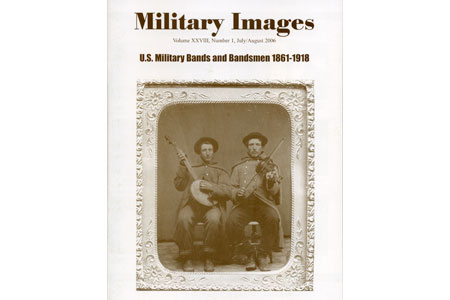
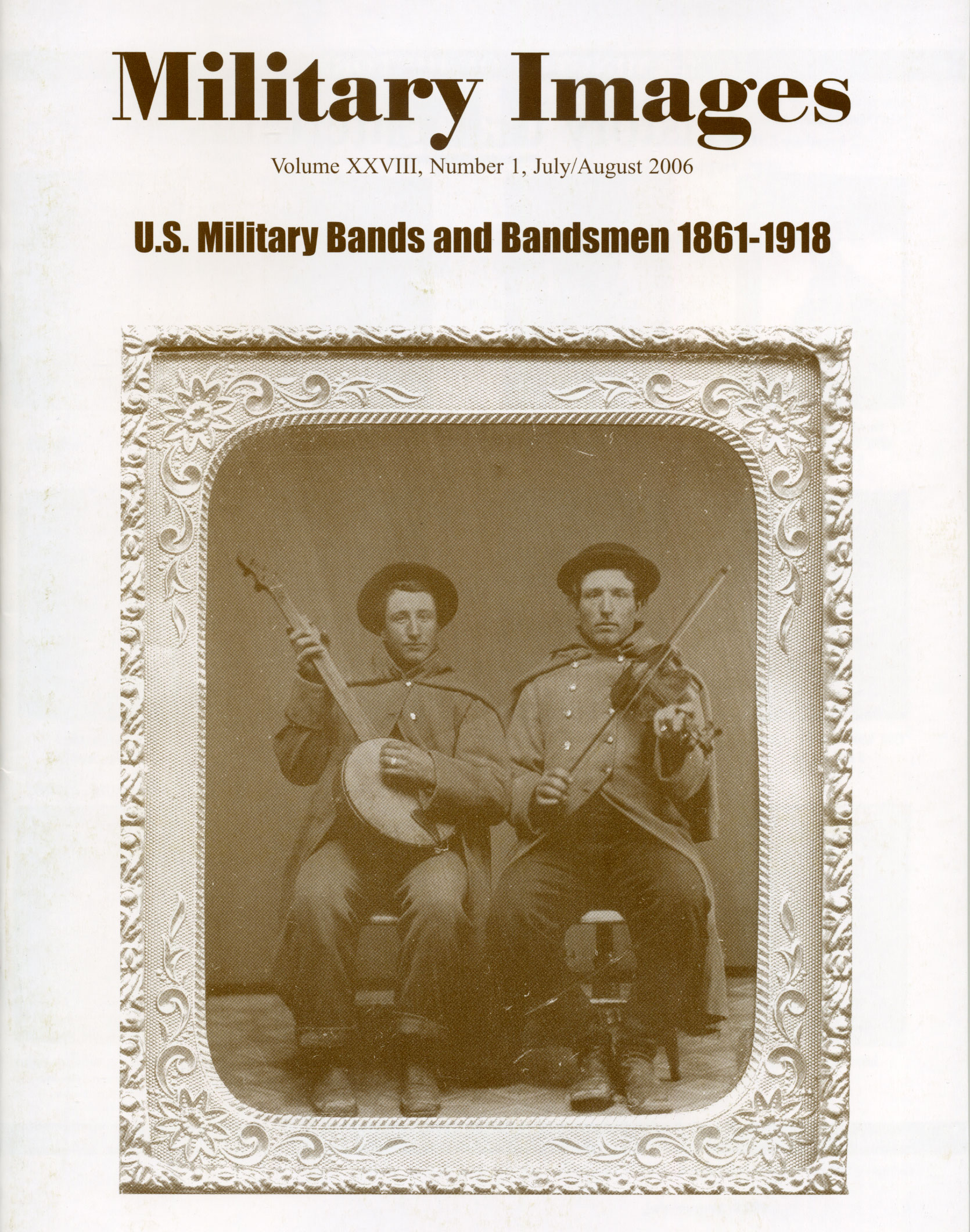
A sixth-plate tintype from the Donald Bates Sr. collection pictures two Union soldiers, one with a banjo and the other with a fiddle.

Table of Contents (p. 1)

Editor’s Desk and Mail Call (p. 2)
The editor welcomes readers to this special issue dedicated to U.S. military bands and bandsman, 1861-1918. Also mentioned is the passing of Dr. Francis Lord, 94, who authored pioneer books about Civil War relics, including his landmark 1963 reference volume the Civil War Collector’s Encyclopedia. Mail Call features a single letter about experiences in Multigraph photography.

Passing in Review (pp. 3-4)
One book is recommended: The Shenandoah Valley Campaign of 1864 (University of North Carolina Press) by Gary W. Gallagher.

U.S. Military Bands and Bandsmen 1861-1918 by Chris Nelson (pp. 4-7)
The introduction to this multipage cover story examines the integral role played by musicians in every U.S. war since the Revolution. The author notes, “Fortunately for students of U.S. military history, the documentation, and surviving examples of instruments, uniforms, and sheet music, allows us to virtually recreate the entire experience. The increasingly successful efforts of Civil War re-enactors to replicate accurate band and field music are now a staple of most events. This article is a quick look at the original bands and bandsmen from 1861 through WWI.” The photo survey that follows is divided into sub-sections that include profiles.

Drummers and Fifers (pp. 8-19)
A total of 31 images of all formats includes the following identified individuals: Connecticut drum maker C.B. Hendrick, the Rebagg Brothers of Rochester, N.Y., Christian Heckler of the 62nd Illinois Infantry, the Smith brothers of Illinois regiments (John of the 89th, Joseph of the 36th and William of the 26th), John Miller of the 100th Indiana Infantry, Robert Henry Hendershot of the 8th Michigan Infantry, Archibald Godley of the 14th New York Heavy Artillery, John S. Kountz of the 37th Ohio Infantry and John G. Webb of the 78th Pennsylvania Infantry.

Brass Instrumentalists (pp. 20-23, 25)
A total of 18 images of all formats includes the following identified individuals: James Porter of Gen. Grenville Dodge’s band, George Lowman of the 36th Illinois Infantry, Jeremiah Potter of the 2nd Rhode Island Infantry, Robert J. Hancock and David L. Thomas of the 3rd Rhode Island Cavalry and Edwin Ordway of the 1st Vermont Heavy Artillery.

Calixa Lavallee: Civil War Musician & Composer of the Canadian National Anthem (p. 24)
A sketch of the life and military service of the song O’Canada is illustrated with a quarter-plate ambrotype of Lavallee and his brother George during their service with the 4th Rhode Island Infantry.

Buglers & Trumpeters (pp. 26-33)
A total of 24 images of all formats includes the following identified individuals: John H. Buckner of an unidentified post-war regiment, Joseph Gibble of the 12th Ohio Cavalry and Emil Smith of the 39th Ohio Infantry.

Military Bands (pp. 34-36)
A total of 6 images includes the following identified organizations: the U.S. Military Academy Band in 1864, the band of the 12th U.S. Infantry at Chickamauga, Ga., in 1898 and Watson’s Band, 1st Minnesota Infantry, Minnesota national Guard, in 1898.

The Boys Who Broke the Hindenburg Line: 370th Old 8th Regiment, Chicago, Illinois (p. 37)
Three images of the band of the 370th U.S. Infantry, an African American World War I unit, which served alongside the famous 369th U.S. Infantry (Harlem Hell Fighters) in the French army.

Sergeant John von Staden: Drum Major, 1st California U.S. Volunteers 1898-1899 (p. 38)
An image of the band of the 1st California photographed in the Philippines in 1899 pictures von Staden holding his baton. A sketch of the regiment and his service is included.

Uniforms & History by Michael J. McAfee (pp. 39-42)
In “The Military Band,” McAfee provides a short history of Union Civil War bands. A dozen cartes de visite illustrate the text, including Charles Grimmer of the 17th U.S. Infantry.

Stragglers (pp. 43-45)
A total of 11 portraits of bandsmen include 1st lt. George Andrews of the 25th U.S. Infantry astride his horse “Bob,” Dunallen M. Woodburn of the 58th Ohio Infantry and the band of the 329th U.S Infantry of the 83rd Infantry Division.

 Sutler’s Row (p. 46)

The Last Shot (p. 48)
“Band Gone Wild” is the headline that accompanies this image of the band of the 1st Minnesota Infantry, Minnesota National Guard. The members are attired in a bizarre assortment of costumes for a mock parade.

Finding Aid: January/February 2007

2007-v28-04-xxviii

The complete issue

Vol. XXVIII, No. 4
(40 pages)


Print edition: Visit our store to check availability
Digital edition: Visit JSTOR.org to purchase
Subscribe to MI
Explore the MI Archives: Browse | Advanced search | Tutorial

Inside

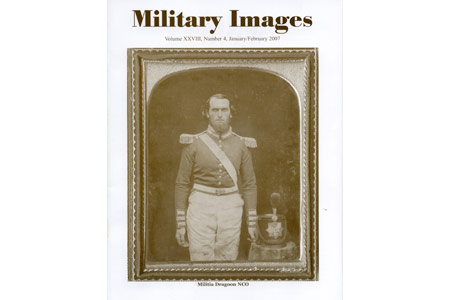
Cover image
A half-plate daguerreotype from the Thom Cole collection is a circa 1850 portrait of a militia dragoon non-commissioned officer in full dress uniform.

Table of Contents (p. 1)

Editor’s Desk and Mail Call (p. 2)
The editor notes that it has been a long while since so many military daguerreotypes have been published in the magazine. He also references upcoming projects.

Passing in Review (p. 3)
Three books are recommended: Confederate Heroines, 120 Southern Women Convicted by Union Military Justice (Louisiana State University Press) by Thomas P. Lowry; War’s Relentless Hand, Twelve Tales of Civil War Soldiers (Louisiana State University Press) by Mark Dunkelman and The Daguerreian Annual 2005 (The Daguerreian Society), edited by Mark S. Johnson and Dawn Patton.

American Military Daguerreotypes From the Collection of Dr. William T. Schultz (pp. 4-23)
A Q&A with Dr. Schultz by James Ronan II (reprinted with permission by the Company of Military Historians) covers the basics of military daguerreotypes and explores various aspects of the collection. A survey of 22 follows, including identified images of Lt. George H. Gordon, U.S. Mounted Rifles; Henry Ledyard, U.S. Charge d’ Affair in Paris; Asst. Surg. Robert Little Brodie, U.S. Army; Midshipman John Gardner Mitchell, U.S. Navy; Lt. Col. Joseph R. Smith, U.S. Army; 1st Lt. William Root, 5th U.S. Infantry; 2nd Lt. William Thompson Mechling, 3rd U.S. Infantry; 1st Lt. William H. Gray, 11th U.S. Infantry and 1st lt. Robert S. Hayward, 13th U.S. Infantry.

“Respetad a la Humanidad!” by Kirk D. Lyons, JD (pp. 24-29)
Subtitled, “The curious history of a Mexican War daguerreotype,” the author, a self-described “keen student of Mexican War photography since my college days,” traces the history of a medical image from the War with Mexico. The photograph pictures Pedro Vander Linden, Chief Surgeon of the Mexican Medical Corps. Captured at the Battle of Cerro Gordo in 1847 when his field hospital was overrun by Americans, Vander Linden, “turned, faced the soldiers with his upraised bloody hands shouting: ‘Respedad a la humanidad, o un hospital de sangre; somos cirujuanos!’ (Respect humanity of this hospital if blood! We are surgeons!)”

Babe Hudspeth: Missouri Guerrilla by John Sickles (pp. 30-33)
Guerrilla fighter William Napoleon “Babe” Hudspeth participated in some of the bloodiest raids of the Civil War. He rode with the likes of William Quantrill, Bloody Bill Anderson and Jesse James and survived his war experience. He died in 1907. The story is illustrated with two cartes de visite from the author’s collection. One is Hudspeth dressed in a Mexican Bolero jacket, and the other pictures him with Oscar Thompson, who also rode with Quantrill.

Uniforms & History by Michael J. McAfee (pp. 33-35)
In “The Military Daguerreotype,” McAfee shares his memory of the first military daguerreotype he purchased, how he came to sell it to well-known collector Herb Peck Jr., and memories of other similar images that passed through his hands. Four images illustrate the column.

The Confederate Soldier (p. 36)
A ninth-plate ruby ambrotype from the Steven Karnes collection is a portrait of an unidentified South Carolina private who served with the Holcombe Legion.

Back Cover Story (p. 38)
The background of the image includes a circa 1846 daguerreotype of the same man dressed in civilian clothes.

Sutler’s Row (p. 39)

The Last Shot (p. 40)
A half-plate ambrotype from the David W. Vaughan collection pictures an unidentified Confederate officer with cavalry-style saber.

Back Cover
A daguerreotype from the Fred Sherfy collection is identified as “Uncle Issac Hull in Civil War.” Though not a Civil War era image, Hull may have served in a militia company.

Finding Aid: September/October 2007

2007-v29-2-xxix

The complete issue

Vol. XXIX, No. 2
(40 pages)


Print edition: Visit our store to check availability
Digital edition: Visit JSTOR.org to purchase
Subscribe to MI
Explore the MI Archives: Browse | Advanced search | Tutorial

Inside

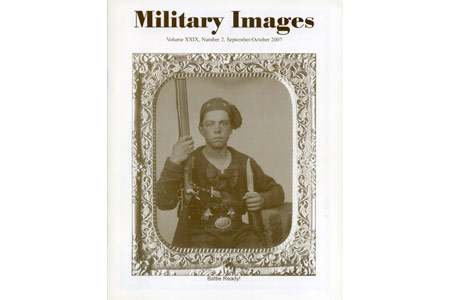
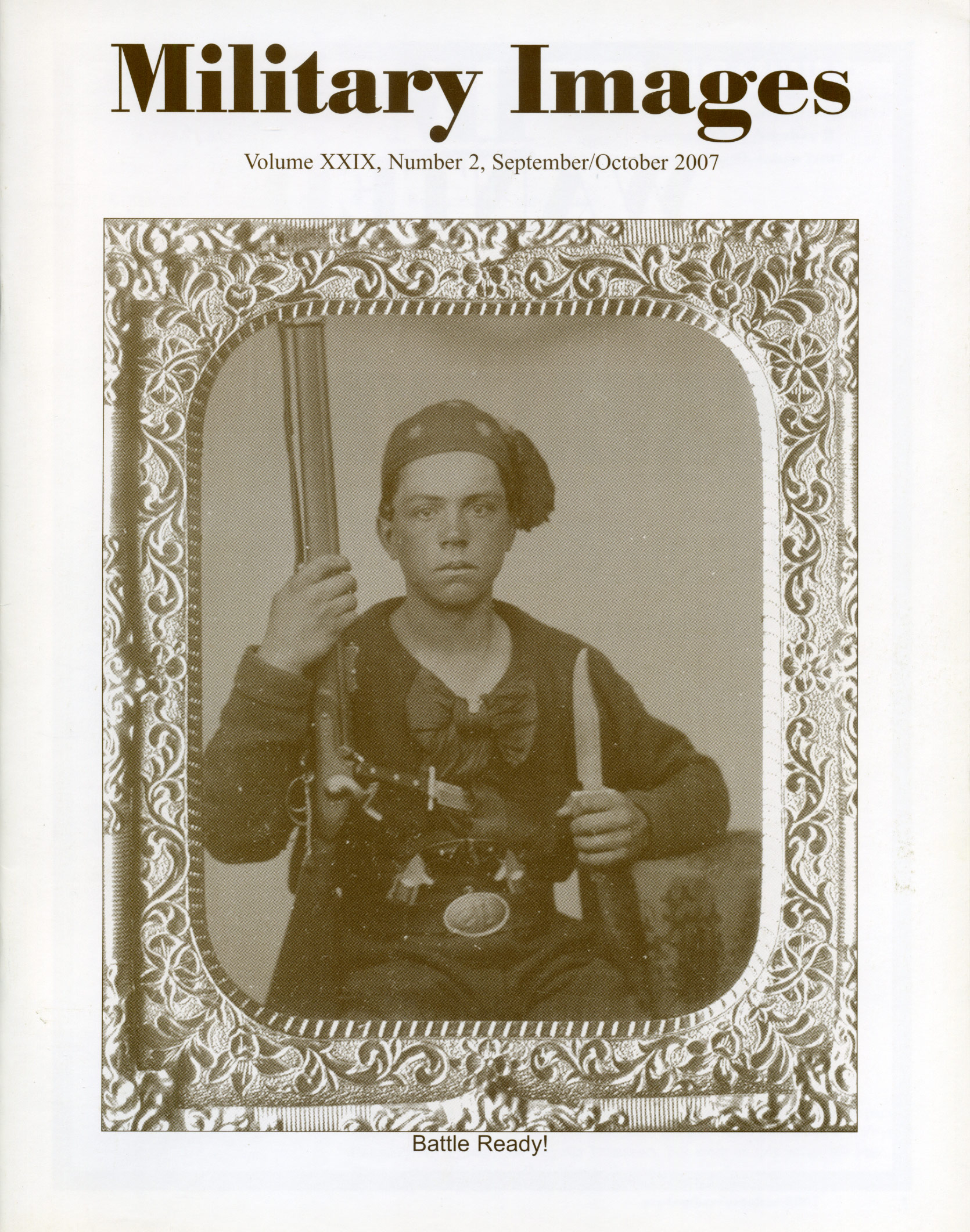
Cover image
A sixth-plate ambrotype from the Brian Boeve collection features a heavily armed Union soldier dressed in Zouave-like attire.

Table of Contents (p. 1)

Editor’s Desk (p. 2)
The editor introduces the Antietam theme in honor of the 145th anniversary of the battle and reports that the recent medical-themed issue seemed to be enjoyed by most readers.

Passing in Review (p. 3)
Two books receive favorable reviews. Uniforms, Arms, and Equipment: The U.S. Army on the Western Frontier, 1880-1892, by Douglas C. McChristian (University of Oklahoma Press) and US Infantry in the Indian Wars 1865-91 by Ron Field (Osprey Publishing).

Brothers at Sharpsburg by Brian Boeve (pp. 4-7)
Images of two pairs of warrior brothers and brief sketches of each soldier include William D. Lowe and John C. Lowe of the 13th Mississippi Infantry, and Solomon and Harrison Moore of the 6th North Carolina Infantry.

With the Signal Corps at Antietam by Joseph Stahl (pp. 8-9)
A New England lieutenant, Edward C. Pierce of Company B, 3rd Maine Infantry, was featured in two photographs taken near Sharpsburg, Md., in September or October 1862. The images, by Alexander Gardner, show Pierce at the Elk Ridge Signal Station. Text that accompanies the images explains how the purchase of a carte de visite of Pierce (also pictured) by the author led him on a voyage of discovery that ended with the Gardner images.

A Call to Arms: Images From the Brian Boeve Collection (pp. 10-19)
Representative examples of Civil War soldier portraits from the Brian Boeve collection include 12 unidentified Union soldiers. Three artillerymen, three cavalrymen and six infantrymen are featured.

“The Bullets Fell Like Hailstones:’ A Uniformed Image of Lt. Colonel James B. Griffin, Hampton’s Legion, CSA by Al Luckenbach (pp. 20-21)
The quote used in the headline is taken from a letter written on June 2, 1862, by Griffin to describe the Battle of Seven Pines. It was published in the 1996 book A Gentleman and an Officer: A Military and Social History of James B. Griffin’s Civil War (Oxford University Press). The author goes on to explain how he came to possess and confirm a partially identified carte de visite that he purchased at a flea market in the Dallas, Texas, area and provides a short profile of the subject. The Griffin portrait, made by Wearn & Hix of Columbia, S.C., illustrates the story.

Captain William White Dorr, Company K, 121st Pennsylvania Infantry by Edward Max (pp. 22-23)
Three carte de visite portraits of William White Dorr, the cover of his prayer book and his lieutenant’s shoulder straps are pictured in this tribute to an officer who was killed in action at the Battle of Spotsylvania Courthouse on May 10, 1864.

The Short Life of Clarke Hockensmith by John Sickles (pp. 24-25)
A cabinet card of Hockensmith illustrates a sketch of his life and service with Quantrill’s Guerrillas, which ended with his death near the end of the war when he was shot and killed by Yankees.

Captain Henry C. Miles, 35th Wisconsin Volunteer Infantry by Thomas P. Lowry (p. 26)
Described by the author as an “errant captain,” Miles ran afoul of the military justice system on numerous charges, including “frequent licentious practice” that resulted in venereal disease. He was dismissed from the army in November 1864.

The Officers Club of Boston by Rick Carlile (pp. 27-29)
An elite band of veterans who served in regiments organized in Massachusetts during the Civil War formed one of the most exclusive social clubs in the world. At its height, the club numbered 19 members, and six of them are pictured here. They include Robert Hooper Stevenson of the 24th Infantry, Henry Sturgis Russell of the 2nd Infantry and 5th Cavalry, Charles Francis Adams of the 1st and 5th cavalries, Dr. Hall Curtis of the 24th Infantry, Henry Lee Higginson of the 2nd Infantry and Charles Albert Whittier of the 20th Infantry.

Spencer Rifles and Carbines by John Sickles (pp. 30-33)
The author details the need for high-tech guns during the Civil War and profiles inventor Christopher M. Spencer, for whom the popular weapon was named. The narrative is illustrated with a carte de visite of an unidentified cavalryman, a 4th Massachusetts Cavalry soldier, a portrait of Col. John T. Wilder of the first brigade in the Union army to be armed with Spencer rifles, an image of William Thieme of the 72nd Indiana Infantry of Wilder’s Brigade and Albert J. Tift of the 5th Michigan Cavalry.

The Confederate Soldier (p. 34)
A ninth-plate ambrotype from the Al Camblin collection pictures Wiley G. Grist of New Hanover County, N.C., is featured in this installment. He served in the 1st North Carolina Light Artillery and the 41st North Carolina Troops, also known as the 3rd North Carolina Cavalry.

Uniforms & History by Michael J. McAfee (pp. 35-37)
In “Zouave Regiments of the National Guard, State of New York, 1866,” McAfee subtitles the narrative “Once a Zouave, always a Zouave?” Noting that “some veterans of the Civil War seem to have felt the need to continue the fraternity of soldiers into peacetime,” he details three regiments of Zouaves, the 1st, 3rd and 4th New York militia regiments. The text is illustrated with two engravings and a half dozen carte de visite portraits. Identified images include Charles Blumenroether of the 1st, Almar Webster and Mortimer Mackenzie of the 1st and John Hock of the 4th.

Back cover story (p. 38)
The life and military service of David T. Poyner is detailed here.

Sutler’s Row (p. 39)

The Last Shot (p. 40)
A sixth-plate tintype of two unidentified Union soldiers playing cards and holding firearms is part of the Derek Manov collection.

Back Cover
Sixth-plate ambrotype from the J. Dale West collection pictures Capt. David T. Poyner, who served in Company A of the 5th Battalion Virginia Infantry.