How a Gettysburg Licensed Battlefield Guide Found a Soldier Portrait Through Military Images to Help Tell the Story of the Fight

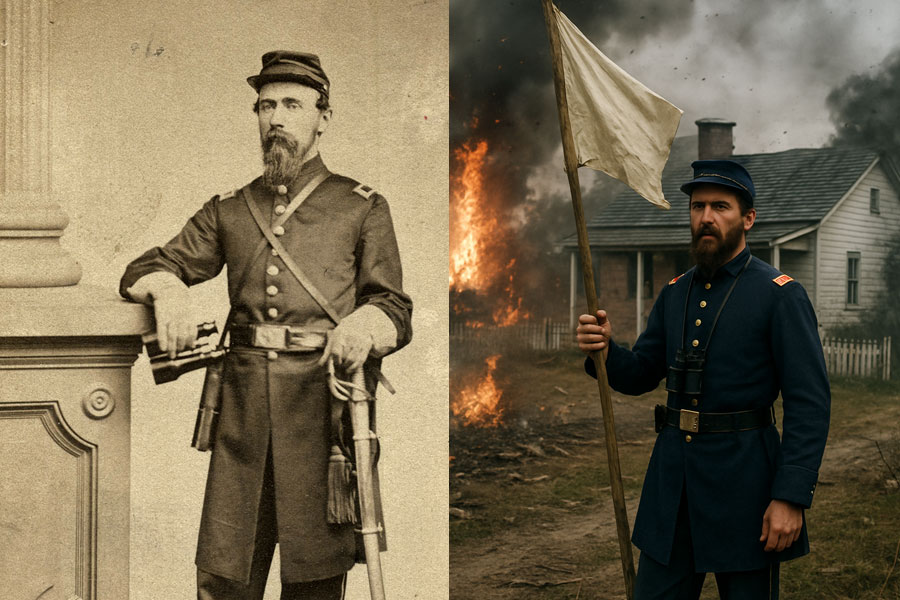
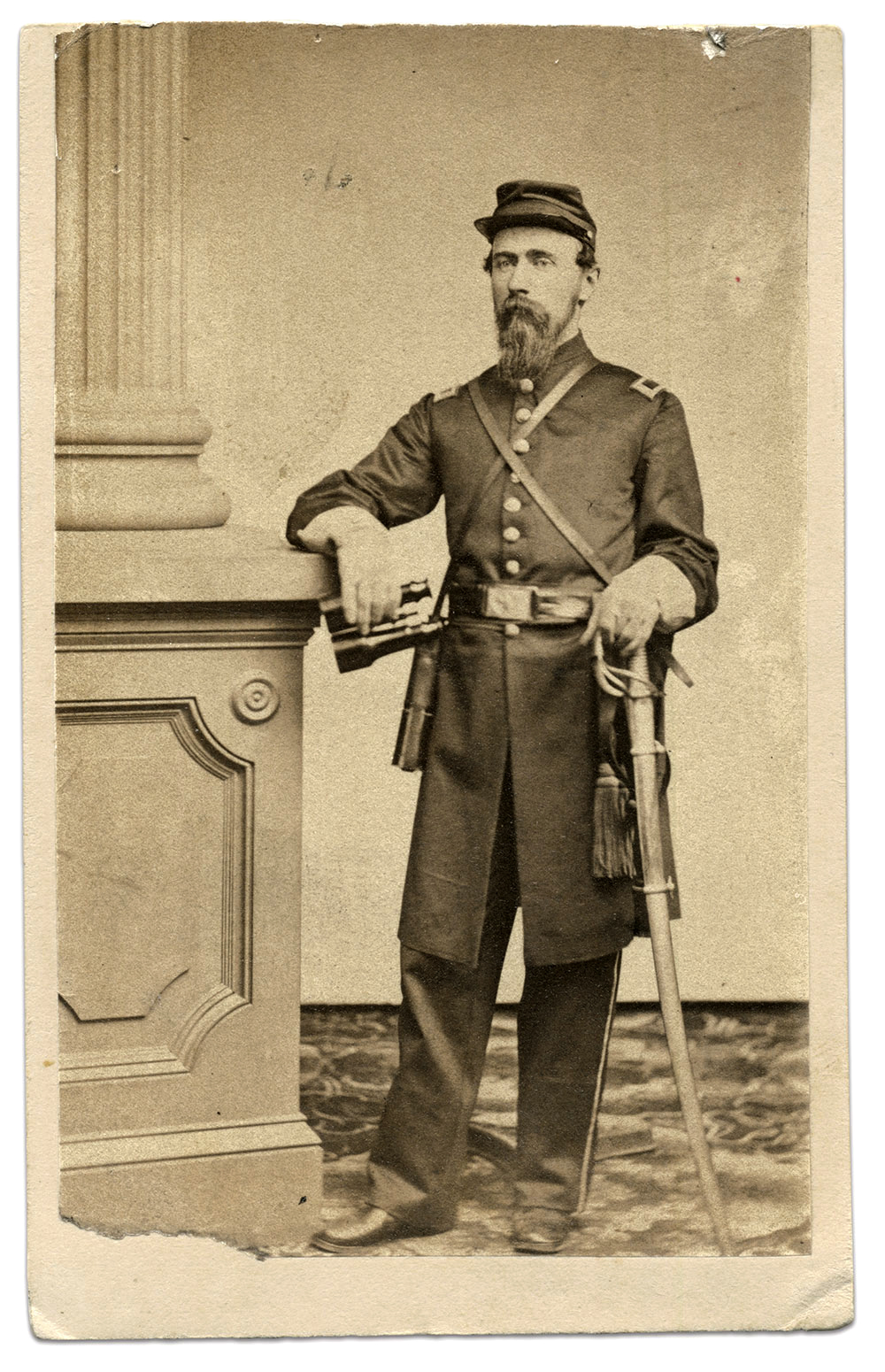
When Gettysburg Licensed Battlefield Guide Jerry Hahn watched a YouTube episode of Life on the Civil War Research Trail featuring Capt. Davis Eugene Castle of the U.S. Signal Corps, a wartime portrait of Castle—standing confidently, binoculars in hand—appeared on the screen.

Hahn, who tells Castle’s story as part of his tour, had not previously seen the image.

Carte de visite by an anonymous photographer. The late Rick Carlile Collection.

Hahn reached out and requested permission to use it, and for a higher resolution copy.

The image, part of the late Rick Carlile Collection, first appeared in our Summer 2019 issue in a feature story titled “Optics: Military men with field glasses and telescopes.

In 2022, Castle’s image and story appeared in the book Gettysburg Faces: Portraits and Personal Accounts, printed by Gettysburg Publishing.

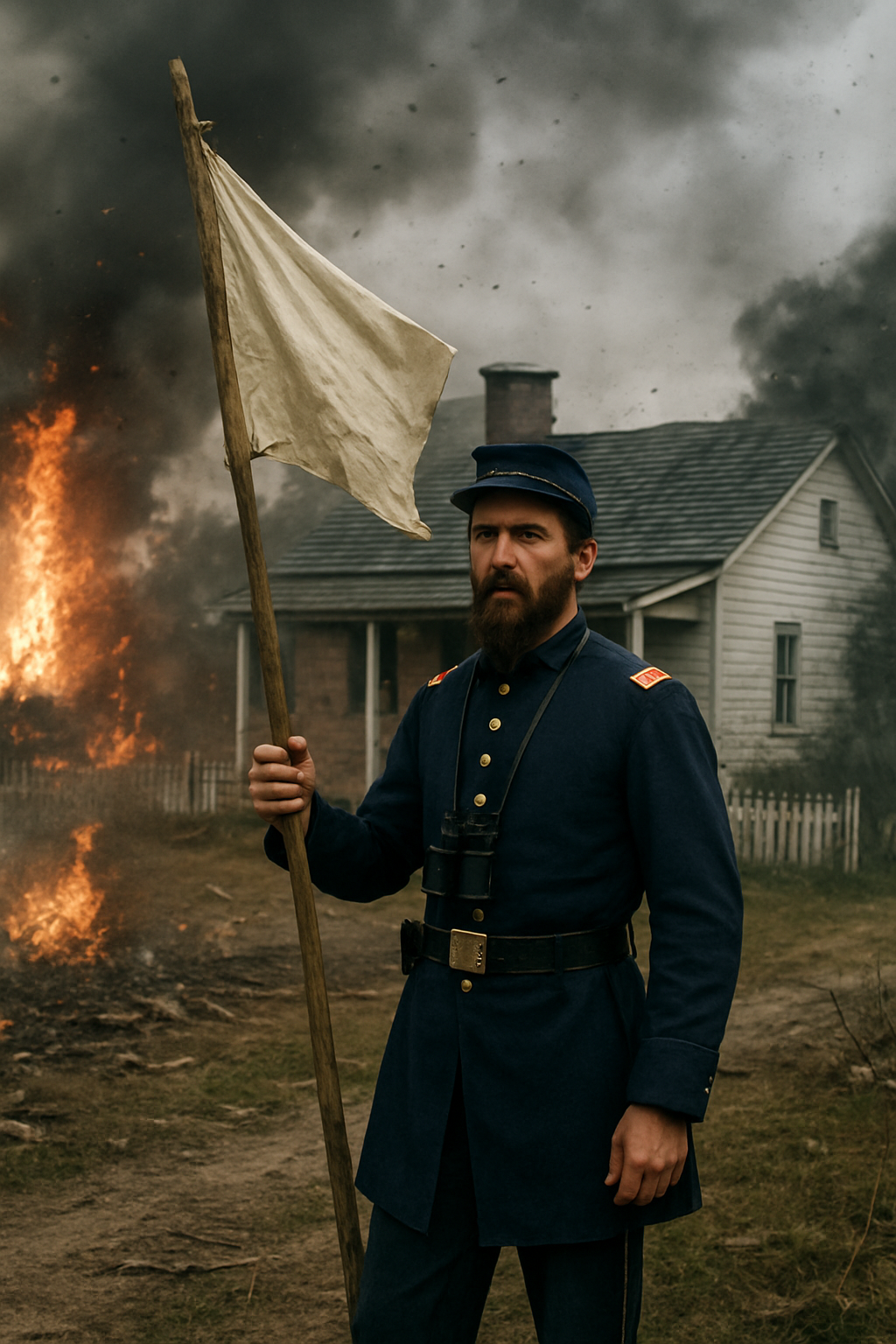
Castle’s Gettysburg story is memorable. According to an official report by his commanding officer, “On July 3, when the enemy made their furious attack upon our center at Gettysburg, Captain Castle occupied a signal station at General Meade’s headquarters, near Cemetery Hill, and remained there on duty after all others had been driven away. His flagmen had also left with his signal equipments, under the impression that their officer had gone with the rest. Having occasion to send a couple of important messages to the general commanding, then at General Slocum’s headquarters, Captain Castle quickly cut a pole, extemporized a signal flag from a bedsheet procured nearby, and sent his dispatches through under a most galling fire.”

Courtesy Jerry Hahn.

We gladly granted Hahn’s permission to use the portrait in his interpretive work on the battlefield. Using ChatGPT’s image-generation tools, he created a compelling artistic interpretation of Castle, standing with his improvised bedsheet signal flag, with Meade’s headquarters behind him. This imaginative visualization reflects what great battlefield guides do—take historical evidence, understand it in context, and bring it to life in ways that help visitors see the past more vividly. Hahn’s image reinforces Castle’s extraordinary moment of bravery and ingenuity.

Licensed battlefield guides like Hahn help visitors understand the human stories that shaped the battle. Their work depends on primary sources—photographs, letters, memoirs—and on the historians, editors, and collectors who preserve and publish them.

When battlefield guides and other students of Civil War history reach out to request an image—as Hahn did—we see it as a sign that the magazine remains a relevant resource for public history. We’re honored to support Hahn and all who interpret America’s defining conflict.

The Summer 2025 Issue

A complete table of contents for the Summer 2025 issue of Military Images magazine, and information about how to purchase single issues and subscriptions.

Vol. XLIII, No. 3
(80 pages)

Print edition: Visit our store to check availability
Digital edition: Visit JSTOR.org to purchase
Subscribe or renew your subscription

Explore the MI Archives:
Browse | Advanced search | Tutorial

Inside

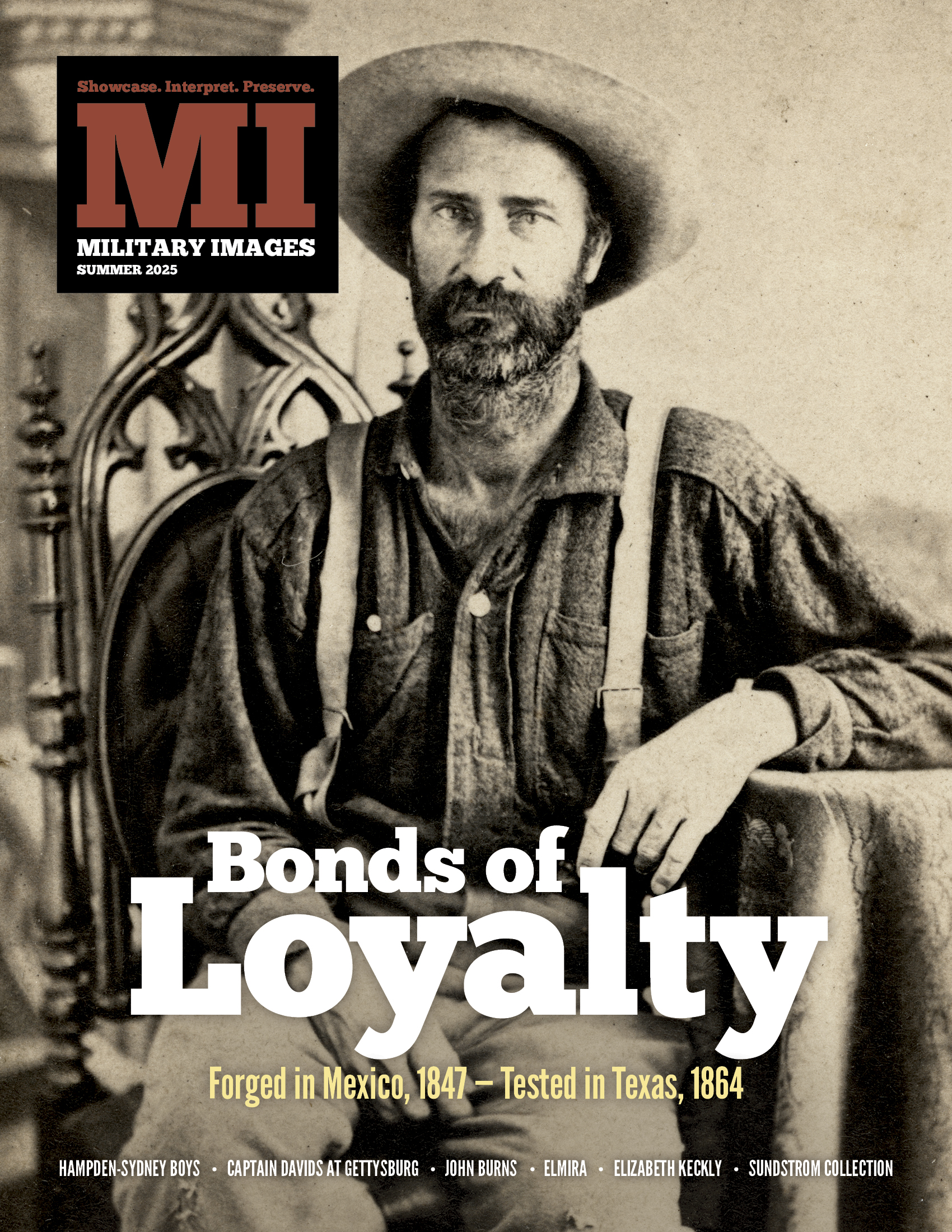
Cover
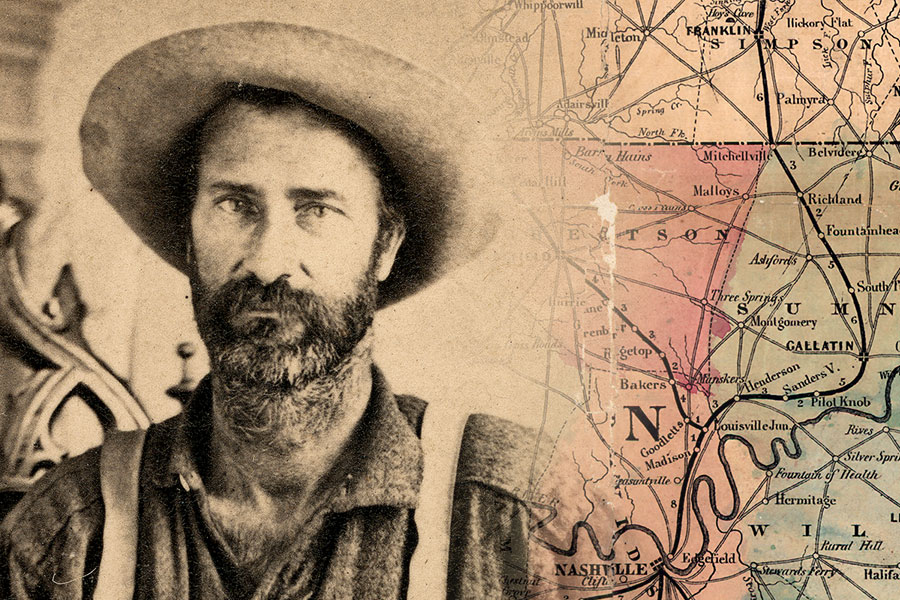
A carte de visite from the Karl Sundstrom Collection pictures Maj. Horace N. Attkisson of the 50th Indiana Infantry, “The Gallant Hero of Edgefield Junction.”

Table of Contents (p. 1)

Editor’s Desk (p. 2)
Civil War portraits of wounded, like battlefield photos in 1862, evoke powerful emotions—reminders of war’s cost and the courage of those who endured it.

Mail Call (pp. 3-4)
Feedback includes references to Confederate Gen. Evander Law, North Carolina photographer Esley Hunt, and American heritage and memories.

Military Anthropologist (p. 4)
A chart reveals how far Union regiments marched in the three weeks before Gettysburg. The range is from under 60 to more than 350 miles.

Passing in Review (p. 6)
Two new books spotlight overlooked forces in the Civil War—Catholic chaplains who served troops and the powerful role of weather in the Gettysburg Campaign.

Photo Sleuth by Kurt Luther (pp. 8-10)
A mystery Brady photo once thought to be Thomas Meagher or John Buford is correctly re-identified as Capt. Atlee W. Putnam of the 7th U.S. Infantry.

Antebellum Warriors by Joe Bauman (pp. 12-13)
Lt. Col. Joshua Howard fought in the War of 1812, the Mexican-American War, and the Civil War—one of a small group to serve in all three major conflicts.

Most Hallowed Ground (p. 14)
Captain Edward C. Townsend, a Union officer and War Department clerk, mourned Lincoln’s assassination and led U.S. Colored Troops at the Battle of the Crater.

The Honored Few (p. 16)
Christian Fleetwood, a free Black man from Baltimore, earned the Medal of Honor for heroism at New Market Heights and fought to preserve the legacy of Black soldiers.

The Citizenry (pp. 18-19)
In 1861, President-elect Abraham Lincoln met 94-year-old Joshua Dewey, a Revolutionary War veteran who had voted in every U.S. election since Washington.

Of Arms and Men by Phil Spaugy (pp. 20-22)
The story of John Burns, the civilian hero of Gettysburg, his iconic firearms, battlefield bravery, and how history and photography remembered him—and his weapons.

Bonds of Loyalty: Forged in Mexico, 1847 — Tested in Texas, 1864 by Ronald S. Coddington (pp. 24-32)
In Indiana during the Mexican War, two soldiers fought side by side. Fifteen years later during the Civil War they met again—this time on opposite sides.

Capturing Elmira: The photographers who documented a Northern prisoner of war camp by Richard Leisenring, Jr., adapted from his forthcoming book(pp. 34-38)
The story of Elmira’s Civil War prison camp—“Hellmira”—through photographs, historical details, and the harsh realities faced by Confederate prisoners.

A Boy Company Goes to War: William Henry Harrison Ewing and His Hampden-Sydney College Classmates by Dave Batalo and Hunter Lesser (pp. 40-43)
Hampden-Sydney College students formed a militia in 1861, fought at Rich Mountain, were captured, and sent home with a lesson from Maj. Gen. George B. McClellan.

The Last Grand Army Vets and a Youthful Symbol of America’s Fighting Men by Ronald S. Coddington (pp. 44-47)
A 1952 Boston Globe cover honored the last Union veterans and a young Korean War soldier, bridging generations of service and capturing a poignant national moment.

The Last Confederate Veteran by Ronald S. Coddington (pp. 48-49)
Pleasant Riggs Crump, the last confirmed Confederate veteran, survived Hatcher’s Run, lived to 104, and became a symbol of memory in the postwar South.

“‘Died at Gettysburg!’ No Prouder Epitaph Need Any Man Covet.”: The Tragedy of Capt. Richard Wistar Davids of the 118th Pennsylvania Infantry by Charles T. Joyce (pp. 50-59)
The life and legacy of Davids, a Philadelphia aristocrat whose sacrifice at Gettysburg shaped his family’s story and historical memory.

Collector and Mentor: Seven decades after he began his Civil War journey, Karl Sundstrom continues to inspire by Austin Sundstrom(pp. 60-65)
Explore Civil War portrait photography through the unique lens of Karl Sundstrom’s collection, introduced by his nephew and fellow collector, Austin Sundstrom.

Material Culture by Ron Field (pp. 66-68)
Explore how to distinguish U.S. and British Navy sailors in Civil War-era photos by comparing subtle uniform differences in rare images from Ron Field’s collection.

Women of War by Melissa A. Wynn (pp. 70-71)
Elizabeth Keckly rose from slavery to become Mary Todd Lincoln’s dressmaker and confidante—then risked it all by publishing her bold and controversial memoir.

Behind the Backdrop by Buck Zaidel and Ronald S. Coddington (p. 72)
Philadelphia photographer Washington L. Germon’s Sea of Tents background is likely inspired by the many military camps in the city during the Civil War.

Vignette by Scott Valentine (p. 74)
Brigadier Gen. Joseph King Fenno Mansfield, a veteran engineer and Mexican War hero, was mortally wounded at Antietam just two days after taking corps command.

Stragglers (p. 74)
A Union soldier grips a War of 1812-era cavalry saber, dressed in early war uniform with 1851 eagle belt plate, and a collector’s first image.

The Last Shot (p. 80)
John “Laurenz” Rosenberger, a Confederate band member and postwar orchestra leader, played music through war and peace, from Richmond to Ford’s Theater.

The Spring 2025 Issue

A complete table of contents for the Spring 2025 issue of Military Images magazine, and information about how to purchase single issues and subscriptions.

Vol. XLIII, No. 2
(80 pages)

Print edition: Visit our store to check availability
Digital edition: Visit JSTOR.org to purchase
Subscribe or renew your subscription

Explore the MI Archives:
Browse | Advanced search | Tutorial

Inside

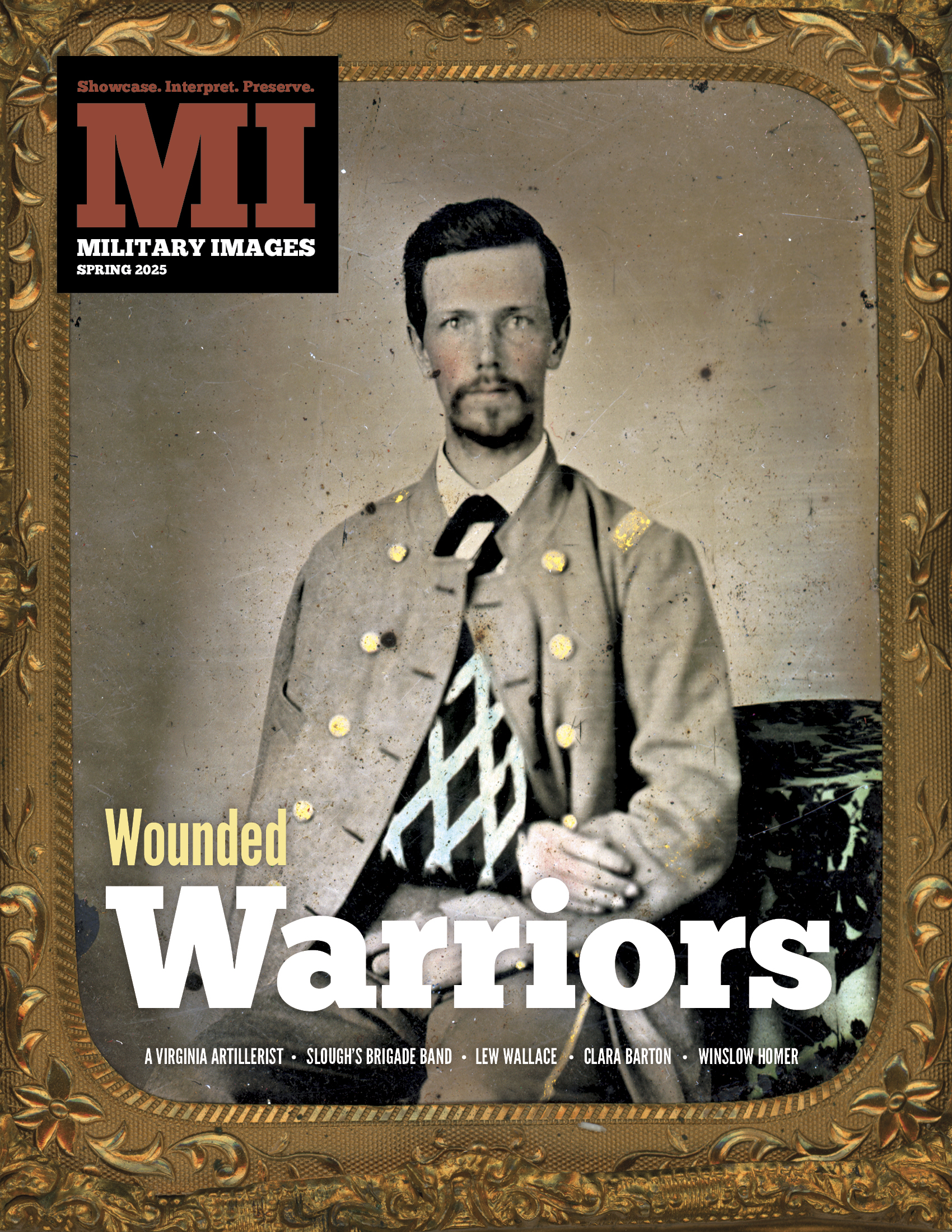
Cover
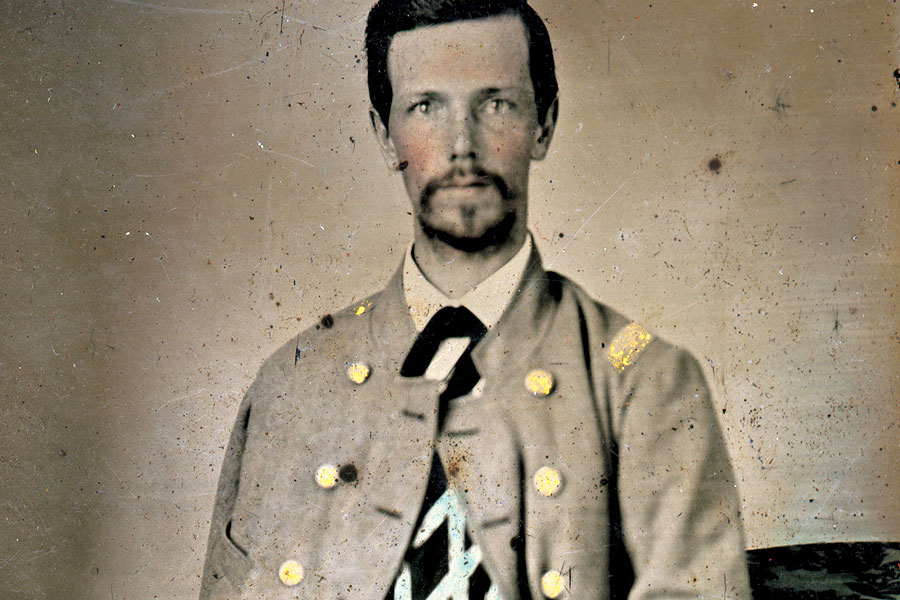
A tintype from the Dan Schwab Collection pictures Confederate Col. Evander Mciver Law recuperating from the wound he suffered at the First Battle of Manassas.

Table of Contents (p. 1)

Editor’s Desk (p. 2)
After Kolt Massie alerted me about a tintype picturing Evander M. Law recovering from his First Manassas wound, I reflected on the thrill of Civil War photography discoveries.

Mail Call (pp. 3-4)
Feedback includes an appreciation for John Walsh’s Fort Donelson feature, Kurt Luther’s Photo Sleuth column, Paul Russinoff’s story about a Michigan cavalryman, and more.

Military Anthropologist (p. 4)
A review of shot fractures of limbs in The Medical and Surgical History of the War of the Rebellion reveals the success rates of conservation, excision, and amputation.

Passing in Review (p. 6)
Righteous Strife by Richard Carwardine, published by Knopf Doubleday, explores how religious nationalism shaped Lincoln’s Union and the Civil War’s moral battles.

Photo Sleuth by Kurt Luther (pp. 8-10)
Photo sleuthing Civil War portraits requires triangulating names, units, and ages to ensure accurate IDs, revealing lost soldier stories and correcting mislabeling.

Antebellum Warriors (p. 12)
A daguerreotype of an unidentified 1840s-50s militia soldier showcases distinctive insignia, a Model 1840-style sword, and period-specific uniform details.

Most Hallowed Ground (p. 14)
Edmund C. Bainbridge, a career U.S. Army officer, served in key Civil War campaigns before retiring as a colonel. He was buried with honors at Arlington.

The Honored Few (p. 16)
At Petersburg, John W. Boutwell of the 18th New Hampshire Infantry rescued a wounded comrade. Decades later, he and another soldier received the Medal of Honor.

The Citizenry (p. 18)
Love of country fills this portrait of a patriotic woman, likely a fundraising image from the 1864 Mississippi Valley Sanitary Fair, featuring the Old Guard’s flag and liberty cap.

Of Arms and Men by Phil Spaugy (pp. 20-22)
Colonel Lew Wallace found a dead Confederate’s ornate Tryon & Co. muzzle-loading rifle at Fort Donelson in 1862, and took it home as a battlefield souvenir.

Wounded Warriors: Slings, crutches, and missing limbs are emblems of personal loss and patriotic sacrifice(pp. 22-36)
A photographic survey of Civil War amputees and other wounded soldiers and sailors, their societal impact, medical treatment, and portraits of the veterans.

Gifted Scholar, Faithful Christian, Reluctant Soldier: The life and times of Virginia professor and artillerist Lewis Minor Coleman by Ronald S. Coddington, with images from the Dave Batalo Collection (pp. 38-45)
Lewis Minor Coleman, an educator turned Confederate officer, sought to balance duty, faith, and the horrors of war. His service culminated at Fredericksburg.

A Useful Life: Sarah Chamberlin Eccleston, Civil War nurse and educator by Sidney Dreese (pp. 46-48)
Sallie Chamberlin defied age restrictions to serve as a Civil War nurse, later pioneering kindergarten education in Argentina. She lived a life of service.

Cruising the Potomac and Elsewhere with Brig. Gen. John P. Slough’s Brigade Band by Ronald S. Coddington, with images from the Mark Jones Collection (pp. 50-55)
Formed from the 60th New York Infantry, Slough’s Brigade Band played at key Civil War events in Alexandria, Va., and Washington, D.C.

Winslow’s Homer’s Use of Portrait Photographs in Civil War Era Illustrations by Rick and Victoria Britton (pp. 57-60)
A recently discovered sketch of Gen. Montgomery Meigs adds to Winslow Homer’s rich artistic legacy. The famed Civil War illustrator captured wartime life in Harper’s Weekly.

Wherever He Went, He Found History: Remembering Alex de Quesada, 1965-2024 by Ronald S. Coddington(pp. 62-64)
Alex de Quesada (1965-2024) was a passionate historian, collector, and author, known for his militaria expertise, vast artifact collection, and love of Star Wars.

Material Culture by Frank Graves (p. 66)
An early 1840s daguerreotype features an unknown man holding a U.S. Model 1805 Harpers Ferry flintlock pistol, the first military handgun made by a U.S. national armory.

Women of War by Melissa A. Wynn (pp. 68-69)
Clara Barton, Civil War nurse and founder of the Missing Soldiers Office, helped families locate lost loved ones and later established the American Red Cross.

Behind the Backdrop by Dave Batalo (p. 70)
A look at a painted camp and forts backdrop that appears in Confederate soldier portraits; it may be connected to a Fredericksburg photographer.

Vignette by Scott Valentine (p. 72)
First Lt. and Adjutant Orett Munger of the 44th New York Infantry was captured at Laurel Hill but freed by Gen. George Armstrong Custer’s cavalry. After the Civil War he settled in Chicago.

Stragglers (p. 74)
Confederate and Union soldiers pose for portraits, showcasing unique uniforms, tinting, and photography techniques by Charles R. Rees and other artists.

The Last Shot (p. 80)
A Confederate captain poses in a rustic studio scene with a tree-trunk chair and table, holstered sidearm, and missing coat button.
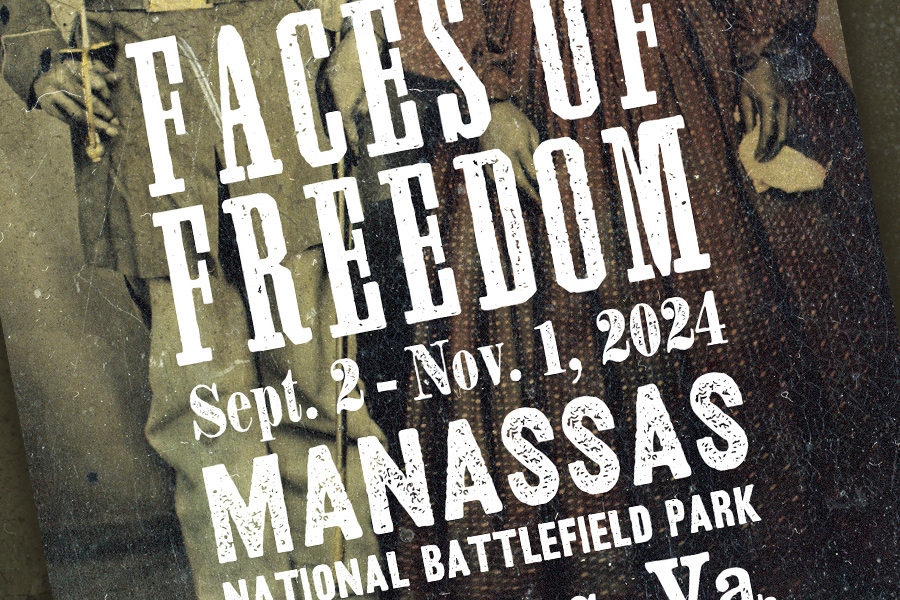
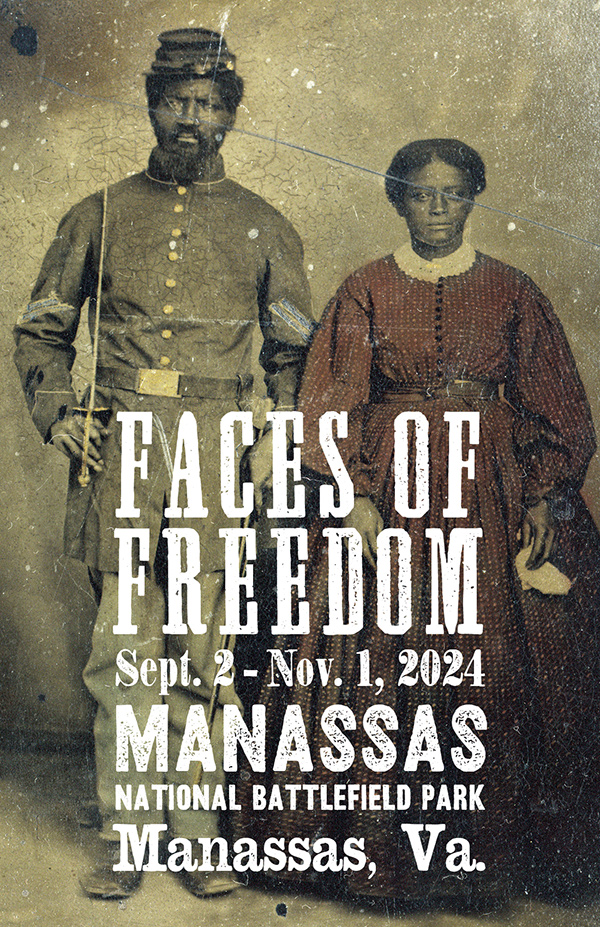
Faces of Freedom Exhibit Travels to Manassas

Our traveling exhibit, Faces of Freedom, is coming to Manassas National Military Park. The exhibit will be on display at the Visitor Center from September 2 through November 1, 2024.

Established in 2019, the exhibit first appeared at the Hubbard House Underground Railroad Museum in Ashtabula, Ohio. Covid paused our travels until 2024, when the exhibit moved to the Goodridge Freedom Center and Underground Railroad Museum in York, Pa.

The exhibit features 37 high-quality prints of wartime portraits of Black men who served in the U.S. Colored Troops (USCT) and Navy during the Civil War. Each portrait is accompanied by a biographical sketch detailing their wartime experiences. This is a unique opportunity to honor and learn about these brave individuals, some who sacrificed their lives to make a more perfect union and others who went on to become Buffalo Soldiers.

This exhibit is made possible by Military Images. Editor and Publisher Ron Coddington observes, “This is another wonderful opportunity to share portraits and stories, and our history, with visitors to the hallowed grounds of the First and Second Battles of Bull Run.”

The images are from private collectors and public institutions.

These individuals shared images from their collections for inclusion in this exhibit: Jonathan Beasley, David E. Brown, Kevin Canberg, Glen Cangelosi, Ronald S. Coddington, Greg French, Thomas Harris, Ross Kelbaugh, C. Paul Loane, Steve Meadow, Ronn Palm, and Paul Russinoff.

Images from public institutions include the Beinecke Rare Book and Manuscript Library, Yale University; The Lawrence T. Jones III Collection at DeGloyer Library, Southern Methodist University; Gettysburg National Military Park Museum; Kansas State Historical Society; The Liljenquist Family Collection at the Library of Congress; National Archives; West Virginia and Regional History Collection, West Virginia University Libraries; and the Manuscripts, Archives, and Rare Book Library, Robert W. Woodruff Library, Emory University.

Interested in bringing Faces of Freedom to your location? Fill out this form.