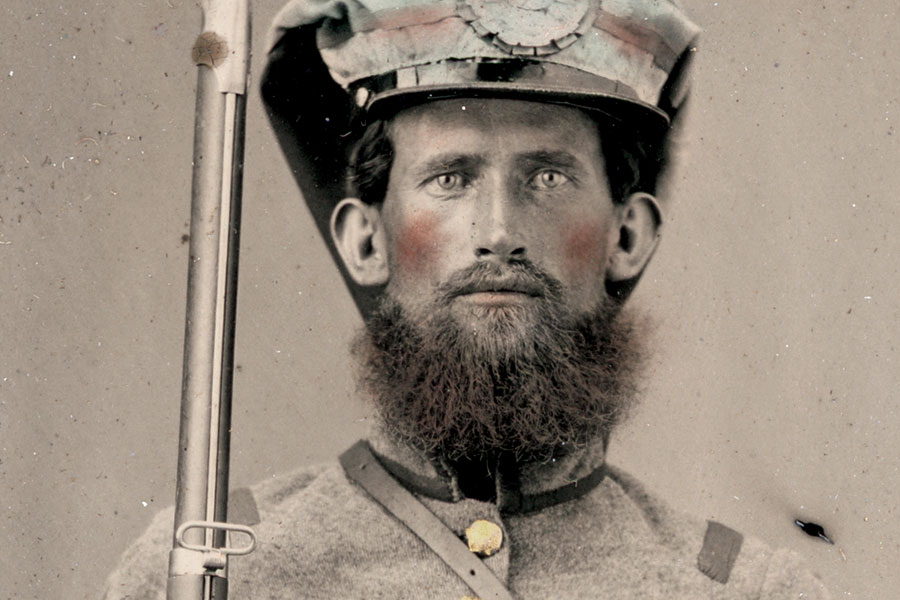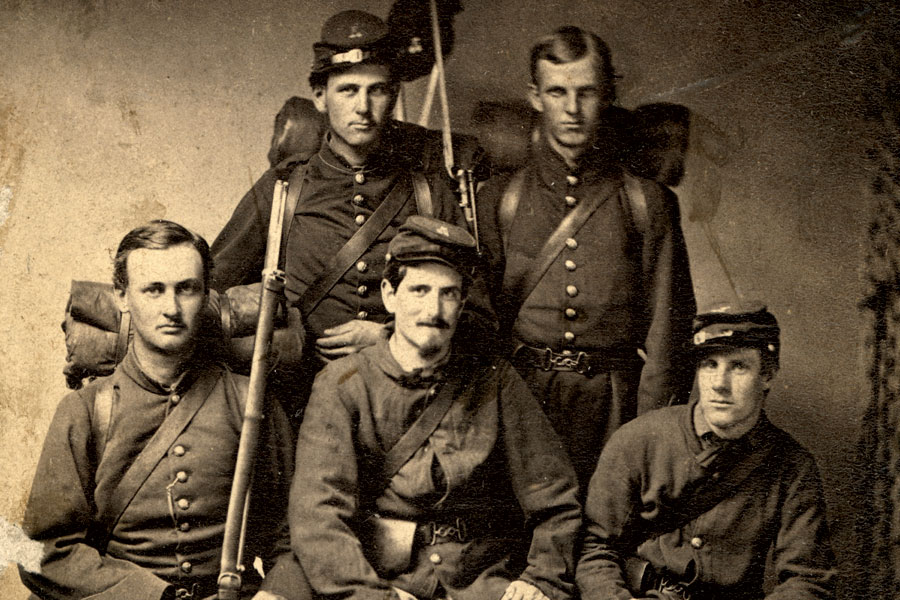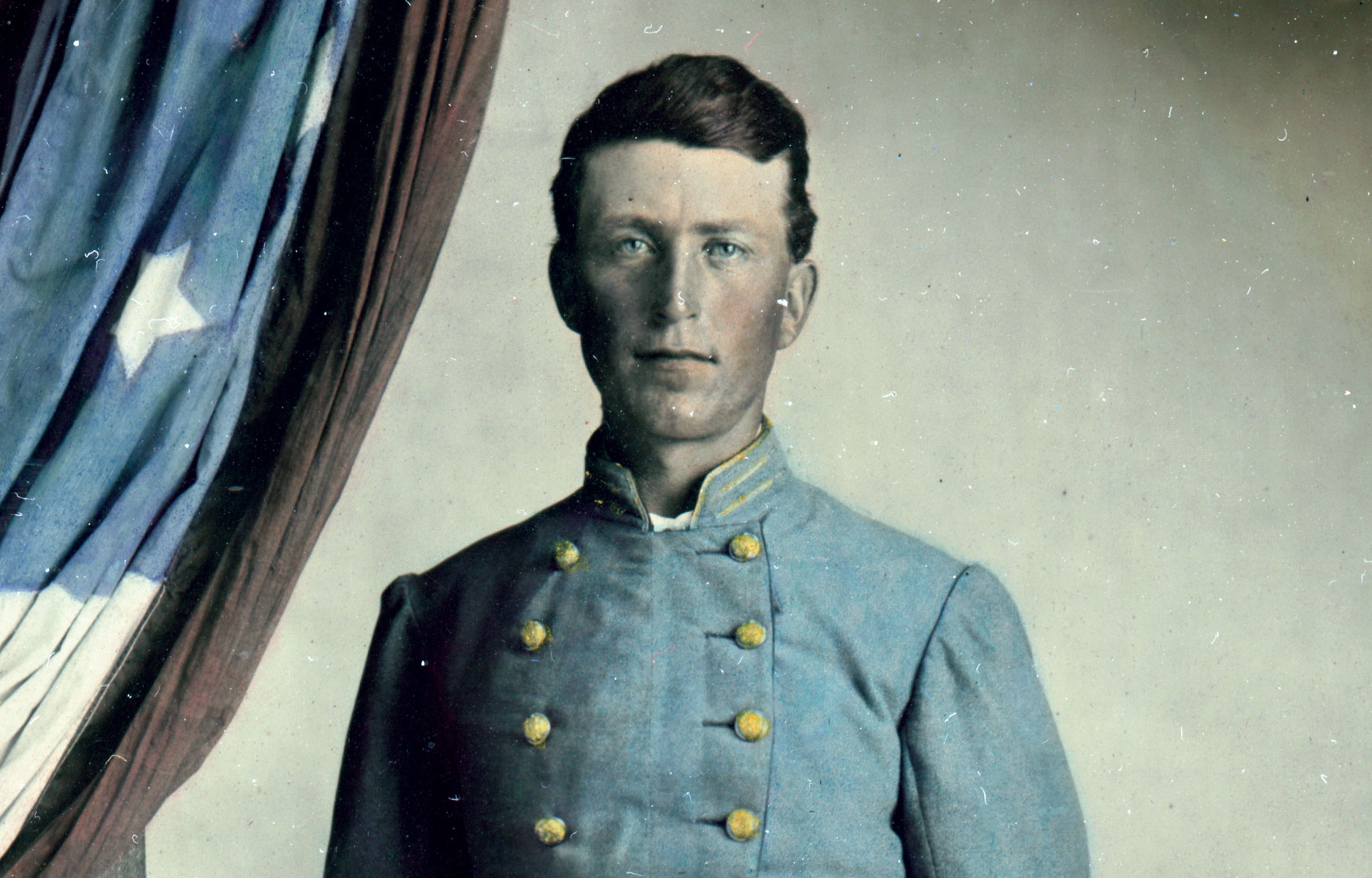
A complete table of contents for the Spring 2026 issue of Military Images magazine, and information about how to purchase single issues and subscriptions.

Vol. XLIV, No. 2
(80 pages)
Print edition: Visit our store to check availability
Digital edition: Visit JSTOR.org to purchase
Subscribe or renew your subscription
Explore the MI Archives:
Browse | Advanced search | Tutorial
Inside
Cover
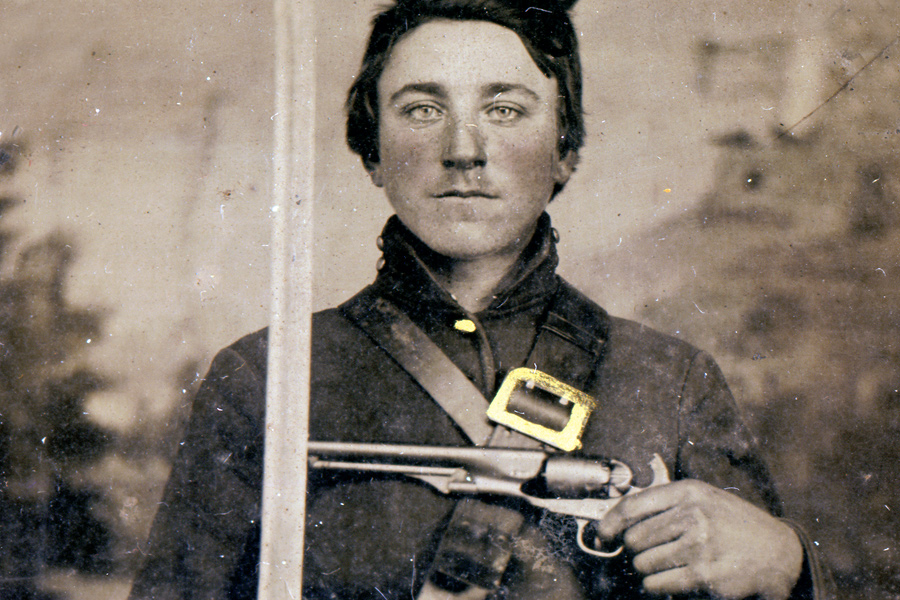
A tintype of a Hoosier cavalryman posed with a Merrill carbine and a .44-caliber Model 1860 Army Colt revolver.
Table of Contents (p. 1)
Editor’s Desk (p. 2)
A reflection on collectors Rick Carlile and Perry Frohne, stewardship, and the future of Civil War photography collecting in a changing digital community.
Mail Call (pp. 3-4)
Feedback includes praise for Mike Fitzpatrick’s profile of “Fighting Bob” Robley, identifying three Confederate soldiers, and more.
Military Anthropologist (p. 4)
National Archives data shows how 2,700 women served in concentrated Union hospital centers, revealing the scale and geography of wartime care.
Passing in Review (p. 6)
A new book by Richard Leisenring Jr. examines Elmira prison images as historical evidence, revealing how photography, commerce, and memory shaped views of the Civil War camp.
Photo Sleuth by Kurt Luther (pp. 8-9)
Why many images of women soldiers are misidentified or fake—and how research separates verified portraits from myths in Civil War history.
Antebellum Warriors (p. 10)
A militia officer’s portrait raises questions about daguerreotype reversal, revealing clues in uniform details, sword presentation, and camera technology.
Most Hallowed Ground (p. 12)
Major Ruel M. Johnson led the 100th Indiana Infantry under heavy fire at Missionary Ridge, earning the Medal of Honor for gallantry in the Chattanooga Campaign.
The Honored Few by Evan Phifer (p. 14)
Iron Brigade officer William Wade Dudley lost a leg at Gettysburg, later served veterans as Pension Bureau chief, and was tied to the 1888 Block of Five scandal.
The Citizenry (p. 16)
A Lafayette, Ind., firm’s Civil War contracts fed Union troops, revealing how Midwestern businesses powered the Northern war effort in the Western Theater.
Of Arms and Men by Phil Spaugy (pp. 18-20)
A Terre Haute, Ind., portrait of veteran Union soldiers reveals clues in Model 1842 muskets, Greenwood alterations, and field gear used to trace their unit.
Hoosiers: Indiana Faces of the Civil War (pp. 22-40)
A gallery of Indiana Civil War portraits and stories, from early enlistments to major battles, prison camps, and home-front sacrifice across the Western Theater.
Long Sol: Indiana’a Fighting Quaker by Lance J. Herdegen (pp. 42-46)
The rise of Solomon “Long Sol” Meredith and his Iron Brigade, from Brawner’s Farm to Gettysburg, where wounds ended his battlefield career.
Thunderbolts and Lightning at Hoover’s Gap: How Wilder’s Lightning Brigade received its nom de guerre by Ronald S. Coddington (pp. 48-52)
How John T. Wilder’s mounted infantry and Spencer rifles secured Hoover’s Gap and earned the name “Lightning Brigade” in the Tullahoma Campaign.
Dynamite Man: The life and times of Hoosier soldier, sailor, and inventor James Weir Graydon by Ronald S. Coddington(pp. 54-59)
From teenage bugler in the 7th Indiana Cavalry to Navy officer and prolific inventor, the remarkable life and ambitions of James W. Graydon.
Harper’s Weekly Needed an Image of Wallace’s Zouaves. They Commissioned This One. by Ron Field(pp. 60-62)
How photographs of the 11th Indiana Infantry, also known as Wallace’s Zouaves, became Harper’s Weekly engravings.
Material Culture by Ron Field (pp. 64-68)
How the 11th Indiana Infantry’s Zouave uniforms changed during the war, from gray militia dress to distinctive blue patterns worn in major campaigns.
Women of War by Melissa A. Wynn (pp. 70-71)
Indiana nurse Eleanor Ransom survived the 1864 sinking of the transport North America and returned to care for Union soldiers through war’s end.
Behind the Backdrop by Buck Zaidel (pp. 72-73)
How focus, depth, and staging at an Indianapolis gallery turned painted Civil War backdrops into convincing camp scenes for Indiana soldiers.
Vignette by Scott Valentine (p. 74)
Captain Poinsett Cooper of the 42nd New York Infantry survived four wounds from Antietam to the Wilderness, including a guerrilla attack during evacuation in Virginia.
Stragglers (pp. 75-77)
Profiles of Union and Confederate soldiers through Civil War portraits, including rare “Jeff. Davis and the South!”placard images, battlefield service, and personal wartime histories.
The Last Shot (p. 80)
How the 58th Indiana Infantry funded and dedicated one of Indiana’s first Civil War monuments to honor its fallen, conceived while the regiment was still in service.