Six Military Images Stories Nominated for Army Historical Foundation Awards

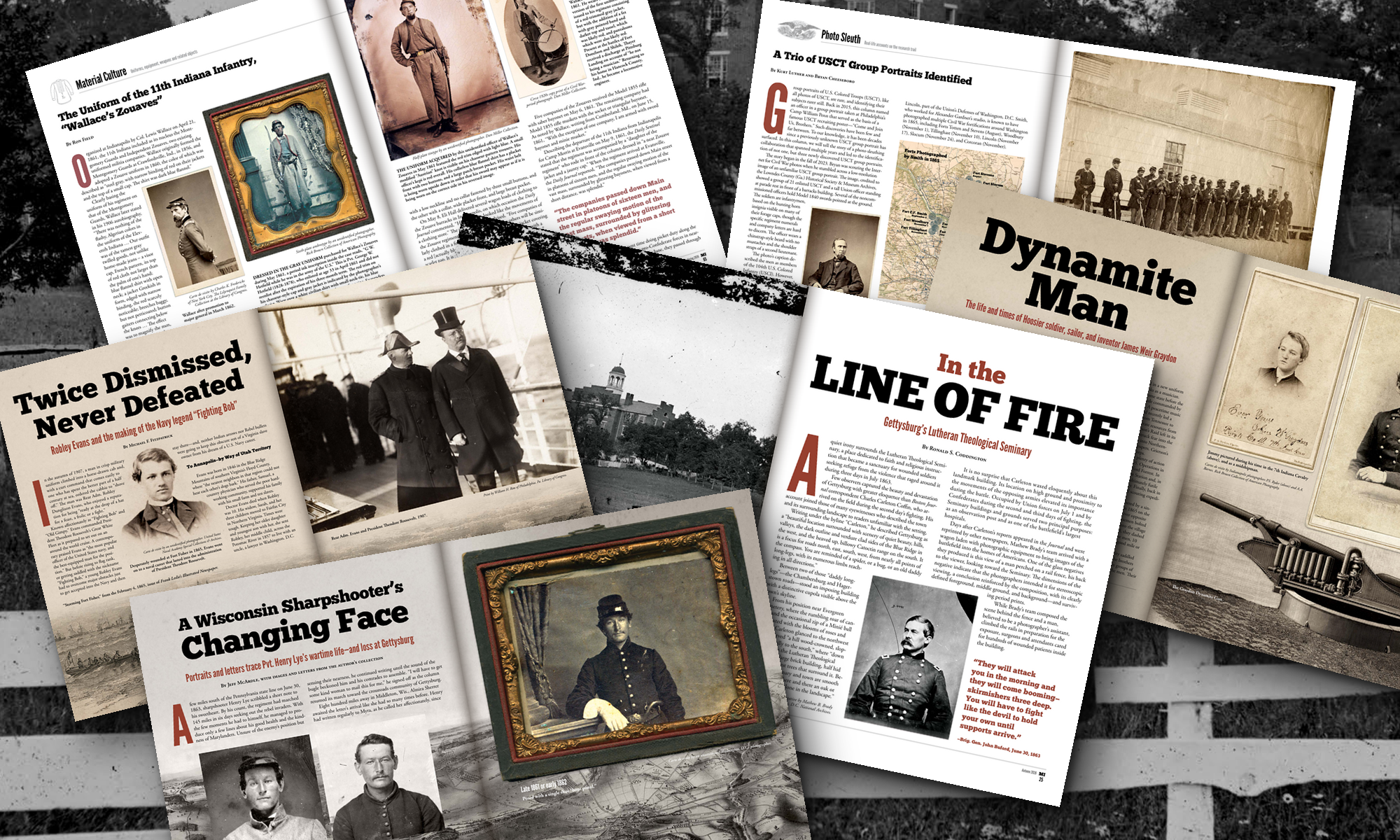
We’re pleased to announce that Military Images has submitted six nominations for the Army Historical Foundation’s 2026 Distinguished Article Award. This year’s entries show how Civil War photographs can help us identify soldiers, trace a life through portraits and letters, and see a familiar battlefield in a new light.

“A Wisconsin Sharpshooter’s Changing Face,” by Jeff McArdle (Winter 2026). Portraits and letters follow Pvt. Henry Lye through his wartime service to Gettysburg, where he was killed. Read.

“Twice Dismissed, Never Defeated,” by Michael F. Fitzpatrick (Winter 2026). The story of Robley Evans, whose Civil War service helped shape the Navy legend known as “Fighting Bob.” Read.

“Dynamite Man,” by Ronald S. Coddington (Spring 2026). The life and times of James Weir Graydon, a Hoosier who went from Civil War bugler to naval officer and inventor. Read.

“The Uniform of the 11th Indiana Infantry, ‘Wallace’s Zouaves,’” by Ron Field (Spring 2026). A close look at the distinctive uniform of Lew Wallace’s regiment and its roots in Indiana’s prewar militia. Read.

“A Trio of USCT Group Portraits Identified,” by Kurt Luther and Bryan Cheeseboro (Summer 2026). A collaboration uncovers the stories behind three group portraits of U.S. Colored Troops in the Defenses of Washington, D.C. Read.

“In the Line of Fire” and “Within These Walls” (Autumn 2026), two companion stories submitted as a single entry. In “In the Line of Fire,” Ronald S. Coddington uses a photograph made by Mathew Brady’s team to explore the role of Gettysburg’s Lutheran Theological Seminary as a lookout and hospital. “Within These Walls” tells the story of the Seminary hospital during and after the battle through portraits and personal accounts of Union soldiers, surgeons, and nurses. The portraits come from the collections of the Adams County Historical Society, Ronald S. Coddington, Scott Hann, Scott Hilts, Charles T. Joyce, Jeff Kowalis, Jason Krausz and Mark Krausz, the Liljenquist Family Collection at the Library of Congress, C. Paul Loane, Faye and Ed Max, Robert May, Ronn Palm, Jim Rivest, Paul Russinoff, and Brian White, with assistance from Dale R. Niesen. Read.

Heartfelt thanks to the writers, collectors, and researchers who helped bring these stories to our audience.

The Army Historical Foundation presents its Distinguished Article Awards annually to recognize writing that makes a distinctive contribution to the history of the U.S. Army. The program judges academic publications and popular history magazines in separate categories. After an initial screening, a committee of military historians and writers evaluates the finalists. Winners will be publicly recognized in July 2027.

Military Images has earned this honor twice before. Paul Russinoff won for “A Savior of the Capitol” (Spring 2021), his account of Benjamin Franklin Watson and the 6th Massachusetts Infantry in the opening days of the war. John Walsh won for “Fort Donelson: Early turning point of the Civil War” (Winter 2025), his account of the Union victory that brought Ulysses S. Grant to national attention.
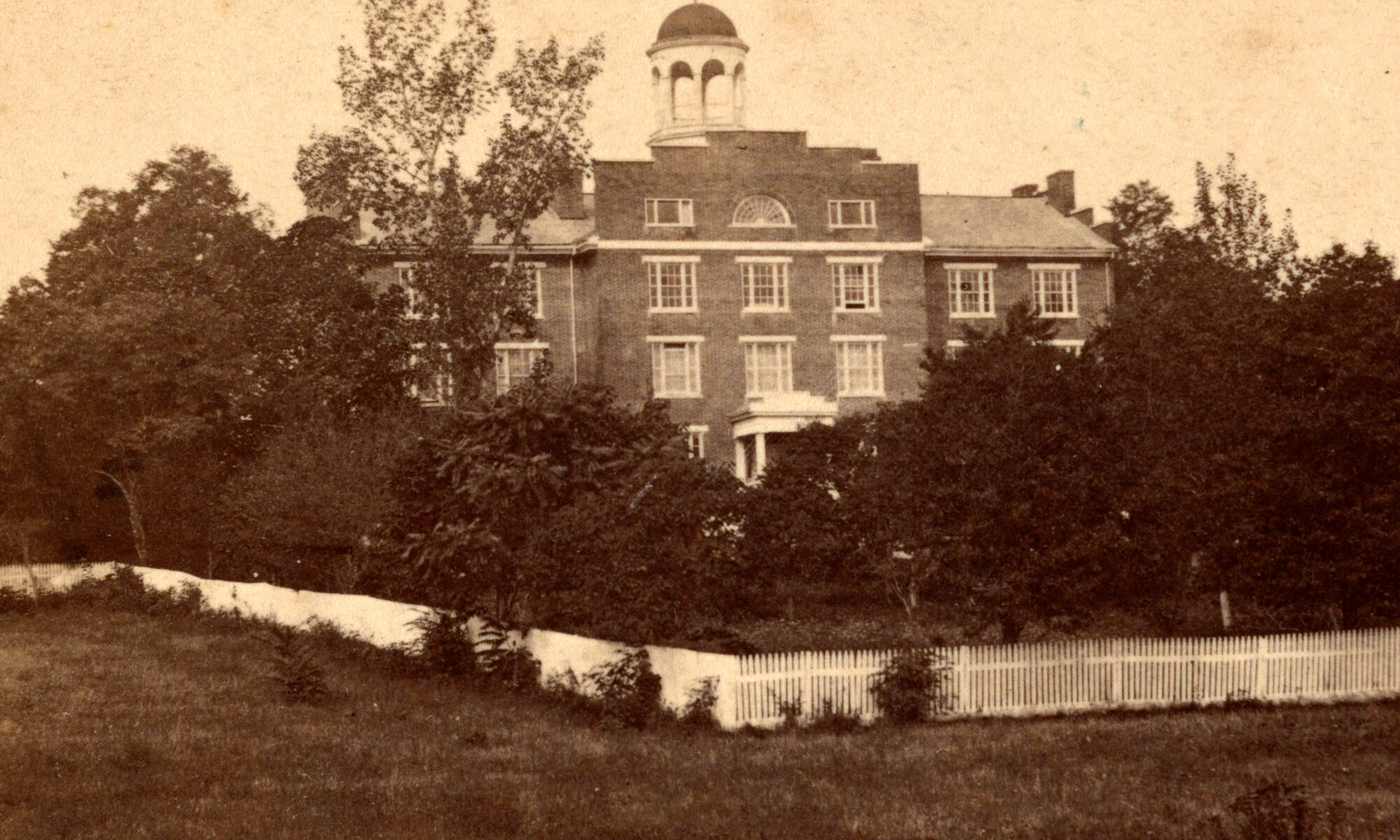
Faces of Gettysburg’s Seminary Hospital: A Research Update

One Friday last January, I drove to Gettysburg to visit the Seminary Ridge Museum and met with Codie Eash, the Director of Education and Interpretation, and Paul Russinoff, a Military Images senior editor and a member of the museum’s board. Paul organized the meeting to discuss an idea—an exhibit of images of surgeons, patients, and attendants who were on the seminary grounds used as a temporary hospital during the three-day battle.

The meeting was a success, and it kicked off a larger effort to locate original, wartime, photographic portraits of those who were there. The project began with a remarkable dataset: a documented list of 498 patients treated at the hospital during and after the Battle of Gettysburg, along with registries of 147 attendants and 30 surgeons who cared for them—675 unique individuals.

Here’s an update on our progress.

The first and most important phase of the project relied on the generosity of collectors. Through social media, personal outreach, and the support of the Civil War photography community, collectors shared images from their collections and helped identify individuals connected to the hospital. Their contributions formed the foundation of this effort.

As the project evolved, we explored new research methods alongside traditional approaches. Using Artificial Intelligence and Large Language Models, we compared the 675-person list against thousands of identified Civil War photographs. We searched about 6,600 records of Union images published in Military Images and analyzed more than 9,000 images in the Library of Congress’s Liljenquist Family Collection of Civil War Photographs. Using ChatGPT to assist our efforts, we were able to compare the datasets, surface potential matches, and direct our attention to promising leads that were then verified through traditional historical research.

To date, we have identified 25 unique individuals connected to the Seminary Hospital for whom original wartime photographs are known to survive. Some are represented by multiple views.

This work would not have been possible without the efforts of many individuals. In addition to Paul and Codie, thanks tot he collecting community who responded to the call: Sid Dreese, Scott Hahn, Scott Hilts, Chuck Joyce, Paul Loane, Ronn Palm, Jim Rivest, and Tom Liljenquist and the staff of the Library of Congress.

While our analysis of major image databases is largely complete, the search continues. We will continue to crowdsource through social media, collector networks, descendants, and institutional contacts in hopes of locating additional photographs.

It is not too late to participate! Here’s the spreadsheet.

The exhibit is expected to open at the Seminary Ridge Museum this September. The opening is planned to coincide with the annual symposium of the Center for Civil War Photography, which will be held in Gettysburg, where the project will be shared with attendees—and, of course, with a wider audience of historians, collectors, and Civil War enthusiasts.

Onward!

Ronald S. Coddington
Editor & Publisher