Finding Aid: Winter 2019

The complete issue

Vol. XXXVII, No. 1
(80 pages)

Print edition: Visit our store to check availability
Digital edition: Visit JSTOR.org to purchase
Subscribe to MI ($24.95)
Explore the MI Archives: Browse | Advanced search | Tutorial

Inside

Cover image
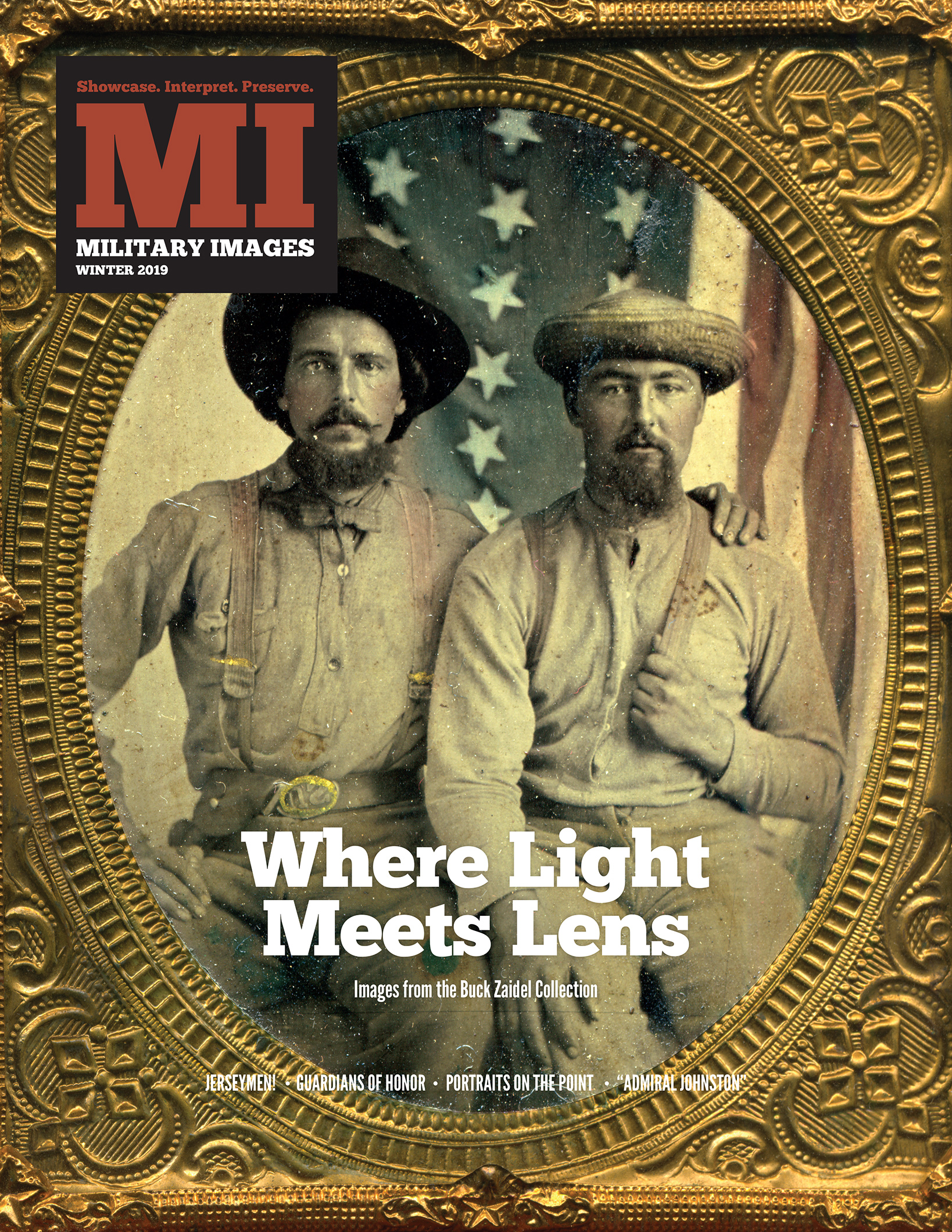
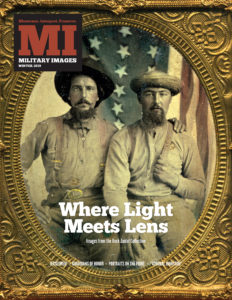
A sixth-plate tintype from the Buck Zaidel Collection pictures two Union pards fighting for each other and the flag.
Download (free)

Table of Contents (p. 1)
Download (free)

Editor’s Desk (p. 2)
The editor marks the magazine’s 40th year by placing the publication in context to key events in the modern history of collecting. Also noted is the passing of John R. Sickles, an icon in the collecting community and a former Senior Editor of MI.
Download (free)

Mail Call (pp. 3-4)
Feedback includes an example of uncommon placement of chevrons on the coat sleeve of a hospital steward, a question about a Texas identification and a request for more Confederate images.
Download (free)

Military Anthropologist (p. 4)
An analysis of the 19 loyal states that did not border the Confederacy shows seven exceeded their quotas for Union troops and the rest barely missed making their numbers.
Download (free)

Passing in Review (p. 6)
Gettysburg’s Coster Avenue: The Brickyard Fight and the Mural (Gettysburg Publishing LLC) by Mark H. Dunkelman is the story of how one man’s vision added an artistic masterpiece to a less-traveled section of the Gettysburg battlefield.
Download (free)

Photo Sleuth by Kurt Luther (pp. 8-9)
In “What to Do When Gold Standards Go Wrong,” Kurt revisits a column published in the Autumn 2016 issue after alert reader Doug Sagrillo presented him with an identified carte de visite that challenged another listed with a different name in a reputable public collection.

Antebellum Warriors (p. 10)
A quarter-plate ambrotype from the Dan Binder Collection is a portrait believed to be a militia staff officer sitting next to his feathered hat and a document.

Most Hallowed Ground (p. 12)
Pvt. George Washington Tucker survived the deadliest day in Vermont history—May 5, 1864. He and his fellow Vermonters suffered 1,234 casualties during the fighting in The Wilderness.

The Honored Few (p. 14)
Cecil Clay, a captain in the 58th Pennsylvania Infantry, was conspicuous for gallantry during the attack on Fort Harrison on Sept. 29, 1864. The fight cost him an arm, and resulted in his being awarded the Medal of Honor.

The Citizenry (p. 16)
A group of women stand on the back stairs of a clapboard building in Corning, N.Y. Several of them hold hats in various stages of completion, indicating that they are milliners.

Where Light Meets Lens: Representative images from the Buck Zaidel Collection (pp. 18-29)
Buck Zaidel is perhaps best known as the co-author of the book, Heroes for All Time: Connecticut Soldiers Tell Their Stories. He is also a savvy collector with a keen eye for unique images. Here we showcase selected images from his holdings.

Portraits on The Point: Representative photographs by the studio of Robert M. and James B. Linn by Dr. Anthony Hodges with images from his and other collections (pp. 31-42)
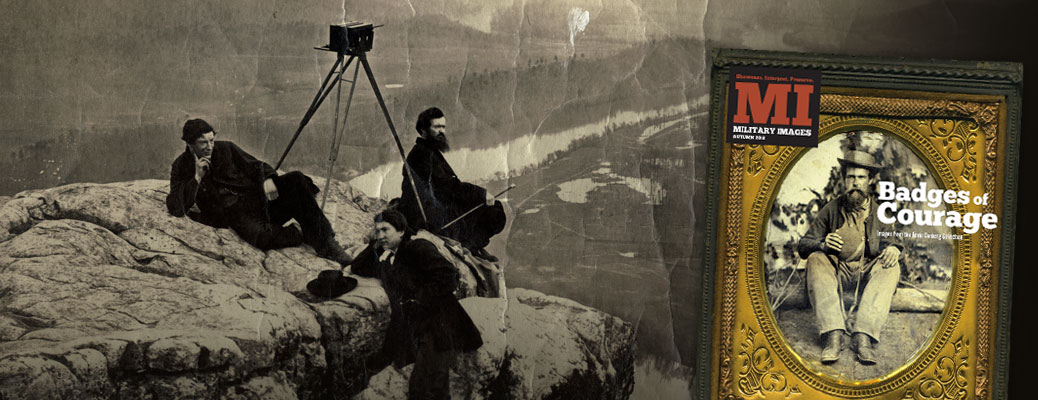
The rocky outcropping that overlooks Chattanooga, Tenn., became the scene of one the most dramatic moments of the Civil War after Union soldiers raised the Stars and Stripes in victory over Confederates on Nov. 25, 1863. Soon after, enterprising photographer Robert M. Linn set up a gallery and captured uncounted numbers of soldiers who visited the iconic spot. In this gallery, we showcase representative images from private collections. This is the second in a three-part series.

Jerseymen! A survey of Civil War soldiers and sailors from the John Kuhl collection (pp. 44-55)
The state of New Jersey’s contribution to Northern arms is evident in the faces and stories of volunteers who served in the Union armies during the Civil War. Original images are included here, many published here for the first time, along with their personal narratives.

New Jersey’s Splendid Colors Recall a Terrible Struggle (pp. 56-57)
An 1885 fire in the New Jersey state capitol building almost destroyed the precious colors carried by regiments during the late Civil War. The 19 men who saved the flags received badges of honor for heroism. One of them, William S. Stryker, accepted the badge with a moving speech.

Guardians of Honor: Men and events that shaped the Medal of Honor by Ron Maness (pp. 60-66)
Though the standard by which the Medal of Honor is substantially the same as it was during the Civil War, the process by which the awards are made is far more rigorous. Two stories here examine how the lack of validation impacted the decoration, and highlight the actions of two forgotten soldiers.

Captain Ramsey and the Birth of the “True Blues” by Ronald S. Coddington (pp. 68-70)
David Wardlaw Ramsey numbered among the first Alabama men to join the army in 1861. Those early, heady days of excitement soon gave way to pain, suffering and loss at Island No. 10, Port Hudson and elsewhere.

“Admiral Johnston”: An unofficial powder boy’s courage under fire by Ron Field (pp. 73-75)
Pint-size 6-year-old James Vincent Johnston could scarcely be kept out of harm’s way after he and his mother were trapped aboard the gunboat Forest Rose during a fight near Vicksburg, Miss., in early 1864. His father, the commander of the vessel, resorted to tying the boy to a chair in his cabin to keep him safe. It didn’t work. What happened next became the stuff of navy legend.

British Invasion! Confederate portraits in England by John O’Brien (pp. 76-77)
During the latter period of the war, a series of cartes de visite of Confederates, including President Jefferson Davis, Gen. Robert E. Lee and political and military leaders, was published in London by photographer Charles B. Walker in partnership with Florida lensman S.C. McIntyre. Long overlooked, we explore the history of this unique grouping.

Stragglers: Distinctive Images from MI contributors (pp. 78-79)
“Southern Warriors” features four images of Confederates.

The Last Shot (p. 80)
An eighth-plate tintype from the Michele Behan Collection is a portrait of a heavy artilleryman or an infantryman posed with a cannonball.
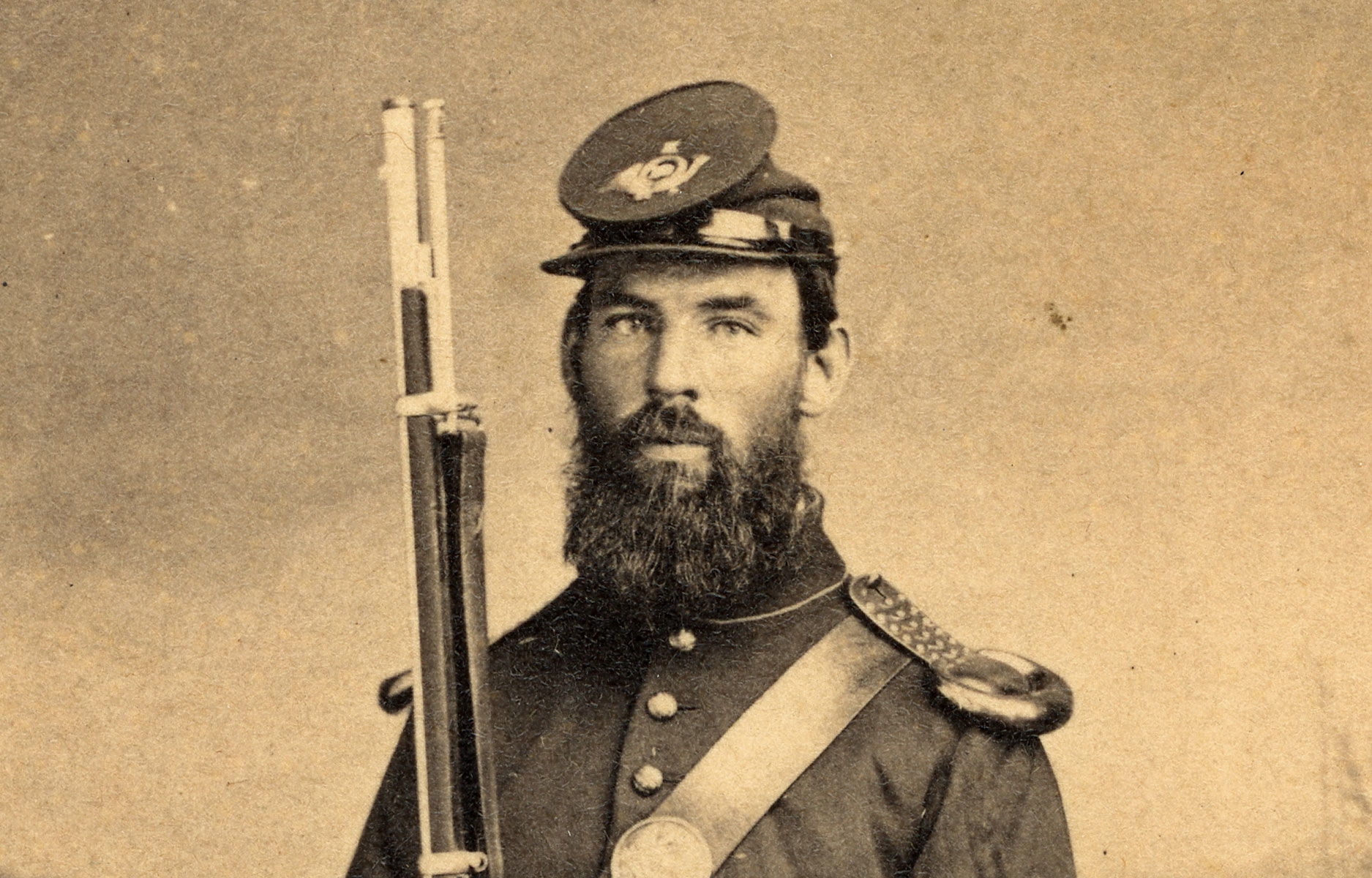
The Linns of Lookout: The enterprising brothers behind a legendary photograph gallery

In this first installment of a three-part series, we meet two brothers who documented the scene of one of the great moments in Civil War history—the Nov. 24, 1863, Battle of Lookout Mountain during the Chattanooga Campaign. Images include various views of the area around Lookout Mountain, the gallery and several of the best known individual and group portraits. Learn more about this story and others with our finding aid.

Finding Aid: Autumn 2018

The complete issue

Vol. XXXVI, No. 4
(80 pages)

Print edition: Visit our store to check availability
Digital edition: Visit JSTOR.org to purchase
Subscribe to MI ($24.95)
Explore the MI Archives: Browse | Advanced search | Tutorial

Inside

Cover image
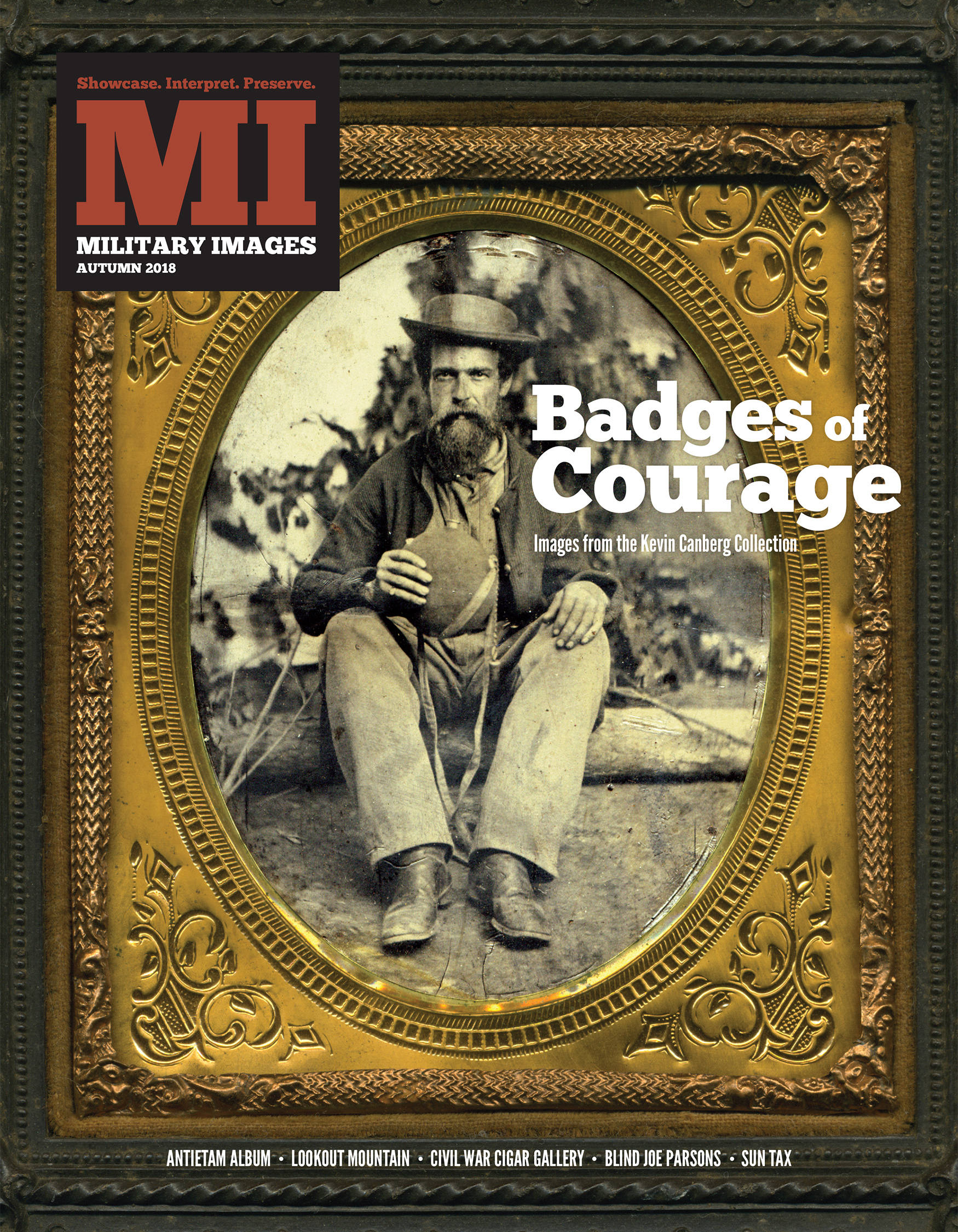
A sixth-plate tintype from the Kevin Canberg Collection pictures a Union veteran seated on a tree trunk with canteen in hand.
Download (free)

Table of Contents (p. 1)
Download (free)

Editor’s Desk (p. 2)
In “Introducing The Citizenry,” the editor provides background on a new department to recognize the generation who supported soldiers and sailors in blue and gray through original portrait photographs and stories.
Download (free)

Mail Call (pp. 3-4)
Feedback includes an early birthday gift for the state of Maine, an emotional reunion with a family photo, a newly discovered photo of George L. Fisher, the durable man of Hagerstown, Md., and a commentary on probably props.
Download (free)

Military Anthropologist (p. 4)
An analysis of more than 25,000 photograph citations on Newspapers.com reveals that the Civil War is a time of transition for photographic formats. Ambrotypes dominated in 1861. Four years later, the carte de visite ruled.
Download (free)

Passing in Review (p. 6)
The Soldiers of Fort Mackinac: An Illustrated History (Michigan State University Press) by Phil Porter documents the many soldiers who passed through the fort, including future Union and Confederate generals, during its active operations from 1780 to 1895.
Download (free)

Photo Sleuth by Kurt Luther (pp. 8-9)
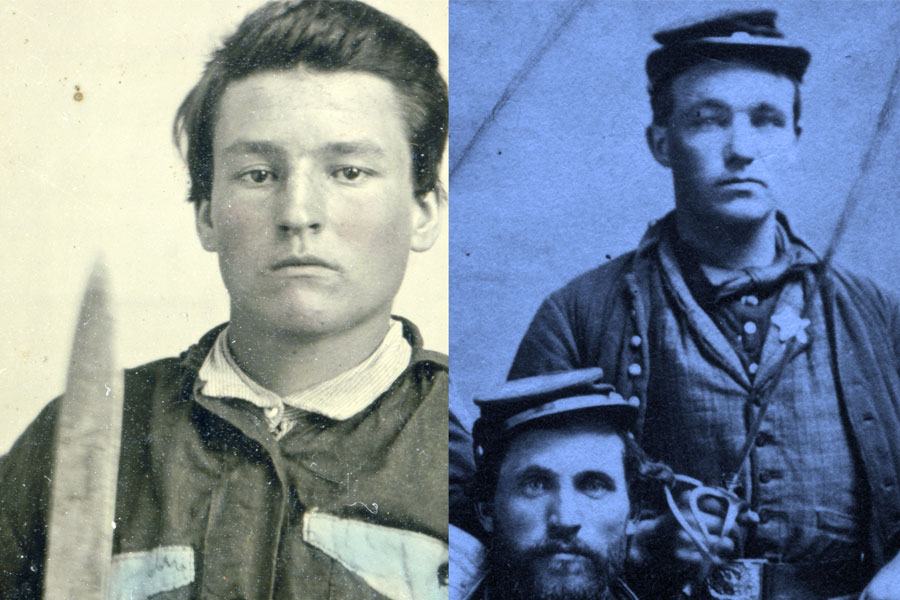
In “A New Era in Photo Sleuthing Begins,” Kurt reviews the history of Civil War Photo Sleuth from its soft launch in Gettysburg in 2017 to the official launch inside the Innovation Hub at the National Archives on Aug. 1, 2018. Kurt also discusses early feedback and next steps to fulfill its mission “to recover the names and stories behind every surviving Civil War-era portrait.”

Antebellum Warriors (p. 10)
A sixth-plate daguerreotype from the Paul Reeder Collection is a portrait believed to be a member of the Massachusetts Volunteer Militia.

Most Hallowed Ground (p. 12)
Capt. Adam Kramer and 86 of his troopers in the 15th Pennsylvania Cavalry launched a successful raid in North Carolina during the closing days of the war. Born and educated in Germany, he started his military service before the war with the 2nd U.S. Dragoons and continued on after the war with the 6th U.S. Cavalry.

The Honored Few (p. 14)
Robert Frank Shipley, a sergeant in the 140th New York Infantry, captured the flag of the 9th Virginia Infantry during the Battle of Five Forks—one of 17 soldiers to receive the honor for this engagement. How he came to capture the flag and what happened to the banner after the war are reported here.

The Citizenry (p. 16)
The inaugural department dedicated to images of the Civil War generation is a portrait of Kentuckians Elizabeth Taylor Nelson and John Rowzee Green.

Antietam Album with an introduction by John Banks (pp. 18-23)
A survey of 10 portraits of Union and Confederate soldiers who became casualties in the bloodiest single-day battle of the Civil War. Two Confederate and eight Union soldiers are profiled.

Blue & Gray Badges of Courage: Representative images from the Kevin Canberg Collection (pp. 24-34)
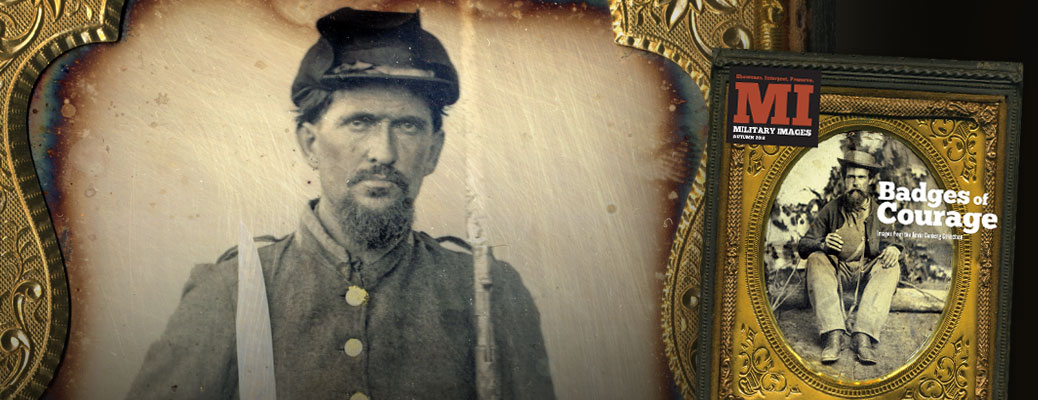
Kevin Canberg’s journey as a collector began with an unusual Father’s Day gift for his dad—a vintage fireman’s badge from Brooklyn, N.Y. Since then, Canberg has amassed an impressive collection of ambrotypes and tintypes of Union and Confederate soldiers.

The Linns of Lookout: The enterprising brothers behind a legendary photograph gallery by Dr. Anthony Hodges, with images from the author’s collection (pp. 36-43)
In this first installment of a three-part series, we meet two brothers who documented the scene of one of the great moments in Civil War history—the Nov. 24, 1863, Battle of Lookout Mountain during the Chattanooga Campaign. Images include various views of the area around Lookout Mountain, the gallery and several of the best known individual and group portraits.

Civil War Daguerreotypes: Last of photography’s celebrated first format by Ronald S. Coddington with daguerreotypes from the Mike Medhurst Collection (pp. 44-46)
By the start of the war, the daguerreotype’s reign was at an end as cheaper formats chipped away at its once-dominant market position. Two surviving examples of Civil War soldiers remind us of the end of one era and the beginning of another.

Taxing the Sun: The revolution to repeal and replace the stamp act on photos by Richard Leisenring, Jr. (pp. 47-50)
The federal government needed to pay for an expensive war and looked to tax goods and services to pay for it. Photographs were among the items singled out. We explore the events that led to the tax, and how Mathew Brady and other leading photographers killed it.

Overworked, Undermanned and Indispensable: Hospital stewards in the Civil War by William T. Campbell, Ed.D, RN (pp. 52-56)
Hospital stewards were pharmacists and much more on staff at army hospitals. The author examines their role, responsibilities, selection process and uniforms.

Rescuing Joe Parsons: A researcher’s unexpected journey to connect a face to a mythic tale by Alison Renner (pp. 57-60)
Newspapers across the Union carried the story of two soldiers who lay wounded on the battlefield of Antietam, a blinded Yankee and a rebel unable to walk, who joined forces to make a daring escape. The Union soldier, Pvt. Joseph Parsons of the 2nd Maryland Infantry, lived the rest of his days in darkness and his story faded from American history—until the author and her husband found his portrait in a local antique shop.

Fateful Final Lesson: A schoolteacher-soldier’s journey to Andersonville by Earvin Lee Joyner, Jr. (pp. 62-65)
John William Partridge, a New England educator, started his Civil War military service with the 25th Massachusetts Infantry and he later joined the Signal Corps. Captured during a Confederate raid in New Bern, N.C., his journey ended at Andersonville Prison.

The Defier and other Union archetypes by a master lensman by Jim Frasca (pp. 66-67)
A uniquely, thoughtfully posed selection of 7 Civil War cartes de visite by Frank Rowell of Providence, R.I., a refreshingly innovative photographer whose contributions to the art have been largely forgotten.

The Great American Civil War Cigar Gallery (pp. 69-76)
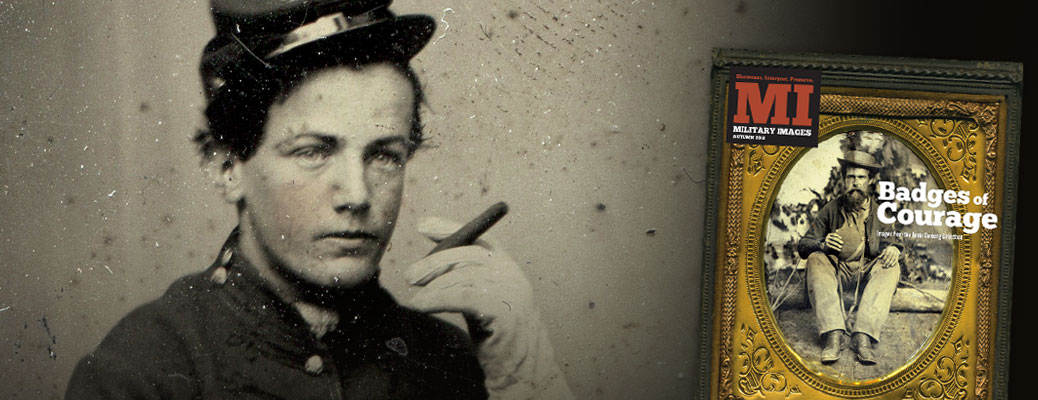
Tobacco was hailed as the soldier’s constant companion—when he could find it—by some and also as a wicked habit by others. In this gallery, we celebrate those who enjoyed a good smoke in front of the camera.

Stragglers: Distinctive Images from MI contributors (pp. 78-79)
“Sergeants in Blue” features eight images of Union men who wore the three-striped chevrons on their sleeves.

The Last Shot (p. 80)
A carte de visite from the Mike Medhurst Collection is a portrait of Granville Moody, the “Famous Fighting Methodist Preacher” who served as colonel of the 74th Ohio Infantry and ended the war as a brevet brigadier general. Moody inscribed the back of the image with a record of marriage vows he administered to John W. Widney and Mary A. Fitzwater Brown of Orange, Ohio.

The 30th Annual Daguerreian Society Benefit Auction

The Daguerreian Society is honored to offer THE CIVIL WAR GENERALS CARTE DE VISITE COLLECTION OF ROSECRANS BALDWIN in its entirety. This collection represents 165 Generals from the Union and Confederate sides plus a few notables like William Quantrill and John Wilkes Booth. Rosecrans (aka Crans) is a direct descendant of General Winfield Scott Hancock, and a more distant descendant of General William S. Rosecrans, both well-known Union Generals in the Civil War. For the fascinating story of how Crans became a collectorclick here.

TO BID ON THE ROSENCRANS BALDWIN COLLECTION OF CIVIL WAR GENERALS: https://www.daguerre.org/page/2018BenefitAuction

The Official Launch of Civil War Photo Sleuth

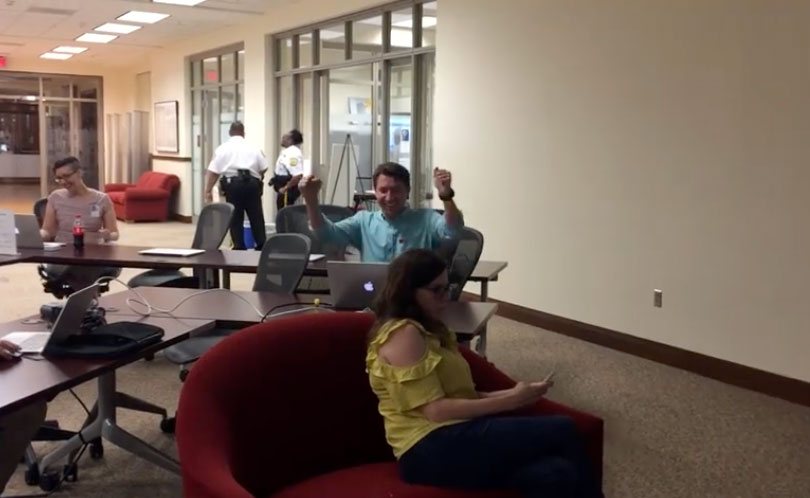
Kurt Luther, pictured here, in the moment he launched our Civil War Photo Sleuth software on August 1 in the Innovation Lab at the National Archives in Washington, D.C.

Kurt (head of CWPS), Ron Coddington (editor of Military Images magazine), and the rest of the team introduced guests throughout the day to the website to learn how to identify unknown Civil War photos, find photos of Civil War ancestors, and add identified photos to our reference database.

Attendees included Garry Adelman of the Civil War Trust and the Center for Civil War Photography, Melissa Winn of Civil War Times, Karen Chittenden from the Library of Congress and Tom Liljenquist, whose collection is part of the Library of Congress.

Images and live video of the event were carried on Facebook.

The response was overwhelmingly positive. CWPS is a historic moment for anyone interested in Civil War soldier and sailor photography.

Countdown to the Launch of Civil War Photo Sleuth

Thrilled to announce the public launch of our Civil War Photo Sleuth software in less than two weeks! This software uses face recognition and crowdsourcing to provide powerful new tools for photo research.

To celebrate, we are hosting a launch party Wednesday, Aug. 1, at the U.S. National Archives Building in Washington, D.C. Kurt Luther (head of CWPS), Ron Coddington (editor of Military Images), and the rest of the team will be there. We can help you use the website, identify unknown Civil War photos, find photos of Civil War ancestors, and add identified photos to our reference database.

Both the website and party are completely free and open to all. If you are thinking of coming, please RSVP here (required for security reasons): https://goo.gl/forms/D59pFqZgWn35YF8z2 Hope that many of you can join us!

Make your plans now!