Youthful Warrior

young-cavalry-gallery

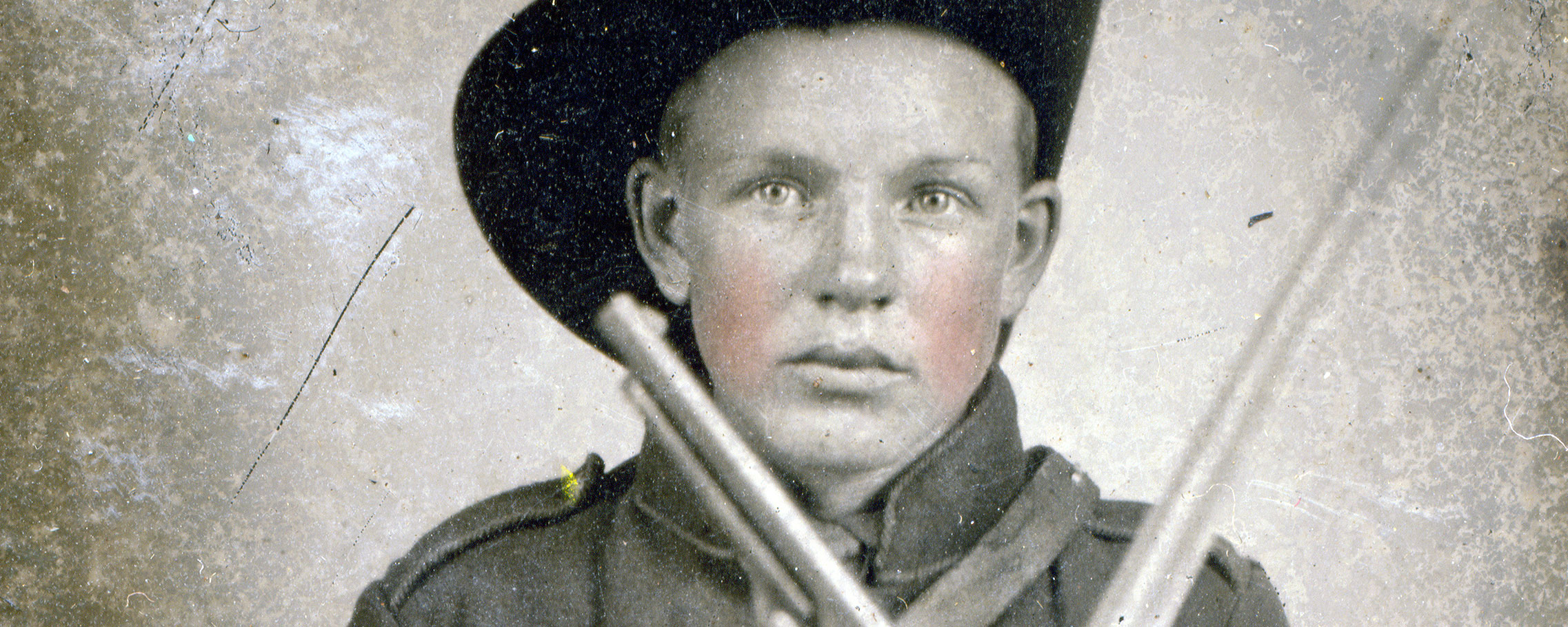
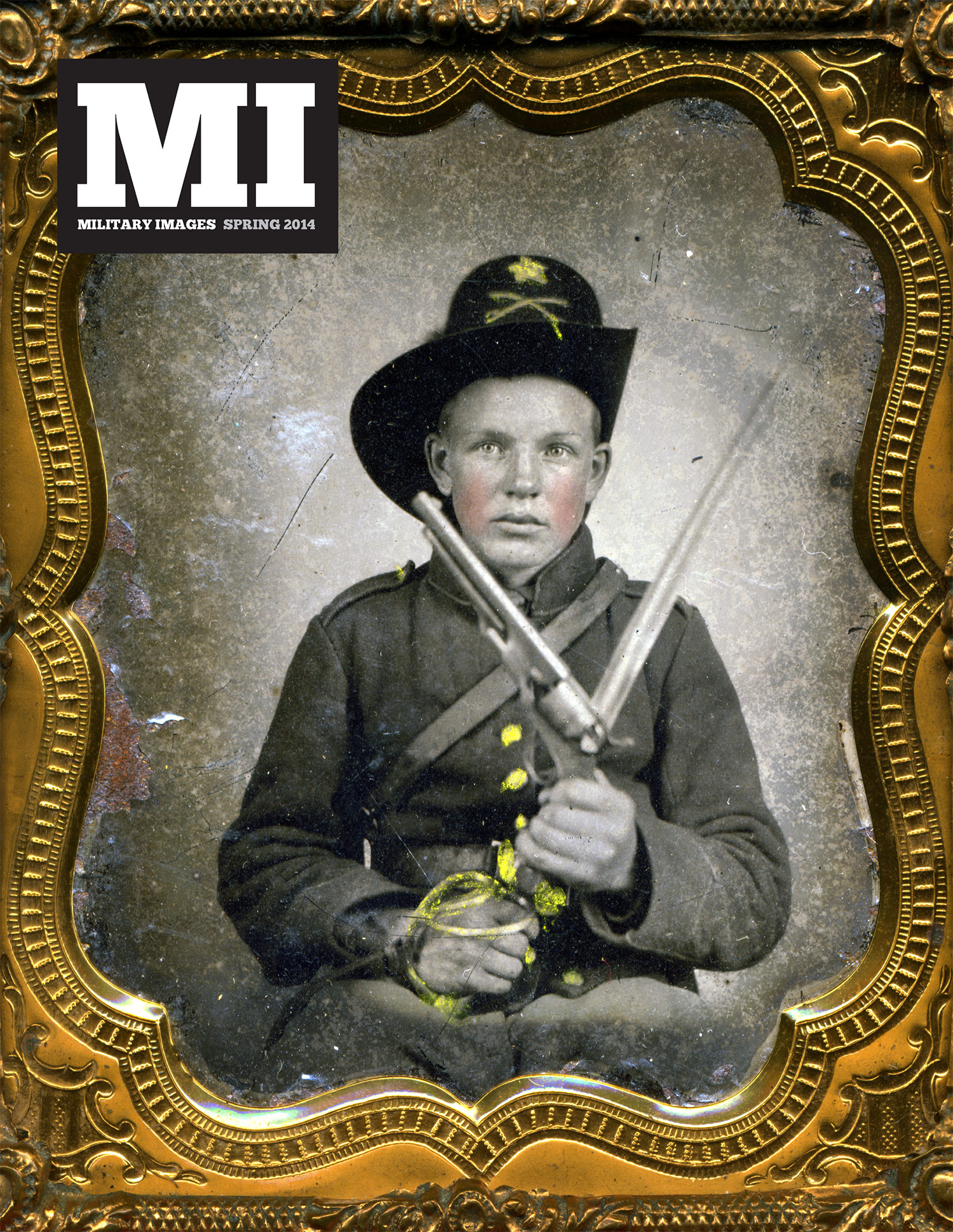
A youthful warrior displays his cavalry sword and M1860 Colt revolver. The intensity of his gaze and prominence of his weapons underscores his commitment to the Union and willingness to fight, and creates a stark contrast with his boyish innocence suggested by the soft curves of his face. He wears a Hardee hat with crossed sabers of the cavalry, and a star insignia that may indicate his allegiance to the Twelfth/Twentieth Corps. Collector and owner Rick Brown observes that the weapons “wonderfully frame the sitter’s face, and since they are held close to the camera it makes his diminutive size even more dynamic.” This sixth plate tintype was made by an anonymous photographer.

USCT Album Donated to Smithsonian

25th-usct

An album of portraits of men from the 25th U.S. Colored Infantry has been donated to the Smithsonian’s National Museum of African American History and Culture. The photos were published for the first time in the Winter 2014 issue of Military Images magazine.

The album was donated to the museum by a descendant of Capt. William A. Prickitt. The descendant currently remains anonymous. Prickitt started his military service in the 14th New Jersey Infantry, and became the original commander of Company G of the 25th when it was organized in Philadelphia in early 1864. The album contains 18 gem-sized photographs, almost all tintypes. Someone, perhaps Prickitt, carefully wrote the names of 17 of the 18 men on the mat below each image.

The soldiers hailed mainly from Delaware, New Jersey and Pennsylvania. One of the men, George H. Mitchell, was a slave in Delaware. His master, Caleb Layton, enlisted him in the Union army. Layton received the $300 bounty, a Mitchell received his freedom when his term of enlistment ended.

The album was brought to the attention of Military Images by Shayne Davidson, an artist and genealogist who discovered the photographs and created a series of drawings exhibited at ArtPrize 2013 in Grand Rapids, Mich. Her “Civil War Soldier” drawings were recognized in the top 25 of more than 1,500 entries.

According to a family story supported by military service records, Capt. Prickitt fell deathly ill during his service in the regiment, and noted that some of the men in his company nursed him beck to health. The men pictured in the album may have been the same soldiers that Prickitt credited with saving his life.

The National Museum of African American History and Culture is scheduled to open in 2015. The album is planned to be part of two inaugural exhibits.

Spring 2014 Cover Unveiled

mi-cover-32-2-spring-2014

Delighted to share the cover art for the next issue of Military Images. Special thanks to Rick Brown—This image is from his wonderful collection, which is featured prominently in this issue.

MI is scheduled to be printed next week.

If you’re not a subscriber, now is a great time. Sign up today for a one year subscription and receive 4 quarterly issues—plus a fifth issue free!

Trooper Group

viper-gallery-6-cavalrymen

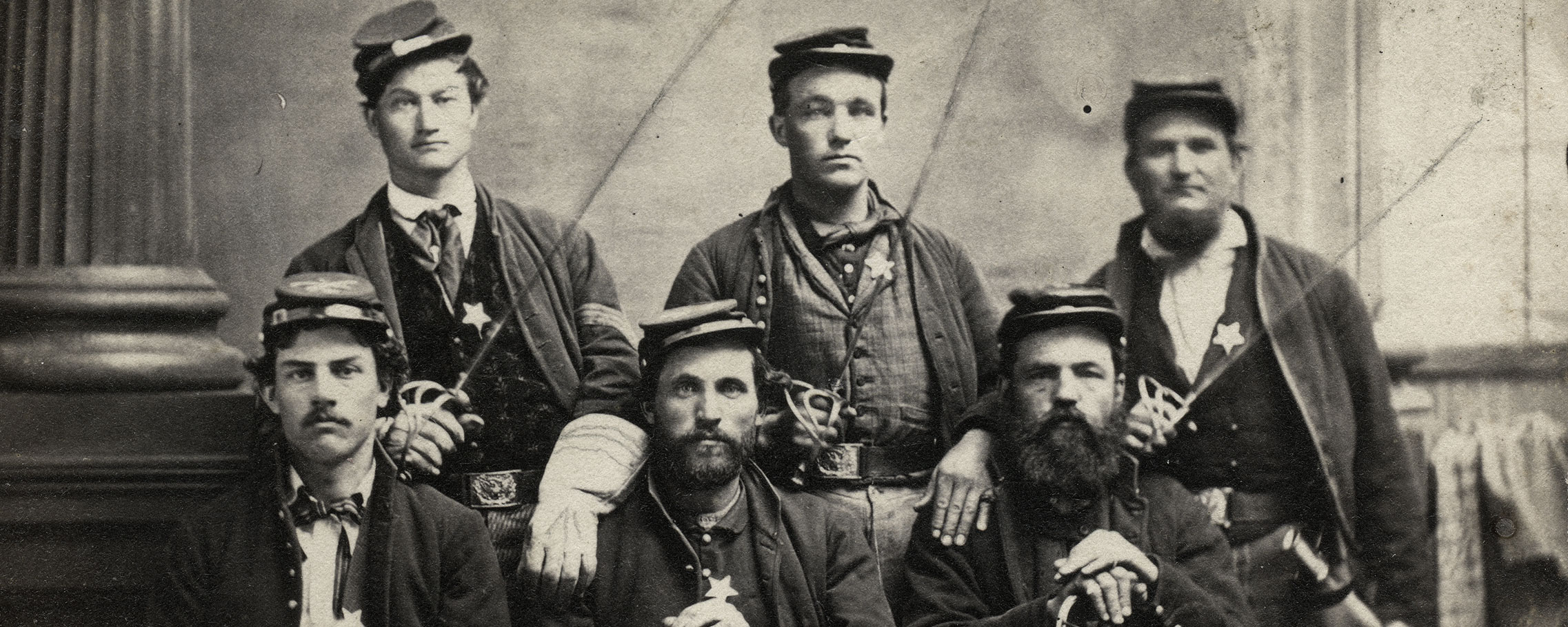
Six troopers pose with their sabers for the camera operator. Visible on the vests of five of the six men are star-shaped badges, which may indicate that they belonged to the Union Twelfth or Twentieth Corps. The individual standing on the left wears the stripes of a sergeant, making him the highest-ranking member of the group.

Preserving the Honor of Lady Liberty

viper-gallery-liberty

Columbia, or Lady Liberty, sits atop a podium trimmed with material on which is painted or sewn stars and an eagle with wings outstretched. She holds above her head a liberty cap hung from a pole, the traditional symbol of freedom that dates before Roman times. She also holds the shield of the United States, which represents defense, military strength and nationalism. Lady Liberty is flanked by representatives of the Union army and navy. Each holds a staff trimmed with ribbon, to which is attached the Star-Spangled Banner. The flags are crossed to provide a backdrop for Columbia, who they have pledged to defend.

Finding Aid: September/October 1990

The complete issue1990-v12-02-xii

Vol. XII, No. 2
(32 pages)

Print edition: Visit our store to check availability
Digital edition: Visit JSTOR.org to purchase
Subscribe to MI
Explore the MI Archives: Browse | Advanced search | Tutorial

Inside

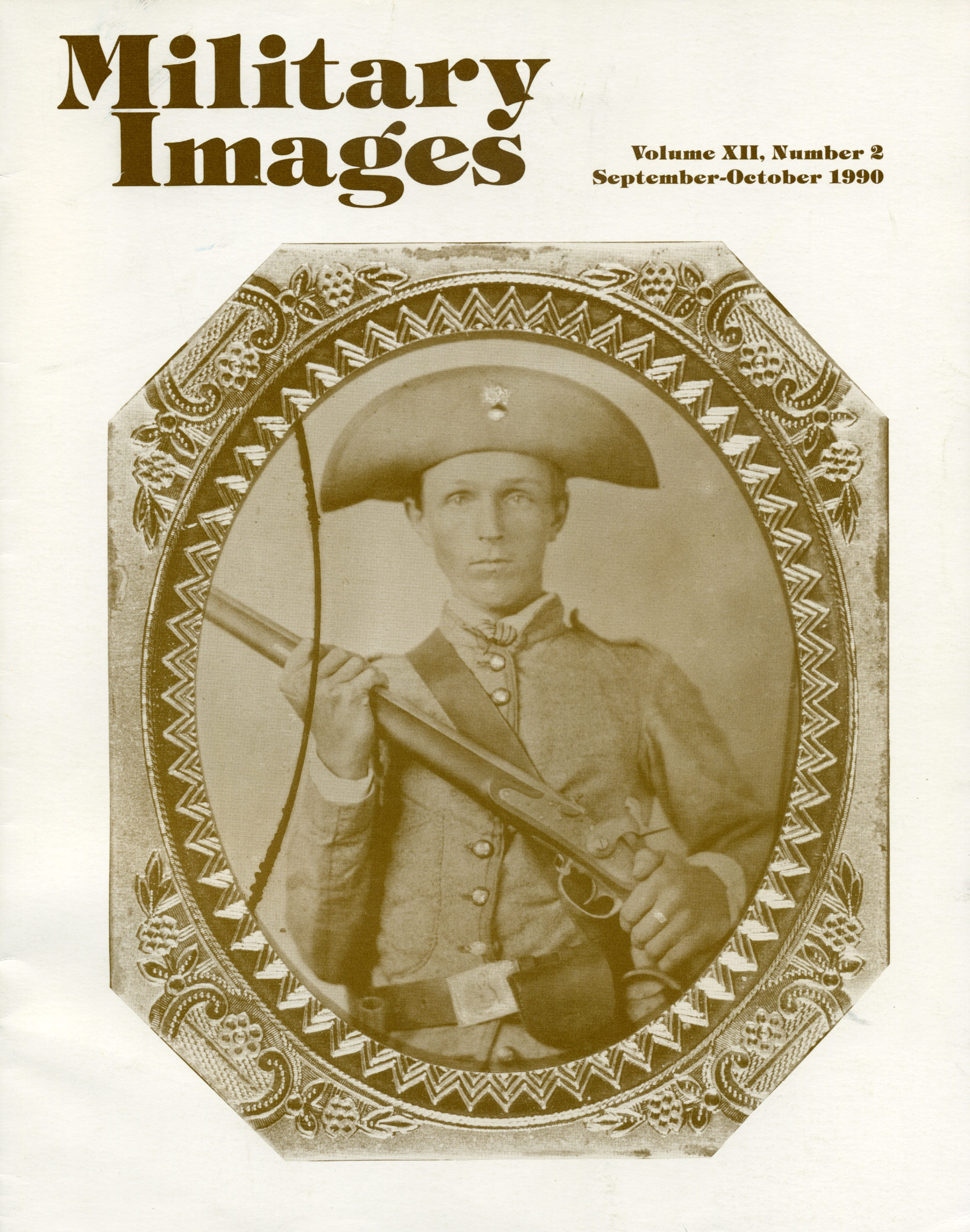
Cover image
A quarter-plate ambrotype from the Martin Callahan Collection is a Confederate soldier with a flintlock to percussion conversion musket and a Louisiana belt plate.

Editor’s Desk (p. 1)
The editor urges readers to attend the upcoming living history and Civil War battle reenactments at Cedar Creek Battlefield. Profits will support efforts by the Cedar Creek Foundation to save battlefield land from development.

Mail Call (p. 3)
The letters to the editor include kudos for the North Carolina issue (November-December 1989), corrections from a descendant of a South Carolina soldier pictured in the May-June issue and concern from one reader about modern reproductions.

Passing in Review (p. 5)
Five publications are mentioned: Directory of Civil War Photographers, Volume One: Maryland, Delaware, Washington, D., Northern Virginia West Virginia (Historic Graphics) by Ross J. Kelbaugh, Hiram Berdan: Civil War Chief of Sharpshooters, Military Commander and Firearms Inventor (Northwood Heritage Press) by Roy Marcot, Cahaba Prison and the Sultana Disaster (The University of Alabama Press) by William O. Bryant, Abandoned by Lincoln (University of Illinois Press) by Wallace J. Schultz and Walter N. Trenerry and War & Conflict: Selected Images from the National Archives, 1765-1970 (National Archives) edited by Jonathan Heller.

First Blood: A Jersey Brigade at Williamsburg by Joseph Bilby (pp. 7-11)
The 2nd New Jersey Brigade was one of three full brigades raised and equipped by the Garden State during the Civil War. It originally included the 5th, 6th, 7th and 8th infantries. Over time, troops from other states were added. Together, the brigade fought in most of the horrific battles with the Army of the Potomac. An account of its actions at the Battle of Williamsburg during the Peninsula Campaign is included here, illustrated with portraits of Brig. Gen. Francis Patterson, Col. Samuel Starr of the 5th, Lt. Col. Ezra Carman of the 7th, 2nd Lt. John Fritschy Jr of the 7th, Capt. James Brown of the 7th and 1st Lt. Dekyn Lalor of the 5th.

The Burial of Trooper McCoy: A 7th Cavalry Funeral by George Rummel (pp. 12-15)
Private Charles McCoy, a young trooper of promise assigned to Troop E of the 7th U.S. Cavalry, died in a freak wagon accident in 1903. The story of his military service is illustrated with six portraits including one of McCoy and his horse, images from his funeral and his gravesite at Chattanooga National Cemetery.

“A Brave Officer:” The Letters of Richard Saffell, 26th Tennessee. C.S.A. by Mike Miner (pp. 16-18)
A portrait of Col. Richard Meredith Saffell (1835-1865) is the centerpiece of this story of his life and death at the Battle of Bentonville through his wartime letters. Other illustrations include the uniform coat at vest worn by Saffell at Bentonville, his sword and a hard-plate photograph of his brother, Sam, who served in the 63rd Tennessee Infantry and was killed at Petersburg.

Uncommon Soldiers: An album of faces from the Civil War (pp. 19-23)
Profiles and portarits of seven Confederate and Union soldiers include Pvt. Major Hezekiah Allen of the 13th Alabama Infantry, 2nd Lt. Robert Emmett Hitchcock of the U.S. Marine Corps, Sgt. Romaine Hart of the 108th New York Infantry and 22nd New York Cavalry, 1st Lt. Charlie E. Crow of Purcell’s Virginia Battery, Sgt. William Maxey of the 1st Illinois Cavalry and the 80th Illinois Infantry, and Pvt. George Lane of the 1st New Hampshire Infantry, 2nd U.S. Sharpshooters, 1st New Hampshire Light Battery and the 1st New Hampshire Heavy Artillery.

The Shippy Brothers: A New York Family at War by Mark Dunkelman (pp. 24-27)
The five Shippy boys of New York served with distinction during the Civil War. Two survived without injury: Eugene of the 85th Infantry, Aaron of the 13th Heavy Artillery. One brother, Leroy of the 64th Infantry, suffered wounds in the battles of Fair Oaks and Gettysburg. Another brother, Stanley of the 14th Heavy Artillery, was captured at Fort Stedman during the Petersburg Campaign. One brother paid the highest price: Augustus of the 154th New York Infantry was killed in action at Dug Gap, Ga. This is their story.

Uniforms & History by Michael J. McAfee (p. 29)
In “The Anderson Troop,” McAfee details the organization and distinctive uniform of this Pennsylvania cavalry unit. The story is illustrated with a carte de visite of Pvt. Louis Fagan and an unknown member of the Troop.

Stragglers (pp. 30-31)
Five images are included in this installment, including a group of three messmates, an antebellum daguerreotype, Union troops massed in a street, a sergeant wielding a broom and an outdoor scene with a bit of toilet humor.

Sutlers’ Row (p. 32)

Back cover
A circa 1855 daguerreotype from the Herb Peck Jr. Collection pictures a second lieutenant of the 10th U.S. Infantry.


Finding Aid: July/Aug. 1980

1980-v2-01-ii

The complete issue

Vol. 2, No. 1
(32 pages)


Print edition: Visit our store to check availability
Digital edition: Visit JSTOR.org to purchase
Explore the MI Archives: Browse | Advanced search | Tutorial

Inside

Cover Image
Wearing the symbol of his regiment on his hat, Col. Langhorne Wister of the 150th Pennsylvania Volunteer Infantry graces the cover of this issue of Military Images. Wister’s regiment was also known as the third Bucktail regiment, as each member wore a buck’s tail as a symbol of their shooting ability.

Editor’s Page (inside front cover)
The editor suggests that readers contact their Senators and Congressmen in order to pass House Bill 5048, which would preserve an additional 1,700 acres for the Bull Run battlefield in Manassas, Virginia. This would add the acreage to that already held by the National Park Service and protect the battlefield area from commercialization.

Mail Call (p. 2)
Letters include one request to reprint the article on “Jack of the 102d P.V.” as well as one subscriber who requested better quality paper for use with the reproduction of images. The editor explained that quality is a concern, but older images are selected for their content value (e.g. to show uniform detail), not their inherent quality. There were also corrections made regarding names and other identifications in the previous issue.

Passing in Review (p. 3)
Two different publications were reviewed in this issue of MI. The first was The Orphan Brigade: The Kentucky Confederates Who Couldn’t Go Home by William C. Davis. The book used several memoirs, diaries, letters, and unit papers from the 9th Kentucky Infantry, C.S.A. to write about the wartime and post-war experiences of the members of this unique unit. The second publication was Der Angriff by Rick Baumgartner. Translated as The Attack, the short English-language magazine focuses on the German soldier who fought in World War I, and includes photographs, biographies, interviews and other insightful features.

John Taylor Wood by Charles S. Schwartz (pp. 4-5)
The author of the article describes the subject of a pre-Civil War naval officer from a quarter-plate daguerreotype he had purchased. Thinking that the subject was anonymous, he was surprised to see that “John Taylor Wood/Merrimac” was written on the back. The article discusses the unique career of this eventual Confederate naval commander, who was the nephew of Jefferson Davis. Initially educated at what became the U.S. Naval Academy, Wood served for 14 years before “being stricken from the rolls of the Navy” after attempting to resign. He commanded the aft pivot gun on the reconstructed C.S.S. Virginia, which had been the scuttled U.S.S. Merrimac, and fired shots into the Federal ships Congress and Cumberland. The article mentions other remarkable actions in which Wood was involved, such as organizing the hit-and-run commando tactics of his “cutting out” expeditions on the Chesapeake and Potomac, and serving as Jefferson Davis’ liaison officer between the Confederate navy and army while simultaneously holding the rank of commander and colonel. He was with Davis when he was captured in Georgia in May 1865 and was able to escape to Cuba. Wood eventually settled in Halifax, Canada, and was a frequent author, submitting articles that outlined his many adventures to many prestigious periodicals of the day.

The Grove Boys in the Great War by David Valuska (pp. 6-9)
Three brothers from South Dakota, featured in a variety of images, each had a very different experience in the Great War, with two of the brothers having served prior to U.S. entry into the conflict. The eldest, Carl Grove, had joined the army in 1910, and because he was a trained farrier, he was initially assigned to handle horses, and eventually was trained to join the cavalry and served for a while in the Philippines. By the time World War I broke out, Carl had become a wagoner (munitions carrier) and was sent to France as part of the “Big Red One” – the First Division. When his wagon was hit by German artillery, Carl severely wounded and was brought back to health by a French family, but did not recover mentally, spending the rest of his life in V.A. hospitals until his passing in 1979. The middle brother, Albert, joined the navy in 1911, serving on many different types of vessels, including the experimental submarine fleet in 1915 and taking part in the only “clean sweep” cruise from California to Hawaii. He also witnessed the international naval night salute to the new Japanese emperor, Yoshihito, in 1912, an incursion into Nicaragua later that same year, and then serving on escort missions on the cruiser St. Louis until honorably discharged in 1919. The youngest brother, Starkey, quit high school in 1917 and joined the 1st South Dakota Cavalry, a National Guard unit that was eventually trained as an infantry unit. He was a messenger during the Meuse-Argonne offensive and was part of the U.S. occupation forces serving in Koblenz, Germany. Receiving his commission in the ROTC unit at the University of Nebraska, Lt. Col. Starkey Groves was a member of Douglas MacArthur’s staff, returning with his general to the Philippines, where his older brother had once served almost a half-century earlier.

The Soldiers of Summer by John L. Marsh (pp. 10-15)
The article follows the National Guard career of Fred Windsor, who enlisted in Company I of the 16th Infantry, Pennsylvania National Guard, in October 1885. Like many men of his era, “Private Fred” had grown up in the shadow of the Civil War, and dreamed of attaining the glory experienced by those veterans. The first part of the article describes how the unit trained in Warren, Pennsylvania, including Windsor’s eventual election as 1st lieutenant in 1887 and captain in 1890. Under his leadership, his unit was determined by inspection to be the most proficient in 1893. For this era, the annual encampments were the height of the Guard experience, shown in two photographs from the 1886 event. The National Guard, including Company I, was deployed to deal with the Homestead Strike of 1892. Despite initial confusion, the Guardsmen were frequently disappointed, as they were never called to act in the capacity for which they had trained. Mostly they performed drill and guard duty, as shown in the accompanying two photographs. There was one instance in which “Captain Fred” felt called upon to have his men target train thought to be firing upon a small steamer being used by the Guard on the Monongahela; a following investigation showed that no shooting had come from the train. Company I returned home a few weeks afterward. A series of five photographs documents the journey of Company I when called to serve in Puerto Rico during the Spanish-American War in April, 1898. “Major Fred” and the men of Company I, led by Col. Willis J. Hulings who commanded the 16th, among other adventures, took part in the capture of some Spanish forces at Cuamo. Upon their return to Pennsylvania in October, 1898, Fred Windsor now held the rank of lieutenant colonel, and the soldiers of Company I received the accolades befitting veterans of war at last.

“Bucktails Forward!” by Lawrence G. Bixley (pp. 16-23)
Accompanied by 16 individual and four group images, the article recounts the Civil War histories of the initial 13th Regiment of the Pennsylvania Reserves in 1861 and the later recruitment of the “Bucktail Brigade” made up of the 149th and 150th regiments of Pennsylvania Volunteers in 1862. Known for their red battle shirts and the bucktail worn on each man’s hat, the 13th was involved in a series of important fights, including the killing of Turner Ashby, Mechanicsburg and Gaines Mill, Antietam, Fredericksburg, and a failed skirmish against John Mosby’s partisans. At the time Lee’s forces moved toward Pennsylvania, the 149th and 150th were formed and ordered to the defense of Washington, D.C. A rift between the original bucktails and these new units was formed, with the 149th and 150th taking part in fighting on the first day of battle at Gettysburg and the 13th taking part on the second.

Naval Uniforms of the Civil War, Part V: The U.S. Revenue-Marine by Philip Katcher (pp. 24-27)
The U.S. Revenue-Marine was the precursor to the United States Coast Guard, a service that was for the most part in a neglectful state at the outbreak of the Civil War. The exception to this was the Harriet Lane, first launched in 1858 and one of the few stationed in Southern ports that remained loyal to the North. The Aiken, for example, was purposefully beached by her captain right before the firing upon Ft. Sumter, allowing Confederate forces to capture her, while others surrendered. Many other Revenue-Marine vessels were handed over to the Navy and crews were reassigned, mostly to perform blockade duty. The Revenue-Marine had to be recreated, and thus began a tug-of-war between the Navy and Treasury. The article discusses the capture of the Harriet Lane in December, 1862, and then begins a description of the Revenue-Marine uniforms, which were a great deal like those of the Navy. Uniform items that differentiate them from the Navy include buttons that bore the Treasury Department seal, the use of the Treasury Department shield above the gold sleeve stripes on the coat arms, and distinguishing badges worn on both hat and epaulettes, to name but a few outlined in the article. Changes in uniform regulations happened in 1862, partly due to expansion of the service in general due to the war and due to the use of steam powered shipping in specific.

Stragglers (pp. 28-31)
A number of different images are included, included three that have some mystery to go along with them. Another shows Federal troops playing cards and sharing a bottle, using a barrel for a table, two images provide a look at Pennsylvania naval reservists, while three feature Civil War era soldiers with their canine companions.

Back Cover
The final image shows a North Carolina captain wearing his captain’s bars sewn right onto his unique homemade shirt. Fashioned with two plackets that are gathered on both sides on either side of the button placket, the plaid homespun shirt also sports a cross hanging from the attached watch chain.


Finding Aid: March/April 2008

2008-v29-05-xxix

The complete issue

Vol. XXIX, No. 5
(40 pages)


Print edition: Visit our store to check availability
Digital edition: Visit JSTOR.org to purchase
Subscribe to MI
Explore the MI Archives: Browse | Advanced search | Tutorial

Inside

Cover image
A sixth-plate ambrotype from the David W. Vaughan collection is a portrait of a Confederate sergeant standing with a large knife and a musket with fixed bayonet.

Table of Contents (p. 1)

Editor’s Desk (p. 2)
The editor thanks subscribers for their patience and understanding for the delay in publication due to “the critical illness of an immediate family member.” He assures readers that the issues scheduled for this year will be published as soon as possible. The editor also notes the passing of two members of the Civil War community: Collector James Stamatelos amassed an impressive selection of photos, some of which appeared in the March/April 1997 issue of MI, and Ed Hahn, a historian, archivist, author and World War II veteran.

Passing in Review (p. 3)
This page is intentionally blank with the exception of a note, “Book Reviews Will Return In The Next Issue Of MI” and an advertisement.

Men of Gettysburg by Brian Boeve (pp. 4-9)
Three wartime soldier portraits are featured in this tribute to the Battle of Gettysburg. They include an unidentified member of the 146th New York Infantry (Garrard’s Tigers), a Zouave regiment that fought on Little Round Top, Corp. Burlington “Burl” Cunningham of the 19th Indiana Infantry, who carried the regiment’s flag into battle and suffered two wounds, and Pvt. Thomas Eubanks of the 7th Wisconsin Infantry, an Iron Brigade regiment that participated in the action in Herbst Woods during the first day of the battle.

Warren’s Field Glasses by Michael J. McAfee (pp. 10-13)
Maj. Gen. Gouverneur K. Warren carried this unique relic with him on the afternoon of July 2, 1863, when he famously acted quickly to move Union troops on his own authority to counter Confederate forces moving on his position on Little Round Top. The field glasses are part of the West Point Museum Collection. The story is illustrated with a photo of the glasses and other images.

Francis H. Abbott, 17th Regiment Virginia Volunteers (pp. 14-15)
An albumen print from the collection of Mahlon Nichols is a portrait of Abbott, who served with Company A of the 17th. He was killed in action at the Battle of Williamsburg, Va., on May 5, 1862, and buried where he fell. This information is included on the back of the print along with a stanza from William Collins’s poem “How Sleep the Brave.”

Thomas and Samuel Livingston’s Civil War by Linda Livingston Kovar (pp. 16-19)
Biographical sketches of Thomas Grove Livingston, a corporal in Company C of the 110th Pennsylvania Infantry, and his younger brother, Samuel Livingston, a private in Company D of the 13th Pennsylvania Cavalry, are illustrated with wartime and postwar portraits. Both brothers survived the war and lived in the 20th century.

Officers of the 10th U.S. Cavalry at Ft. Riley, Kansas, 1867 by Robert Kotchian (pp. 20-21)
A cabinet photograph pictures the white officers of the African American 10th U.S. Cavalry. Numbers printed on top of the image correspond to a list that provides details of the officers, an officer’s wife, and two dogs.

Vignettes from the Collection of Patrick Knierman (pp. 22-24)
A profile of Pvt. Franklin G. Lewis, who served in Company D of the 145th Pennsylvania Infantry, includes detail of his death at the Battle of Fredericksburg. Also profiled is Pvt. Theron Swap, who served in Company H of the 111th Pennsylvania Infantry. He suffered a mortal wound at Culp’s Hill on July 3, 1863, during the third and final day of the Battle of Gettysburg. Swap’s story includes, in addition to his portrait, images of two of his comrades, Corp. Daniel Gibson and Pvt. Isaac Baldwin. A postwar portrait of Swap’s brother is also included. Jacob E. Swap of the 83rd Pennsylvania Infantry received the Medal of Honor for his actions at the 1864 Virginia battles of the Wilderness and Laurel Hill.

The Confederate Soldier (p. 25)
A ninth-plate ambrotype from the Peggy Dillard collection pictures an unknown Confederate soldier “with a brace of evolvers and a gigantic fighting knife.” The image was found in Texas.

Uniforms & History by Michael J. McAfee (pp. 26-27)
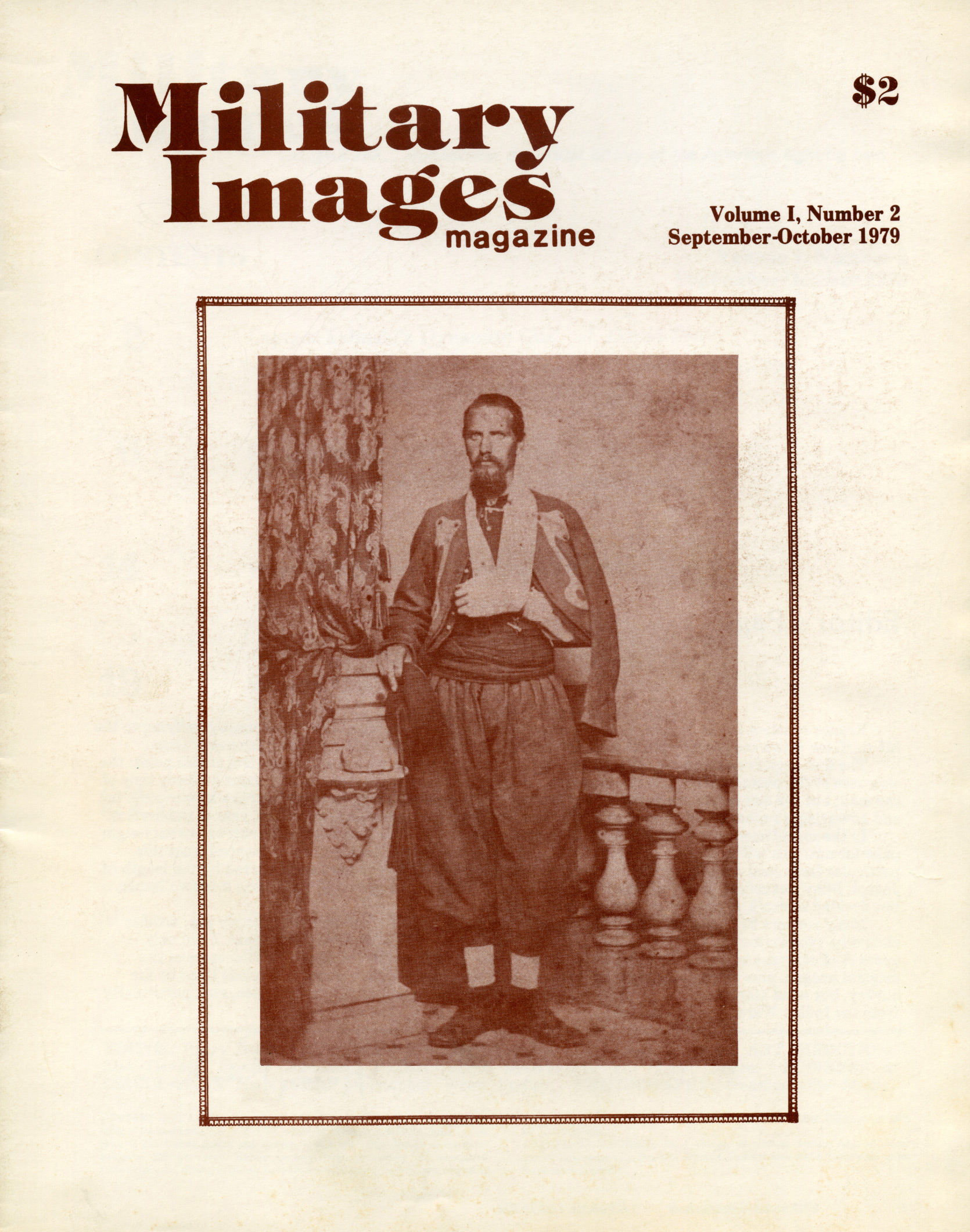
In “Charles F. Johnson, 9th Regiment, New York Volunteer Infantry ‘Hawkins’ Zouaves,’” McAfee muses about he acquired the perfect Civil War image on eBay, a perfect condition carte de visite of Johnson posed with his arm in a sing from the effects of a wound suffered in the 1862 Battle of Camden, N.C. The author explains that Daniel Lorello had stolen the image from the New York State Archives and auctioned it on eBay. Lorello, an employee of the Archives, was eventually caught. McAfee was ordered by the Attorney General’s office of New York to return the image, which he did.

Stragglers (pp. 28-37)
A total of 16 images submitted by subscribers are featured, and they are a mix of Civil War and post-war photographs. Identified images include 1st Lt. Charles B. Brockway of the 1st Pennsylvania Light Artillery, Jared Carr of the 85th Indiana Infantry, 1st Sgt. David M. Scott of the 54th Alabama Infantry, Theodore Hoeninghausen of the 16th Michigan Infantry (postwar portrait), Corp. Charles Kimball of the 13th Pennsylvania Reserve Infantry and Veteran Reserve Corps and 2nd Lt. John S. Miller of the 29th Iowa Infantry.

Sutler’s Row (pp. 38-39)

The Last Shot (p. 40)
An albumen print from the collection of John Sickles is captioned, “Determined to fight for his freedom, an unidentified African-American soldier ready for the fray.”

Back Cover
A real-photo postcard from the Chris Nelson collection pictures three individuals dressed as Abraham Lincoln, Lady Liberty and Lt. Gen. Ulysses S. Grant. The trio is flanked by two World War I doughboys.

Finding Aid: May/June 2008

2008-v29-06-xxix

The complete issue

Vol. XXIX, No. 6
(48 pages)


Print edition: Visit our store to check availability
Digital edition: Visit JSTOR.org to purchase
Subscribe to MI
Explore the MI Archives: Browse | Advanced search | Tutorial

Inside

Cover image
carte de visite from the Stephen Osman collection of Marshall Sherman of the 1st Minnesota Infantry and the flag he captured from the 28th Virginia Infantry at the Battle of Gettysburg.

Table of Contents (p. 1)

Editor’s Desk (p. 2)
The editor pays has a two-word message for readers: “It’s Back!” The issue is completely dedicated to Minnesota in the Civil War.

Passing in Review (p. 3)
Two volumes are recommended. Texas Civil War Artifacts, A Photographic Guide to the Physical Culture of Texas Civil War Soldiers (University of North Texas Press) by Richard Mather Ahlstrom includes photographs of more than 500 Texas-related artifacts connected to soldiers from the Lone Star state. Faces of the Confederacy: An Album of Southern Soldiers and Their Stories (The Johns Hopkins University Press) by Ronald S. Coddington includes 77 original wartime images of identified Confederates with accompanying sketches of their lives and military service.

Minnesota in the Civil War: A Photographic Legacy by Wayne Jorgenson (pp. 4-42)
The author presents brief histories of regiments formed in the Union’s thirty-second state during the Civil War. They include the 1st, 2nd, 3rd, 4th, 5th, 6th, 7th, 8th, 9th, 10th and 11th infantries, the 1st and 2nd Companies of Minnesota Sharpshooters or 2nd United States Sharpshooters, Companies A and L (Berdan’s Sharpshooters), Brackett’s Battalion of Cavalry, Hatch’s Battalion of Independent Cavalry, Minnesota Mounted Rangers, 2nd Minnesota Cavalry, 1st Minnesota Heavy Artillery, 1st, 2nd and 3rd Minnesota light artillery batteries and a page of Minnesota stragglers. Each organization is illustrated with at least one soldier portrait. The 1st Minnesota Infantry receives the most attention with 15 pages of information including portraits of individual soldiers and photographs of swords and other relics.

Back Cover Story: Company G (Douglas Guards), 9th Minnesota Volunteer Infantry (p. 43)
Detail views of the carte de visite pictured on the back cover highlight the Native American soldiers, mostly members of the Chippewa tribe, who served in the ranks of the company.

Uniforms & History by Michael J. McAfee (pp. 44-45)
In “The First Regiment Minnesota Volunteer Infantry—1861-1864,” McAfee examines the uniforms and weapons of the regiment. Two soldier portraits illustrate the text, Corp. Edward Z. Needham and Principal Musician Henry O. Fifield.

Sutler’s Row (p. 46)

The Last Shot (p. 48)
Marshall Sherman, the soldier pictured on the cover, is pictured here in civilian clothes with the artificial leg and crutches he used as a result of a wound received at the Aug. 14, 1864, Battle of Deep Bottom, Va. The carte de visite is courtesy of the Minnesota Historical Society.

Back Cover
A carte de visite of Company G of the 9th Minnesota Infantry from the Wayne Jorgenson collection. Details on page 43.