Finding Aid: July/August 1995

The complete issue

Vol. XVII, No. 1
(40 pages)

Print edition: Visit our store to check availability
Digital edition: Visit JSTOR.org to purchase
Subscribe to MI
Explore the MI Archives: Browse | Advanced search | Tutorial

Inside

Cover image
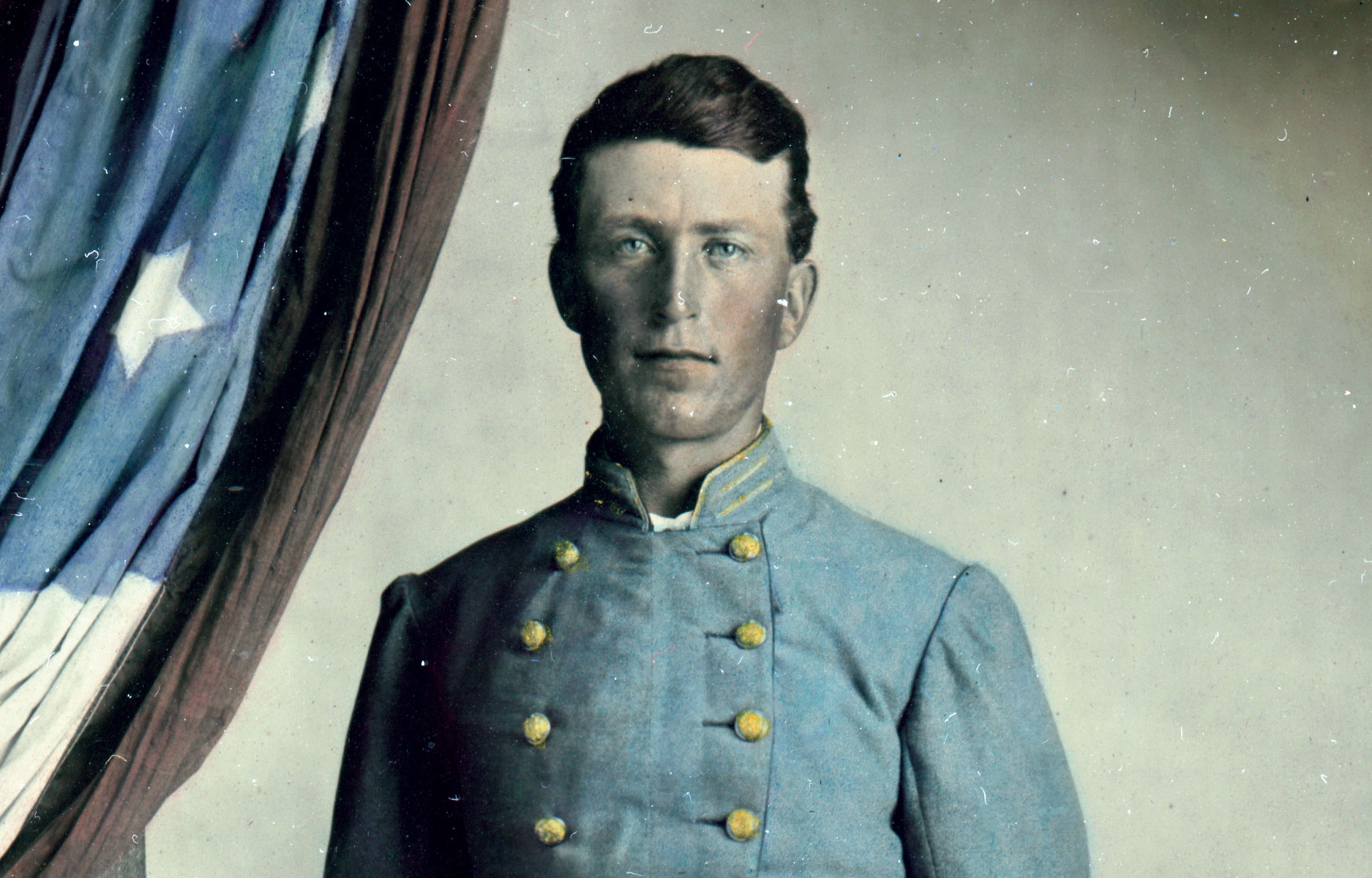
A carte de visite from the Colby Mack collection pictures a horse-drawn carriage with three men, one of which appears to be a convalescing Union soldier.

Editor’s Desk (p. 3)
The editor laments the rising cost of antique military images in the U.S., and notes that there are bargains to be found in Europe.

Mail Call (p. 5)
Letters include critical comments about “Brown the Poet” (May-June 1995) being too far afield for a magazine about military photography, and that no Confederate images were included in the same issue.

Passing in Review (p. 7)
Four publications are mentioned, including Bicycling Through Civil War History in Maryland, West Virginia, Pennsylvania and Virginia (EPM Publications) by Kurt B. Detwiler, Flashman and the Angel of the Lord (Alfred A. Knopf) by George MacDonald Fraser and Who Wore What? Women’s Wear 1861-1865 (Thomas Publications) by Juanita Leisch.

The Rock River Rifles: Company I, 34th Illinois Volunteer Infantry by Scott Cross (pp. 8-9)
A brief history of the company, which fought at Shiloh, Stone’s River, and the Atlanta and Carolinas campaigns, is illustrated with portraits of six members. They include Amos Hostetter, Theophilus Hills, Mason Fuller, Joseph Teeter, Israel Solt and Frederick Ikerman.

A Winter in New Bern: Family visits brighten a season of provost duty in an occupied city of the South by David A. Norris (pp. 10-12)
This photo analysis is focused on two photographs from the MOLLUS collection at the U.S. Army Military History Institute in Carlisle Barracks, Pa. One pictures a group of officers and ladies posed on the porch of a frame home. Another is Union Maj. Gen. John G. Foster and his staff standing in front of headquarters of the Department of North Carolina.

Midwestern Masterpieces: Images from the collection of Donald Bates (pp. 13-19)
An interview with Bates is illustrated by 23 portraits. All are hard plate formats and none are identified.

The Lucky Company: Co. A, 95th Ohio Infantry by Coby Mack (pp. 20-21)
A summary of the company’s service, including the Vicksburg Campaign, is illustrated with 14 gem-sized tintypes, 13 of which are identified. They include David Evans, Henry Schrock, William Davies, Sylvester Gale, Eli Dennison, Evan Evans, Jonah Whitaker, George Schrock, Frederick Weadon, William Walton, Smith Dulin, Edward Ulric and Josiah Landis.

Uncommon Soldiers: Vignettes from the Brothers’ War (pp. 22-31)
A collection of images and profiles include the following soldiers: John R. Beatty of the 2nd Minnesota Infantry, John Emanuel Ayers of the 58th Virginia Infantry, Clarence Mauck of the 4th U.S. Cavalry and Edwin Mauck of the 6th U.S. Cavalry, Abner Charles Lay of the 13th Georgia Infantry, Cornelius Starr Thomasson of the 6th Alabama Infantry, John Cuthbert Carroll of the 15th Kentucky Infantry and the 14th and 32nd U.S. Infantries, Frederick William Bush of the 1st Arkansas Infantry, Arthur Cranston of the 7th and 55th Ohio Infantries and the 4th U.S. Artillery, Samuel Alfred Craig of the 105th Pennsylvania Infantry and John Henry Hatfield of the 4th Mississippi Cavalry Battalion and the 8th Confederate Cavalry.

Uniforms & History by Michael J. McAfee (p. 33)
In “Turncoats: Regulars who went South in 1861,” McAfee discusses the large number of soldiers, including Robert E. Lee and others, who joined the Confederate army. The text is illustrated with a circa 1861 carte de visite of Pierre G.T. Beauregard.

Stragglers (pp. 34-35)
The theme of this grouping of five images is “oddball insignia.” Included is a navy paymaster, a possible chaplain, a hospital steward and a post-Civil War Marine.

Captain Bob’s Caveat Emptorium (p.37)
In this column, the slick Captain attempts to convince us that a modern view of Brian Pohanka’s 5th New York Zouaves is an original photo to the Civil War period.

Sutlers’ Row (pp. 38-40)

Back cover
A continuation of the cover image.
Finding Aid: May/June 1995

The complete issue

Vol. XVI, No. 6
(40 pages)

Print edition: Visit our store to check availability
Digital edition: Visit JSTOR.org to purchase
Subscribe to MI
Explore the MI Archives: Browse | Advanced search | Tutorial

Inside

Cover image
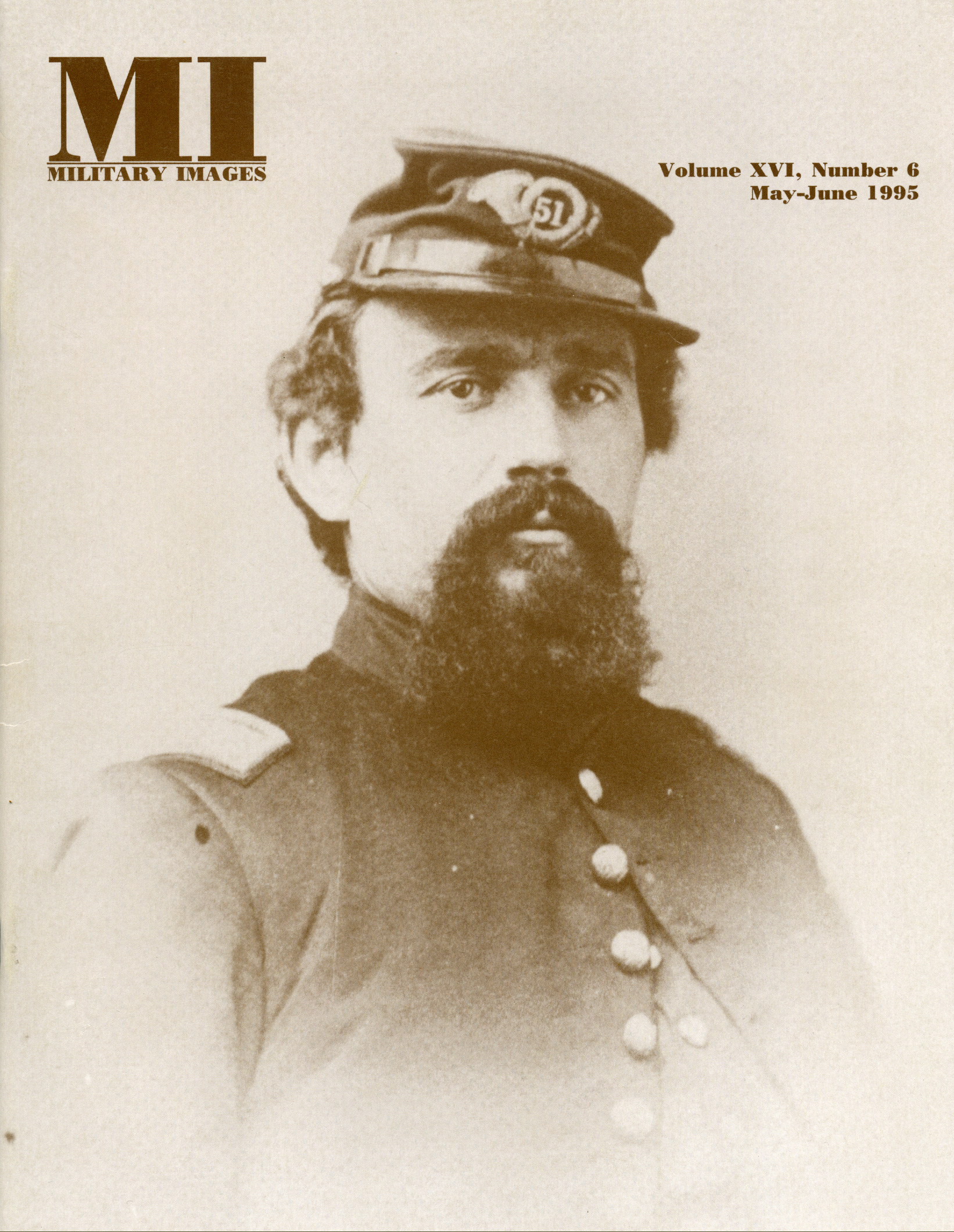
Since the magazine was founded in 1979, Mark Supplee’s portrait has appeared on our letterhead and business cards. Here at last he receives due recognition.

Editor’s Desk (p. 3)
The editor previews projects in development, including an all-Confederate issue, Tennessee Confederates, and notes a display of women’s fashions from the Civil War period.

Mail Call (pp. 4-5)
Letters include commentary on the use of the term kepi to describe a cap, the identification of soldiers pictured in an image as members of Elmer E. Ellsworth’s United States Zouave Cadets, and praise for the recent story about American Hussars.

Lieutenant Mark Supplee, 51st Pennsylvania Infantry: The story behind a well-known face by Harry Roach (p. 7)
Supplee started his enlistment in the regiment as an orderly sergeant, advanced to second lieutenant and suffered a foot wound at the Battle of Fredericksburg that eventually ended his service. He lived until 1901. Supplee’s portrait illustrates the text.

Rank & File: An album of images from our readers (pp. 8-16)
This gallery of 37 images is a potpourri of subjects that range from a double exposure of Chaplain Thomas Murphy of the 1st Delaware Infantry to unique medals and badges, casualties of war, navy men and more.

Brown the Poet by Mark Dunkelman (pp. 17-19)
Sergeant James Byron Brown of the 154th New York Infantry wrote at least three patriotic poems that were published. Brown survived the war but his whereabouts after he was discharged for disability in July 1864 are not known. Brown’s portrait illustrates the text.

Murder in Dayton, Death of George Waterman: Copperheads slay lieutenant of the 115th Ohio by Timothy Brookes (pp. 20-22)
George Lawson Waterman, a promising young officer, was ordered to quell Copperhead rowdies in Dayton in May 1863. Months later, in September, Waterman was on duty in Dayton when his was shot in the thigh by one of the rowdies. The wound proved fatal. A wartime image of Waterman, posed with fellow Lt. John Eadie, and a modern photograph of Waterman’s grave stone illustrate the text.

A Look at the Other Side: Carte de visite backmarks of the Civil War era by Tom LaPorte (pp. 23-25)
Eagles and the personification of Liberty are two of the motifs explored in this overview of photographer’s imprints. A total of 14 images illustrate the text.

Mystery Zouaves: Unknown soldiers in baggy pants by Robert Fulmer (pp. 26-29)
A total of 14 images include infantrymen of the 14th Brooklyn, 114th Pennsylvania (Collis’s Zouaves) and other regiments across the Union.

Uniforms & History by Michael J. McAfee (pp. 30-31)
In “Company A, 10th Regiment, National Guard, State of New York—The Albany Zouave Cadets, 1861-1865,” McAfee provides details about the uniform and history of this regiment of the company. Two cartes de visite illustrate the text, a portrait of an unidentified musician and another of Pvt. Louis D. Graveline.

Stragglers (p. 33)
Solo photos from our readers include Samuel Calhoun of the 7th Iowa Infantry, who wrote his name and regiment on the chinstrap of his cap, and a pair of images of Paul Zink of the 58th Ohio Infantry and his son Charles, who was killed in action in France in 1918.

Passing in Review (pp. 34-36)
Six publications are mentioned, including The Mutiny at Brandy Station: The Last Battle of the Hooker Brigade (Bates & Blood Press) by Frederick B. Arner, Årbok 1994 (Norsk Vapenhistorik Selskap) edited by Knut Erik Strom, The Shipwreck of Their Hopes (University of Illinois Press) by Peter Cozzens, Confederate Raider (Brassey’s) by John M. Taylor and more.

Captain Bob’s Caveat Emptorium (p.37)
In this column, the wily Captain attempts to convince readers that a portrait of a group of servants are Clara Barton posing with other Civil War nurses.

Sutlers’ Row (pp. 38-40)

Back cover
A salt print from the Thomas Woolworth Collection pictures Lt. William Coffin Little of the 1st City Guard, a San Francisco militia company.