A complete table of contents for the Winter 2026 issue of Military Images magazine, and information about how to purchase single issues and subscriptions.

Vol. XLIV, No. 1
(80 pages)
Print edition: Visit our store to check availability
Digital edition: Visit JSTOR.org to purchase
Subscribe or renew your subscription
Explore the MI Archives:
Browse | Advanced search | Tutorial
Inside
Cover
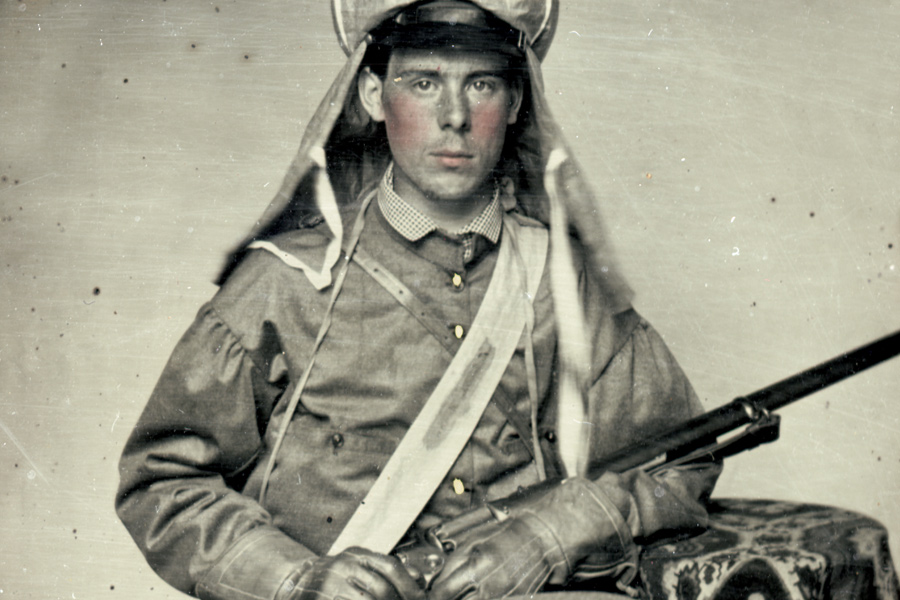
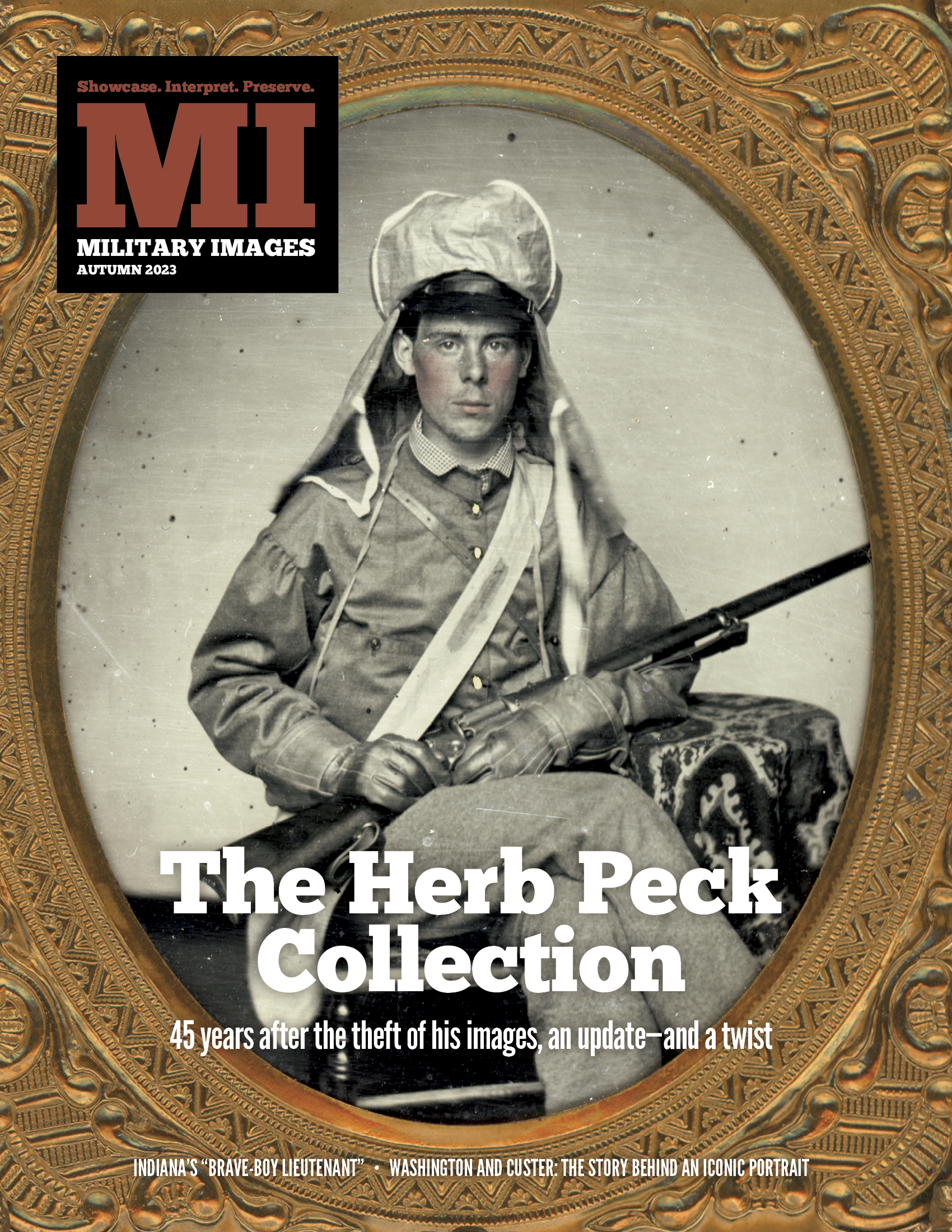
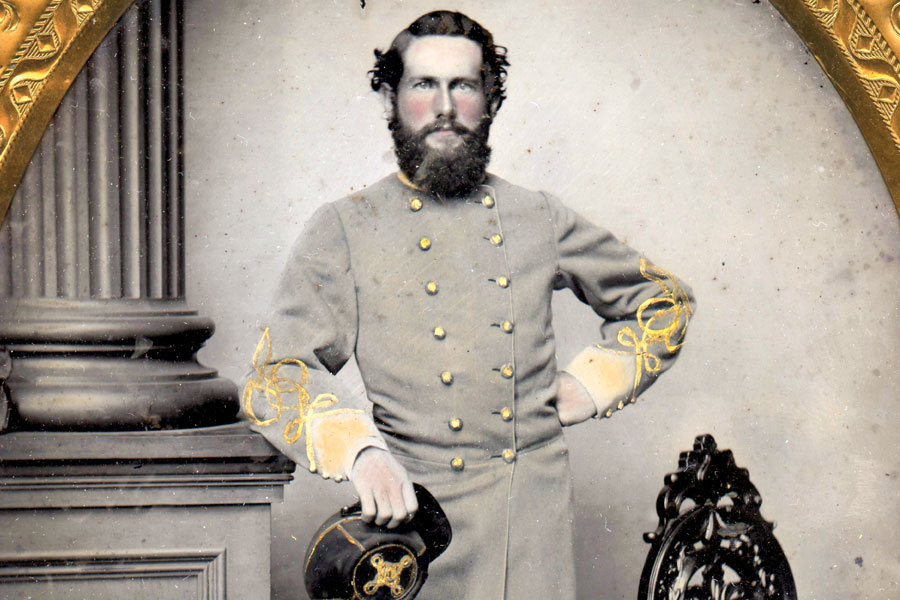
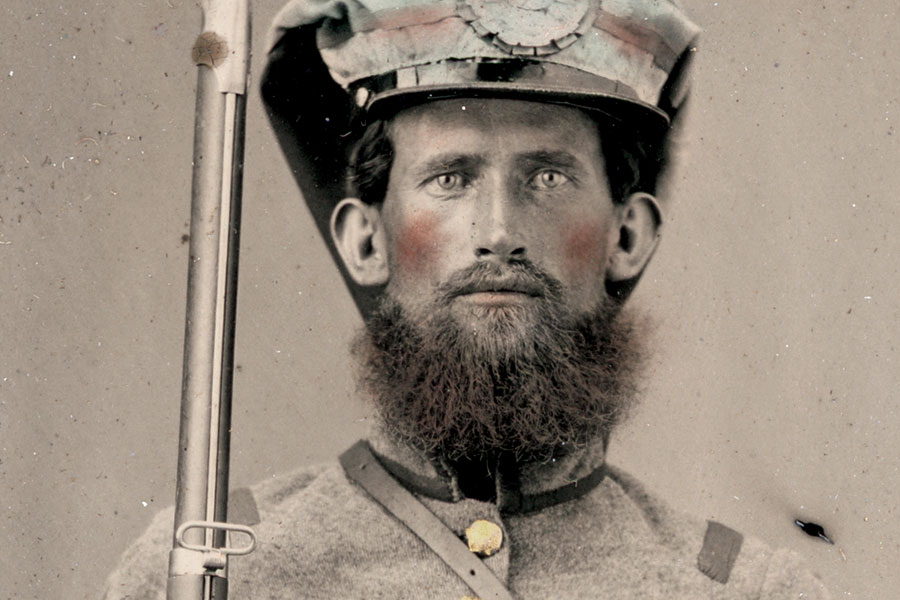
A tintype of a Confederate soldier sporting a “Sicilian”-style stocking cap with a large secession cockade attached to the front, D-Guard Bowie knife and Model 1842 musket.
Table of Contents (p. 1)
Editor’s Desk (p. 2)
A tribute to Rick Carlile’s impact on Military Images and collectors, honoring his mentorship, scholarship, and shared passion for Civil War photography.
Mail Call (pp. 3-4)
Feedback includes notes on Texas photographer Louis de Planque, restoring the name of a misidentified soldier, and more.
Military Anthropologist (p. 4)
Tracking the loyalties of 1,125 surviving West Point graduates, 1802-1864, indicates that one in three wore Confederate gray.
Passing in Review (p. 6)
Two new Civil War books explore a truce in Louisiana and New York City in images, offering fresh insights from James Hogg, Jonathan White, and Timothy Orr.
Photo Sleuth by Kurt Luther (pp. 8-10)
Research into a Civil War portrait reveals Maj. Alphonzo Nicholds and his wife, Julia, showing how photo sleuthing can restore names and stories to forgotten images.
Antebellum Warriors (p. 12)
A militia officer’s portrait reflects America’s 19th-century system of independent companies, state oversight, and reforms that led to today’s National Guard.
Most Hallowed Ground (p. 14)
At Cold Harbor, George Armes, and aide to Maj. Gen. Winfield Scott Hancock, rode through heavy fire to deliver an order to Maj. Gen. Francis Barlow.
The Honored Few by Evan Phifer (pp. 16-17)
Henry Goodwin of the 27th Maine served during the Gettysburg crisis, later receiving a Medal of Honor that was rescinded in the 1917 review of award criteria.
The Citizenry by Elizabeth A. Topping (p. 18)
Photographs of young women at the 1864 Metropolitan Fair show attendants of the Normandy Confectionery booth, not nurses, illustrating Civil War homefront roles.
Of Arms and Men by Phil Spaugy (pp. 20-22)
An 1861 view of the 9th Mississippi Infantry at Camp Magnolia shows early Confederate clothing, arms, and leadership as the regiment entered wartime service.
Southern Exposures: Confederate images from the Paul Reeder Collection by Ron Field (pp. 24-39)
A study of Confederate soldiers through their uniforms, weapons, and wartime portraits, revealing Southern military dress, equipment, and material culture.
A Wisconsin Sharpshooter’s Changing Face: Portraits and letters trace Pvt. Henry Lye’s wartime life—and loss at Gettysburg by Jeff McArdle (pp. 40-47)
Sharpshooter Henry Lye’s letters chart marches to Gettysburg, Peninsula and Chancellorsville battles, and his July 2, 1863 death, and Myra’s long grief at home.
Twice Dismissed, Never Defeated: Robley Evans and the making of the Navy legend “Fighting Bob” by Michael F. Fitzpatrick (pp. 48-56)
The story of Robley Dunglison Evans traces his perilous youth, Naval Academy appointment, Civil War service, and ascent to rear admiral after remarkable persistence.
Q&A with Cara Arnold: Connecting Through Images by Deena C. Bouknight(pp. 60-63)
An interview with Cara Arnold of The Horse Soldier, exploring her path into military history, image appraisal, collecting, and the world of Civil War material culture.
Material Culture by Dr. Charles H. Cureton (pp. 64-66)
A study of Marine Corps boy musicians, their distinctive uniforms, and the early-war Horstmann sword pattern documented through a studio image from Brooklyn.
Women of War by Melissa A. Wynn (pp. 68-69)
Kate Chase, Washington’s ambitious Civil War socialite, her political work for father Salmon P. Chase, marriage to marriage to Gov. William Sprague, and postwar decline.
Behind the Backdrop by Buck Zaidel (p. 70)
A Civil War soldier stands before a primitive painted camp backdrop by photographer Julia Emma Jones.
Vignette by Scott Valentine (p. 72)
The 8th Vermont Infantry met its first combat near Bayou des Allemands, and Alvin B. Franklin rose through repeated wounds to lead his regiment in battle.
Stragglers (pp. 74-76)
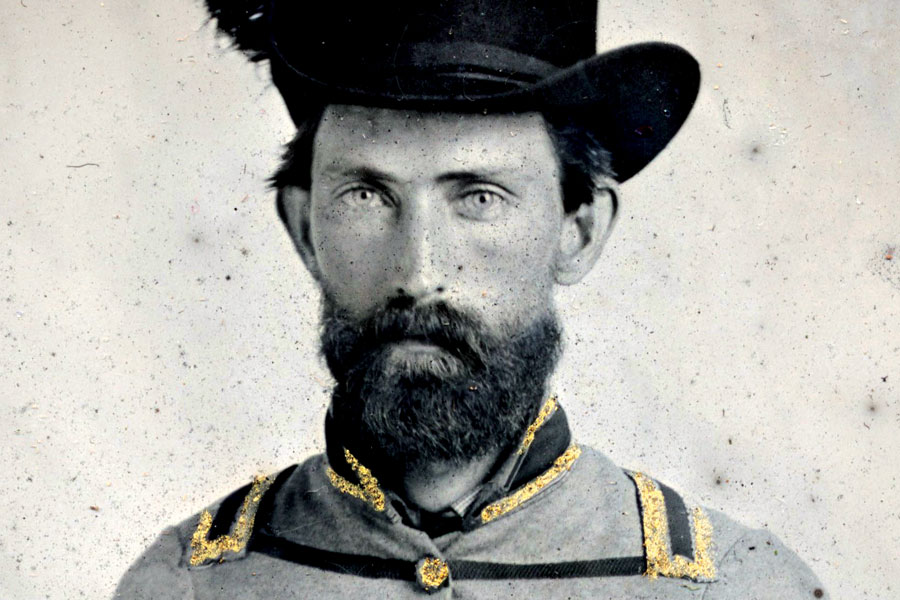
Images include Union and Confederate musicians, a Mississippi soldier, a Richmond monument, and a possible early war field hospital scene after Blackburn’s Ford.
The Last Shot (p. 80)
The story of Bob Dillard, an enslaved man identified by name and face, whose life was bound to Captain John Dillard through the Mexican War and the Civil War.