Search Tips to Find Your Civil War Ancestor’s Image

Most wartime soldier photos were not taken for mass-media consumption. These were personal mementos distributed to families, friends, and comrades. Many are scattered in private and public collections. Having a photo for identification purposes was not standard military practice during this era.

Finding a portrait is possible, though it requires patience and determination. Locating an image is rarely a sprint; it is a marathon. These tips can help.

Search National, State, and Local Repositories

Civil War Photo Sleuth (CWPS) is a free application with more than 60,000 images in its searchable database. If you have an unidentified image, CWPS hosts facial recognition technology that can compare your subject’s features against the database of portraits to help you find potential matches.

The Liljenquist Family Collection at the Library of Congress is a free site with more than 9,000 images of Union and Confederate soldiers and sailors.

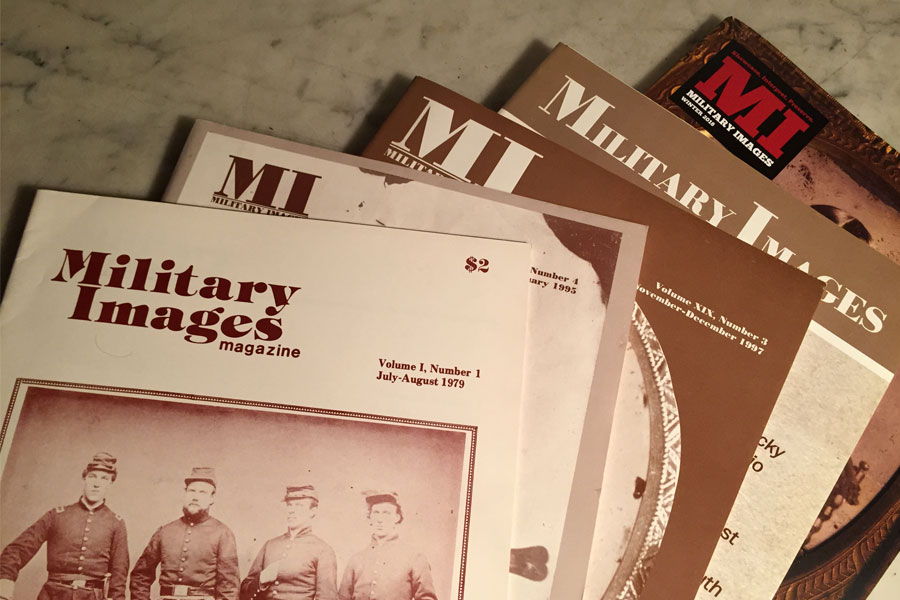
Identified Civil War Soldier, Sailor and Civilian Portraits in Military Images magazine is a free database with more than 9,000 entries for Union and Confederate soldiers and sailors, and civilians. Though the images are not included to protect private collectors, links to past issues on the nonprofit Journal Storage (JSTOR) are included.

If you are searching for an ancestor and know which state he served in, visit the state archives. Though the number, cataloging, and digitization of images vary, you may find your veteran. If you know the city, town, or community in which your ancestor resided when he enlisted, seek out local libraries, museums, historical societies, archives, and other institutions. Access and holdings will vary.

Connect with Community Networks and Seek Out Individuals with Authoritative Knowledge

The Civil War image collecting community is knowledgeable and often eager to help. Dedicated communities on Facebook (Civil War Faces) and historical forums (Civil War Talk) include collectors and enthusiasts who possess deep, collective knowledge. They often provide useful feedback and guidance on uniform details or regimental specifics that may assist in your search.

Military historians, local museum curators, and other researchers can also help. These individuals have spent years navigating archives and may be able to point you toward the right lead or private collector.

Utilize genealogy sites like FamilySearch (free) and Ancestry (subscription) to search records and connect with distant relatives. You may find that someone else in your extended family tree has already secured or archived the exact photo you are looking for.

Search newspaper collections for postwar portraits of veterans who survived the war. Digitized newspaper archives are available at no cost for some states and through the Library of Congress. Newspapers.com (subscription) features about 32,000 newspapers and 1.3 billion pages of content.

Monitor the Civil War Image Marketplace

Original portraits are sold through auctions, dealers, Civil War collector shows, and social media marketplaces. Actively monitor these sites. The right image may reappear when you least expect it. But buyer beware: there are sellers at public auctions who may defraud you, knowingly or unknowingly. Military Images magazine’s advertisers are trusted sources. You’ll find them at the bottom of this page. Civil War News maintains a dealer directory.

Enjoy the journey! Reach out with questions: militaryimages@gmail.com.
Updated: November 16, 2026.
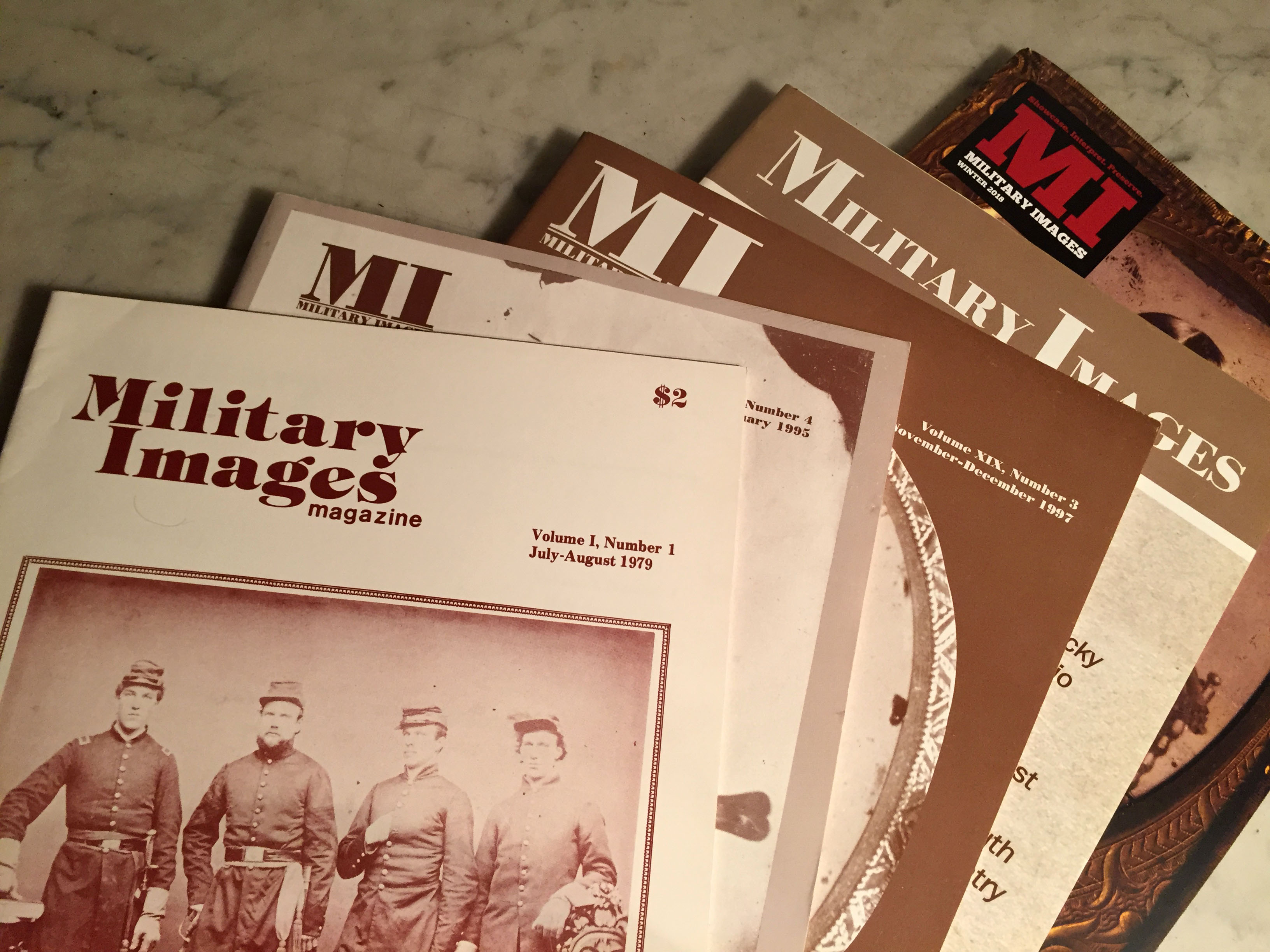
Our Digital Preservation Effort

The toughest part of my job may surprise you—fielding specific search requests. Want to know how many times the 54th Massachusetts Infantry is mentioned in all of our issues? How about the 6th Virginia Cavalry? I couldn’t tell you without a huge investment in time.

The root of the problem is that there has been no easy way to search our 200-plus issues archive. My predecessors, to their credit, anticipated the need, and created two indexes: one for stories and another for regiments. But they were not maintained and are now out of date. A substantial effort is required to bring them to current times. And they’re not digital native.

I’ve been concerned about how to make 40 years of content available since becoming editor.

Our first effort to address the problem was to create finding aids. We began cataloging in November 2015 and completed the work last December. These aids can now be browsed by volume by volume and issue number in the Back Issues section of our site. Though these finding aids do not satisfy larger search needs, they do document the contents of each issue.

What we really needed was a fully searchable digitized collection. I investigated a few options early on in my tenure, but could not find a way forward.

Everything changed on Sept. 26, 2016, with an email from Robert Sedgwick, a Senior Editor at the non-profit digital library Journal Storage, or JSTOR. “I write today to invite your publication, Military Images, to join our archive,” Sedgwick stated. He added, “Participation in the archive is by invitation, and Military Images was selected after a careful review of its publication history, as well as recommendations from academic librarians and scholars.”

I accepted the offer and soon the archive of printed magazines was in the hands of JSTOR staff. They scanned and converted each page to optical character recognition, then made everything searchable on JSTOR.org. The work finished last month.

The JSTOR team has my eternal gratitude for preserving Military Images for all time.

Thanks to their efforts, Military Images can be searched by anyone. Modest fees apply to download stories and issues. So go forth and explore! Visit jstor.org/journal/militaryimages to begin searching. Before you do, I recommend our guide for how to get the most out of your JSTOR visit. It is available on militaryimages.com.

Oh, and the answers to those questions? The 54th Massachusetts appears 22 times, and the 6th Virginia Cavalry makes 14 appearances.

How to Make the Most of Your Military Images Search on JSTOR

JSTOR offers a powerful search tool to explore Military Images, and has a unique interface to guide you to the best possible results. There are two main ways to access our content:

  • Advanced Search: Using key terms and boolean operators to deliver relevant results, this is a great tool for in-depth fielded searches.
  • Browse: Organized by subject, title and publisher. If you are looking for a specific issue , this is a convenient way to access it.

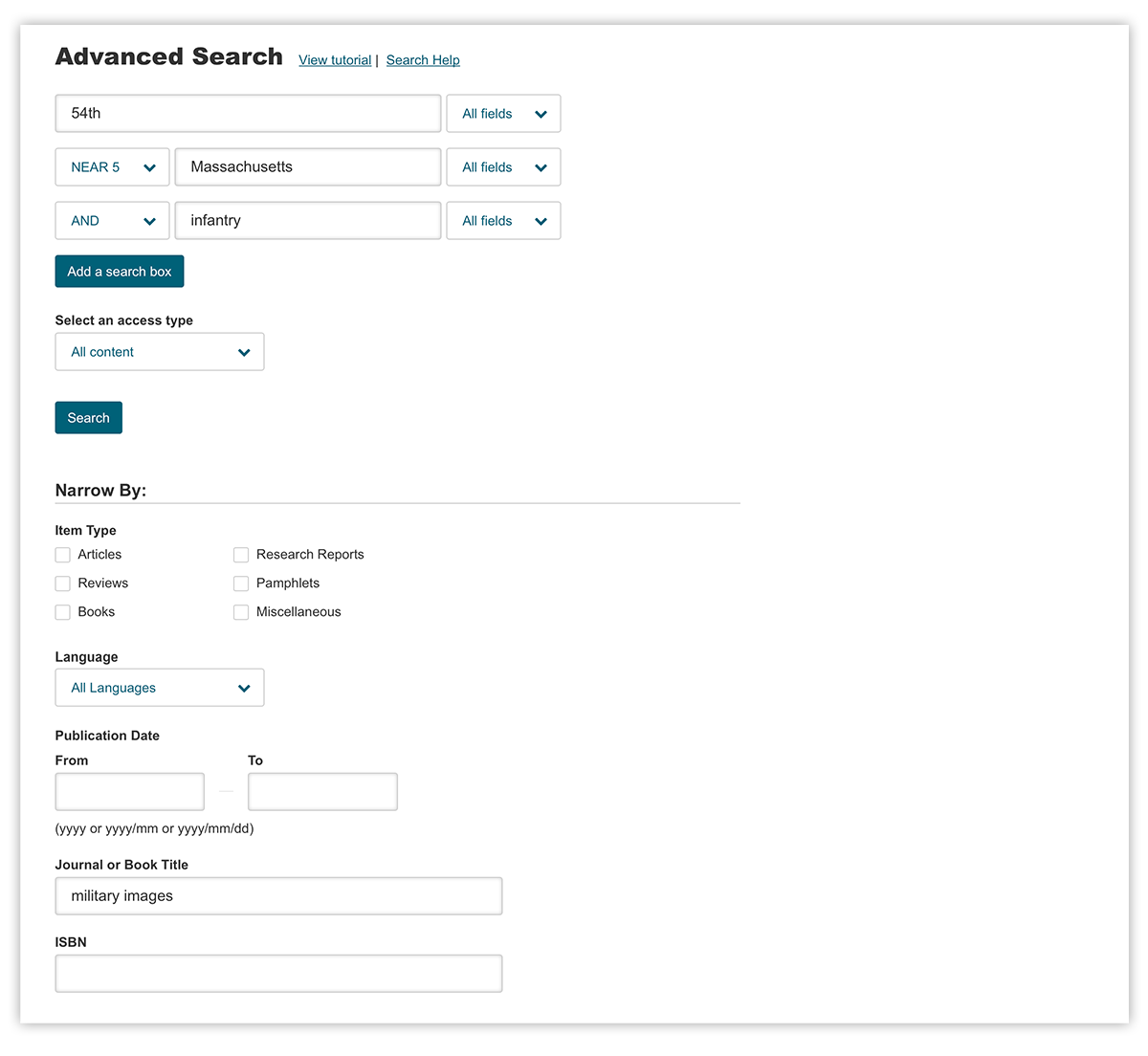
Military Images recommends the Advanced Search to take full advantage of our full run of issues. Why? Because the JSTOR interface is designed to perform unique searches of value to collectors, historians, genealogists and other enthusiasts. Here’s how it works:

  1. Go to jstor.org and select “Advanced Search.” You don’t need to be logged in to search.
  2. On the search screen, enter key terms in the field boxes and the pull-down menus to connect the terms (and, or, not, near 5, near 10, near 25). You can add additional search boxes as needed. Scroll down to the “Journal of Book Title” field and type in Military Images. Fill in other boxes as desired.
  3. Select “Search.” A new page will load with your results.
  4. Select a search result to purchase a PDF of the story. To complete the purchase you will need to register for an account.

For further information, visit JSTOR’s collection of video tutorials.