The Summer 2026 Issue

A complete table of contents for the Summer 2026 issue of Military Images magazine, and information about how to purchase single issues and subscriptions.
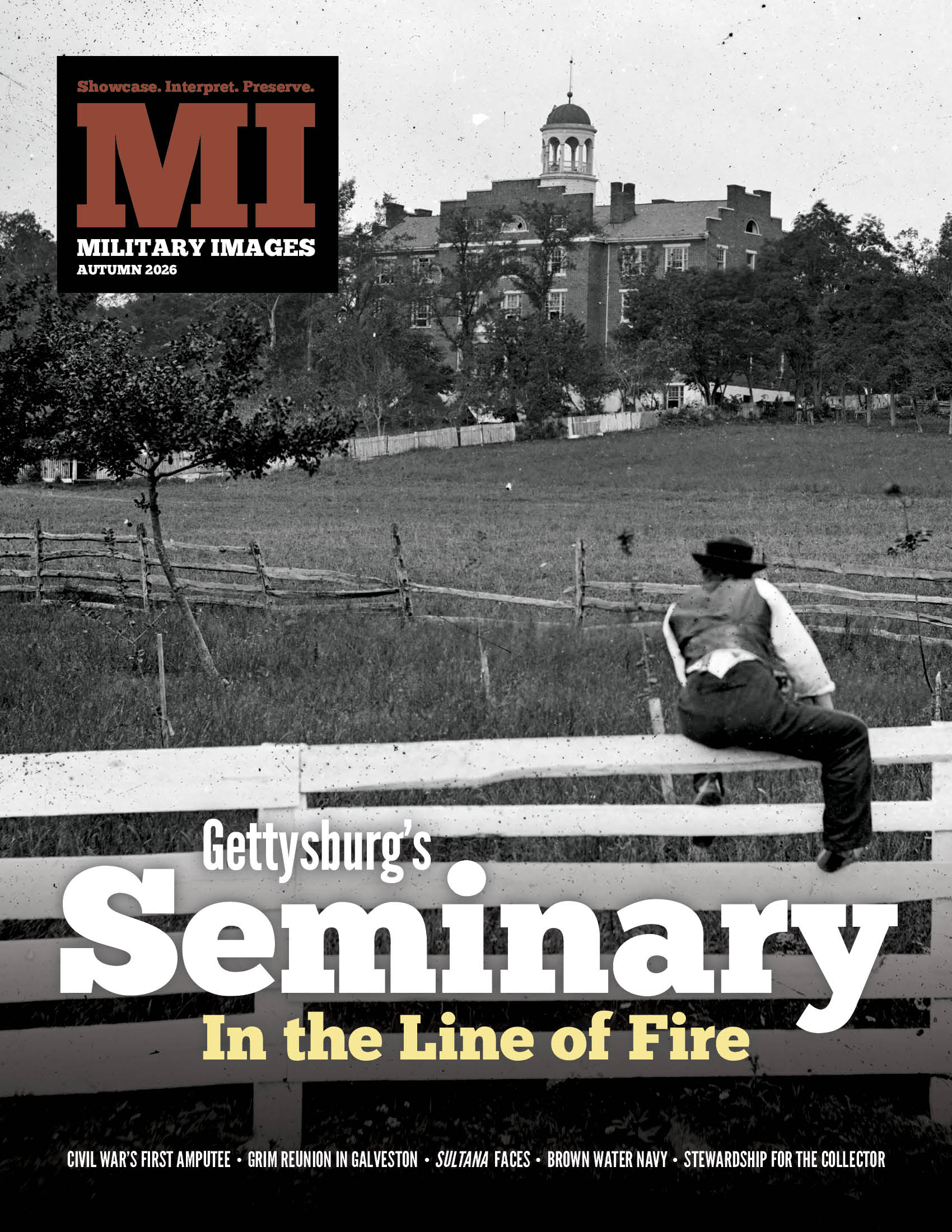
Vol. XLIV, No. 3
(80 pages)

Print edition: Visit our store to check availability
Digital edition: Visit JSTOR.org to purchase
Subscribe or renew your subscription

Explore the MI Archives:
Browse | Advanced search | Tutorial

Inside

Cover
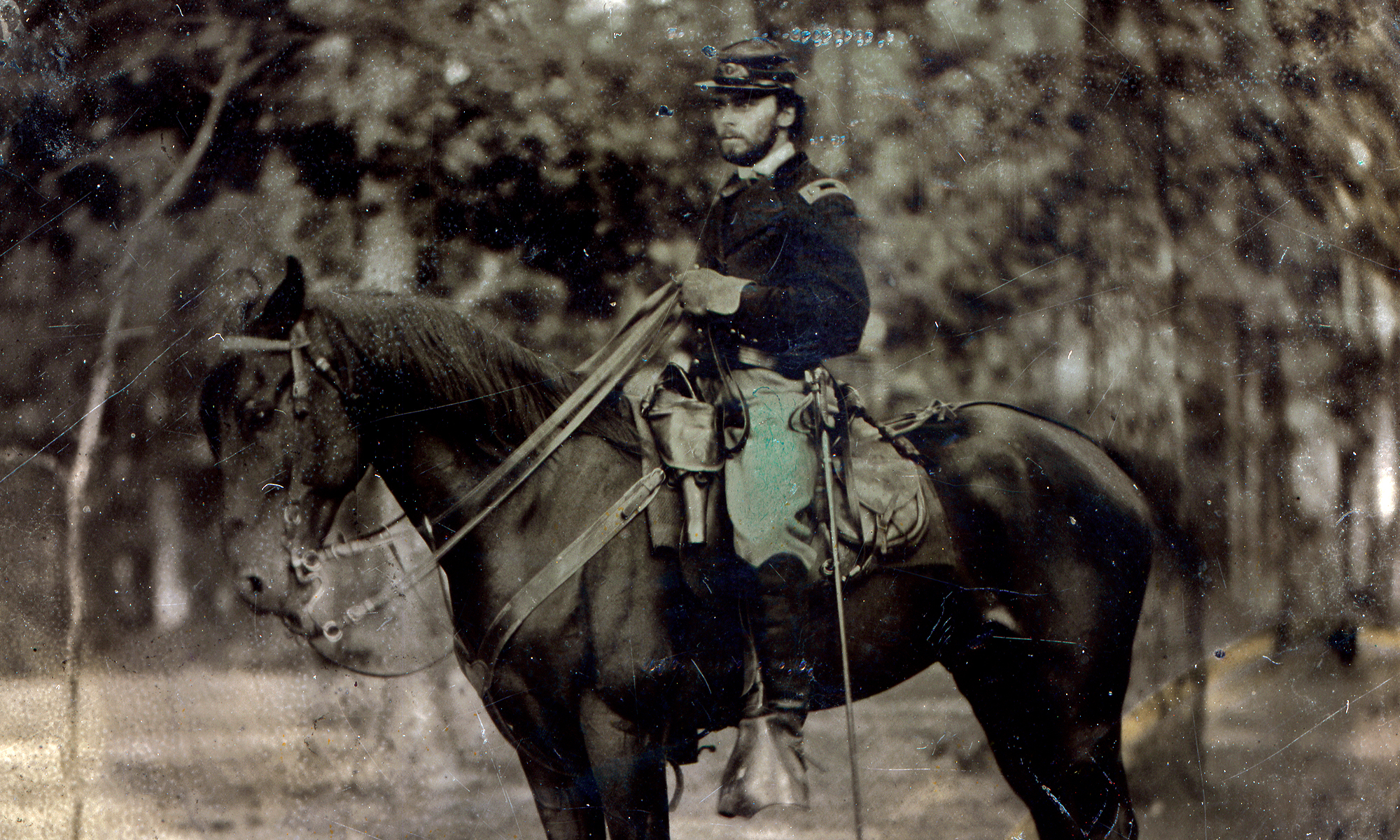
A tintype of Lt. Col. William A. Throop of the 1st Michigan Infantry on horseback beneath the shade of trees.

Table of Contents (p. 1)

Editor’s Desk (p. 2)
Thoughtful planning can help collectors find future caretakers for Civil War images and artifacts while easing the burden on loved ones.

Mail Call (pp. 3-4)
Feedback includes praise from new and veteran subscribers, and corrections on a weapon identification and a death place.

Military Anthropologist (p. 4)
Data reveals how emergency militia call-ups from New York, Pennsylvania, Illinois, and Indiana reinforced Union defenses during key Civil War crises.

Passing in Review (p. 6)
Reviews of two new books: Scott Hippensteel’s Civil War Photo Forensics and the first volume of James McLean’s regimental history of The 14th New York State Militia in the Civil War.

Photo Sleuth by Kurt Luther and Bryan Cheeseboro (pp. 8-13)
The identification of three rare U.S. Colored Troops group portraits, revealing their regiments, forts, photographer, and early postwar service in Washington, D.C.

Antebellum Warriors (p. 14)
A daguerreotype by Henry Earle Insley depicts a U.S. Army captain during the Mexican War era. Uniform details offer clues, but his identity remains unknown.

Most Hallowed Ground (p. 16)
Capt. George “Van” Vanderbilt led a daring cavalry action at Bristoe Station, delaying Confederates and helping secure a Union victory.

The Honored Few by Evan Phifer (pp. 18-20)
Artilleryman Frederick W. Fout earned the Medal of Honor for rallying abandoned guns during the 1862 siege and surrender of Harpers Ferry.

The Citizenry by Elizabeth A. Topping (pp. 22-24)
General George McClellan’s wife, Nelly, embraced society life, drew criticism for limited wartime charity work, and remained devoted to him until his death.

Of Arms and Men by Phil Spaugy (pp. 26-27)
Phil investigates three Ohio soldiers, Austrian Lorenz muskets, and conflicting evidence that challenges a long-accepted identification.

Gettysburg: Echoes of Three Days in July 1863 Curated by Charles Joyce, with contributions from Rick Brown, Scott Hann, Robert May, Dale Niesen, Paul Russinoff, and Melissa Winn (pp. 29-43)
Portraits and stories reveal stories of courage, sacrifice, wounds, death, and survival across three days of the Battle of Gettysburg.

War Compromised His Health. Photography Gave Him a New Lease on Life. The Life and Times of Enos F. Hilton, 8th Missouri State Militia Cavalry by M. Jane Johansson (pp. 44-47)
Civil War cavalryman Enos F. Hilton battled illness, reinvented himself as a photographer, and documented Colorado boomtowns.

Mountain Legion: The hard-fighting 156th New York Infantry in the Eastern and Western Theaters by Kyle A. Williams and Paul D. Thompson(pp. 48-55)
The 156th New York Infantry fought from Louisiana bayous to the Shenandoah Valley, earning distinction in both the Eastern and Western Theaters.

Rocket Man: Acting Signal Officer George H. Felt and his innovative pyrotechnics by Dale R. Niesen and Ronald S. Coddington (pp. 56-61)
Acting Signal Officer George H. Felt developed innovative signal rockets and coded pyrotechnics that sought to transform Civil War communications.

Material Culture by Ronald S. Coddington (p. 64)
Though linked to Confederate forces, Maynard carbines also armed select Union cavalry regiments, including the 1st Wisconsin and 9th Pennsylvania.

Women of War by Melissa A. Wynn (pp. 66-68)
Educator Emma Brown Montgomery devoted her life to teaching Black children during and after the Civil War, leaving a lasting legacy in Washington, D.C.

Behind the Backdrop by Buck Zaidel (pp. 70-71)
Four cartes de visite reveal how photographer J.P. Ball used painted backdrops to distinguish civilian life from military service in wartime Cincinnati.

Vignette by Scott Valentine (p. 72)
Colonel John A. Koltes fell leading a charge at Second Bull Run. His blood-stained scabbard rested atop his casket during a well-attended funeral in Philadelphia.

Stragglers (pp. 75-77)
Confederate Capt. William Pratt Parks, Sgt. John W. Taylor, Capt. Samuel D. Irvin, a Zouave, and a portrait of a print of Col. Elmer E. Ellsworth.

The Last Shot by Robert May(p. 80)
Color Sergeant John A. Kiggins repaired his regiment’s flagpole at Gettysburg and earned the Medal of Honor for heroism at Lookout Mountain.

Faces of Gettysburg’s Seminary Hospital: A Research Update

One Friday last January, I drove to Gettysburg to visit the Seminary Ridge Museum and met with Codie Eash, the Director of Education and Interpretation, and Paul Russinoff, a Military Images senior editor and a member of the museum’s board. Paul organized the meeting to discuss an idea—an exhibit of images of surgeons, patients, and attendants who were on the seminary grounds used as a temporary hospital during the three-day battle.

The meeting was a success, and it kicked off a larger effort to locate original, wartime, photographic portraits of those who were there. The project began with a remarkable dataset: a documented list of 498 patients treated at the hospital during and after the Battle of Gettysburg, along with registries of 147 attendants and 30 surgeons who cared for them—675 unique individuals.

Here’s an update on our progress.

The first and most important phase of the project relied on the generosity of collectors. Through social media, personal outreach, and the support of the Civil War photography community, collectors shared images from their collections and helped identify individuals connected to the hospital. Their contributions formed the foundation of this effort.

As the project evolved, we explored new research methods alongside traditional approaches. Using Artificial Intelligence and Large Language Models, we compared the 675-person list against thousands of identified Civil War photographs. We searched about 6,600 records of Union images published in Military Images and analyzed more than 9,000 images in the Library of Congress’s Liljenquist Family Collection of Civil War Photographs. Using ChatGPT to assist our efforts, we were able to compare the datasets, surface potential matches, and direct our attention to promising leads that were then verified through traditional historical research.

To date, we have identified 25 unique individuals connected to the Seminary Hospital for whom original wartime photographs are known to survive. Some are represented by multiple views.

This work would not have been possible without the efforts of many individuals. In addition to Paul and Codie, thanks tot he collecting community who responded to the call: Sid Dreese, Scott Hahn, Scott Hilts, Chuck Joyce, Paul Loane, Ronn Palm, Jim Rivest, and Tom Liljenquist and the staff of the Library of Congress.

While our analysis of major image databases is largely complete, the search continues. We will continue to crowdsource through social media, collector networks, descendants, and institutional contacts in hopes of locating additional photographs.

It is not too late to participate! Here’s the spreadsheet.

The exhibit is expected to open at the Seminary Ridge Museum this September. The opening is planned to coincide with the annual symposium of the Center for Civil War Photography, which will be held in Gettysburg, where the project will be shared with attendees—and, of course, with a wider audience of historians, collectors, and Civil War enthusiasts.

Onward!

Ronald S. Coddington
Editor & Publisher

From Gettysburg to Saratoga Springs, our Education Program Continues to Grow

We’re proud to announce that the New York State Military Museum has joined the Kenneth J. Bertholf Jr. Civil War History Education Program—our 65th site!

The addition of the museum puts another subscription into workers on the front lines of history— a growing network of battlefields, museums, libraries, archives, and historic sites committed to preserving and sharing the stories of the American past through education, research, and public engagement.

The Bertholf Program provides participating institutions with complimentary subscriptions to Military Images magazine and educational resources focused on Civil War portrait photography and material culture. The program is open to national battlefields, historical sites, and non-profit organizations connected to American history.

Learn more: https://militaryimagesmagazine.com/2023/11/30/the-kenneth-j-bertholf-jr-civil-war-history-education-program/

Fund a participating site or organization: https://shopmilitaryimages.com/collections/support-history/products/the-kenneth-j-bertholf-jr-civil-war-history-education-program

Want to nominate a deserving group? Contact militaryimages@gmail.com.

Participating institutions currently include sites and organizations such as Gettysburg National Military Park, Harpers Ferry National Historical Park, the National Museum of Civil War Medicine, the Library of Congress, the National Portrait Gallery, and many others across the country.

We’re grateful to every supporter helping to connect students of the Civil War and American history through period portrait photography.

Photo: Wikimedia

4 Military Images Stories Named Finalists for 2025 Army Historical Foundation Distinguished Writing Awards

Delighted to share that four stories from Military Images magazine have been named finalists for the 2025 Army Historical Foundation Distinguished Writing Awards:

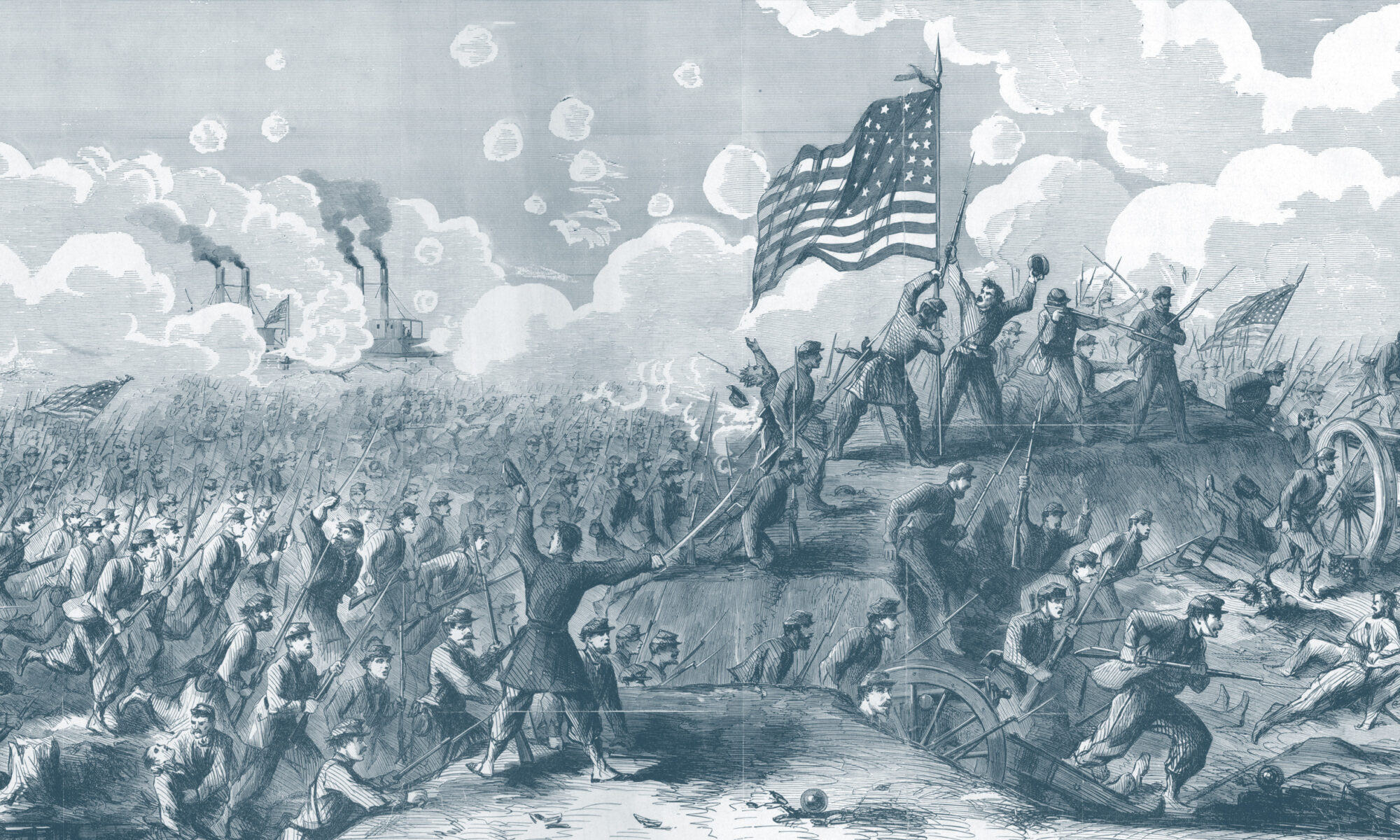
“Fort Donelson: Early turning point of the Civil War,” by John Walsh
The Union victory at Fort Donelson in February 1862 reshaped the war in its first year and propelled Ulysses S. Grant to national prominence. Read.

“‘Died at Gettysburg’: No Prouder Epitaph Need Any Man Covet,” by Charles T. Joyce
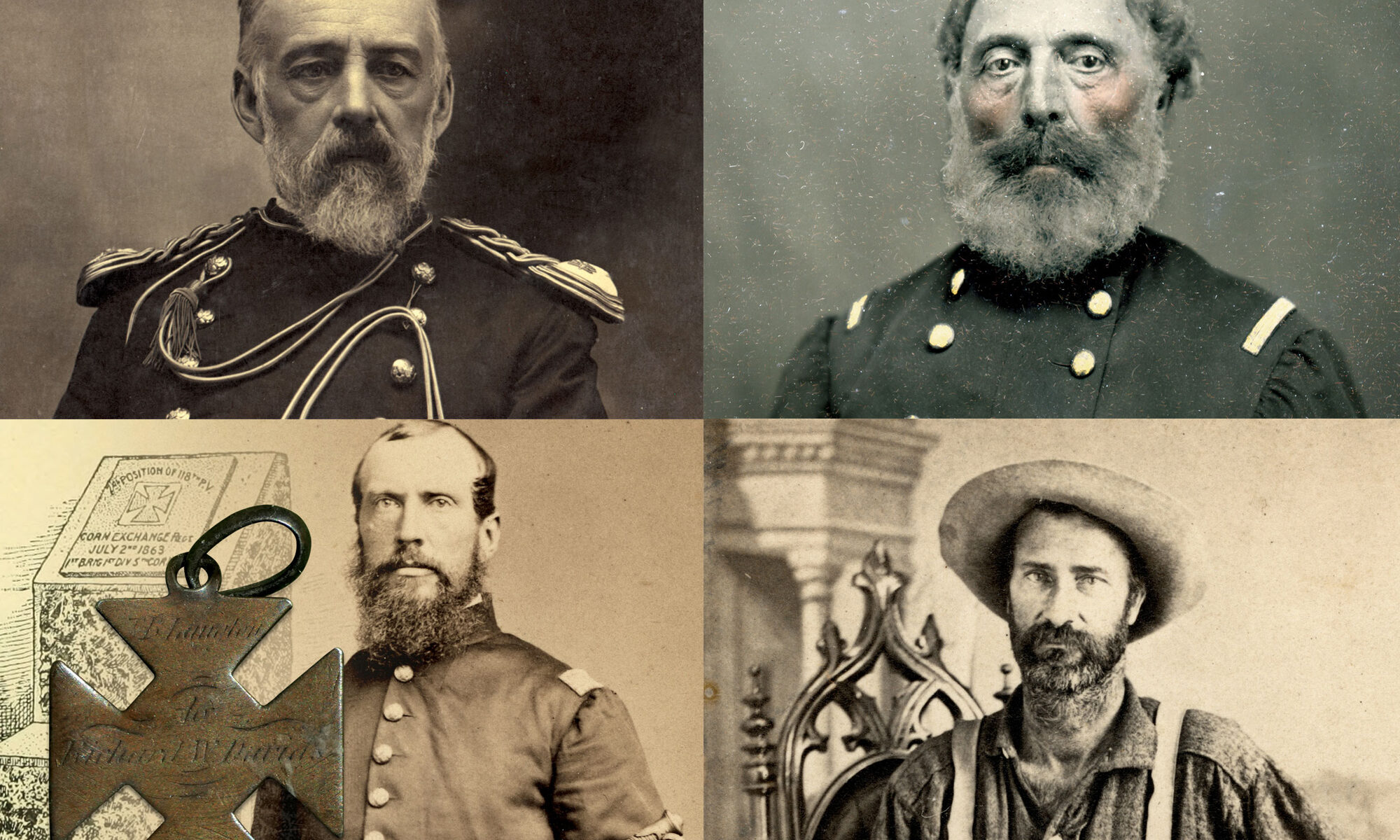
A moving exploration of the life and legacy of Davids, a Philadelphia aristocrat whose sacrifice at Gettysburg resonated through family memory and history. Read.

“On Quinby’s Watch,” by Ronald S. Coddington
Colorado Lt. Ira Quinby, a Signal Corps officer at the 1864 Battle of Westport, helped direct movements that checked Price’s Raid—often called the Gettysburg of the West. Read.

“Bonds of Loyalty: Forged in Mexico, 1847 — Tested in Texas, 1864,” by Ronald S. Coddington
Two Indiana soldiers who served together in the Mexican War found themselves on opposite sides fifteen years later during the Civil War—a powerful story of divided loyalties. Read.

Presented annually by the Army Historical Foundation, the Distinguished Writing Awards recognize excellence in historical scholarship and storytelling that deepens understanding of the U.S. Army’s past.

Final scores are due from the judges on July 1, with winners to be announced shortly thereafter.

We are proud to see Military Images so strongly represented among this year’s finalists. Since 1979, our mission has been to showcase, interpret, and preserve Civil War portrait photography—pairing compelling original images with research-driven narratives that bring the past to life. These nominations reflect that commitment.

Congratulations to our authors, and our thanks to the Army Historical Foundation for this meaningful recognition.

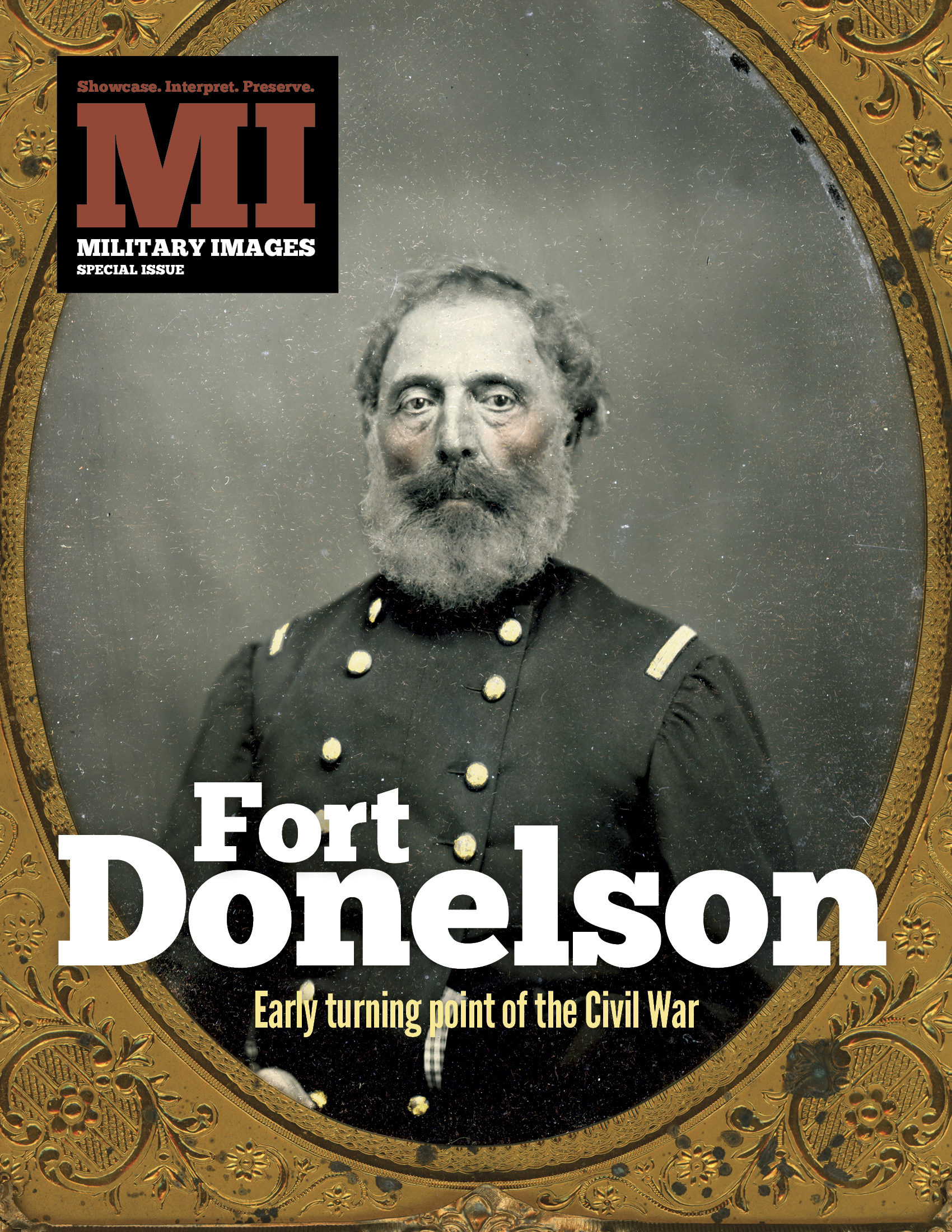
New Special Issue Tells the Fort Donelson Story Through Photos and Stories of Those Who Were There

A new special issue from Military Images and John Walsh brings the story of Fort Donelson to life through powerful portraits and firsthand accounts.

Originally published as the cover story in our Winter 2025 issue, this 20-page presentation by John Walsh—founder of Fort Donelson Relics and a lifelong student of the Western Theater—offers a deeply informed and personal look at one of the Civil War’s pivotal early victories.

As Walsh writes, the Union triumph in February 1862 “broke the back of the secession serpent.” The fall of the fort triggered the surrender of 14,600 Confederates, opened vital rivers, and led to the loss of Nashville—while elevating a little-known general, Ulysses S. Grant, to national prominence with his demand for unconditional surrender.

From the twin blows at Fort Henry and Donelson—supported by the ironclads of Andrew H. Foote—to the engagement of more than 40,000 soldiers, this issue captures the human dimension of the campaign through the faces and stories of those who were there.

Walsh, who lives near Fort Donelson National Battlefield, has spent decades preserving relics and advancing understanding of the soldiers who fought on this ground. His work reflects a commitment to responsible collecting, historical research, and battlefield preservation.

Founded in 1979, Military Images is dedicated to showcasing, interpreting, and preserving Civil War portrait photography—and the stories behind the faces.

Get your copy for $10 plus shipping at shopmilitaryimages.com.

Military Images Represents Civil War Portrait Photography at the Rich Mountain Symposium

I was honored to attend and represent Civil War portrait photography in all its forms—daguerreotypes, ambrotypes, tintypes, cartes de visite, and other albumen prints—at the recent symposium, “Chronicling the Fight: Art & Photography of the Civil War,” presented by The Rich Mountain Battlefield Foundation and Davis & Elkins College in Elkins, W. Va.

Cliff Krainik discusses the career and contributions of Mathew Brady. (Military Images)

Held near the historic Rich Mountain battlefield, the setting placed us squarely on ground tied to the 1861 Western Virginia Campaign—an early and decisive phase of the war that helped secure the region for the Union and set the stage for the creation of West Virginia. You students of the Civil War know the names associated with this campaign: George B. McClellan, whose success here helped launch his national reputation; William S. Rosecrans, whose flanking movement at Rich Mountain proved decisive; Lew Wallace, then early in his wartime service; and Robert E. Lee, whose struggles in the rugged terrain marked one of the few setbacks in his military career.

My sincere thanks to Rick Wolfe for the invitation and to the entire team at Davis & Elkins for their warm welcome and thoughtful hospitality. The setting, organization, and attention to detail made for an outstanding experience from start to finish.

The symposium itself was exceptionally well structured: four engaging presentations spaced comfortably throughout the day, a welcome lunch break that encouraged conversation, and a terrific panel discussion that brought all the speakers together for a lively and insightful exchange.

My fellow presenters inspired me: Rick Wolfe on “Photos and Stories of West Virginia Soldiers,” Hunter Lesser discussing “Artists at War: The First Campaign,” and the legendary Cliff Krainik sharing his knowledge about “The Incomparable Civil War Photographer, Mathew B. Brady.”

Last but not least, I very much appreciated the audience—curious, engaged, and asking thoughtful questions that elevated the discussion. The combination of venue, pacing, and participation created a comfortable atmosphere. I left energized!

For more about the Rich Mountain Battlefield and its history, visit: https://beverlyheritagecenter.org/rich-mountain-battlefield/

Calling for Images of Gettysburg’s Seminary Hospital Patients

I’m delighted to announce that Military Images magazine is partnering with Gettysburg’s Seminary Ridge Museum and Education Center on a new exhibit featuring soldiers who were treated at, or worked in, the Seminary Hospital in the aftermath of the battle.

We are looking to make digital copies of original, identified ambrotypes, tintypes, cartes de visite or other albumen prints of soldiers associated with the Seminary Hospital that will be featured in the exhibit. And we’re reaching out to the collecting community to assist our efforts.

The museum has compiled a database of almost 500 soldiers who were either patients, surgeons, or attendants at the hospital—and this database is available for searching. Tip: You’ll find two tabs at the bottom, alphabetically by last name, and by state and regiment:
https://docs.google.com/spreadsheets/d/1khmnz3fBe3AcxoIlh8FrpRfJgUm9XZRWk-Rxs-uffEQ/edit?usp=sharing

If you have an original wartime portrait of one of these soldiers and would like to share it for possible inclusion in the exhibit, please contact:

Paul Russinoff: prussinoff@aol.com
Ron Coddington: militaryimages@gmail.com

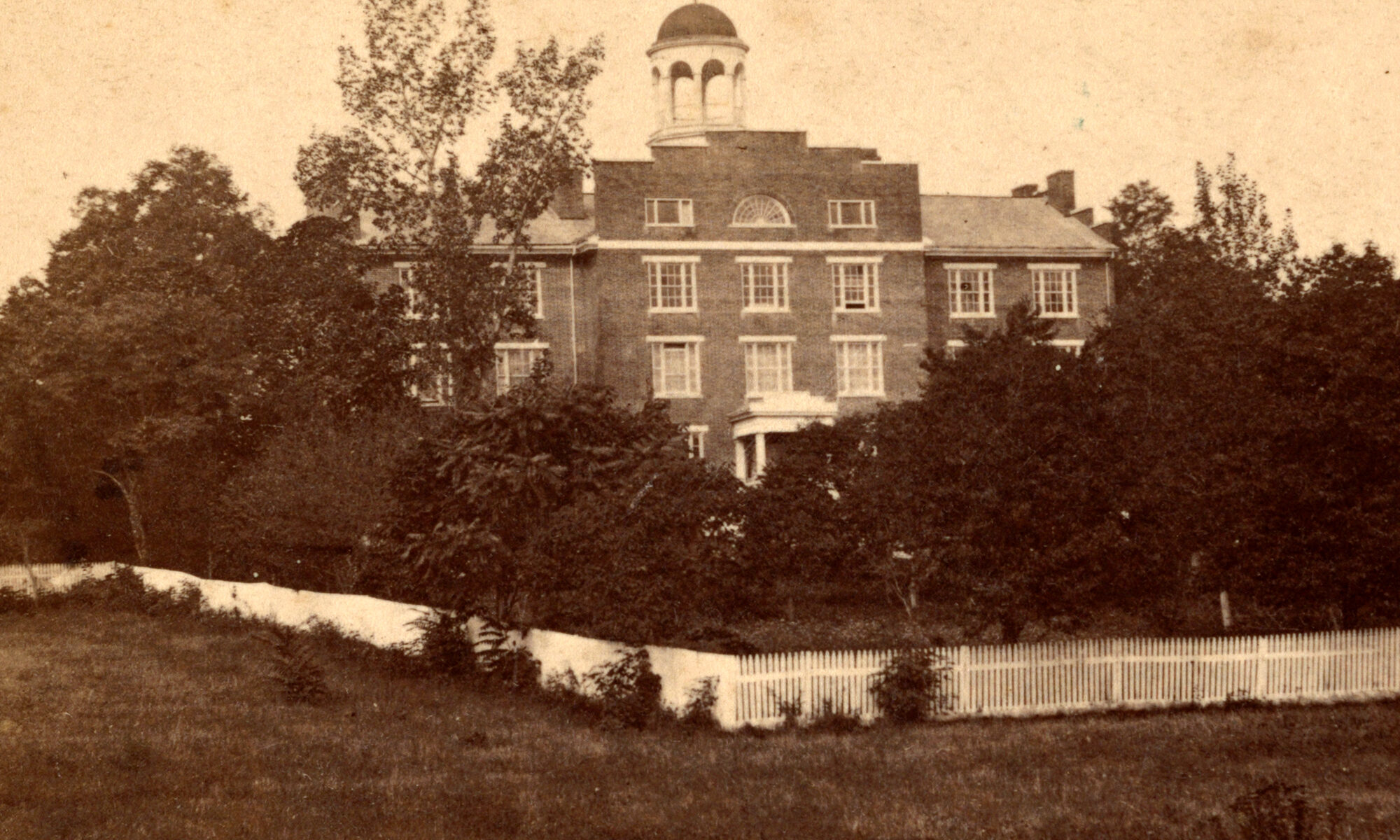
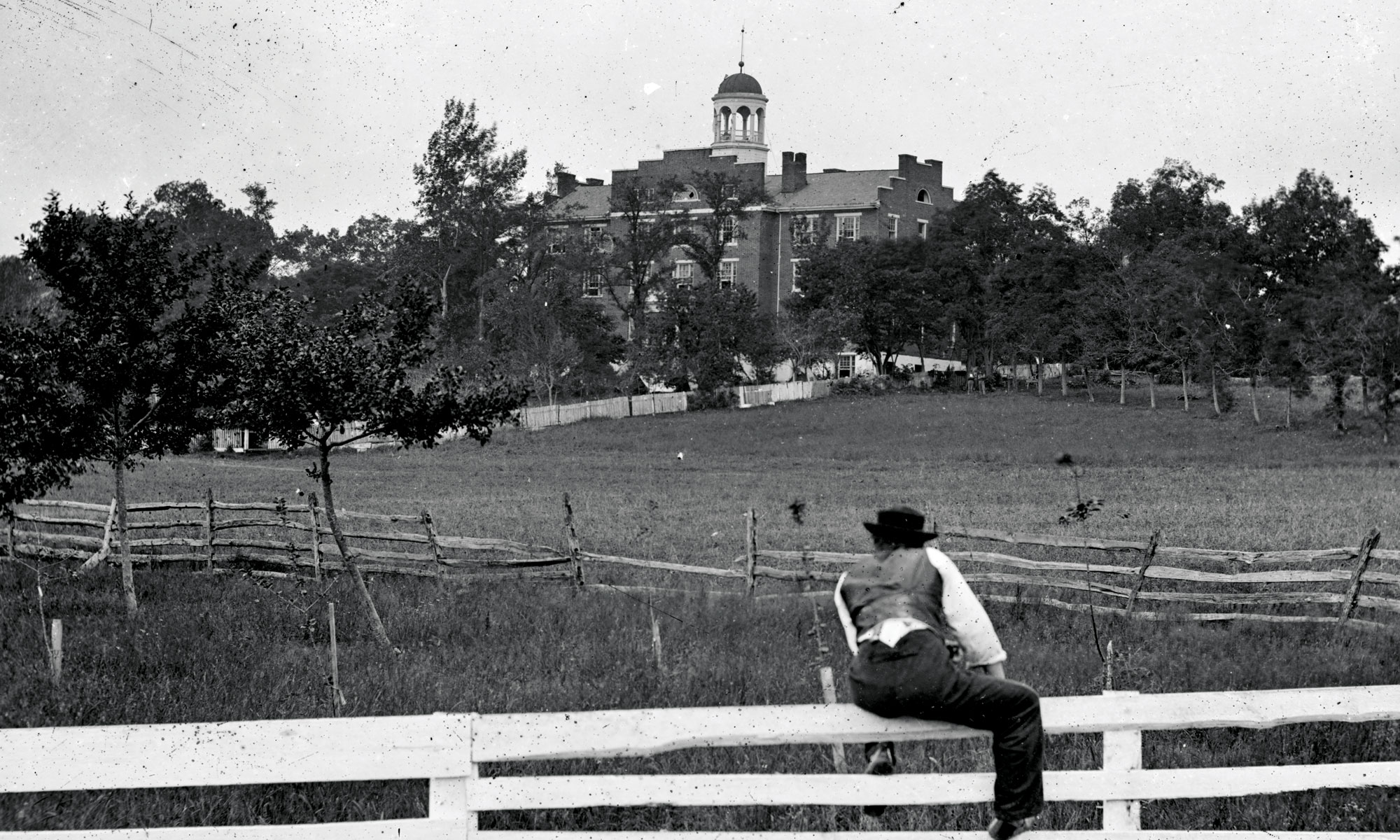
Gettysburg’s Lutheran Seminary is arguably one of the most important buildings connected with the battle. Its landmark cupola was critical to both Union and Confederate forces in assessing enemy troop locations. Within its walls, hundreds of Union and Confederate soldiers were treated for serious wounds, and many died. After an extensive restoration, the Seminary Museum opened in 2013 and houses four floors of exhibits tracing its role in the battle and exploring the question of what brought armies of Americans to this Pennsylvania town in 1863.

Thanks in advance for your help!

Paul and Ron

The Spring 2026 Issue

A complete table of contents for the Spring 2026 issue of Military Images magazine, and information about how to purchase single issues and subscriptions.

Vol. XLIV, No. 2
(80 pages)

Print edition: Visit our store to check availability
Digital edition: Visit JSTOR.org to purchase
Subscribe or renew your subscription

Explore the MI Archives:
Browse | Advanced search | Tutorial

Inside

Cover
A tintype of a Hoosier cavalryman posed with a Merrill carbine and a .44-caliber Model 1860 Army Colt revolver.

Table of Contents (p. 1)

Editor’s Desk (p. 2)
A reflection on collectors Rick Carlile and Perry Frohne, stewardship, and the future of Civil War photography collecting in a changing digital community.

Mail Call (pp. 3-4)
Feedback includes praise for Mike Fitzpatrick’s profile of “Fighting Bob” Robley, identifying three Confederate soldiers, and more.

Military Anthropologist (p. 4)
National Archives data shows how 2,700 women served in concentrated Union hospital centers, revealing the scale and geography of wartime care.

Passing in Review (p. 6)
A new book by Richard Leisenring Jr. examines Elmira prison images as historical evidence, revealing how photography, commerce, and memory shaped views of the Civil War camp.

Photo Sleuth by Kurt Luther (pp. 8-9)
Why many images of women soldiers are misidentified or fake—and how research separates verified portraits from myths in Civil War history.

Antebellum Warriors (p. 10)
A militia officer’s portrait raises questions about daguerreotype reversal, revealing clues in uniform details, sword presentation, and camera technology.

Most Hallowed Ground (p. 12)
Major Ruel M. Johnson led the 100th Indiana Infantry under heavy fire at Missionary Ridge, earning the Medal of Honor for gallantry in the Chattanooga Campaign.

The Honored Few by Evan Phifer (p. 14)
Iron Brigade officer William Wade Dudley lost a leg at Gettysburg, later served veterans as Pension Bureau chief, and was tied to the 1888 Block of Five scandal.

The Citizenry (p. 16)
A Lafayette, Ind., firm’s Civil War contracts fed Union troops, revealing how Midwestern businesses powered the Northern war effort in the Western Theater.

Of Arms and Men by Phil Spaugy (pp. 18-20)
A Terre Haute, Ind., portrait of veteran Union soldiers reveals clues in Model 1842 muskets, Greenwood alterations, and field gear used to trace their unit.

Hoosiers: Indiana Faces of the Civil War (pp. 22-40)
A gallery of Indiana Civil War portraits and stories, from early enlistments to major battles, prison camps, and home-front sacrifice across the Western Theater.

Long Sol: Indiana’a Fighting Quaker by Lance J. Herdegen (pp. 42-46)
The rise of Solomon “Long Sol” Meredith and his Iron Brigade, from Brawner’s Farm to Gettysburg, where wounds ended his battlefield career.

Thunderbolts and Lightning at Hoover’s Gap: How Wilder’s Lightning Brigade received its nom de guerre by Ronald S. Coddington (pp. 48-52)
How John T. Wilder’s mounted infantry and Spencer rifles secured Hoover’s Gap and earned the name “Lightning Brigade” in the Tullahoma Campaign.

Dynamite Man: The life and times of Hoosier soldier, sailor, and inventor James Weir Graydon by Ronald S. Coddington(pp. 54-59)
From teenage bugler in the 7th Indiana Cavalry to Navy officer and prolific inventor, the remarkable life and ambitions of James W. Graydon.

Harper’s Weekly Needed an Image of Wallace’s Zouaves. They Commissioned This One. by Ron Field(pp. 60-62)
How photographs of the 11th Indiana Infantry, also known as Wallace’s Zouaves, became Harper’s Weekly engravings.

Material Culture by Ron Field (pp. 64-68)
How the 11th Indiana Infantry’s Zouave uniforms changed during the war, from gray militia dress to distinctive blue patterns worn in major campaigns.

Women of War by Melissa A. Wynn (pp. 70-71)
Indiana nurse Eleanor Ransom survived the 1864 sinking of the transport North America and returned to care for Union soldiers through war’s end.

Behind the Backdrop by Buck Zaidel (pp. 72-73)
How focus, depth, and staging at an Indianapolis gallery turned painted Civil War backdrops into convincing camp scenes for Indiana soldiers.

Vignette by Scott Valentine (p. 74)
Captain Poinsett Cooper of the 42nd New York Infantry survived four wounds from Antietam to the Wilderness, including a guerrilla attack during evacuation in Virginia.

Stragglers (pp. 75-77)
Profiles of Union and Confederate soldiers through Civil War portraits, including rare “Jeff. Davis and the South!”placard images, battlefield service, and personal wartime histories.

The Last Shot (p. 80)
How the 58th Indiana Infantry funded and dedicated one of Indiana’s first Civil War monuments to honor its fallen, conceived while the regiment was still in service.

Tour Arlington National Cemetery’s Civil War History on Saturday, March 7, 2026, at 1 P.M.

Join us for a free tour of key Civil War sections at Arlington National Cemetery on Saturday, March 9, 2024, rain or shine. We’ll meet at the Visitor Center entrance at 1 p.m. for a 2.5-hour walking tour of Sections 1 and 2, and around Arlington House, The Robert E. Lee Memorial. 

Leading our tour is Jim Garrett, senior guide and trainer for Unscripted Tours. Jim led us on a Lincoln assassination tour last year, and two years ago, different sections of Arlington. 

If you are in town for the D.C. Antique Photo, Postcard & Civil War Show (Sunday, March 8), in the D.C. area, or plan on visiting the city, join us! For you show-goers, we’ll finish the tour with plenty of time for you to grab dinner and visit dealer rooms the evening before the show.

From our guide, Jim: “Plan on 2 1/2 miles of walking. We’ll see lots of unexpected sites. Our Arlington tour is rated by Viator as one of the top 20 tours (of all kinds of tours, food, white water, ghost, etc.) in America!”

For more information and questions, please contact Ron Coddington at militaryimages@gmail.com, Facebook message or text/voice at 703-568-1616.

Hope you can join us! I look forward to seeing you in person on the hallowed grounds of Arlington National Cemetery.

—Ronald S. Coddington, Editor and Publisher

Photo credits: Library of Congress, National Portrait Gallery

Civil War Nurses Exhibit Opens at Carnegie Free Library

On February 14, 2026, the traveling exhibit Faces of Civil War Nurses opened to a warm welcome at the Andrew Carnegie Free Library & Music Hall in Carnegie, Pa., just outside Pittsburgh.

Presented in partnership by Military Images and the National Museum of Civil War Medicine, the exhibit features 20 life-size portraits of women who served as nurses during the Civil War—bringing viewers face-to-face with the caregivers who tended the wounded and dying in hospitals, camps, and on the battlefield.

The Carnegie installation marks the second stop for the exhibition following its premiere at the Clara Barton Missing Soldiers Office in Washington, D.C.

Andrew Carnegie Free Library & Music Hall .

A Record-Setting Opening

The Valentine’s Day opening program exceeded expectations in every way.

According to program coordinator Jon-Erik Gilot, the event set an attendance record for the library’s long-running Second Saturday Civil War Series, which began in 2014.

Coddington, left, with Jon-Erik Gilot.

The audience reflected the library’s broad educational mission. While many were Civil War enthusiasts, others came simply out of curiosity and a love of lifelong learning. Despite limited parking and a busy weekend, the room filled quickly, and late arrivals continued to stream in after the program began.

Bringing the Nurses to Life

The opening presentation explored the stories behind the images and the larger effort to identify, research, and interpret the visual record of Civil War nurses. The strong turnout—and the many thoughtful comments afterward—underscored the growing public interest in the human side of Civil War photography.

As Gilot noted, the program “set a high bar not just for attendance, but for content and quality,” and the enthusiastic response highlighted the power of portrait photography to connect modern audiences with the past.

Continuing the Journey

Faces of Civil War Nurses continues its run in Carnegie through May 9, offering visitors a rare opportunity to encounter these women at full scale and learn about their service and sacrifice.

The success of the opening affirms the exhibit’s mission: to honor the caregivers of the Civil War and to share their stories with communities across the country.